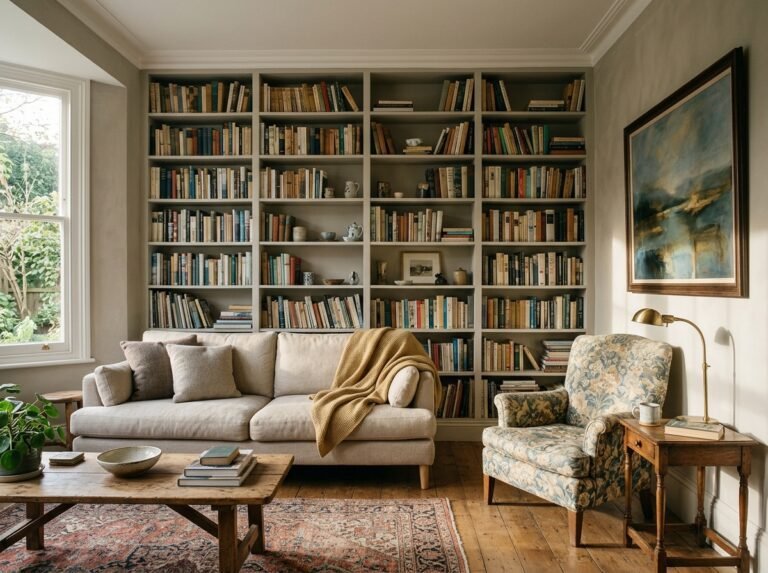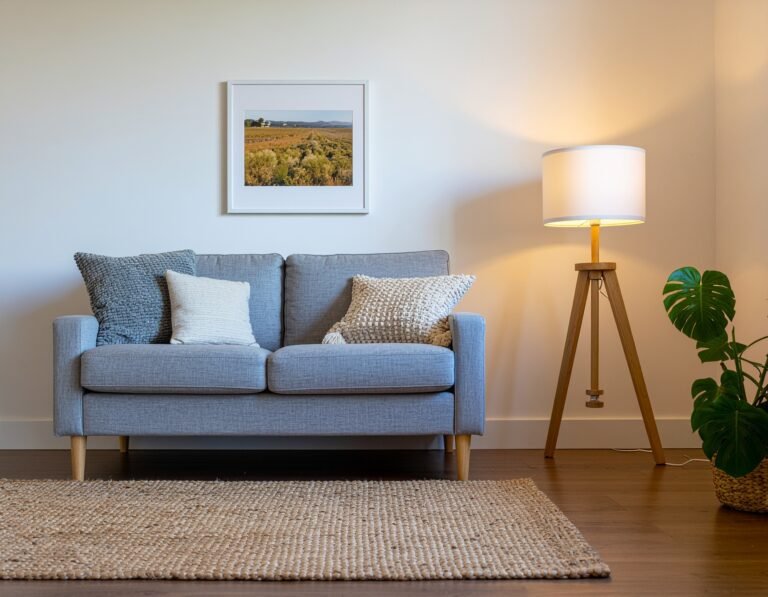
How to Make a Large Living Room Feel Cozy
A large living room rarely feels cold because of the wrong pillows. It feels cold because of distance, scale, height and sound. Seats sit too far apart. Furniture looks small against the walls. The top half of the room is empty, and voices bounce off hard surfaces.
This Decorumy guide works through those four causes one at a time. Each one gets a quick test you can do tonight and the fixes that address it. If you want the general cozy basics (texture, warm color and soft extras), our guide to cozy living room ideas covers them. Everything here is about what changes when the room is big.
To make a large living room feel cozy, pull the seating into one group where no two seats are more than about 12 feet apart. Then scale up the furniture, bring something into the upper half of the walls and add soft surfaces that stop echo. Give any leftover floor a second purpose instead of leaving it empty.
Why does a large living room feel cold?
A large living room feels cold when the space between people and objects is bigger than the space people feel comfortable in. Most big rooms have at least two of these four problems:
| Cause | What you notice | Quick test |
|---|---|---|
| Distance | Conversations feel formal or need raised voices | Measure between the two farthest seats |
| Scale | Furniture looks lost or “floating” | Photograph the room from the doorway |
| Height | The room feels tall and empty above your head | Look at what sits above 7 feet |
| Echo | Footsteps and voices ring | Talk at normal volume and listen |
Fix them in that order. Distance and scale are about where things sit, so they cost the least. Height and echo usually need something new.
How far apart should seats be in a big living room?
Seats in a cozy living room should sit close enough to talk at a normal voice, which in practice means keeping the farthest pair within about 12 feet. That number comes from proxemics, the study of how people use space. Anthropologist Edward Hall described social distance as roughly 4 to 12 feet. Past 12 feet, he described public distance, the range used for speeches.
That’s the trap in a large room. When the sofa sits on one wall and the chairs sit on the opposite wall, guests end up at speech distance. The room feels formal even when it’s full of soft things.
Run the test. Measure from the middle of the sofa to the farthest chair someone actually sits in. If it’s over 12 feet, the group is too spread out. Then try these fixes:
- Pull the sofa off the wall and bring the chairs toward it until the group closes up.
- Turn chairs so they face the sofa or each other, not the TV or the window.
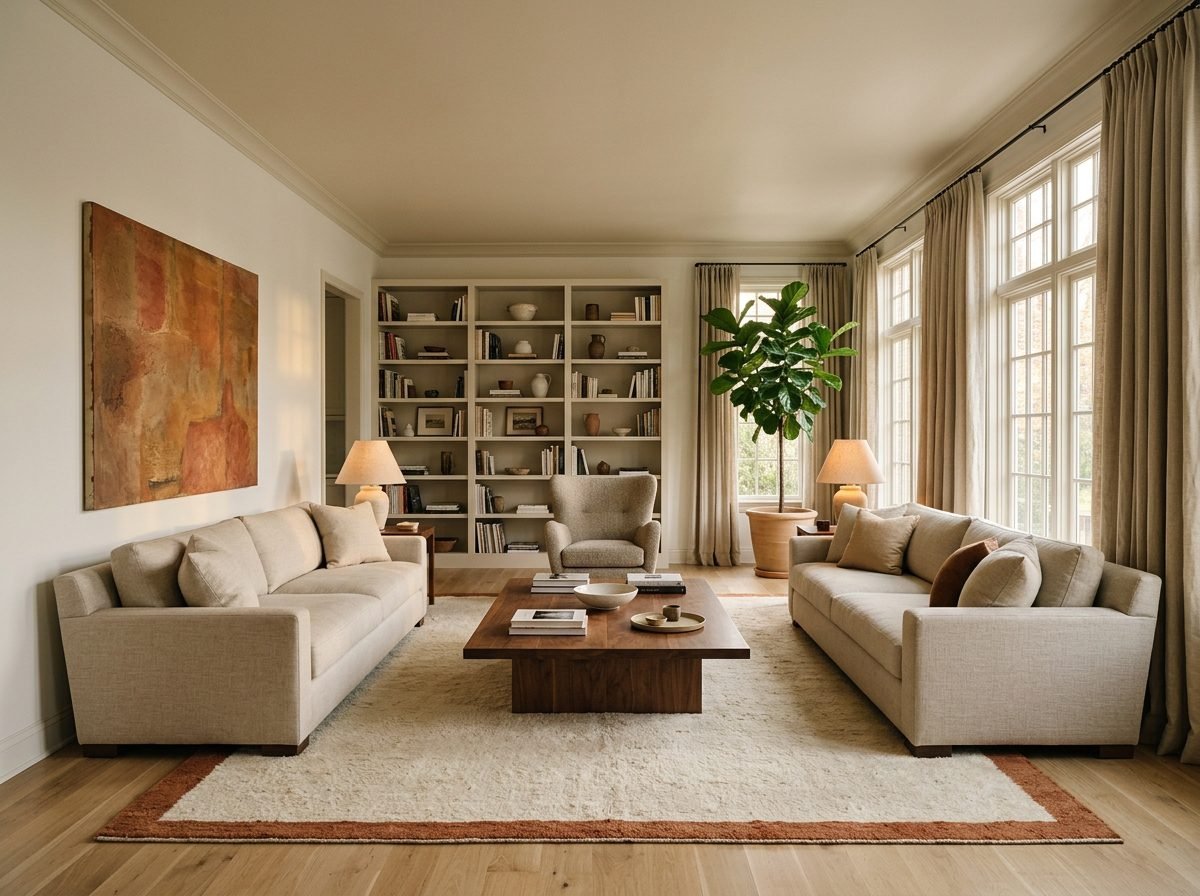
- Swap two separate armchairs for a second sofa facing the first if the room is wide.
- Use an L-shaped sectional to close one side of the group.
For the closer spacing inside the group, like coffee table reach and walkway width, the numbers in our $200 living room makeover still apply. A big room doesn’t change them. It only gives you more floor outside the group.
How do you scale furniture for a large living room?
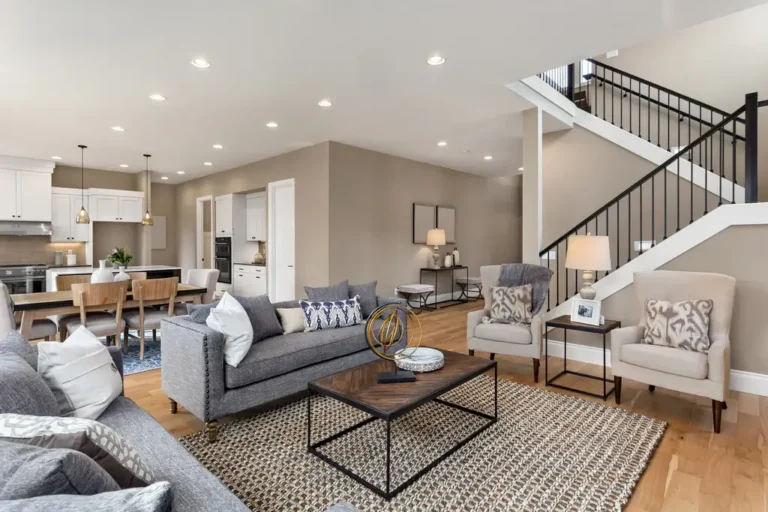
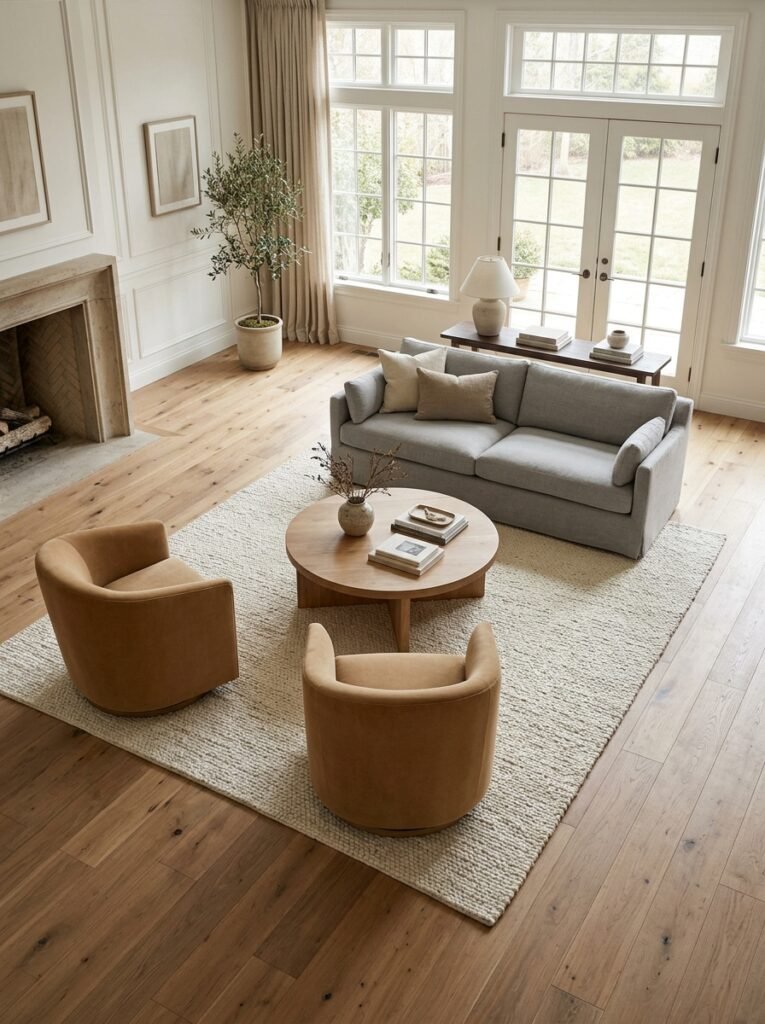
Furniture in a large living room should be fewer pieces in bigger sizes. Five small chairs scattered around a big room look like a waiting area. One deep sofa, one pair of chairs and one large coffee table read as a room.
The doorway photo shows the problem quickly. Take a picture from where you enter. A photo flattens the room, so you’ll notice two things you stop seeing in person. You’ll see bare floor around every piece, and you’ll see furniture that stops well below the windowsills and art.
Here’s where scale matters most:
- The rug. In a big room, a rug that only reaches the front legs of the sofa looks like an island. Choose one large enough for every seat in the group to sit fully on it, with bare floor showing around the edge.
- The coffee table. A small table in the middle of a large group leaves people reaching. Go larger, or use two tables side by side.
- Lamps. Big rooms can carry larger lamp bases and wider shades. Tiny lamps vanish.
- Art. One large piece or a pair does more than many small frames spread across a long wall.
- Plants. A tall tree in a corner fills height and width at once.
The basics of floating furniture and sizing a rug are covered in our guide to arranging living room furniture. In a large room, push each of those choices one size up.
What do you do with high ceilings in a living room?
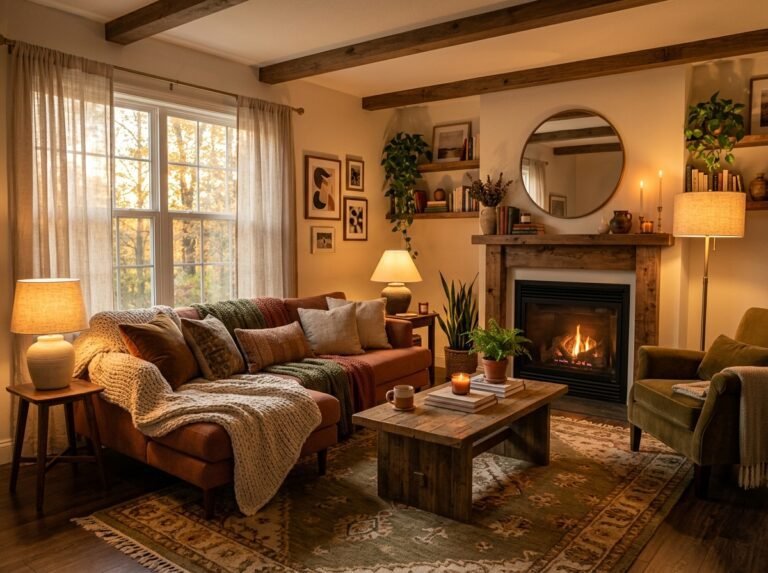
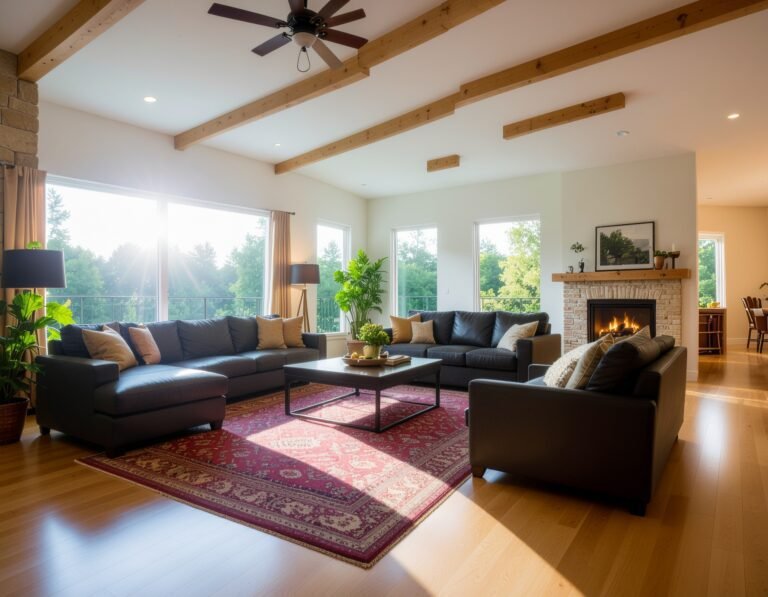
High ceilings feel cozier when something occupies the upper half of the room and the light stays low. Most furniture tops out below 3 feet. Most art hangs near eye level. In a room with a 12-foot or vaulted ceiling, that leaves a tall empty band that the eye keeps noticing.
Try the look-up test. Sit on the sofa and look at everything above about 7 feet. If you see only bare wall, that’s the area to work on. These fixes go from easiest to most involved:
- Add tall pieces. A tall bookcase, a large plant or a floor-to-ceiling cabinet pulls the eye up and fills the band.
- Hang art bigger, not higher. Keep art related to the furniture below it, and choose larger pieces rather than floating small frames halfway up a wall.
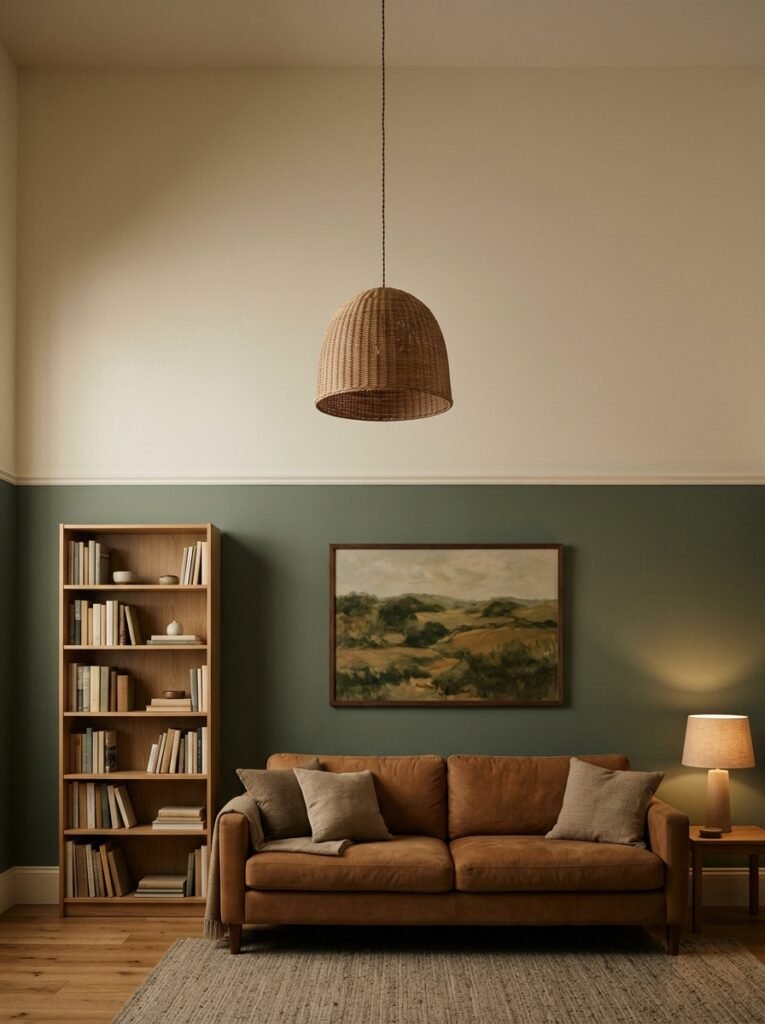
- Paint a horizontal break. A picture rail or a painted line around the room, with a deeper color above or below, makes the wall read as two shorter sections.
- Warm the ceiling. A ceiling painted a shade darker or warmer than the walls tends to read lower than bright white.
- Bring light down. A pendant or chandelier that hangs into the room fills some of the height. New ceiling fixtures, and anything heavy, should be installed by a licensed electrician on a box rated for that weight.
Skip uplights that wash the ceiling with light. They highlight the height you’re trying to soften.
How do you stop a large living room from echoing?
You stop echo in a large living room by adding soft surfaces in the biggest amounts you can. Harvard Health notes that carpeting, curtains and upholstered furniture absorb sound. Hardwood floors, cathedral ceilings and minimalist decor let it reverberate. Many large living rooms have all three of the second group.
Test it by talking at a normal volume or walking across the floor in shoes. If sound lingers or rings, the room needs more absorption. Work through the biggest surfaces first, because area matters more than thickness:
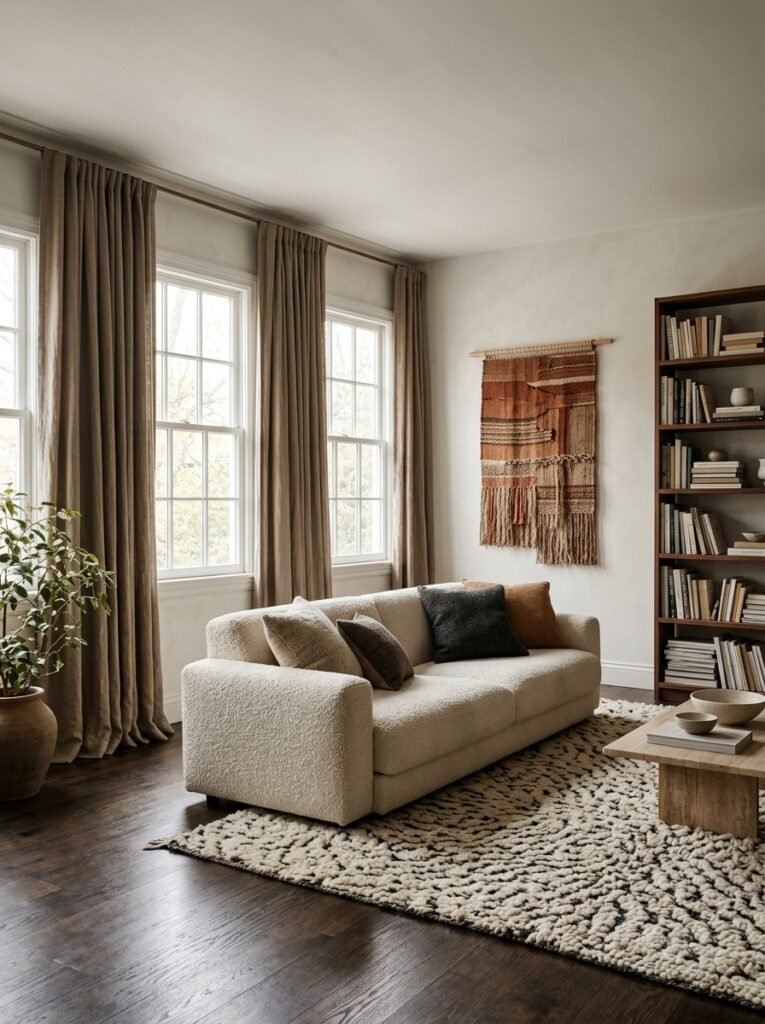
- The floor. A large rug over a felt or rubber pad covers the most surface for the money.
- The seating. Fabric sofas and chairs absorb far more sound than leather, wood or metal.
- The windows. Fabric curtains cover large panes of glass, one of the hardest surfaces in the room.
- The walls. Filled bookshelves break up sound. A large textile hanging or fabric panel on a bare wall helps too.
- The open space. A folding screen between zones stops sound from crossing a wide room.
You don’t need acoustic panels in most homes. A room that has the first three covered usually stops ringing.
What should go in the empty space of a large living room?
Leftover floor in a large living room should get its own job. Once the seating group closes up, you’ll often have a corner or a whole end of the room free. Leaving it bare makes the room feel unfinished. Stretching the sofa group to fill it undoes the fix above.
Pick a second use that fits how you live:
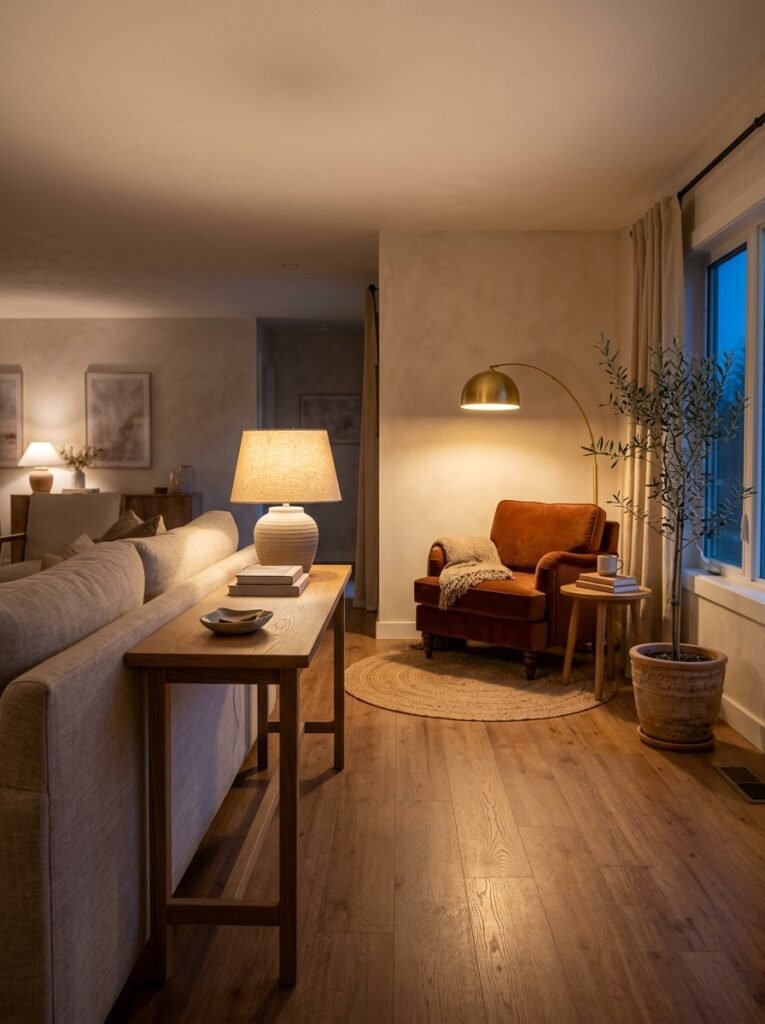
- A reading corner with one chair, a floor lamp and a side table.
- A small round table with two or four chairs for games, puzzles or homework.
- A desk if you need a work spot outside the bedroom.
- A music corner around a piano, record player or instrument.
- A play area with a low shelf and floor cushions.
Give the second zone its own small rug and its own lamp. That’s what makes it read as a separate place rather than spare furniture. If the sofa floats with its back to the second zone, a console table behind it gives the walkway an edge and holds a lamp for both areas.
How should you light a large living room?
A large living room feels cozier when you light the seating group and let the outer edges stay dimmer. Bright light reaching every corner shows how big the room is. Pools of light around the people make the room feel smaller in the best way.
Put lamps inside or next to the seating group, at seated eye level or below. A table lamp on each side of the sofa and a floor lamp beside the main chair cover most groups. Add a lamp in the second zone so it doesn’t sit in the dark.
Bulb color matters too. Energy Trust of Oregon notes that people usually prefer around 2700K for living rooms, because lower Kelvin numbers give a warm, yellow light. Use the same color temperature in every lamp in the group so the light looks even.
What makes a large living room feel less cozy?
The most common mistake is filling a big room with more small things. Extra side chairs, small tables and rows of little frames add clutter without closing any distance. The room ends up busy and still feels empty.
Pushing every piece against the walls is the second. It leaves a large open middle and stretches seats to speech distance.
Lighting the whole room evenly from above is the third. It shows every inch of floor and flattens the space.
Buying hard-surfaced furniture for a room with hard floors is the fourth. Leather, glass, metal and wood on top of hardwood or tile keep the echo going.
Quick answers about cozy large living rooms
Should I paint the walls dark in a large living room?
Dark walls can make a large living room feel more enclosed, but they’re not required. A warm mid-tone often works as well and is easier to live with in daylight. If you want a smaller step, paint only the ceiling a shade warmer or use a deeper color below a picture rail. Test a large sample on two walls and look at it at night.
Can two sofas make a big living room feel cozy?
Two sofas facing each other are one of the most effective ways to close up a large seating group. They create a clear conversation area with a coffee table between them. Keep the distance between the sofas comfortable for passing a cup across the table. Add a chair at one end if the group needs a third side.
How do I make a living room with vaulted ceilings cozy without renovating?
You can soften a vaulted ceiling with tall furniture, large art, a hanging pendant and low lamp light. A tall bookcase or plant fills the upper band of the walls. A pendant brings light down into the room. Keep lamps low and avoid uplights so the ceiling falls into shadow at night.
What do I put in the empty corners of a big living room?
A tall plant, a reading chair with a floor lamp or a tall bookcase works well in an empty corner. Each one adds height and gives the corner a use. Avoid a small side table or a lone decorative object in a big corner. It tends to look forgotten rather than finished.
How can I make a large living room cozy on a budget?
Begin with the free changes: pull the furniture into a tighter group, turn off the overhead light and move lamps into the seating area. Then put money into the biggest soft surface, usually a large rug. Secondhand bookcases, fabric curtains and big plants bought small add height and softness without a large spend.
Do rugs really reduce echo in a living room?
Yes, a large rug is one of the most effective ways to reduce echo in a living room with hard floors. It covers the biggest single surface in the room. A rug pad adds more absorption and keeps the rug in place. Pair the rug with fabric seating and curtains for the strongest effect.
Measure the gaps before you buy anything
A large living room doesn’t need more stuff to feel cozy. It needs shorter distances, bigger pieces, something in the upper half and enough soft surfaces to quiet it down. Measure the seat distances, take the doorway photo and listen to the room before you shop. The tests tell you which of the four problems you have, so you spend only on that one.