Trending Living Room Decor Ideas: What Is Arriving, Peaking and Leaving
Trend lists have a short shelf life, which is an odd thing to admit at the top of one. The useful version is not a catalog of what looks good this minute. It is a note on where each thing sits in its cycle. That is what decides whether a purchase still looks considered in three years, or reads as a date stamp.
This was written in the middle of 2026, drawing on designer surveys and trade coverage published across the year. Everything below falls into one of three groups: arriving, peaked and safe, or on its way out.
Trends Move at Three Different Speeds
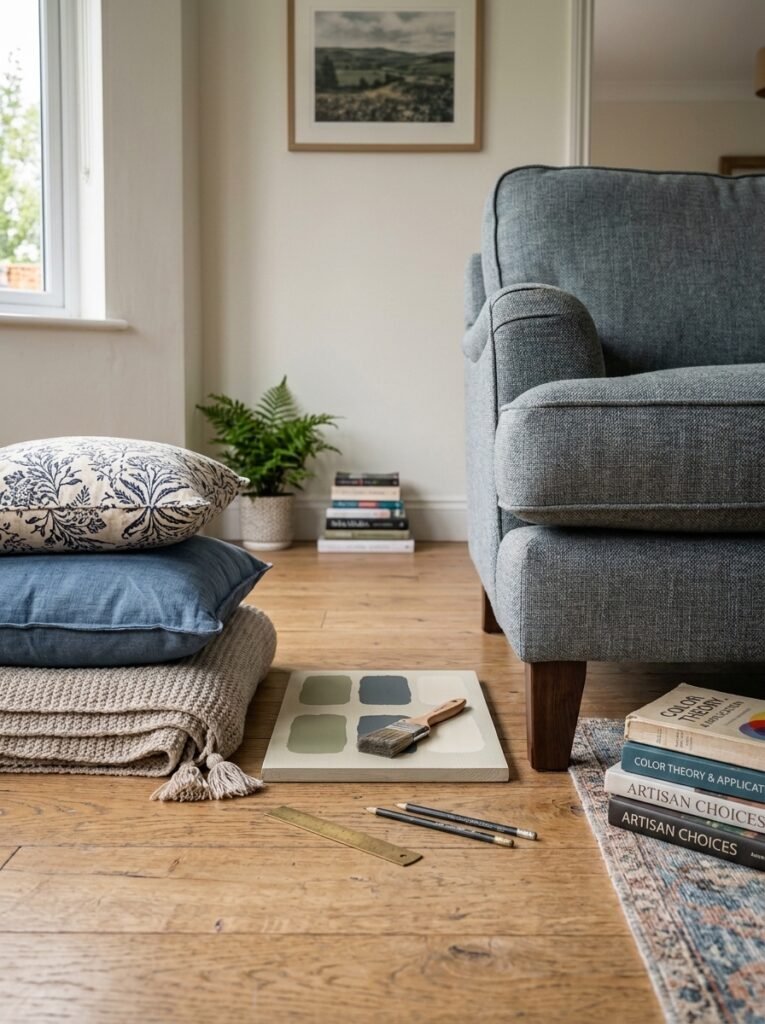
The single most useful idea here has nothing to do with what is fashionable. It is that different parts of a room move at different rates, and the cost of being wrong varies enormously.
- Fast and cheap to reverse. Cushions, throws, art, small accessories. Weeks to change, almost nothing to undo
- Medium. Paint, rugs, curtains, lamps, a single chair. A weekend and a modest bill
- Slow and expensive. Sofas, large case goods, built-in joinery. Years, and a genuine cost to get out of
Most trend regret comes from a mismatch. Putting a fast-moving shape into a slow-moving purchase is the classic error. It is how people end up with a sofa they can date to the month.
The rule that follows is simple. The more permanent the item, the more conservative its shape should be. Let the cheap layers carry whatever is current.
Renting changes the maths rather than the principle. Paint may be off the table, which pushes everything into the fast layer, and that is not a disadvantage. A renter following only the cheap trends stays current far more easily than an owner who committed to joinery.
One useful habit before spending: search a look on Google Trends and set the range to five years. It takes a minute and shows whether interest is still climbing or already sliding down the far side.
Arriving: Walls of Books and Pattern on the Sofa
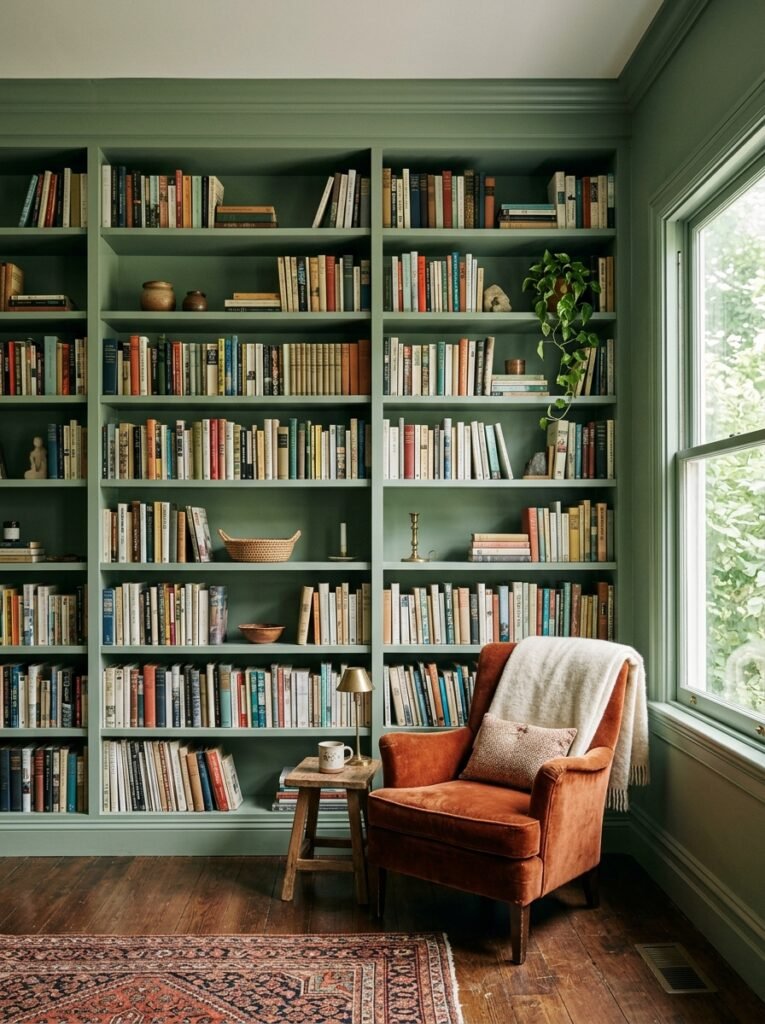
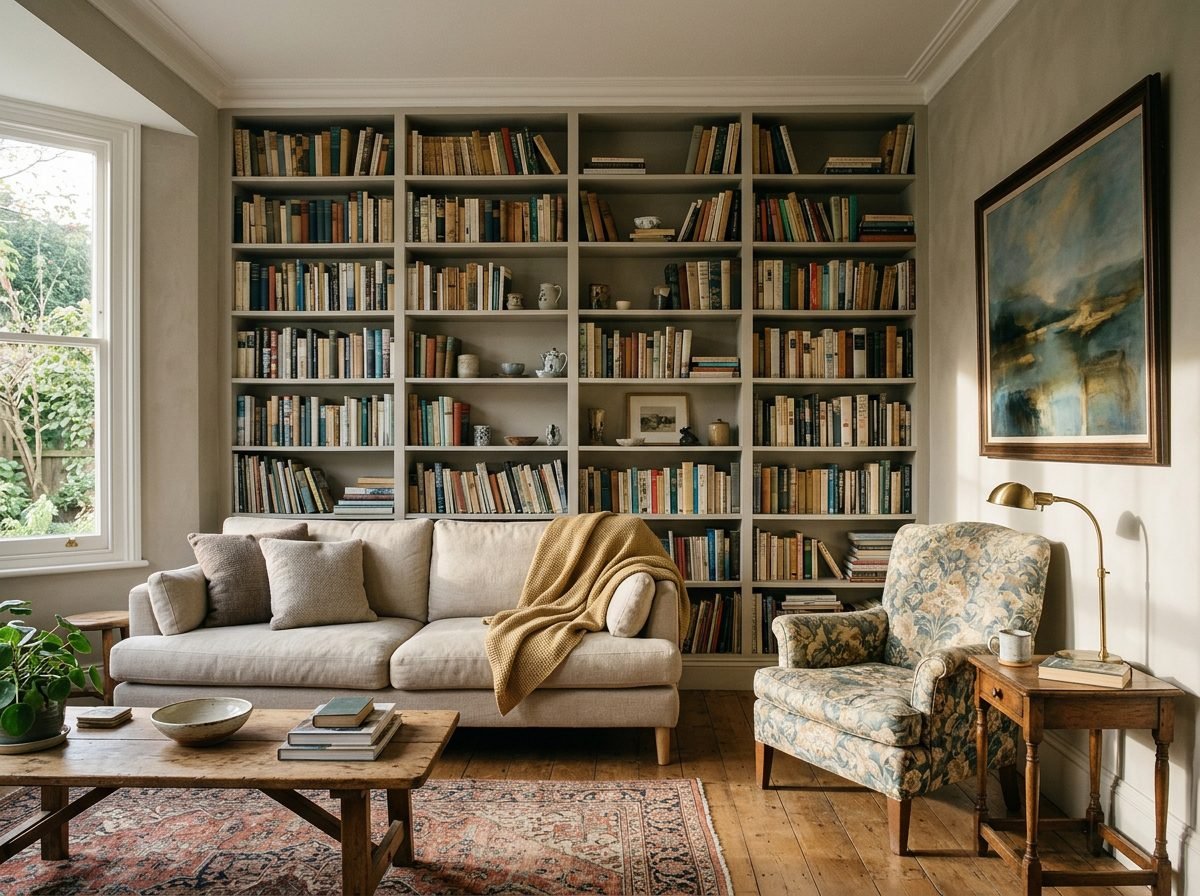
The library wrap. Shelving that covers an entire wall floor to ceiling, filled with actual books, has become one of the defining living room moves this year. It does what a feature wall was supposed to do, except with depth, texture and content that belongs to the person living there.
The affordable version is two or three tall bookcases pushed together. Paint them the same color as the wall behind, and they read as joinery rather than furniture.
Pattern is back on seating. Plain upholstery has dominated for roughly a decade. Florals, stripes and skirted armchairs are returning, including the frilly shapes that were written off as dated a few years ago.
Designers also point out a practical advantage that plain fabric never had. A patterned sofa hides marks and wear far better, which matters in a room that gets used.
One caution. Pattern on seating is a fast-moving shape sitting on a slow-moving purchase. Trying it on one armchair costs a fraction of trying it on a three-seat sofa.
Arriving: Lower Seating and Softer Shapes
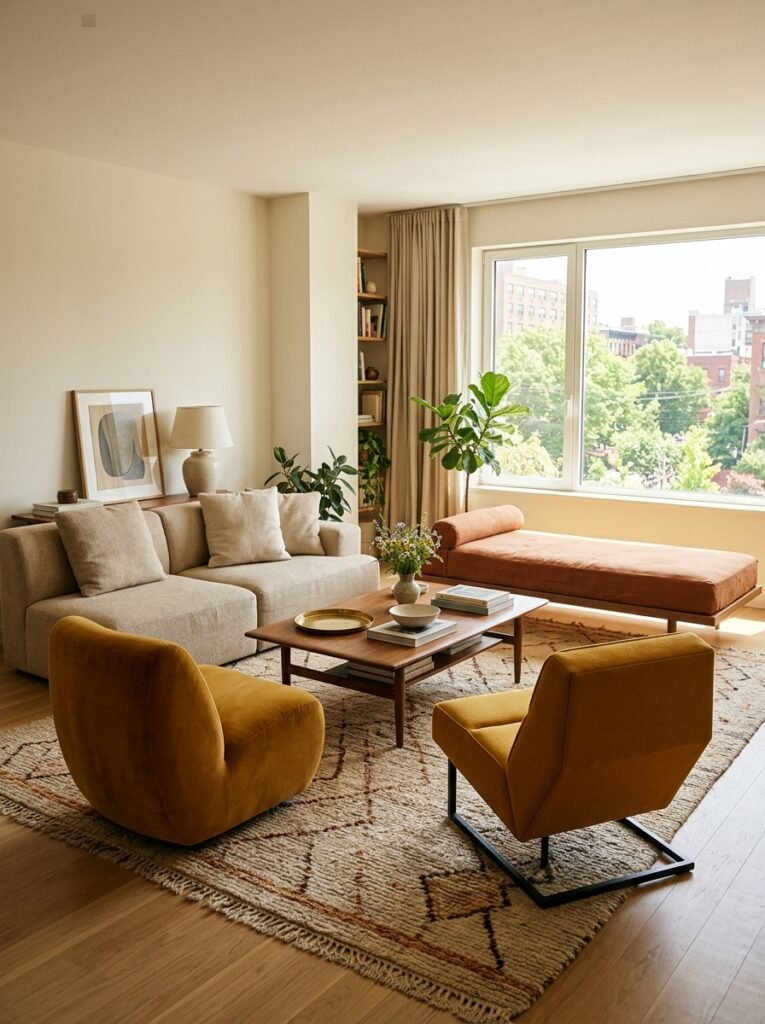
Low-slung sofas and daybeds are replacing the tall, formal three-piece arrangement. The reason is partly sociability and partly sightlines, since lower backs keep an open plan room feeling open.
There is a practical check worth doing before ordering. Low seats are harder to get out of. A seat height that feels relaxed in a showroom can be a daily irritation for anyone whose knees object.
Alongside that, single sculptural chairs are replacing matched sets. Two chairs that relate to each other without matching look more collected and, usefully, can be bought a year apart.
Art first. A quieter shift, and the most useful one on this list. Designers increasingly start a scheme with one piece of art rather than a paint chip or a fabric. The practical version costs nothing: buy the art you actually want, pull two colors out of it, then choose everything else from those two.
Arriving: Matte Walls and Quieter Color
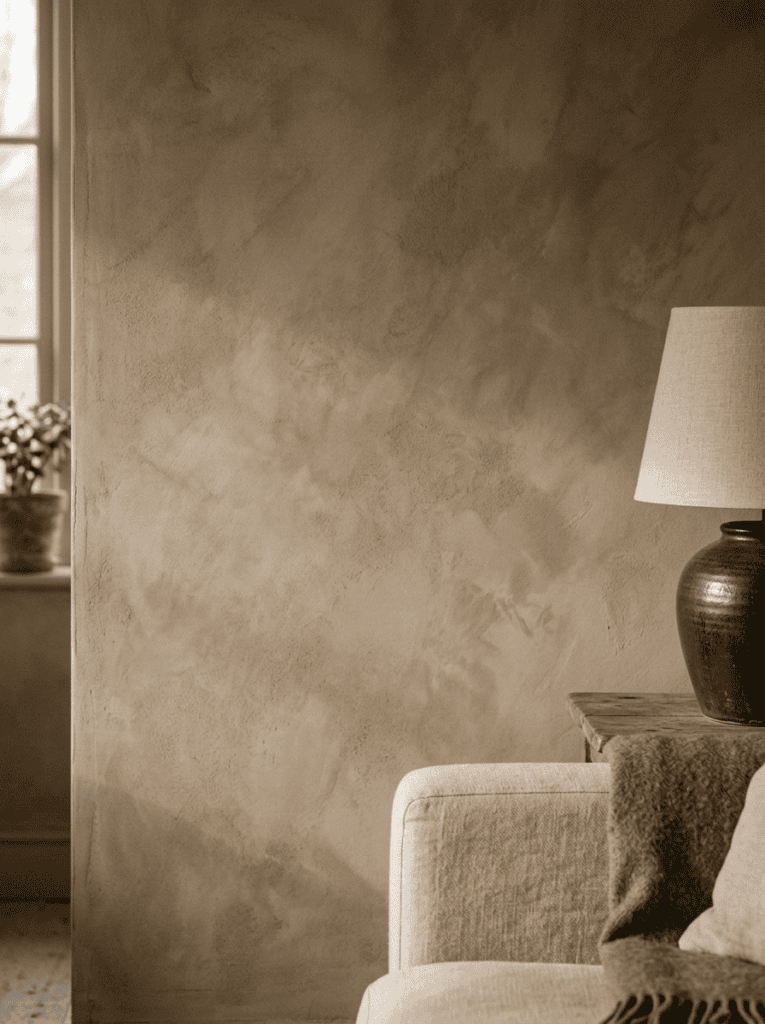
Limewash, clay paint and chalky matte finishes are replacing flat modern emulsion. They give a wall visible depth and movement without any pattern. They also photograph in a way flat paint never does.
One wall is usually enough. These finishes carry a lot of visual texture. A whole room of it can feel closer to a cave than a living room, especially with only one window.
Two warnings. These finishes are genuinely hard to paint over, so sample boards matter more than usual. And they are the wrong choice on a wall that gets touched, because they do not wipe clean.
Color is moving in the same direction. The very saturated brights of the early 2020s are giving way to muted versions of the same hues. The replacements are more complex and less shouty. Paint industry commentary this year describes the shift as quietly colorful rather than bold.
That has a practical consequence. The muted version of a color you like will stay looking current considerably longer than the saturated version of it.
Peaked, and Safe to Commit To
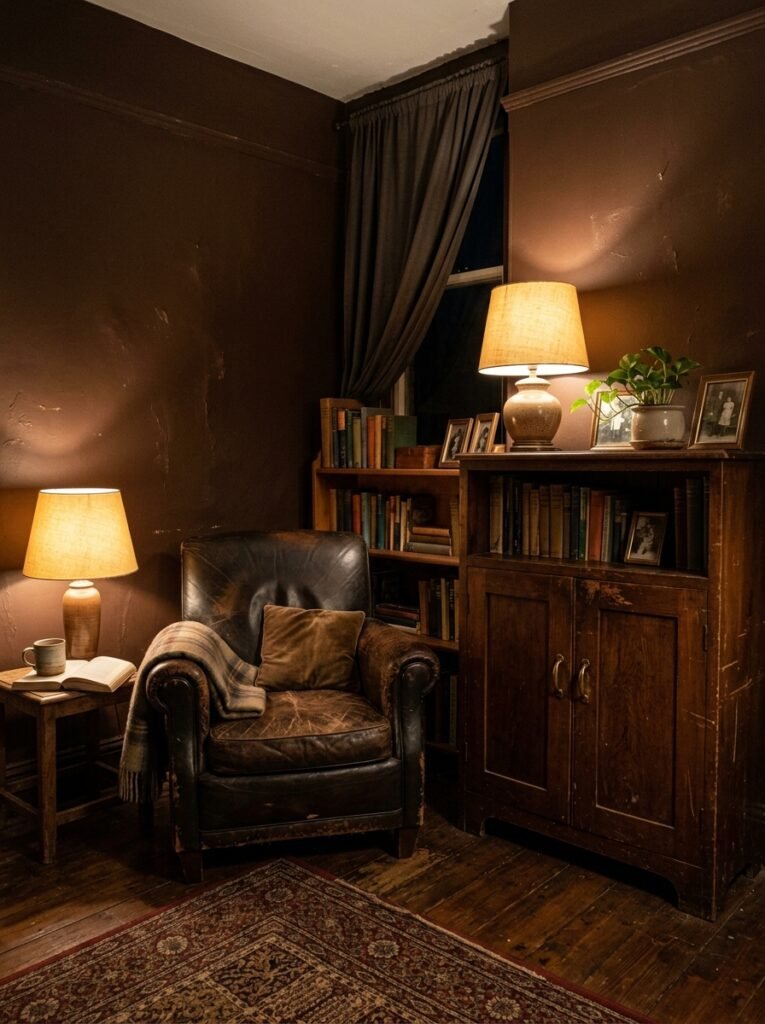
Peaked does not mean over. It means the risky early phase has passed, the look is established, and it is unlikely to reverse suddenly. For expensive items, this is the safest place to spend.
Dark, warm rooms. Chocolate brown and burgundy moved from bold to mainstream this year, and deep enveloping rooms are now firmly normal rather than daring. If that is the direction, there is a full walkthrough of getting it right in this guide to rooms built on deep, warm color.
Vintage and secondhand. This one has been climbing for years, and it now has an economic driver rather than only an aesthetic one. Designers this year point to tariffs keeping new furniture prices high, which pushes buyers toward secondhand for the pieces that would otherwise be out of reach.
That matters because trends with a practical cause behind them outlast trends that are purely about how something looks.
Leaving: The Shapes That Date a Room Fastest
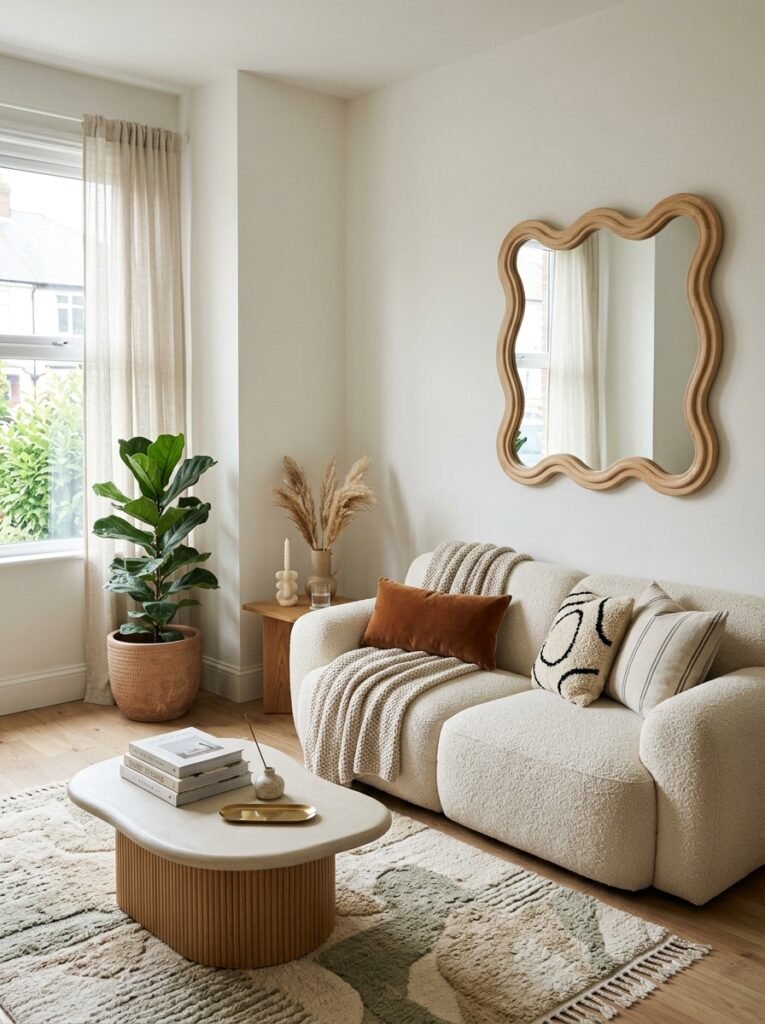
Wavy and scalloped everything. The most-cited casualty in designer surveys this year, and the strongest example of a shape that pins a room to a specific moment. Straight backs and gradual curves survive. Ripples do not.
Oversized cloud sofas. The enormous low-armed marshmallow sofa that filled feeds for several years. Comfortable, awkward to place, and now firmly associated with one period.
Huge sectionals and matched sets. Both are on the way out for the same reason, which is that they commit an entire room to one decision. A matched set also ages all at once, so there is no way to update it gradually.
Cane and rattan used everywhere. Worth being precise here, because the material is not the problem. The saturation is. One rattan piece in a room still reads well. A rattan sofa alongside a rattan mirror, a rattan lamp and a rattan side table reads as a phase.
Fluted panelling was already fading by the middle of this year, according to mid-year designer round-ups.
Leaving: The Palette Everyone Has Had Enough Of
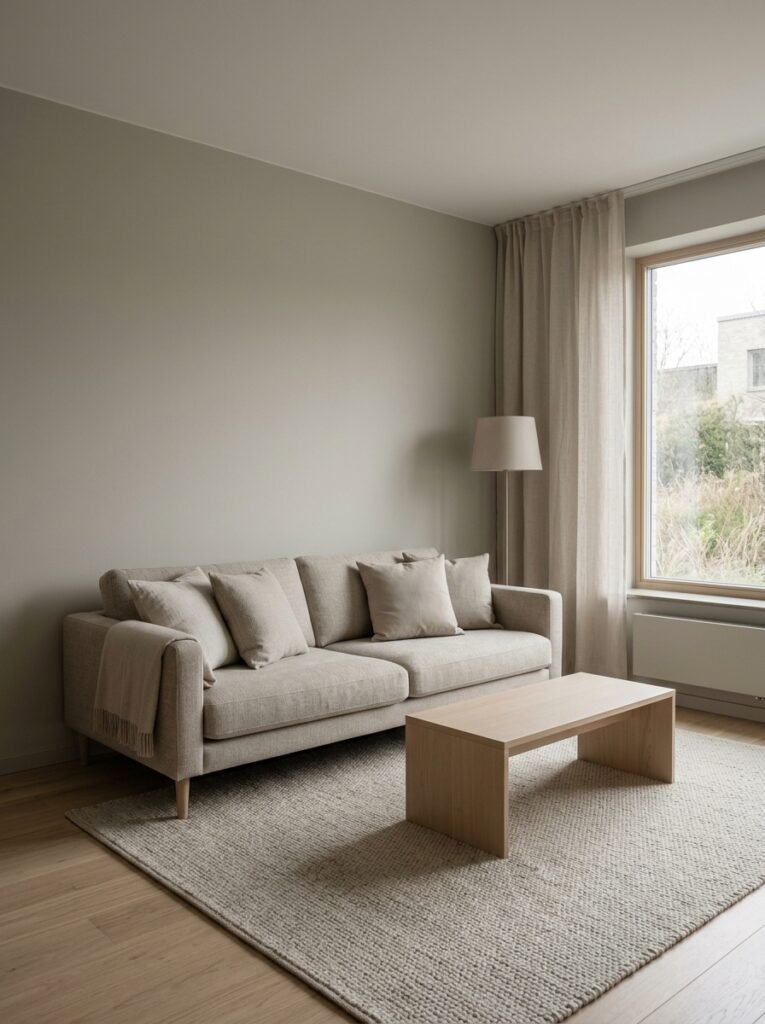
The fully neutral room is the big one. Tone-on-tone beige, greige and warm white schemes have run a long time. Designers now describe them as limiting rather than calm.
Cold minimalism goes with it. All-white rooms with nothing personal in them are on the way out. What replaces them are rooms showing evidence of the people who use them.
At the other end, very saturated brights are also fading. Electric blue and full-strength sunny yellow are giving way to the muted versions described earlier.
If the room in question is already beige, none of this requires repainting. A neutral base is still a perfectly good base. What is out of favor is the beige room with nothing else happening in it. That gets fixed by adding one strong anchor, not by starting again.
Questions Worth Asking Before Buying Into Any of It
Should I follow trends at all? Only in the layers that are cheap to change. A room built entirely from current looks needs redoing in three years, which is an expensive way to stay fashionable.
How do I tell a trend from a fad? A fad is a shape. A trend is a direction. A wavy mirror is a shape and will date. The move toward warmer, more personal, more collected rooms is a direction, and directions run far longer.
Is dark and moody finished? No. It has moved from bold to normal, which is the phase where it becomes safe to spend real money on.
Is my beige living room dated? Not as a base. What has fallen out of favor is the room where beige is the entire idea.
What is the cheapest way to look current? Textiles and one wall of paint. Both are reversible in an afternoon, and between them they carry most of what people register as style.
How long do living room trends last now? Shorter than they used to. Shape-led micro-trends move through in a couple of years. Broader directions run considerably longer.
What Each One Costs to Undo
This is the part worth keeping. Before committing to anything above, price the exit rather than the entry.
- Cushions and throws: an afternoon and pocket money
- Art: a nail hole
- Paint: a weekend and a gallon
- Rug: one delivery, and a resale listing if it was decent
- Curtains: a weekend, more if the track changes
- One armchair: a resale listing and some patience
- Sofa: a genuine problem, and the reason plain shapes keep winning
- Built-in shelving: a carpenter, twice
Resale is the other half of that sum. Solid wood, recognised design pieces and known brands hold their value. That makes the real cost of changing your mind fairly small. Flat-pack and heavily trend-led shapes usually do not, which quietly makes them the more expensive choice.
Match the risk to the reversibility. Everything newest and least proven belongs in the top half of that list. Everything expensive belongs at the calm end of the scale.
Whichever Way the Room Goes
Every trend named here will be replaced, which is the definition of the word. That is not a reason to ignore them, only a reason to be careful about where they land.
The rooms that hold up have quiet expensive things. The cheap things carry the personality. A plain sofa and a patterned cushion age well. A patterned sofa and a plain cushion age together, and quickly.
Buy the big pieces for the next decade. Buy the small ones for this year. And check anything you are unsure about against real search interest before the money leaves the account.