10 Rooftop Decor Ideas That Work With the Wind, Sun, and Sky
A rooftop is not a patio that happens to be upstairs. It plays by different rules. There’s no tree cover, no fence, no house wall blocking the wind just you, the sun, and whatever the weather decides to do. I’ve seen people carry their ground-floor decorating instincts up to the roof and watch the results literally blow away within a week.
So this list does two things. Each idea makes your rooftop more beautiful, yes but each one also answers at least one of the four challenges every rooftop faces: relentless sun, constant wind, total exposure, and the weight your roof can safely carry. One note before anything else: if you’re planning heavy items like large planters, stone furniture, or a fire pit, confirm what your roof structure can hold first. It’s a boring step that saves you from expensive problems.
Create a Comfortable Lounge Area

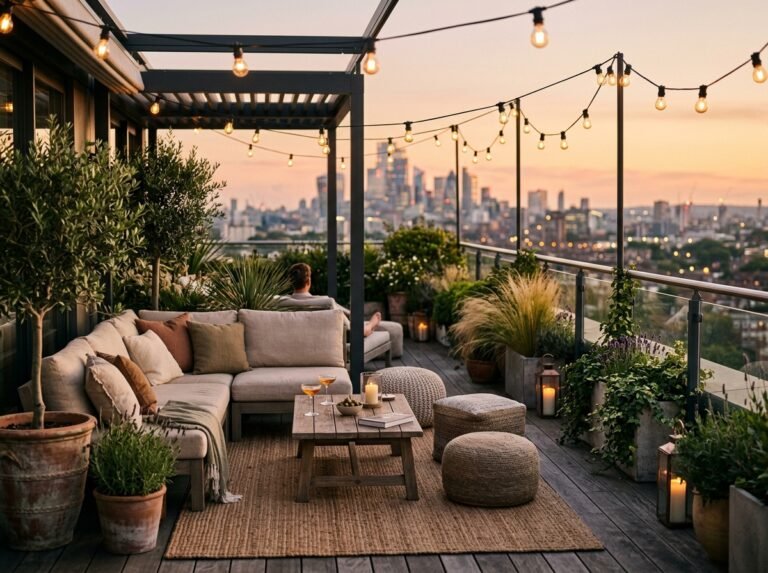
The first decision on a rooftop is seating, and up here the rule is: go low and go heavy. Low-profile sofas and chairs do two jobs at once they sit below the wind that whips across an open roof, and they keep sightlines clear so the view stays the star. Tall-backed chairs act like sails and feel precarious in any breeze.
Weight matters in the opposite way you’d expect: lightweight aluminum-frame furniture is easy to carry upstairs, but it’s also the first thing to tip over. Look for low pieces with some heft, or anchor lighter frames with heavy cushions and a weighted base. Arrange the seating to face your best view on a rooftop, the skyline or sunset is your feature wall, and pointing the sofa at a blank parapet wastes the one thing this space has that no garden does.
Hang String Lights Across the Rooftop
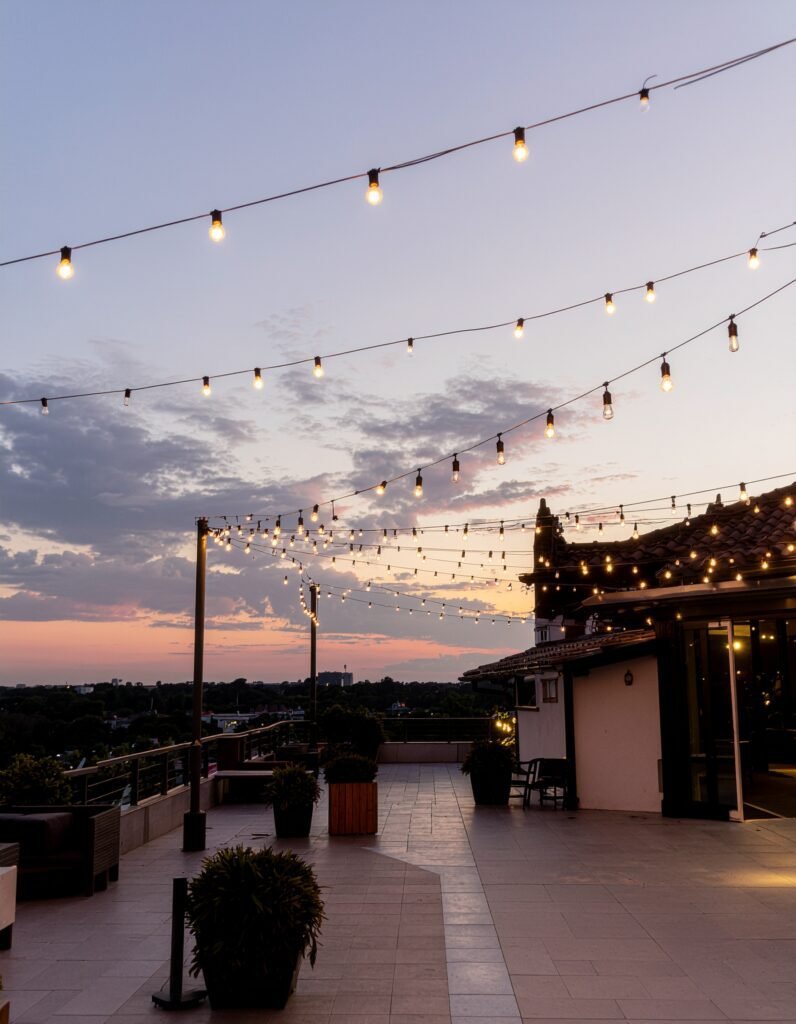
String lights on a rooftop look incredible and fail constantly, because people hang them the way they would in a sheltered garden. Up here, slack lines whip around in the wind and bulbs knock against walls until they shatter.
The fix is tension and anchoring. Run a steel guide wire between solid anchor points first, then zip-tie the light strand to the wire so the cable, not the bulbs, takes the strain. Use shatterproof plastic-shelled bulbs rather than glass they cost slightly more and outlast glass several times over in exposed conditions. If your rooftop has no power outlet (many don’t), solar string lights have improved enormously; mount the panel on the sunniest parapet and you’ll get all-evening light with zero wiring.
Add Large Potted Plants and Tree

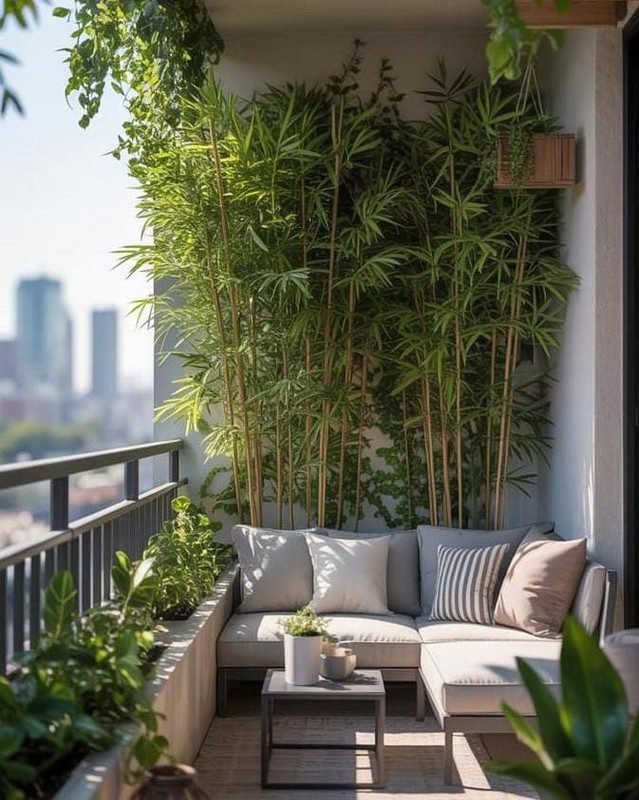
Plants on a rooftop have to fight sun and wind that ground-level plants never see, so choose fighters: tall ornamental grasses that move beautifully in the breeze instead of snapping, bamboo for fast green screening, olive trees and succulents for heat tolerance. Delicate broad-leaf plants will scorch and shred within a season.
Two rooftop-specific rules. First, weight: a large pot of wet soil can weigh well over 100 kg, so spread big planters around the edges of the roof near load-bearing walls rather than clustering them in the unsupported middle. Lightweight fiberglass or resin pots filled with a perlite-mixed soil cut the load dramatically. Second, wind again: wide, squat pots survive; tall narrow ones topple. If a pot is taller than it is wide, it needs a heavy base or a fixing point.
Install a Pergola or Shade Sail
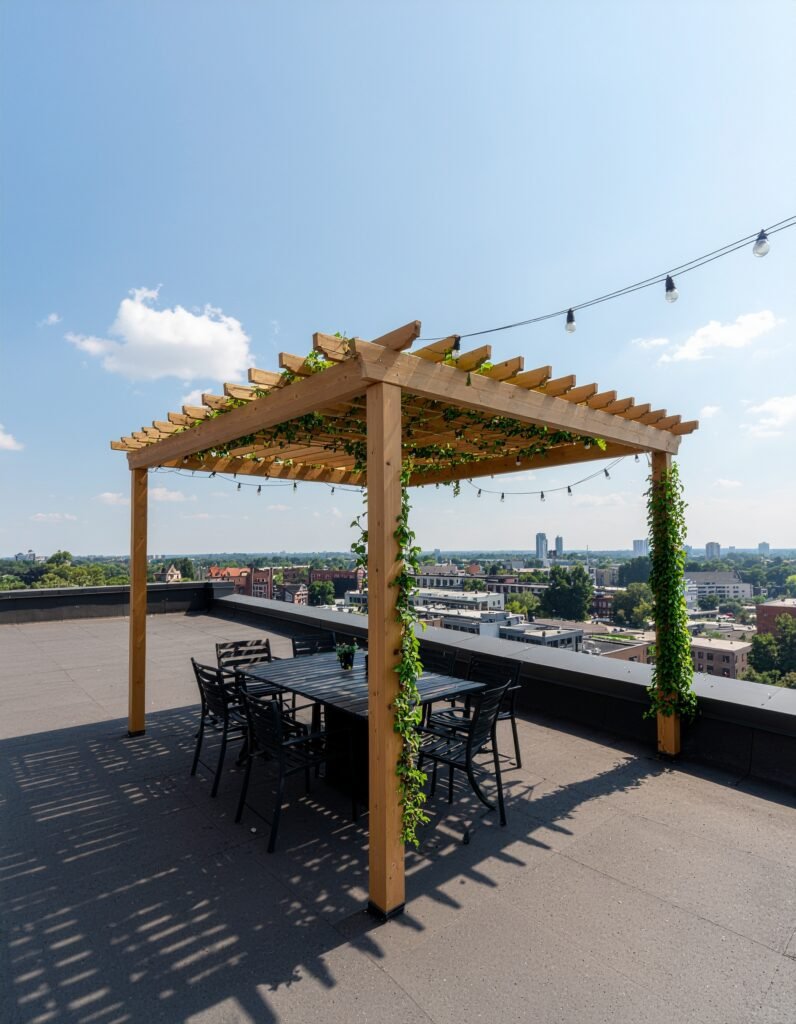
Shade isn’t optional on a rooftop without it, the space is unusable from late morning to late afternoon for half the year. The choice between a pergola and a shade sail comes down to wind and permanence.
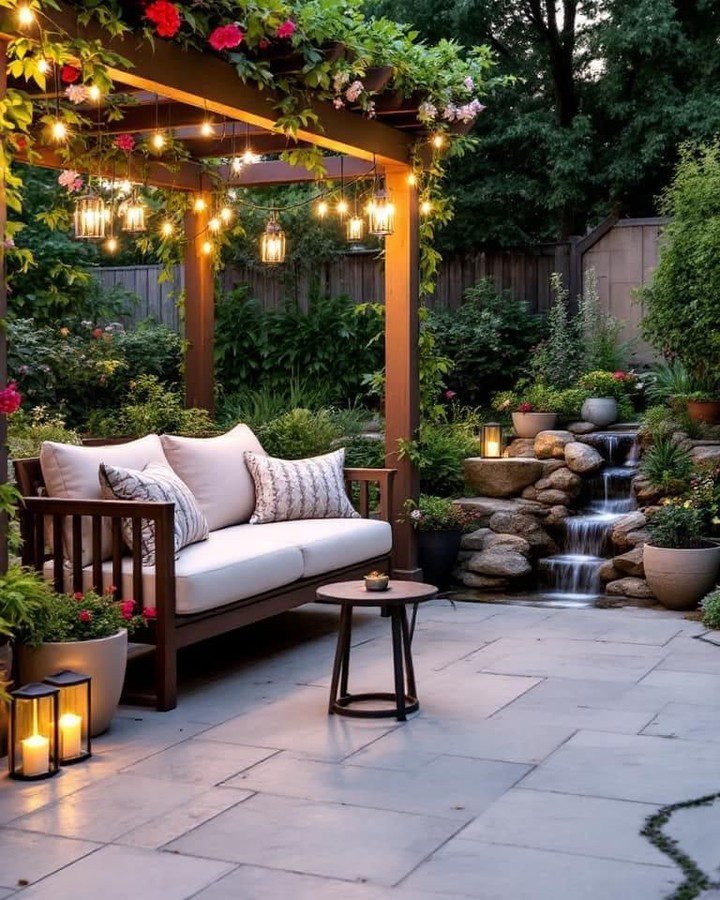
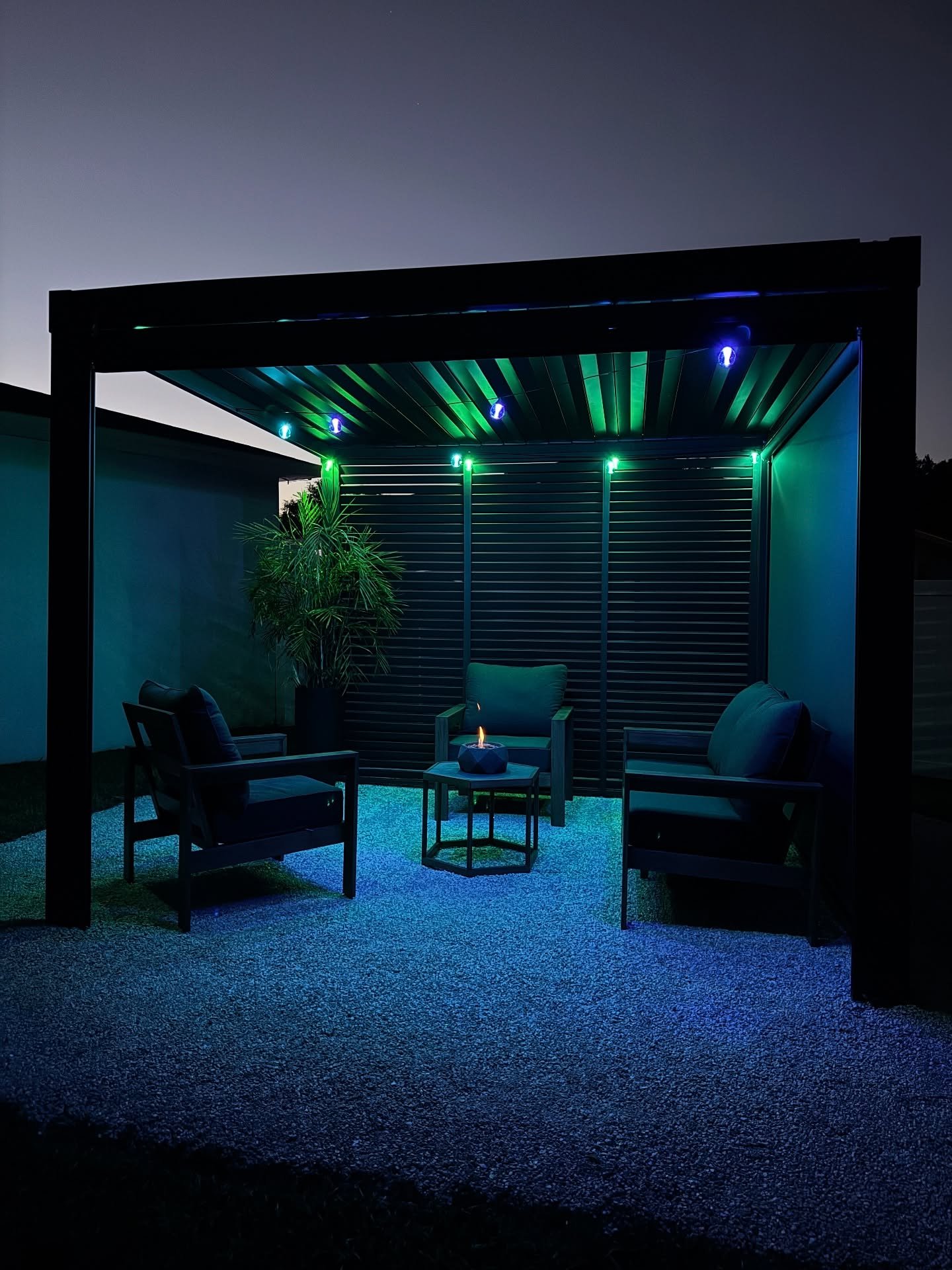
A shade sail is the budget-friendly, renter-friendly option: light, quick to install, and easy to take down before a storm which you should, because a fixed sail in high wind puts enormous strain on its anchor points. A pergola is the long-term answer: it gives you architecture, a frame for lights and climbing plants, and shade that doesn’t flap. But on a rooftop it must be properly anchored or weighted never just standing on its own feet and depending on where you live, a fixed structure on a roof may need permission from your building or local authority. Check before you build, not after.
Add an Outdoor Dining Area
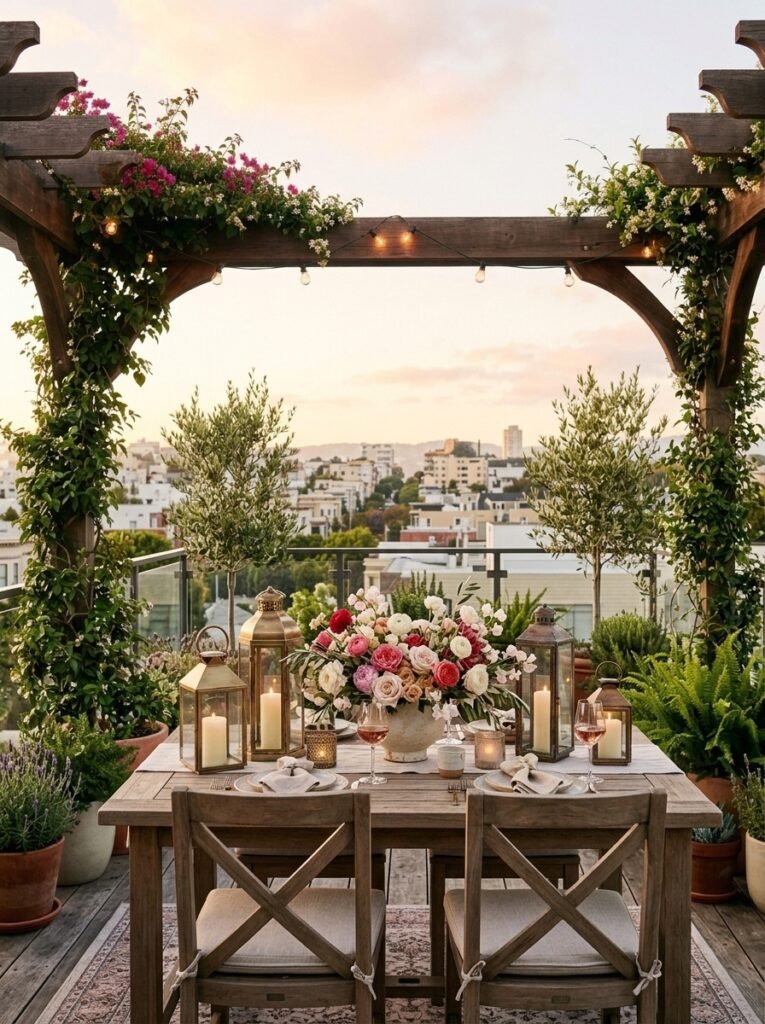
Dinner on a rooftop at sunset beats any restaurant but the wind has opinions about your table setting. Skip the tablecloth entirely (it’s the first casualty), use placemats with some weight, and choose a hurricane lantern over open candles, which won’t stay lit past the first gust.
For the furniture itself, a sturdy table with a solid or slatted top works better than glass, which is both heavy to carry up and unnerving in wind. If your rooftop hosts both lounging and dining, put the dining spot in the more sheltered corner people linger over meals and feel every draft, while a lounge area tolerates a breeze much better.
Use Outdoor Rugs to Define Spaces
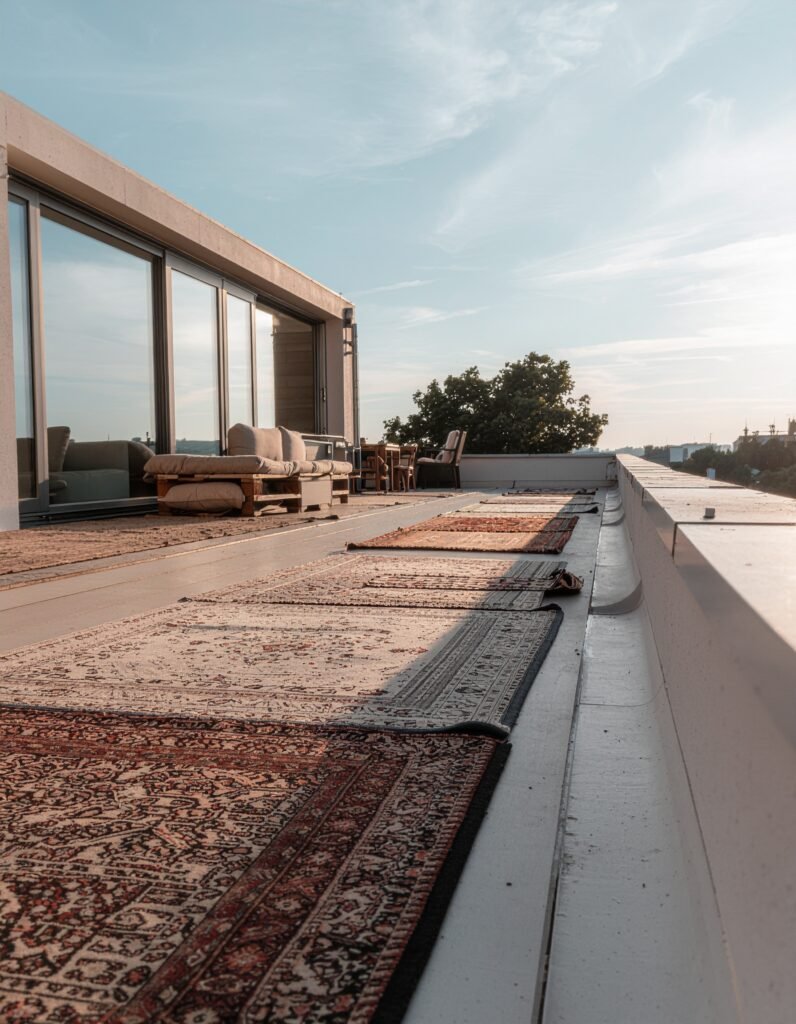
A rooftop is usually one open rectangle, and without walls or planting beds to divide it, everything blurs into one undefined surface. Rugs are the cheapest zoning tool you have: one under the lounge, one under the dining table, and suddenly the roof reads as rooms rather than a slab.
Rooftop-specific buying advice: choose flat-woven rugs and secure the corners rug grippers, furniture weight, or double-sided outdoor tape because a rug is just a large kite waiting for clearance. Lighter colors also stay cooler underfoot, which matters more up here than anywhere else; a dark rug in full rooftop sun gets genuinely too hot for bare feet by mid-afternoon.
Create a Rooftop Bar or Drinks Station
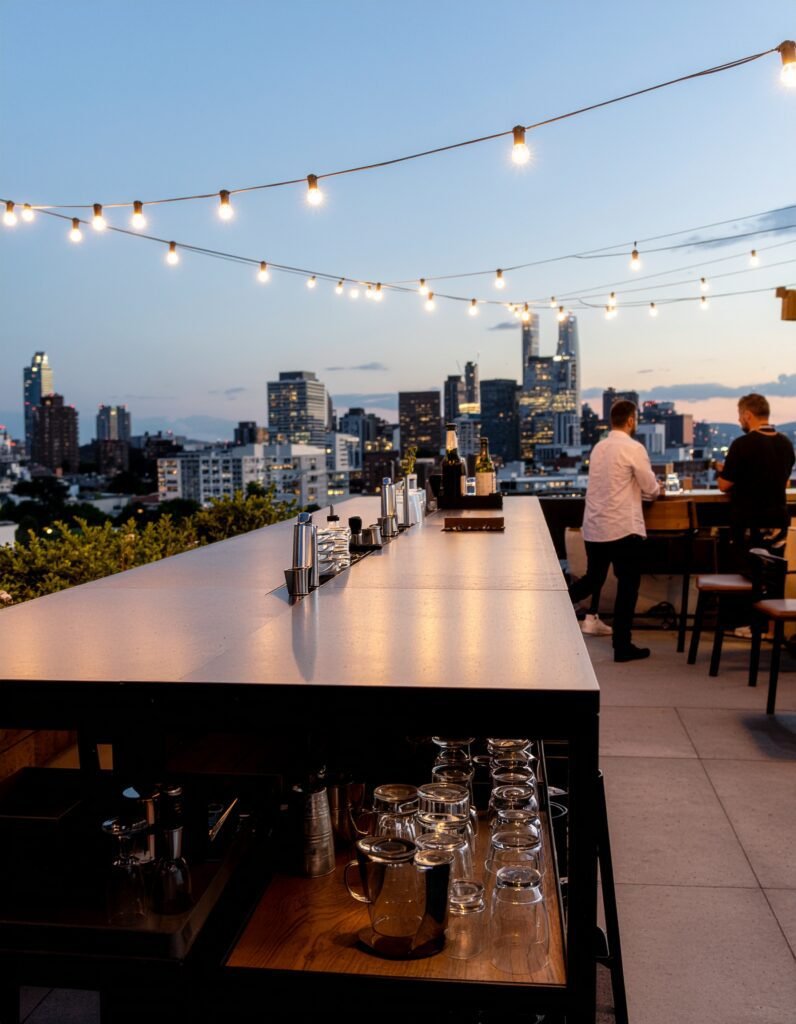
Here’s a rooftop truth nobody mentions: every forgotten glass, every snack, every refill means a trip downstairs. A drinks station solves the single biggest practical annoyance of rooftop entertaining.
It doesn’t need plumbing or a built-in counter. A weatherproof sideboard or console along the parapet wall, stocked with glasses, a tray, and a cooler box, does the job and doubles as serving space for food. Style it with one plant and a small lantern, run a strand of lights above it, and it becomes a destination rather than storage. If you entertain often, an insulated drinks trolley you can wheel out and back inside is the most practical version of all, since nothing valuable lives outside permanently.
Add a Fire Pit or Outdoor Heater
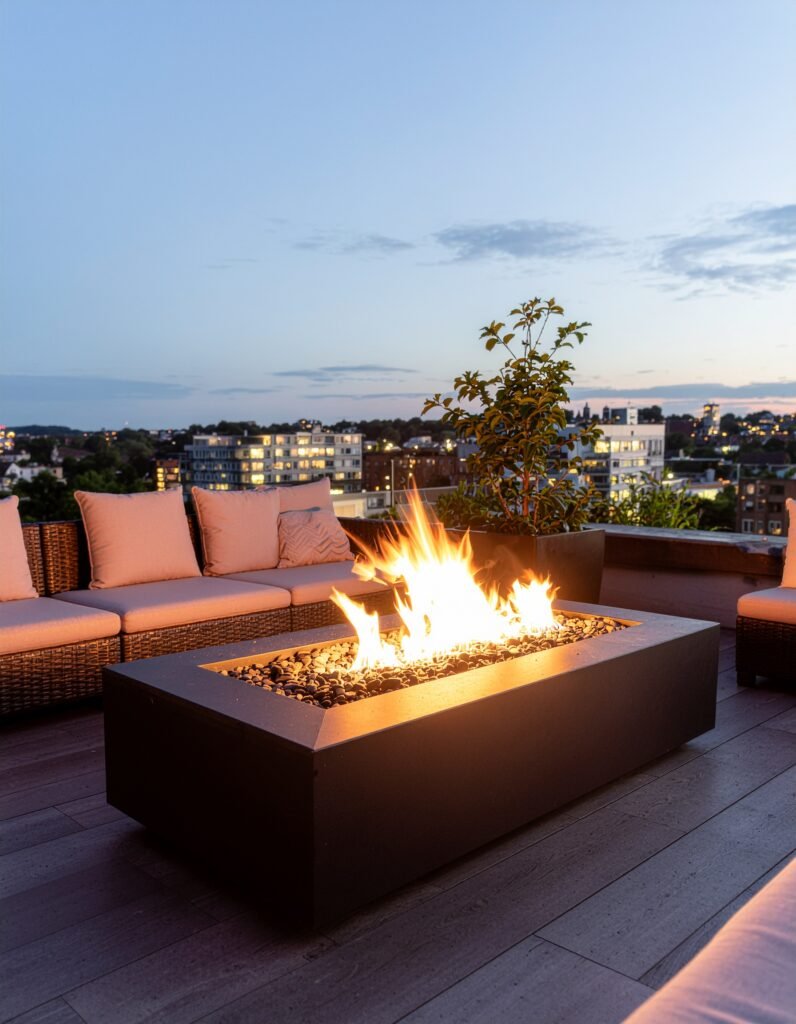
This is the one idea on this list where rooftops demand real caution. Open flames on roofs are restricted or outright prohibited in many buildings and cities and for good reason. Before buying anything, check your building rules and local regulations.
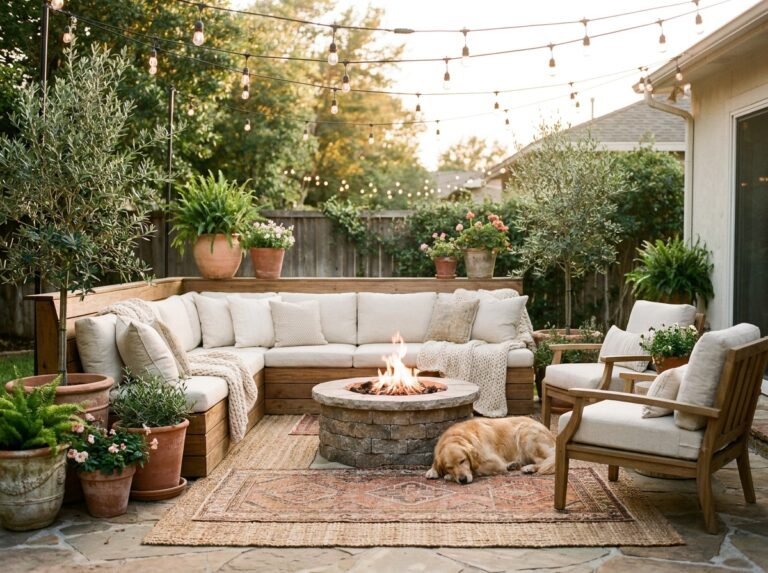
In most rooftop situations, the smart choices are flameless or contained: an electric patio heater (zero emissions, zero sparks, fine under a pergola), or a smokeless gas fire table where rules allow, which gives you the gathering-point magic without flying embers in the wind. Wood-burning pits the default choice for backyards are usually the wrong answer up here. If warmth for cooler evenings is the real goal, a basket of outdoor blankets next to the sofa solves 80% of the problem for a fraction of the cost.
Style With Lanterns and Candles
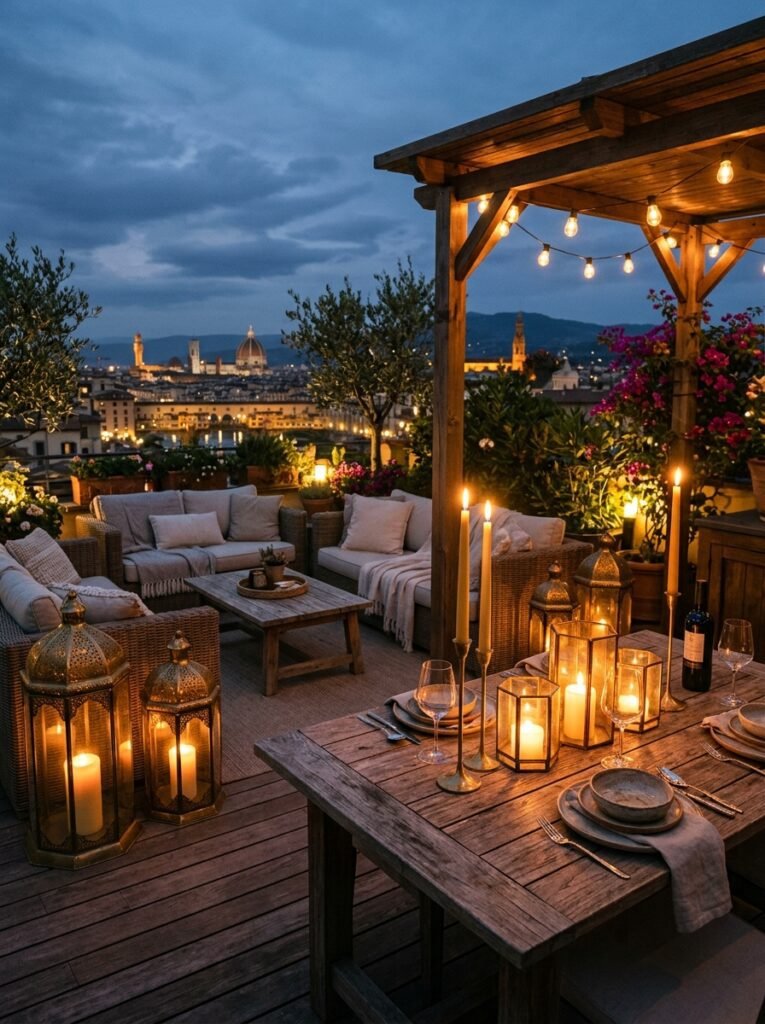
Low-level light is what makes a rooftop feel intimate instead of exposed once the sun drops. But the wind that defines every other choice up here rules out naked flames almost entirely a lit candle on an open rooftop lasts about ninety seconds.
The workaround is simple: lanterns with fully enclosed glass for real candles in calm corners, and flameless LED candles everywhere else. Modern LED candles flicker convincingly, run on timers so they switch on at dusk by themselves, and can sit safely along a parapet edge where you’d never risk a flame. Use a few large floor lanterns at the corners of your seating area to mark the space, and keep the small stuff grouped on tables where it won’t take flight.
Add Outdoor Curtains or Privacy Screens
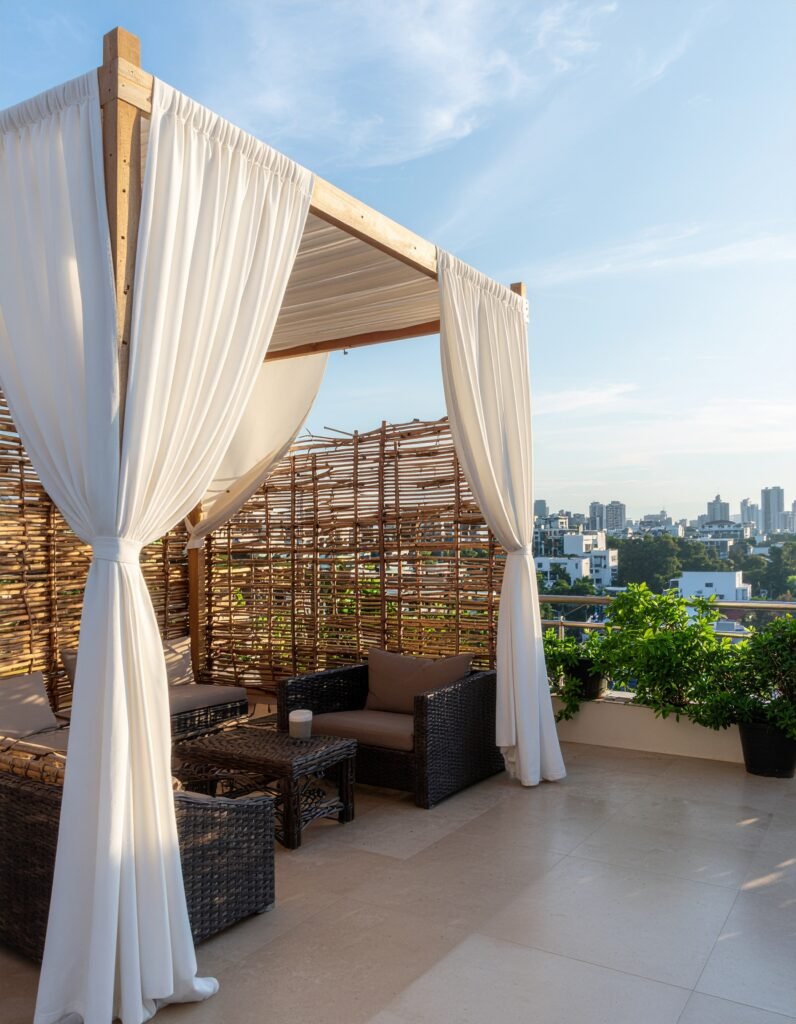
Total openness is the rooftop’s gift and its problem. The same exposure that gives you the view also means the neighboring buildings get a view of you. Screening fixes that — and as a bonus, it tames the wind.
Outdoor curtains hung from a pergola frame are the softest option: light, weather-resistant fabric in white or a warm neutral instantly makes the space feel like a private cabana. Just fit tie-backs and actually use them, or the wind will. For windier roofs, slatted screens in wood, rattan, or metal work better than solid panels they break up gusts instead of catching them like a sail, and they cast beautiful striped shadows in the afternoon. Screen only the sides that need it; blocking your best view to hide from a building that can’t even see your seating area is a common and entirely avoidable mistake.
Final Thoughts
The rooftops that get used year-round aren’t the ones with the most decor they’re the ones designed for the conditions. Get shade, wind protection, and seating right first, and every layer you add afterward will actually survive long enough to be enjoyed. Start with the problem that’s currently keeping you off your roof too sunny, too windy, too exposed fix that one thing, and build from there.