Small Rooftop, Big Style: Decor Ideas for Compact Spaces
A small rooftop is not really a design problem. It is a measuring problem. Most rooftops that feel cramped are not too small at all. They are furnished at the wrong scale, with pieces sized for a garden that happens to sit at ground level.
Work in actual dimensions and the picture changes quickly. A usable lounge zone needs less room than most people assume. A two person dining setup needs less still. The trick is knowing the real numbers before buying anything. Carrying a bulky sofa back down three flights of stairs is nobody’s idea of a good weekend.
What follows is twelve ideas sized for compact rooftops, along with the measurements that make each one fit.
Start With Multi Functional Furniture
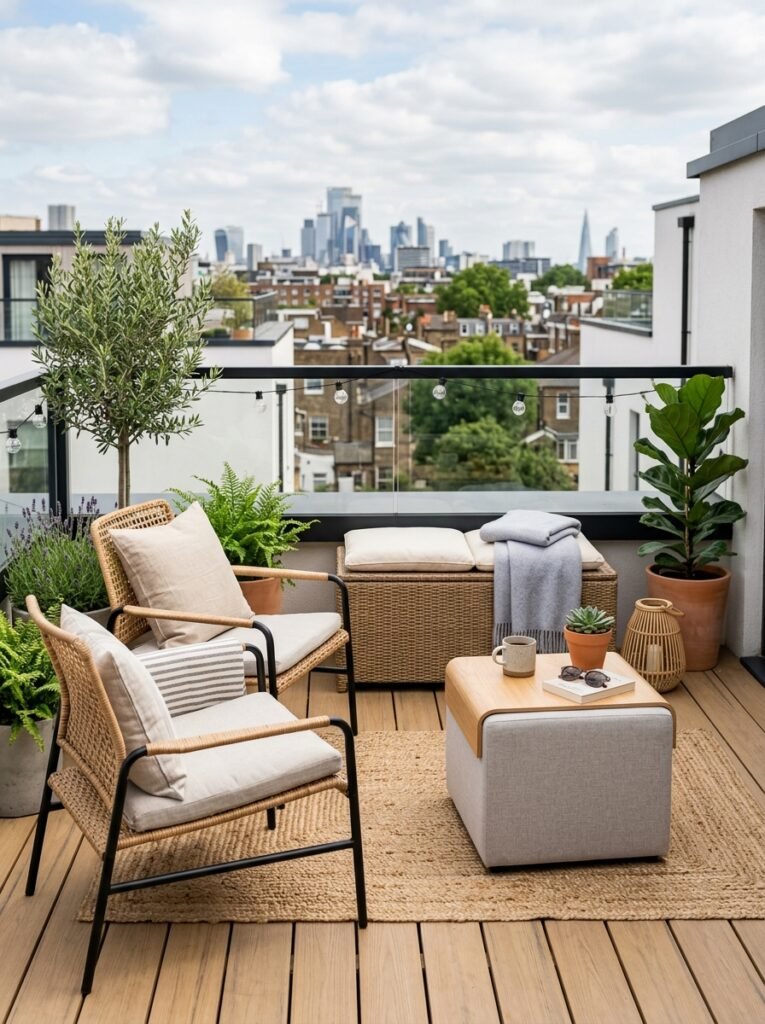
On a compact rooftop, every piece needs at least two jobs. A storage bench is the clearest example. A 40 to 48 inch bench seats two people, swallows cushions and throws, and keeps them dry between uses. That removes the need for a separate storage box entirely.
An 18 inch upholstered cube is the other workhorse. It serves as a footstool, extra seating when friends arrive, and a side table the moment you set a tray on top. Two of them cost less than one small sofa and take up a fraction of the floor.
Measure before you buy, and not just the rooftop. Measure the stairwell, the door width and the tightest turn on the way up. Plenty of outdoor furniture ships flat packed for exactly this reason. Assembling on the roof is far easier than hauling a finished sofa upstairs.
Weight deserves a thought too. Heavy stone and concrete bases are a poor choice on a roof structure. Powder coated aluminium, treated wood and resin wicker give the same look at a fraction of the load. One person can also shift them alone when the layout needs changing.
Add a Cozy Outdoor Rug
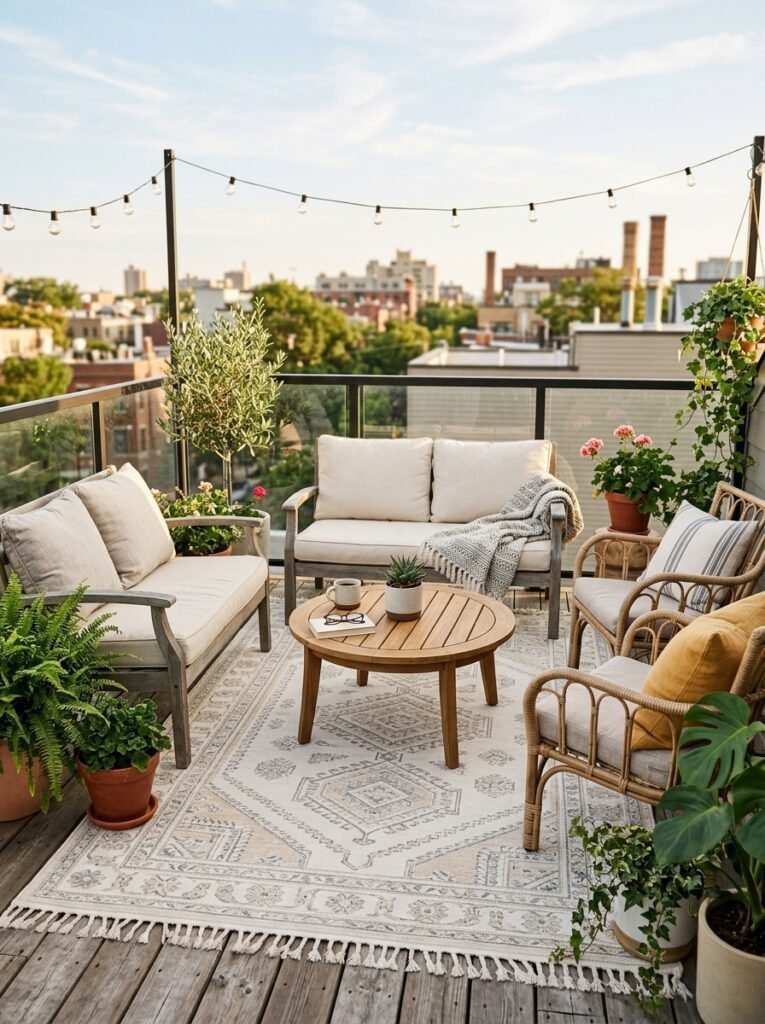
A rug is what turns bare concrete or membrane into a floor. On a small rooftop, 5 by 7 feet is usually the right starting size. Go to 6 by 9 where the seating group is larger. One rule keeps it looking deliberate: at least the front legs of every seat should sit on the rug.
Rooftops bring two conditions a garden does not, and both affect the choice.
Drainage comes first. Roof surfaces are built to shed water toward drains. A solid rubber backed rug laid straight onto the membrane blocks that path and traps moisture underneath. Flat woven polypropylene or recycled PET lets water through and dries fast. Lift it after heavy rain and check what is underneath.
Wind comes second. Anything light enough to roll up is light enough to lift in a gust. Anchor the corners under furniture legs rather than leaving them loose.
Color is worth a moment as well. Pale rugs bounce light and make a small space read larger. They also stay far cooler underfoot than dark ones, which matters on a surface sitting in full sun all afternoon.
Easy Rooftop Decor Ideas With Lighting
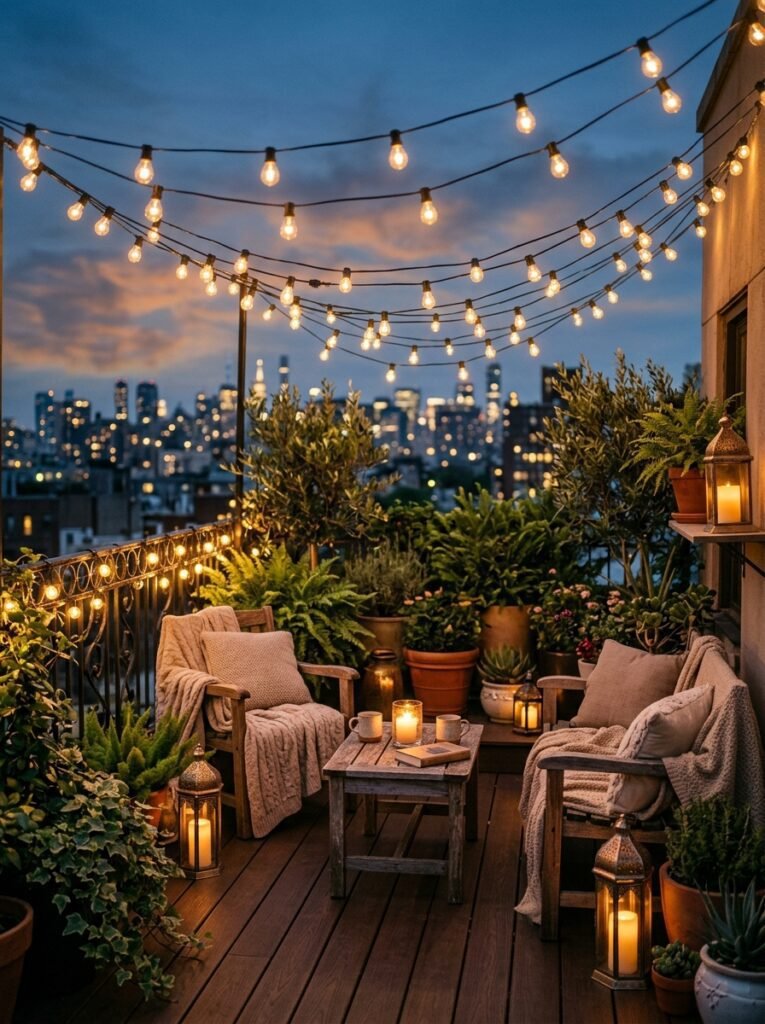
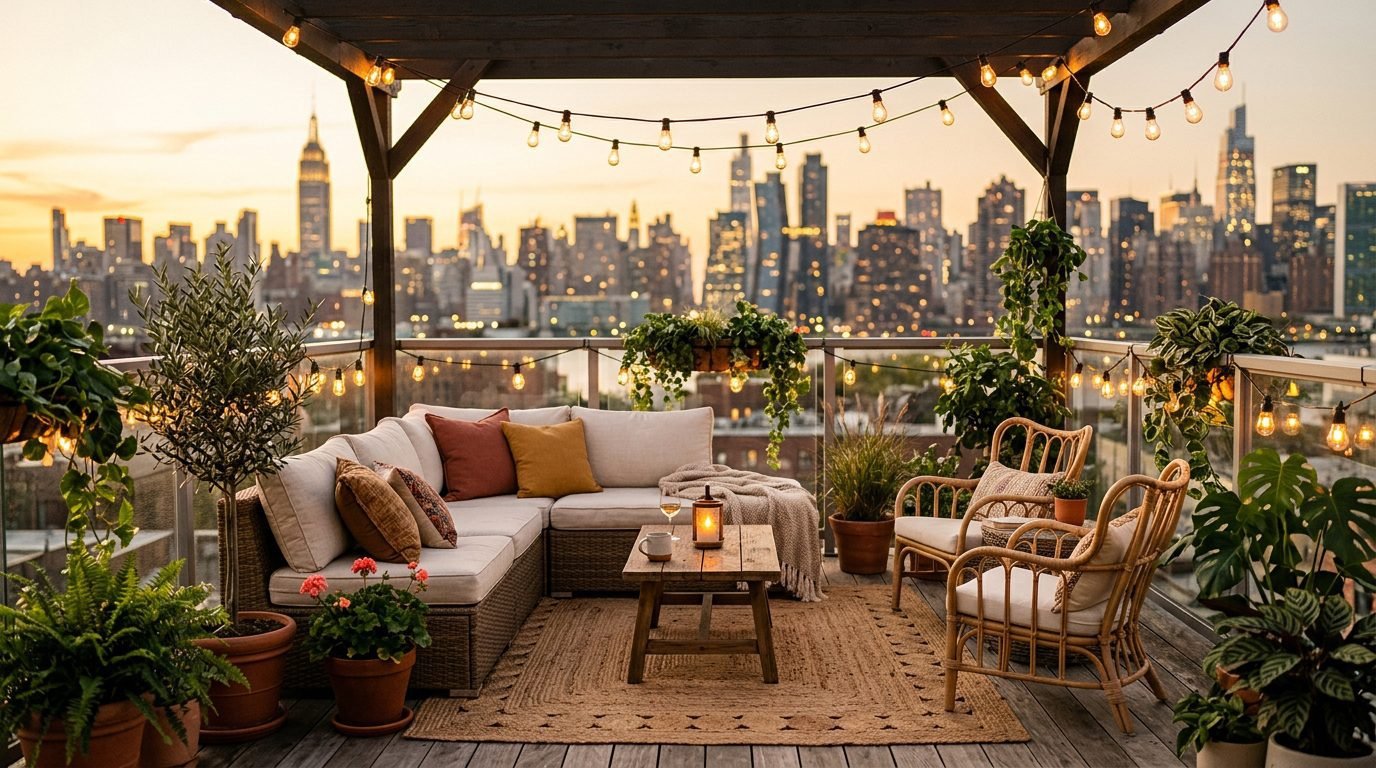
Lighting is where rooftops need a different playbook. There are no trees to hang from and, on most roofs, nothing you are allowed to drill into. Puncturing a roof membrane to fix a hook is how leaks begin.
Work with what is already structural. Railing clamps and screw-on hooks attach to the parapet or handrail without penetrating anything. Two or three planters filled with gravel can hold timber posts upright, giving you anchor points wherever you need them.
Buy strands rated for outdoor use, IP44 or better. Choose warm bulbs in the 2200K to 2700K range, because cool white reads as a parking garage from three floors up.
Solar is the obvious pick when there is no outlet nearby, though the limits are worth knowing. Solar lights need several hours of direct sun and dim noticeably late in the evening. Rechargeable battery lanterns with USB charging give a stronger and more reliable glow.
Layer three sources instead of relying on one. Overhead strands for the canopy effect, a lantern or two at floor level, and a small light on the table. Compact spaces respond far better to several soft pools of light than to one bright fixture.
Go Vertical With Plants
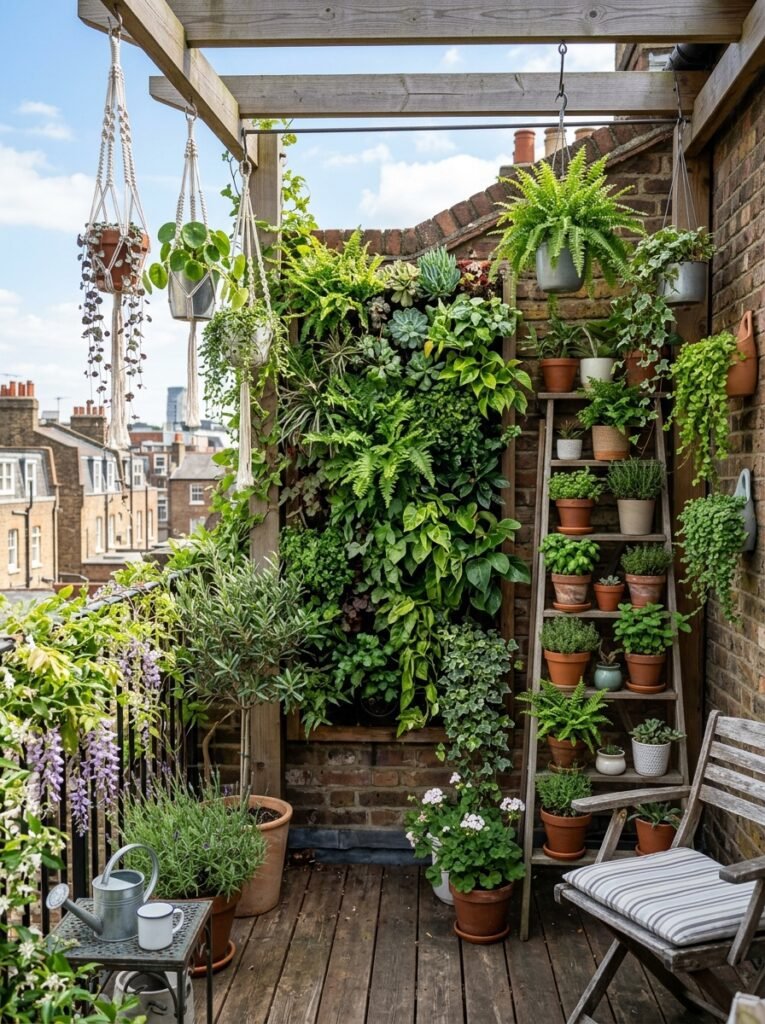
Vertical planting gives a small rooftop its greenery without spending floor area. A three tier plant ladder holds nine pots in roughly an 18 inch footprint. Railing planters use space that was doing nothing at all.
Two rooftop rules come before anything else.
Hang railing planters on the inside of the rail, never overhanging the street or a neighbour’s space. A falling pot is a serious matter from three floors up, and many buildings ban outward mounting outright.
Then think about water weight. A large planter full of wet soil is heavy. Keep the biggest containers near the perimeter over supporting walls, not clustered in the middle of the span. Check with your building manager before adding anything substantial.
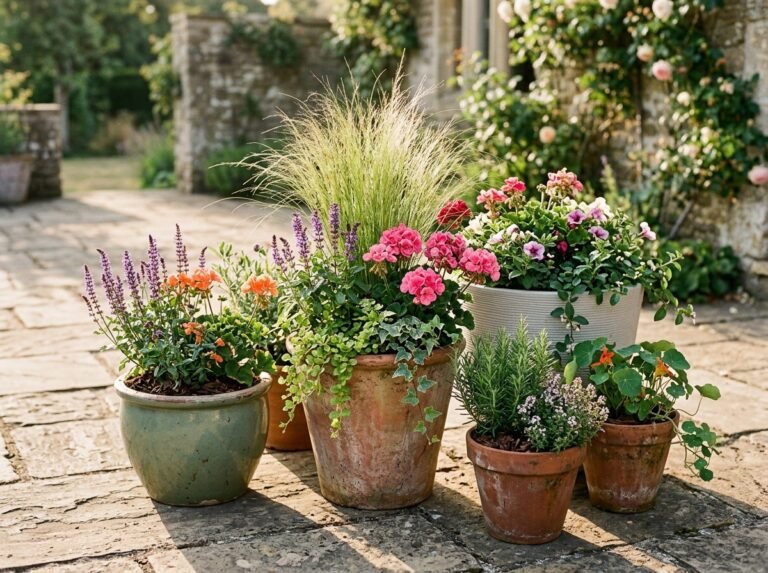
Plant choice is narrower on a roof than in a garden. Full sun and steady wind suit rosemary, lavender, sedum, ornamental grasses and dwarf olive. Large soft leaves shred in wind, so leave those downstairs.
Pots dry out fast up here. Anything under 10 inches across will need daily watering in summer. Go bigger where you can, group pots so they shade each other’s roots, and consider self-watering inserts if you travel.
Build a Small Lounge Nook
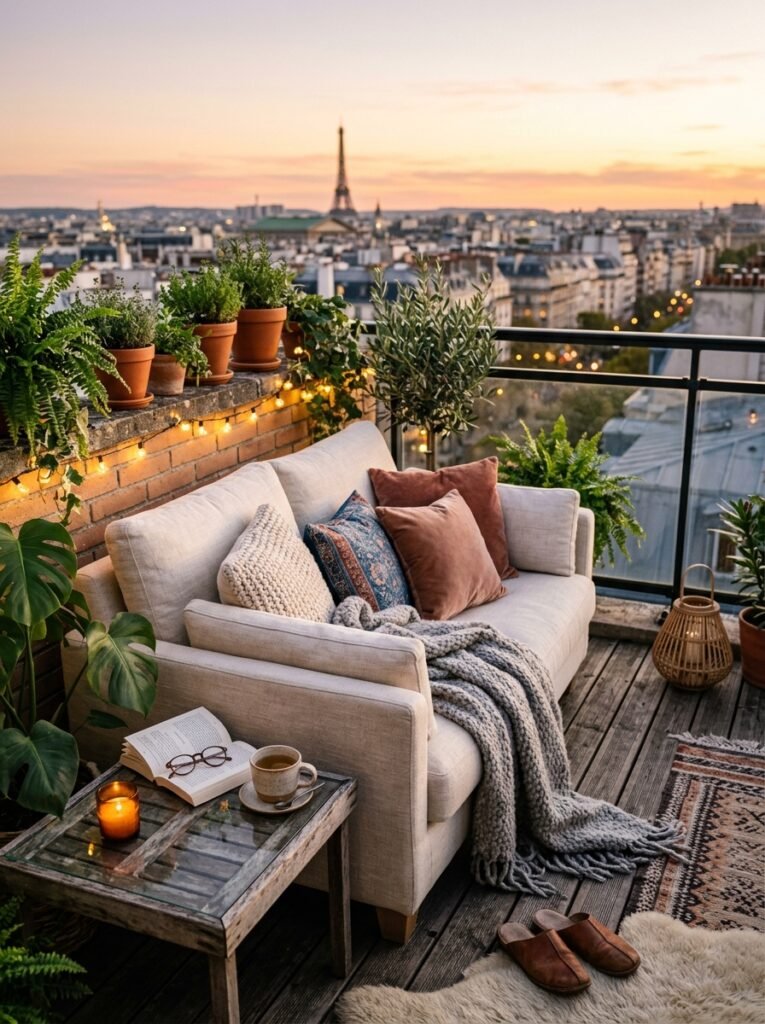
The lounge zone is the reason most people go up to the roof at all. Give it the best corner and the best outlook.
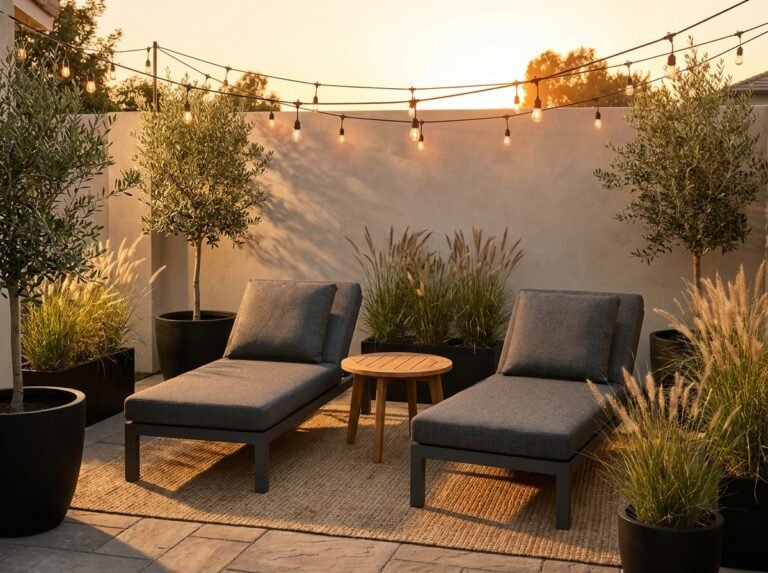
Real numbers make it fit. A two seat loveseat runs about 50 to 55 inches wide. Two lounge chairs set at right angles take a similar footprint and are much easier to carry upstairs. Leave 14 to 18 inches between the seat edge and the coffee table, close enough to reach a drink without stretching.
Keep a clear walkway of at least 30 inches around the group. Small spaces feel cramped when circulation gets squeezed, not when furniture gets larger.
Corners are the right home for seating on a compact roof. Pushing the group into one corner leaves the rest of the floor open. A corner also covers your back, which is what makes a seat feel restful rather than exposed.
Face the seating toward the best view, even if that means turning away from the stairwell door. If one direction faces a neighbouring wall, put a screen or tall planter there and orient the other way.
Add a Compact Dining Spot

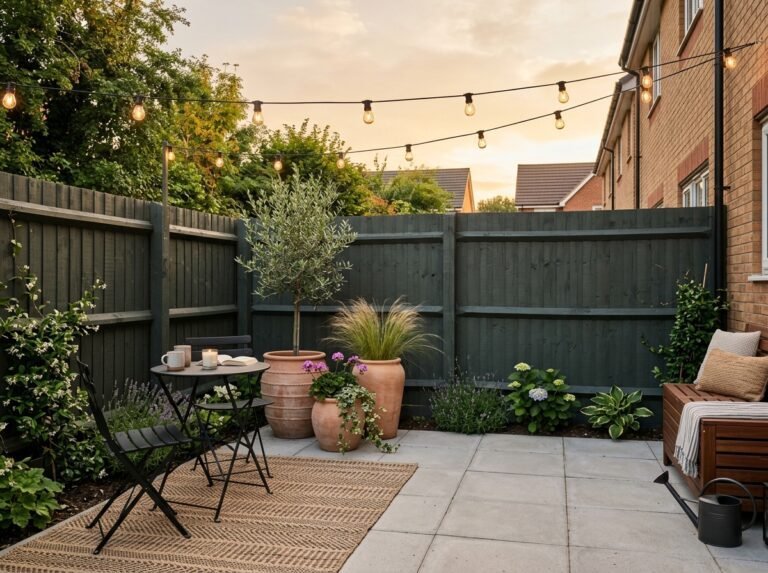
A two person dining setup needs less room than people expect. A round bistro table 24 to 30 inches across seats two comfortably. Step up to 32 to 36 inches and three will fit at a push.
The table is not the real constraint though. Chairs are. Allow 24 to 30 inches behind each seat so people can push back and stand. That puts the true footprint of a two person setup at roughly 6 feet by 6 feet once circulation is counted.
Round tables beat square ones in tight spaces. There are no corners to catch a hip, and you can slide past on any side.
Weight matters on an exposed roof. Very light tables, especially glass topped ones, can shift or tip in a gust. Choose something with a little mass, or a folding table you store flat when weather turns.
For shade, a freestanding umbrella needs a heavy base. That is a real load to carry upstairs and a permanent weight to leave in place. A wall or railing mounted shade sail is usually the smarter answer on a roof.
Rooftop Decor Ideas That Save Space With Foldable Pieces
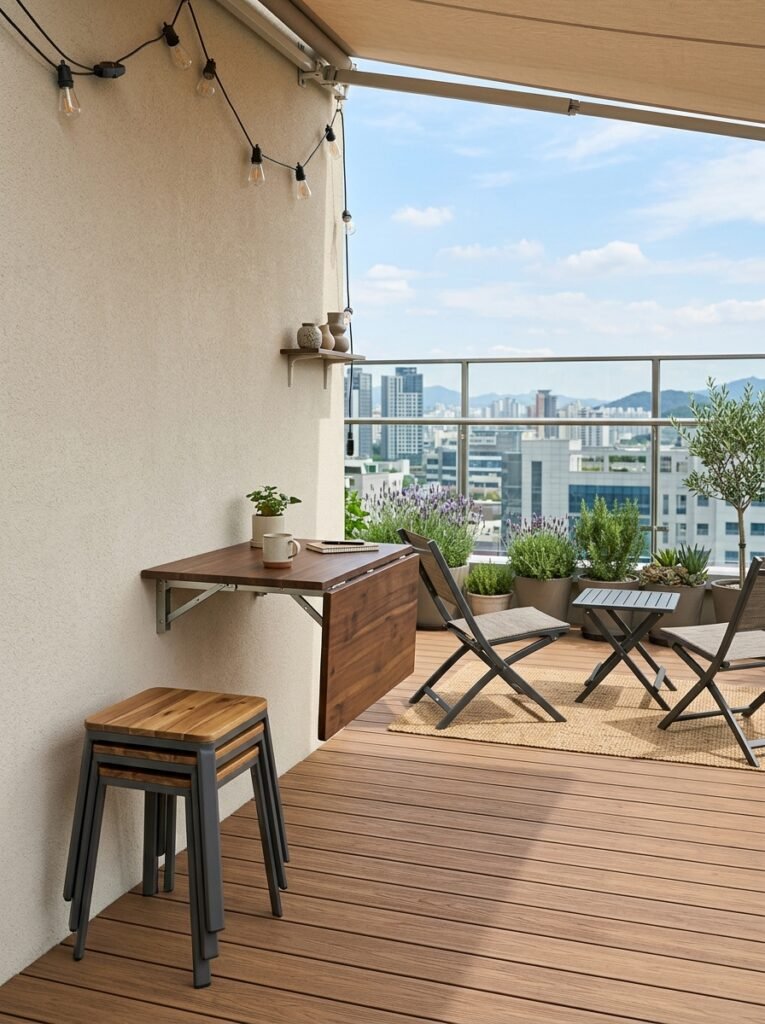
Folding furniture is what lets one small rooftop be two different spaces. Coffee for two in the morning, room for six in the evening.
Three pieces earn their place. A wall mounted drop leaf table folds down to 8 to 10 inches deep. Folding bistro chairs stack four deep in about a foot of space. A folding side table comes out only when you need it.
Hardware quality decides how long any of this lasts. Rain, sun and salt air destroy cheap steel hinges within a season or two. Aluminium frames with stainless fittings cost a little more and keep working. Test the folding action in the shop, because a stiff mechanism is one you will soon stop bothering with.
Weight is the other filter. Anything that has to travel up and down stairs should be liftable with one hand.
Storage is the part people forget. Folded furniture left leaning against a parapet becomes a wind hazard. Give it a proper home: a deck box, a strapped down corner, or back inside the stairwell.
Bring in Privacy Screens
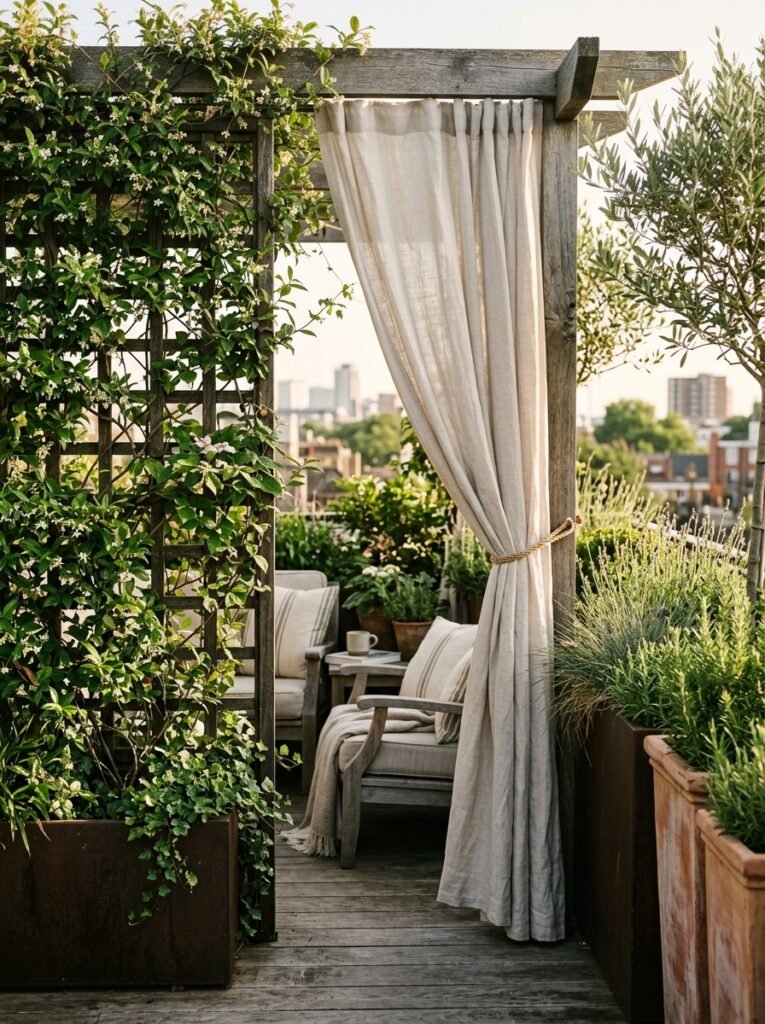
Screening is the one rooftop upgrade where getting it wrong can be dangerous, so this section is worth reading twice.
A solid panel on a roof behaves like a sail. Wind pushes against it, and anything not properly secured goes over, sometimes right off the edge. Permeable screens are the answer. Lattice, slatted timber, reed and mesh all break sightlines while letting air pass through.
Height depends on what you are blocking. A screen of 5 to 6 feet hides a seated person from surrounding windows. Going taller adds wind load without adding much privacy.
Fix screens to something structural. Use railing brackets, or a heavy planter base designed for the job. Never rely on a freestanding panel weighted down with a couple of bricks.
Two more points before buying. Check your building rules, since many limit the height of anything added to a roof or balcony. And remember that a climber grown across a screen doubles both its weight and the area wind can push on. Outdoor curtains raise the same issue, so choose ones you can tie back or take down.
Layer in Soft Textiles
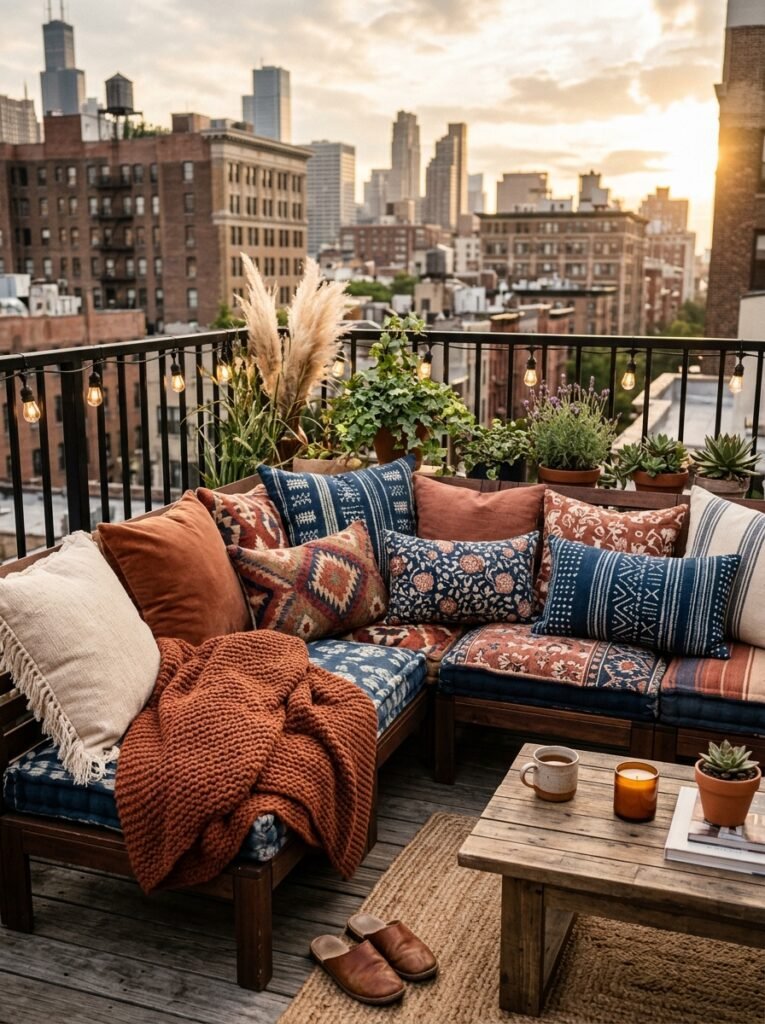
Textiles are what make hard outdoor furniture worth sitting on. On a small rooftop, the fabric you choose matters more than how much of it you buy.
Solution dyed acrylic is the material to look for. The color runs right through the fibre instead of sitting on the surface, so it holds up under constant sun for years. Printed polyester costs less and fades noticeably within a season or two on an exposed roof.
Quick dry foam is the second thing to check. Standard foam holds water for days after rain, and on a hot roof that means mildew.
Scale matters in a small space. Two or three larger cushions read as calm. Eight small ones read as clutter and take longer to bring in.
Wind is the practical problem. Loose cushions blow off roofs regularly. Cushion ties, seat clips or a strip of grip fabric keep them where they belong.
Then buy a storage box, ideally 100 litres or more, and make it the rule. Cushions live in the box whenever the rooftop is not in use.
Add a Small Water or Fire Feature
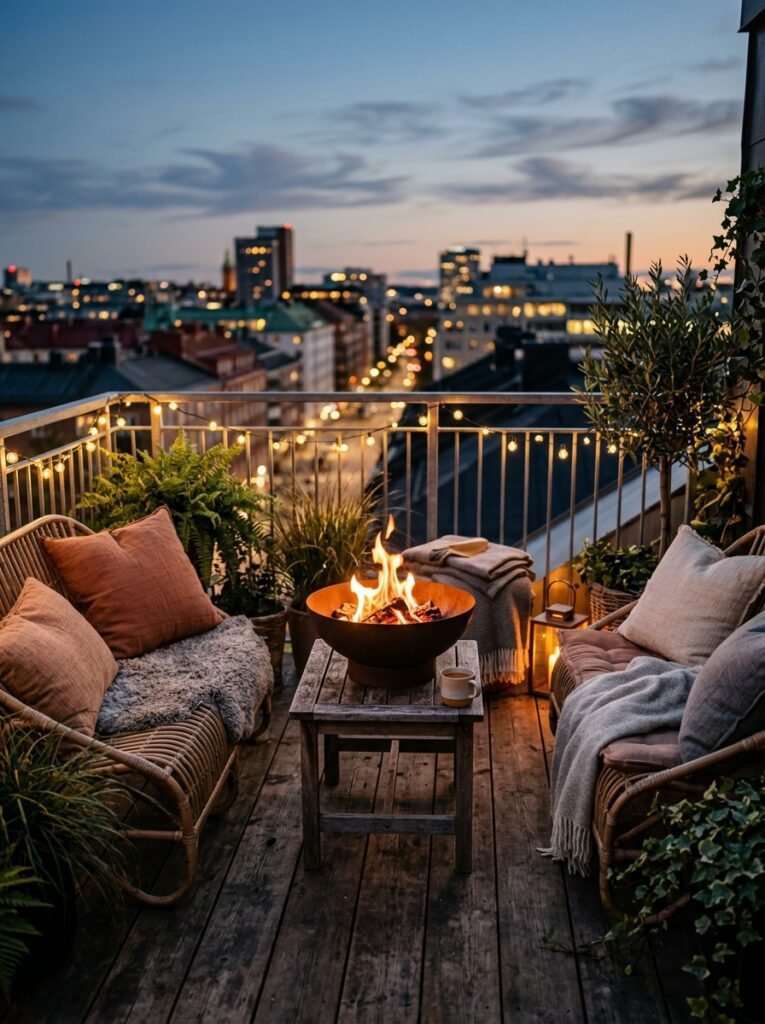
This is the one idea on the list that comes with rules attached, and rooftops attract the strictest ones.
Check first, buy second. Many apartment buildings and leases prohibit open flame anywhere on a roof or balcony. Local fire codes often back that up for multi-unit buildings. The US Fire Administration advises keeping any fire pit at least 10 feet from your home or anything else that can burn. Most small rooftops simply do not have that distance.
Where open flame is off the table, the alternatives still look good after dark. Flameless LED lanterns and electric flame effect heaters give the glow with none of the risk. Check the heater rules too, since some buildings allow electric but not gas.
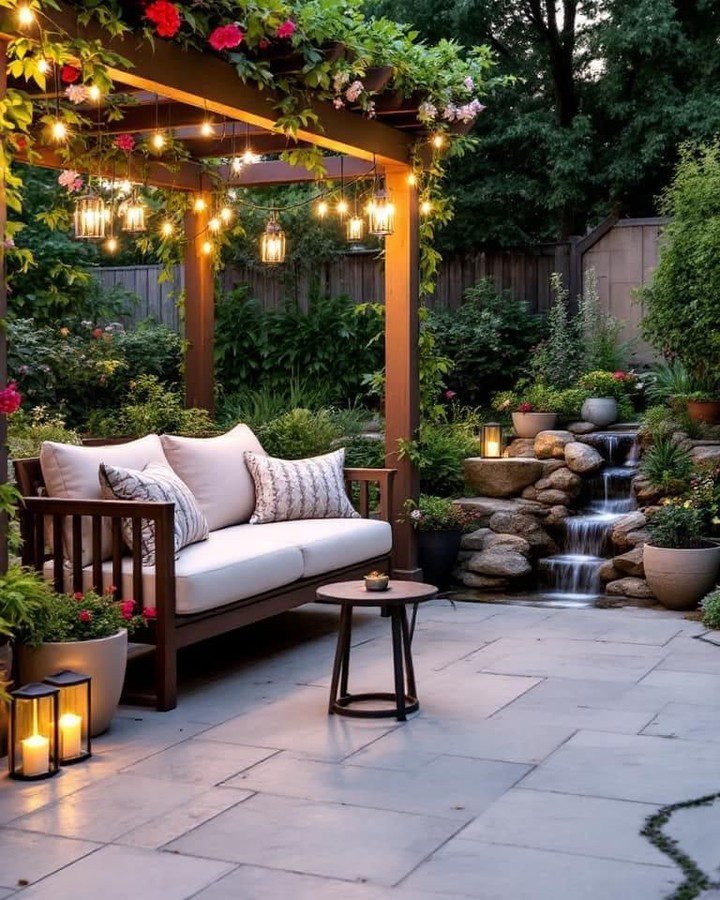
Water is the easier option up here. A recirculating tabletop fountain needs only a small pump and gives you sound without a permit conversation. Two practical notes. Water is heavy, so keep the reservoir small. And place it where splashes land on furniture rather than pooling on the roof surface. Empty it before the first freeze.
Define Zones With Decor
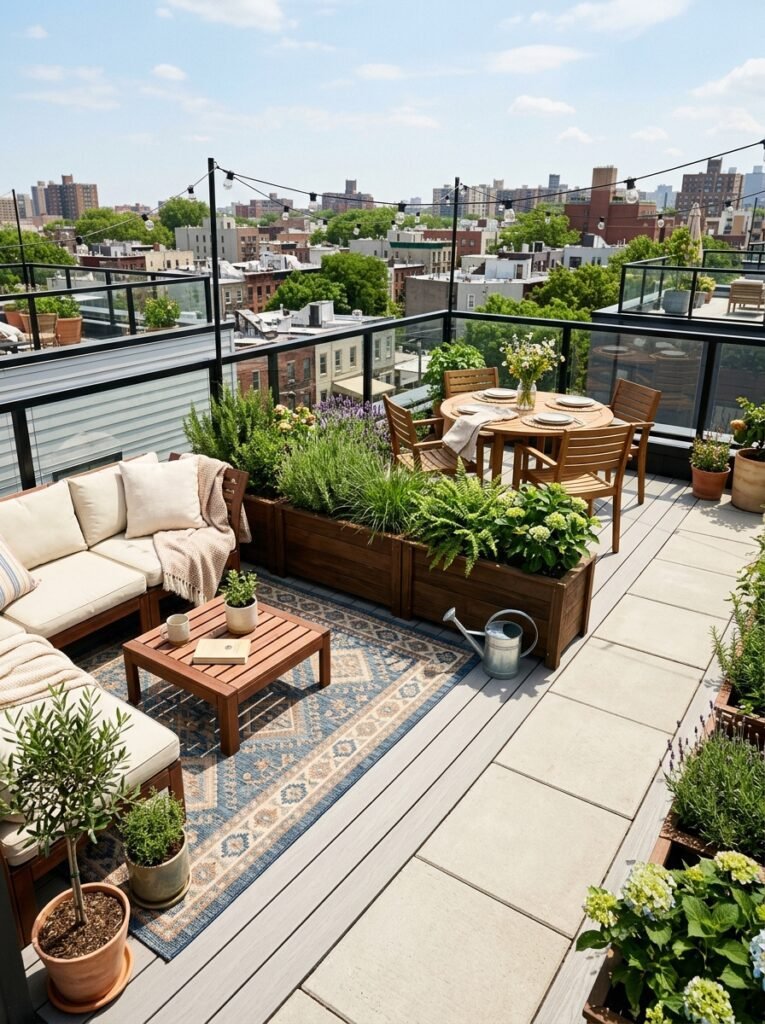
Zoning works on a rooftop with one adjustment: use fewer zones than you would at ground level. Under about 200 square feet, two is the ceiling. Lounge and dining. Squeezing in a third leaves all of them too small to use.
Mark the boundaries with things you already need rather than adding dividers for their own sake. A rug under the seating defines it. A row of planters separates lounge from dining while doing a second job. A change of surface, such as deck tiles in one area, does the same permanently.
Keep at least 30 inches clear as a walkway between zones, measured from the furniture rather than from the wall.
Think about the sightline from the stairwell door as well. Whatever you see first sets the impression of the whole roof. Put the better looking zone in that view and keep the storage box out of it.
The underlying logic is the same one behind these backyard decor ideas, scaled down to a rooftop footprint.
Add Personal Touches and Accessories
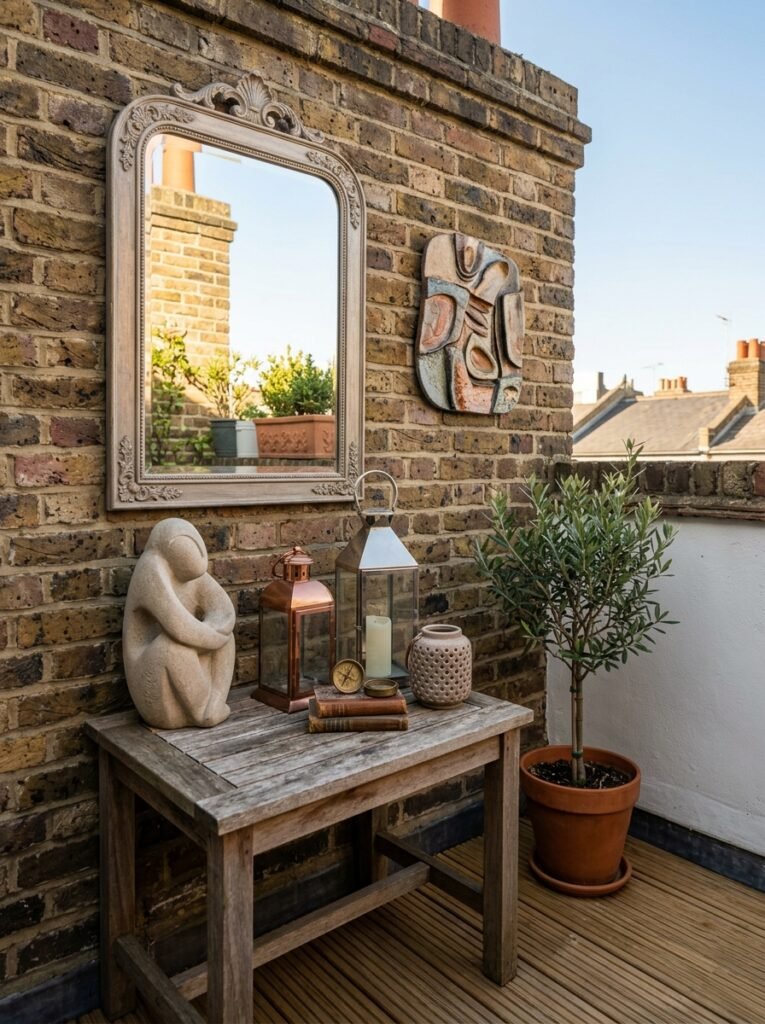
Accessories are what stop a rooftop looking like a furniture showroom. A small space has a low ceiling for how many it can carry. Three to five objects is usually the limit before things start to feel busy.
Every item has to pass one test. Is it heavy enough to stay put, or can it be secured? Anything else becomes a projectile in the first real storm.
An outdoor mirror is the strongest trick available for a compact roof. It doubles the apparent space and bounces light into darker corners. Choose acrylic rather than glass, which is lighter and much safer several floors up. Avoid angling it where it will concentrate sunlight onto furniture or plants.
Art works outdoors when the material suits it. Powder coated metal and treated timber panels survive. Framed paper prints do not.
Pick pieces that also do something. A lantern lights the corner. A ceramic stool is a side table and a spare seat. A tray corrals what would otherwise be clutter. On a compact rooftop, decoration that works for a living earns its space twice.
Final Thoughts
A small rooftop rewards planning far more than spending. Almost everything that goes wrong up here traces back to buying before measuring.
Start with a tape measure and a rough sketch. Mark the walkways first, then the two zones, then choose furniture to fit whatever is left. Get that order right and you avoid the most common outcome: a roof so full of furniture that nobody wants to sit on it.
Build in stages. A rug, seating and lights make a rooftop usable in a single weekend. Planting, screening and the finishing pieces can follow later. By then you will know where the sun lands, where the wind comes from, and which corner you keep gravitating to.
Frequently Asked Questions
What are the easiest rooftop decor ideas for beginners?
Start with a rug and lighting. Both take an afternoon, need no tools and require nobody’s permission. An outdoor rug turns bare concrete into a floor, and warm string lights on railing clamps make the space usable after dark. Add a folding bistro set next, since it works straight away and stores flat. Leave planting, screening and anything that needs mounting for later. Spend a few evenings up there first and see how the space gets used.
How do I decorate a rooftop with very little space?
Measure first and work backwards. Mark a 30 inch walkway, allow roughly 6 feet by 6 feet for a two person dining setup, then furnish whatever remains. Choose pieces with two jobs: a storage bench, an ottoman that takes a tray, a drop leaf table. Grow upward with railing planters and a plant ladder instead of giving floor space to pots. And hold yourself to two zones, because three on a small roof leaves none of them usable.
Are these rooftop decor ideas renter friendly?
Most are, since nothing here requires drilling into the roof itself. Railing clamps, freestanding planters, weighted post holders and folding furniture all leave without a trace. The exceptions are screens, shade sails and anything involving flame. Those usually need permission from a landlord or building management however they attach. Never fix anything through the roof membrane, because that is where leaks start and the repair bill is not a small one.
How do I keep rooftop furniture safe in bad weather?
Wind is the real threat up high, not rain. Anything you can lift with one hand should be folded and stored or strapped down before a storm. Cushions belong in a sealed box rather than on the seats. Choose aluminium frames and stainless fittings over cheap steel, which rusts quickly in an exposed spot. Close and lower umbrellas whenever you leave the roof. For more on managing exposure, this guide to rooftop decor that works with the wind, sun and sky covers it in depth.
Can I add greenery to a rooftop without much sun?
Yes, though the shortlist differs from a shaded garden. Ferns, hostas and heuchera cope with low light but dislike wind, so keep them behind a screen or against a wall. Shade on a roof usually arrives with strong gusts, and that is the harder condition to solve. If one corner defeats several attempts, a good faux plant in a real terracotta pot looks convincing and asks for nothing. Check pot drainage either way, since standing water on a roof creates its own problems.