Container Gardening Ideas: Which Pots Survive the Summer?
A 10 inch pot holds about 3 gallons of potting mix. One tomato plant wants 10 to 15. That gap kills more containers than any watering can will ever fix.
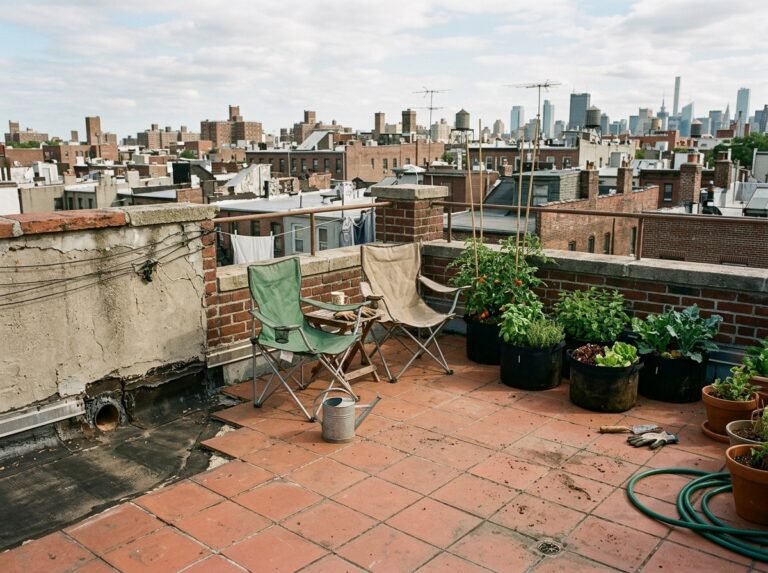
Container gardening ideas usually arrive as photographs. What a photograph never shows is the pot size or the mix inside it. It also hides how many minutes a day somebody spends keeping it alive.
What follows is a decision guide rather than a gallery. Nine choices, in the order you actually face them, with the numbers behind each. Prices are ballpark and shift by region and season, so read every figure as a range.
Pot Material Changes How Often You Water
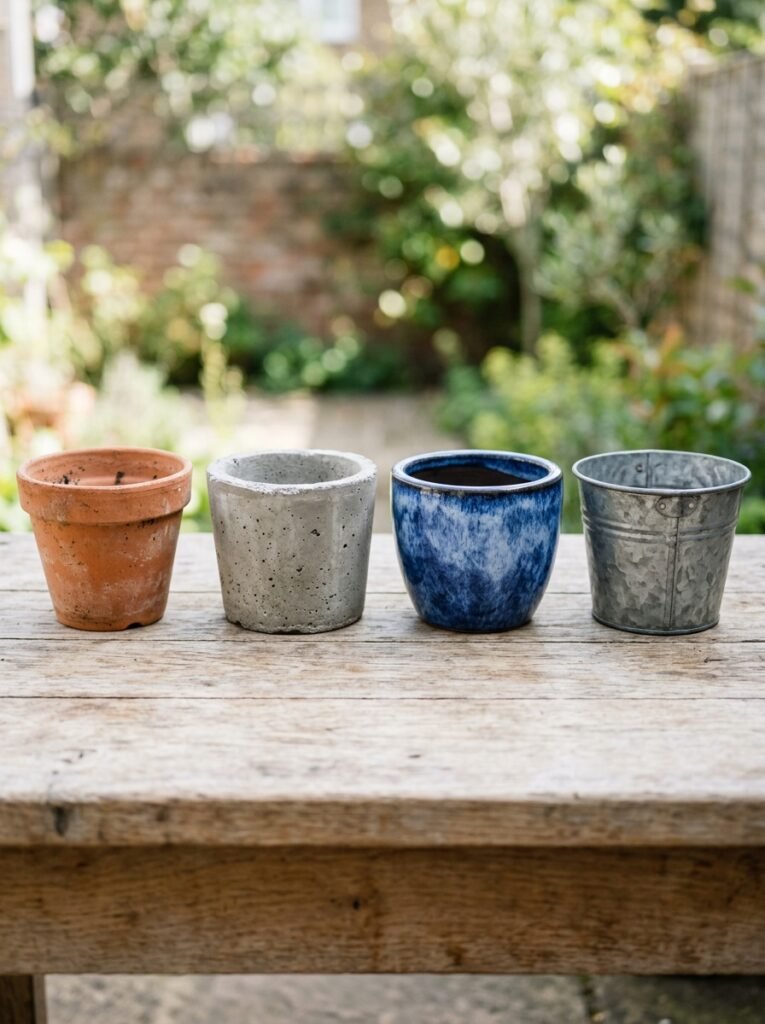
Material decides your watering schedule before a single plant goes in.
Terracotta breathes through its walls, so it dries fastest. That suits rosemary, lavender, thyme and succulents, all of which resent wet feet. It punishes thirsty annuals in July. A 12 inch terracotta pot runs $15 to $35.
Glazed ceramic is sealed, so it holds moisture far longer. It is also heavy and it cracks when wet soil freezes. Expect $40 to $90 for a 14 inch pot.
Plastic and resin cost least and weigh least, at $20 to $60. Dark colors absorb heat and can cook roots against a sunny wall, so pale finishes work better in full sun.
Fabric grow bags air prune the roots and cost $10 to $30 for a multipack. They dry faster than anything else, and they fold flat at the end of the season.
Metal looks sharp and heats brutally. Keep metal planters out of afternoon sun or line them.
A useful compromise costs almost nothing. Grow in a cheap plastic nursery pot, then drop that pot inside the decorative one. Moisture behaves like plastic, and the pot on show is whatever you like.
How Big Does the Pot Actually Need to Be?
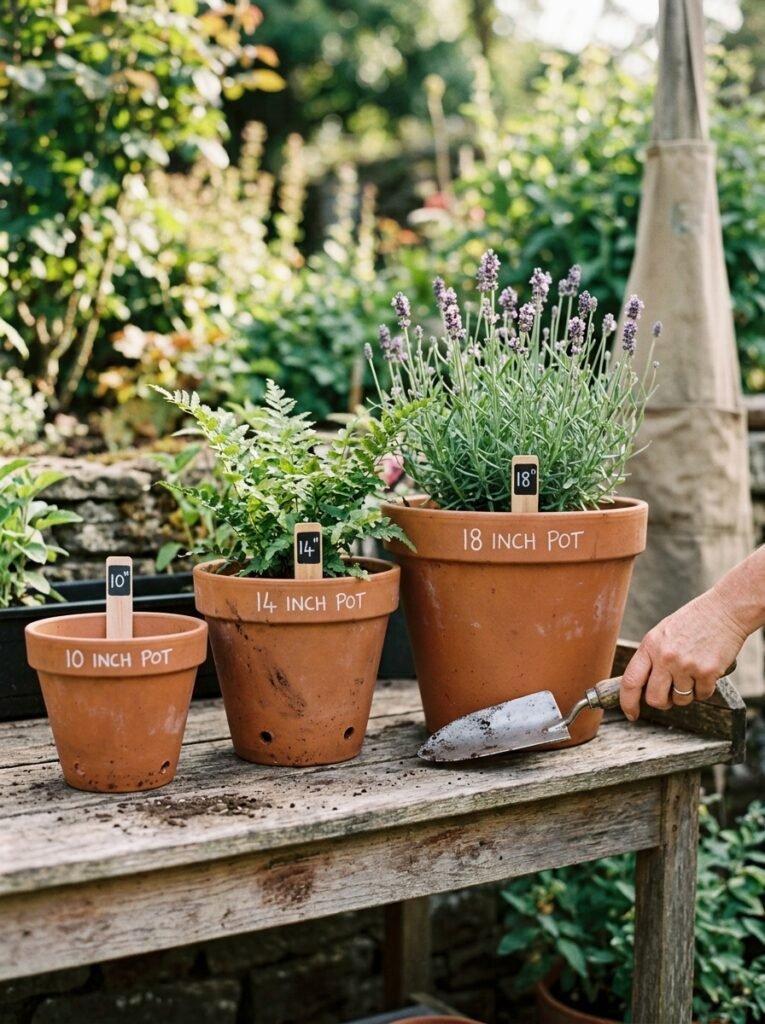
Diameter is the number on the label. Volume is the number that matters.
Rough conversions run like this. A 10 inch pot holds about 3 gallons and a 12 inch about 5. A 14 inch holds 7, a 16 inch holds 10, and an 18 inch holds 15.
Match that to the plant. Herbs and salad leaves root happily in 6 to 8 inches of depth. Peppers want a 12 inch pot. Tomatoes want 18 inches and 10 gallons or more. Carrots need 12 inches of depth whatever the width. Shrubs start at 18 inches.
More soil means slower drying, steadier temperature and fewer waterings. Moving from a 10 inch pot to a 14 inch one costs perhaps $15. It can halve how often you stand there with a hose.
The classic failure is an 8 inch pot with a tomato in it. The mix dries out by noon, the plant swings between drought and flood, and blossom end rot follows within weeks.
Three large containers outperform twelve small ones on every measure except the shopping trip. Fewer pots also means fewer things to forget.
Potting Mix, Drainage and the Gravel Myth
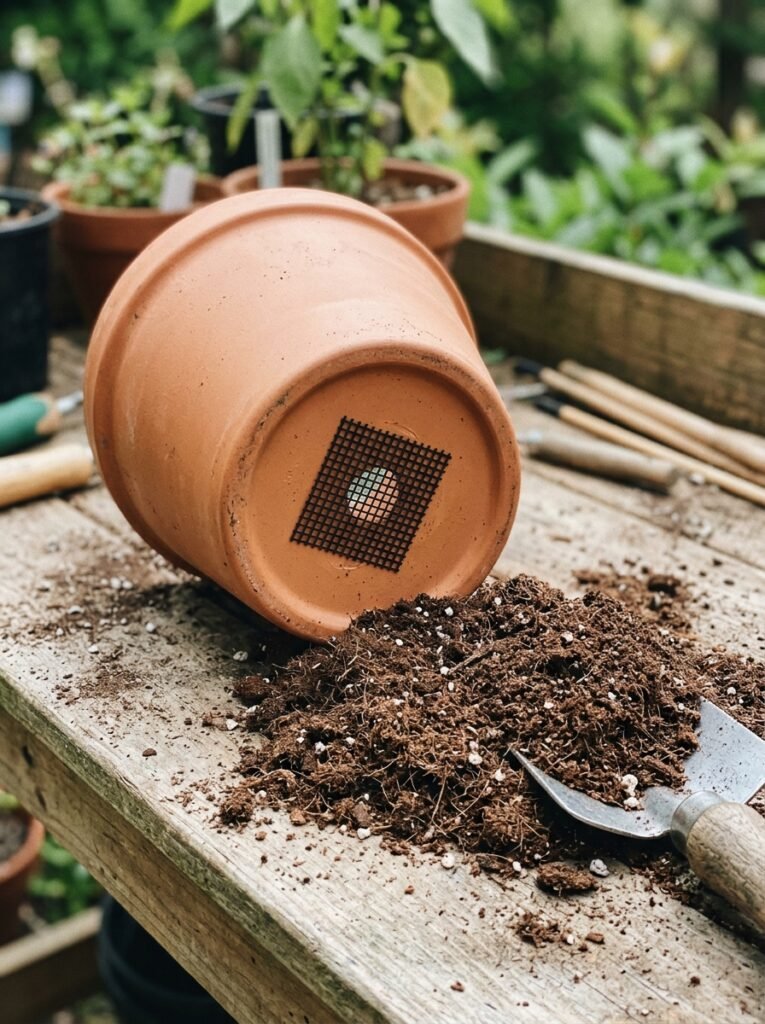
Garden soil belongs in the garden. In a pot it compacts into a dense block, holds water at the bottom, and suffocates roots. Use bagged potting mix, which is peat or coir blended with perlite and bark, at $8 to $20 per bag.
Estimate volume before you shop. A 12 inch pot takes roughly 0.6 cubic feet, a 16 inch about 1.5, and a 20 inch about 3.
Drainage holes matter more than most people expect. Aim for one half inch hole per 6 inches of pot diameter. Drill more if a pot arrived with a single token opening.
Now the gravel. Putting a layer of stones in the bottom does not improve drainage. Water moves poorly from fine mix into coarse gravel, so it perches above the gravel line instead of passing through. The wet zone ends up higher in the pot, not lower, and you lose root space as well. Cover the hole with mesh or a coffee filter and fill the whole pot with mix.
Saucers left full undo all of it. Empty them, or raise the pot on feet at $8 to $20 a set.
Replace the top third of the mix each spring, and the whole lot every two or three years.
Reading the Light Before You Buy Anything
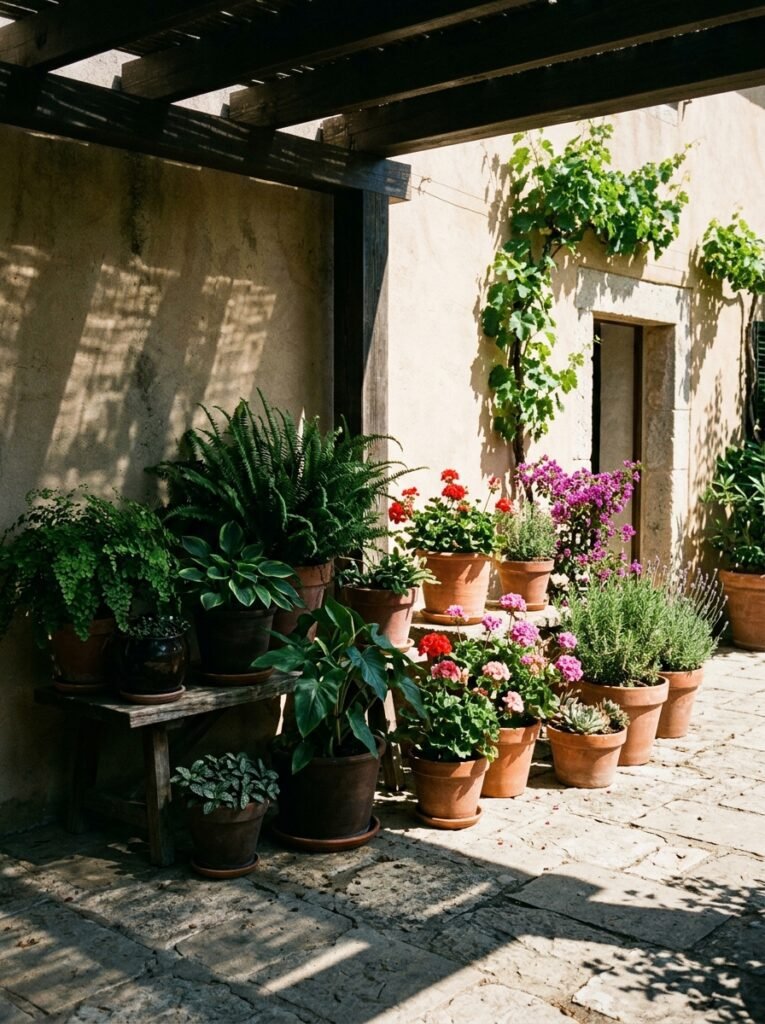
Count the hours of direct sun falling on the exact spot where the pot will stand. Not the garden. The spot.
The label categories are specific. Full sun means 6 hours or more. Part sun runs 4 to 6. Part shade is 2 to 4. Full shade is anything under 2.
Walls change the answer. A pot against a south facing wall gets reflected heat on top of direct sun. The mix inside can run 10 to 15 degrees Fahrenheit hotter than open ground. Plants rated for full sun still struggle there if they are shallow rooted.
Buying sun plants for a shady corner produces the same result every time. Long weak stems, pale leaves, almost no flowers, and a slow decline that looks like a watering problem.
For genuine shade, reach for ferns, heuchera, begonias, coleus and hostas. For full sun, pelargoniums, lavender, rosemary, sedum, lantana, salvia and ornamental grasses all cope.
Plant caddies with wheels cost $10 to $25. They let you move a heavy pot to follow the light.
One Big Plant or a Combination?
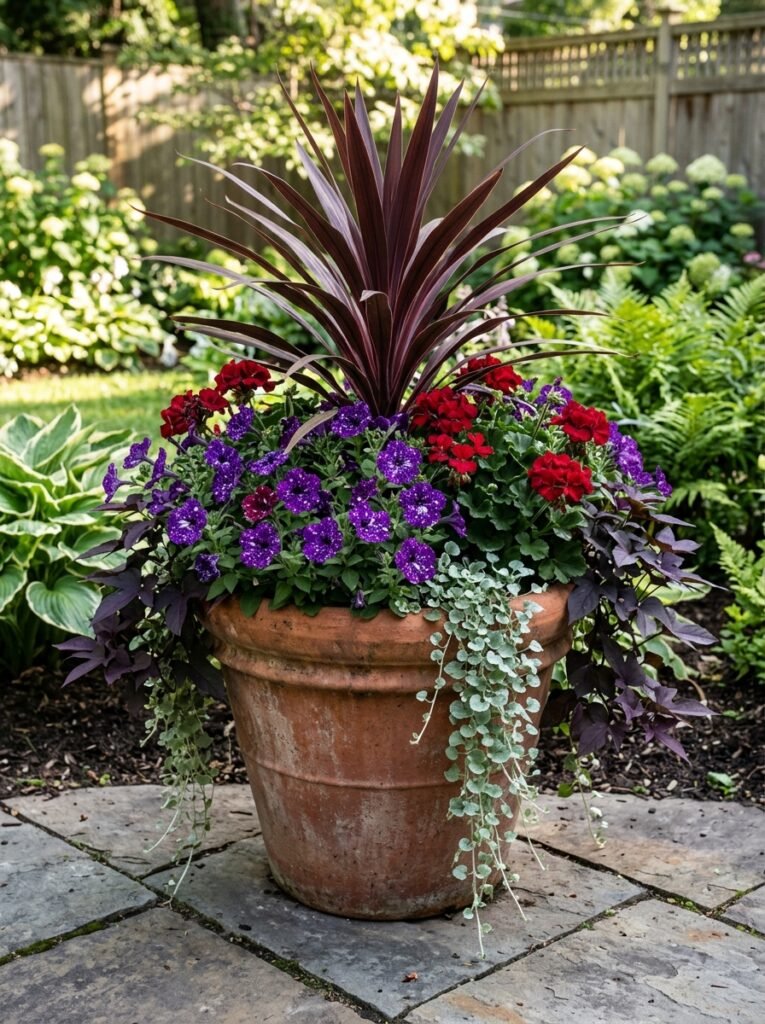
A single specimen is the low effort choice. One plant means one watering rhythm, one feeding rate and no compromises.
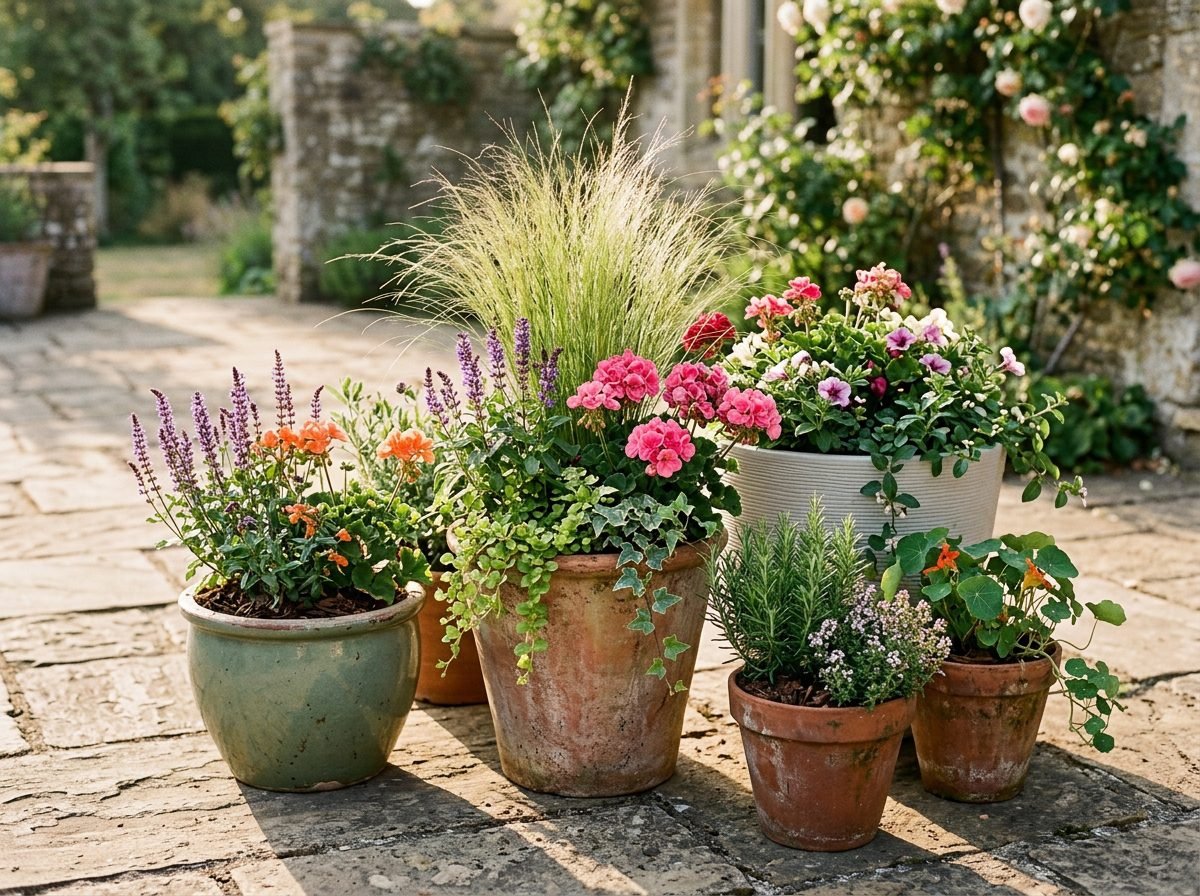
Combinations follow a simple shape: something tall for height, something mounded to fill the middle, something trailing over the rim. That arrangement reads as designed rather than assembled.
One condition governs every mixed pot. Everything in it must want the same light and the same water. Lavender beside a fuchsia guarantees that one of them dies, because one wants dry feet and the other wants damp.
Containers can be planted tighter than beds, at roughly two thirds of the label spacing. You will water and feed far more often than open ground gets.
As a guide, a 14 inch pot carries 3 to 5 small plants. A 16 to 18 inch pot carries 5 to 7.
Cramming nine plants into a 12 inch pot looks spectacular for about three weeks. Then the roots run out of room and the whole arrangement stalls at once.
A cheaper route reaches the same look. Buy one larger anchor plant in a 1 gallon size, then ring it with annuals grown from seed.
Watering Is a Schedule, Not an Instinct
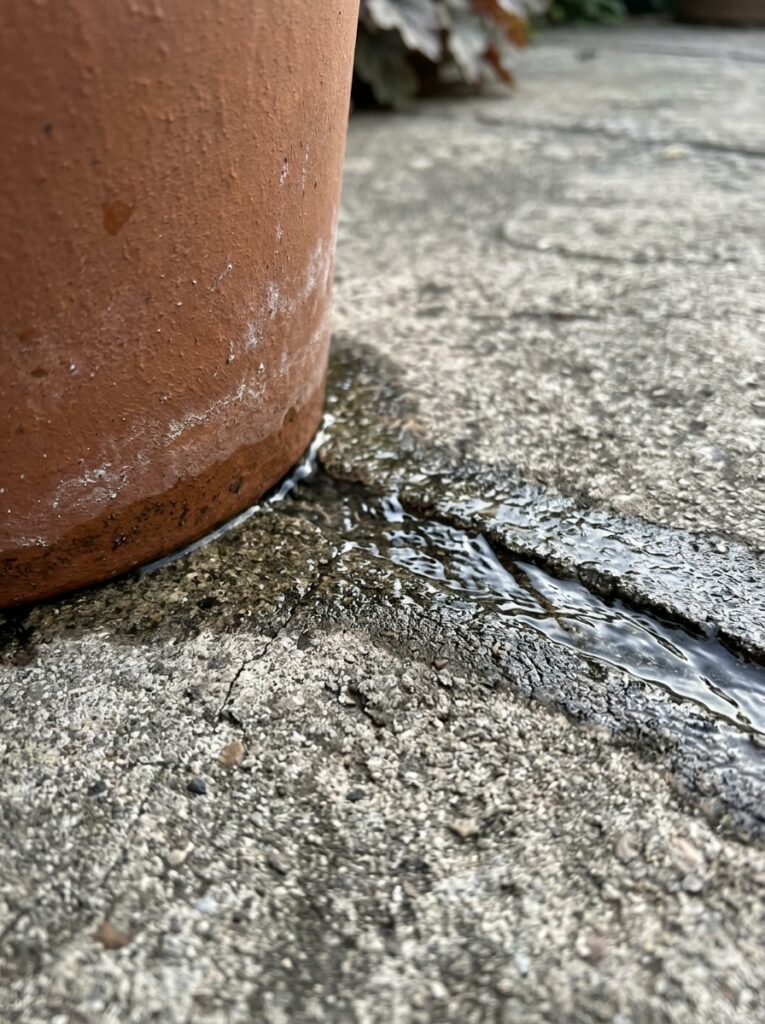
Push a finger 2 inches into the mix. Dry at that depth means water. Damp means wait.
When you do water, keep going until it runs from the drainage holes. A splash every day wets only the top inch and trains roots to stay near the surface, where they bake.
Frequency varies more than people expect. A 12 inch pot in full July sun can want water daily. A 20 inch pot in part shade may go three or four days.
Water in the morning. Foliage that stays wet overnight invites mildew, and evening watering in hot weather encourages it.
Self watering containers with a built in reservoir cost $25 to $80 and buy two to four extra days. A drip kit with a battery timer runs $40 to $120 and solves both heatwaves and holidays.
Mulching the surface of a pot works exactly as it does in a bed. An inch of bark chips or fine gravel cuts evaporation and stops the mix crusting over.
Feeding, Because Containers Run Out of Food
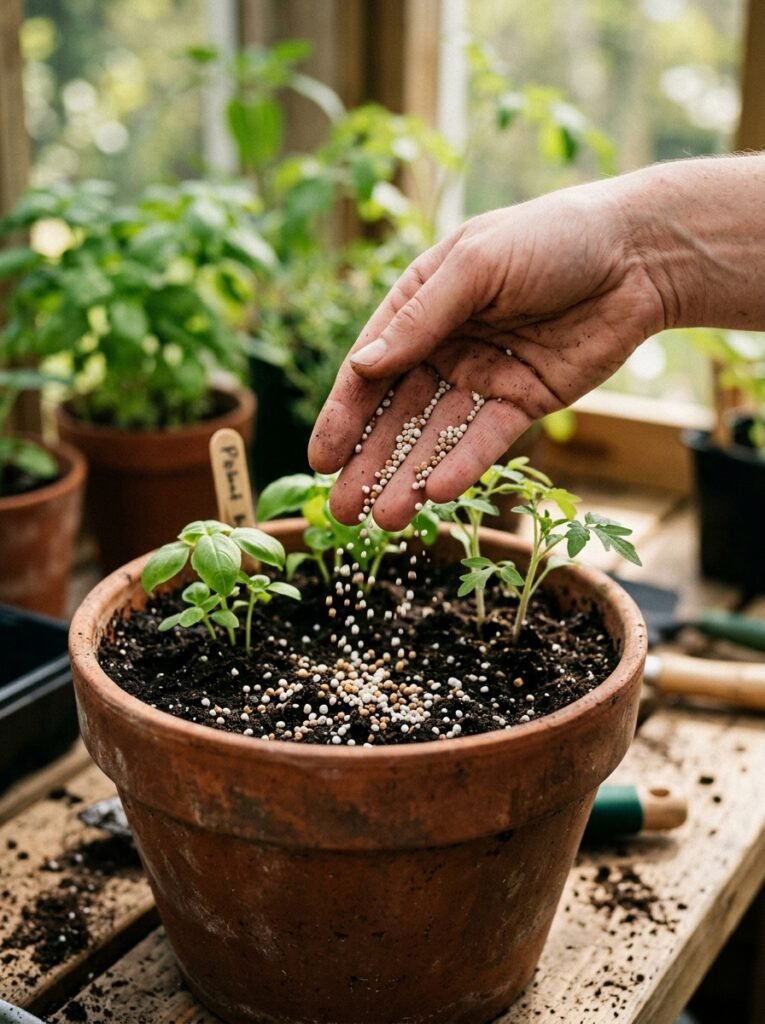
Every watering carries nutrients out through the drainage holes. Bagged mix generally holds four to six weeks of feed, and after that the pot is running on nothing.
Two approaches work. Slow release granules stirred into the mix at planting, reapplied every 8 to 12 weeks. Or liquid feed diluted into the watering can every 10 to 14 days.
Match the feed to the job. A balanced formula suits foliage. Higher potassium suits anything flowering or fruiting.
Pale leaves and stalled flowering in July, on a plant that looked healthy in June, is almost always hunger rather than disease. It is also the point at which most people reach for a fungicide instead.
Do not run both systems at once. Slow release granules plus weekly liquid feed burns roots and scorches leaf edges.
Costs stay small. A tub of granules runs $10 to $20 and lasts a season. Liquid concentrate is $10 to $15 a bottle.
Herbs are the exception worth remembering. Heavy feeding gives you lush growth with noticeably weaker flavor.
Annuals, Perennials or Something You Can Eat?
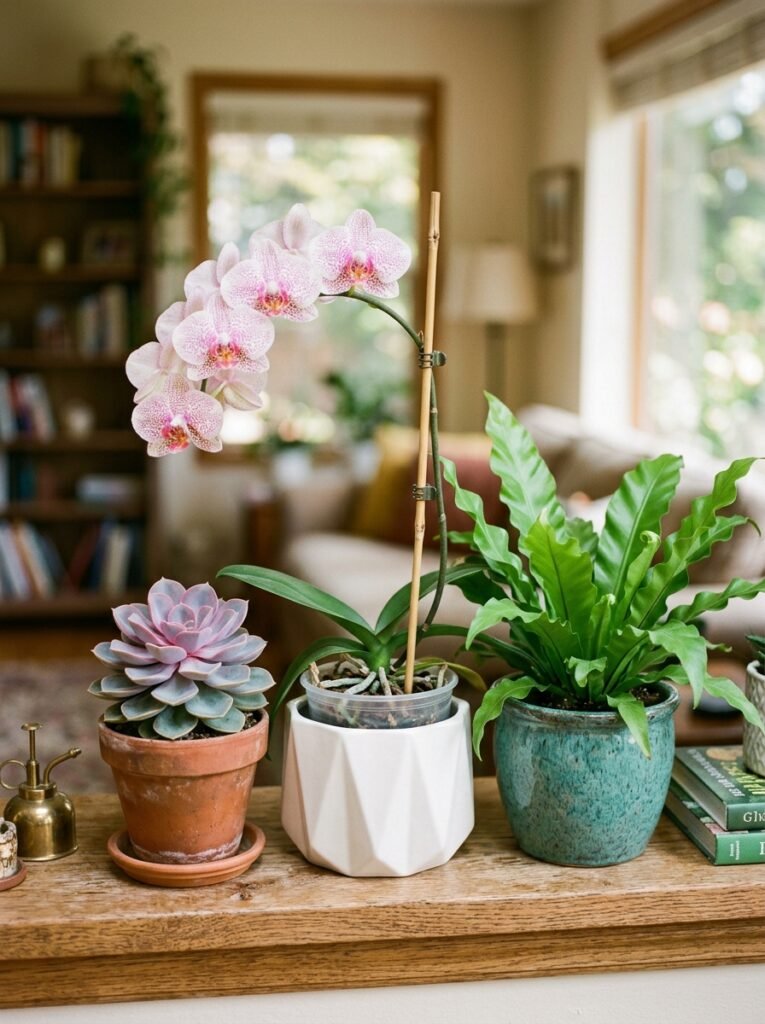
Annuals cost $3 to $8 each, flower for months, and die at the first frost. The whole scheme gets bought again every spring.
Perennials cost $10 to $30, return each year, and need somewhere to survive winter. Over three seasons they work out cheaper.
Edibles give the best return of the three. A $4 rosemary plant replaces years of supermarket bunches, and a $3 packet of salad seed keeps a pot productive for months.
Shrubs earn their price differently. Boxwood, dwarf conifers and compact hydrangeas run $25 to $80 and hold the arrangement together through winter, when everything else is gone.
The practical mix uses one permanent shrub or perennial as the core of a large pot, with annuals swapped around it each season. That keeps the container occupied in January and cuts the spring bill.
An all annual scheme leaves every pot on the patio empty from October to May. Whether that matters depends on how much of the year you look at them.
Where the Pots Go in Winter
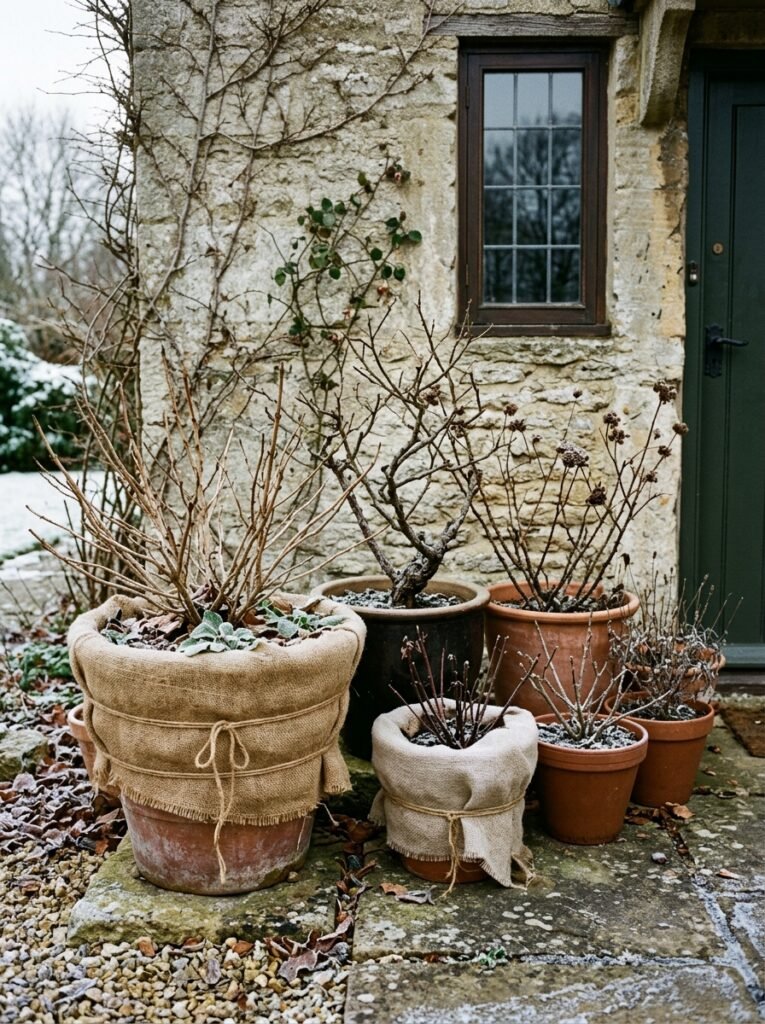
Roots in a container have no surrounding soil mass to insulate them. They sit at close to air temperature. That is why a plant thriving in a bed can die in a pot two feet away.
Buy plants rated one to two zones colder than your own. A zone 7 garden calls for zone 5 plants in containers. Check your zone on the USDA Plant Hardiness Zone Map, which takes a zip code and gives you the figure directly.
Terracotta and glazed ceramic crack when wet mix freezes and expands. Empty them for winter or move them somewhere sheltered. Fabric, resin and thick plastic all shrug it off.
Group the pots that stay outside into a tight cluster against a wall. Wrapping the sides with burlap or bubble wrap through the coldest weeks costs a few dollars and buys several degrees.
Raise every pot on feet so the base is not sitting in a frozen puddle.
Stop feeding by late summer so growth hardens before the first frost, and cut watering right back. Frozen waterlogged mix kills more container plants than cold air ever does.
The cheapest overwintering trick is to sink the entire pot into a garden bed and lift it again in spring.
The Short Version
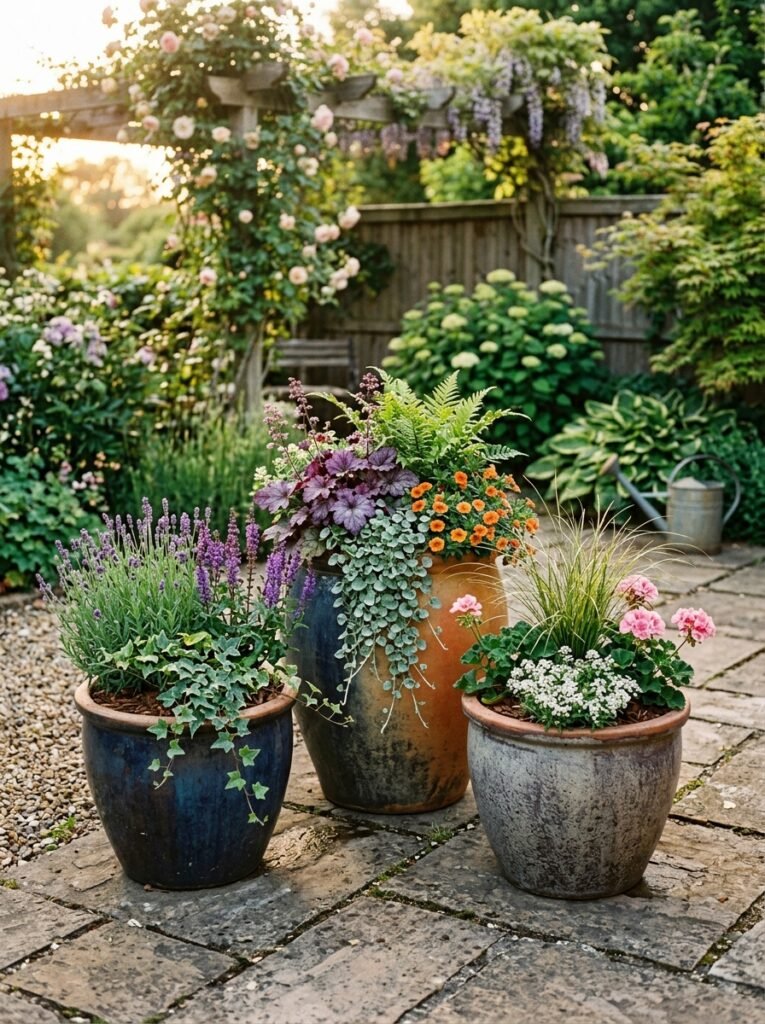
The order matters more than the budget. Pot size first, then the mix, then an honest count of the sunlight hours, and only then the plants.
Everything downstream follows from volume. A bigger pot dries slower, swings less in temperature, holds more nutrients and forgives a missed watering. It is the one purchase that makes every other decision easier.
If only one thing changes this season, buy pots two sizes up from the ones you were planning. The extra $15 removes more work than any gadget will.
Feed from week six, water deeply rather than often, and skip the gravel layer entirely.
A full container setup, meaning three large pots, mix, plants and feed, lands somewhere around $120 to $250 depending on what you plant. Spread over three seasons with perennials at the core, it costs less than replacing bedding annuals every spring.
For the patio these pots will stand on, patio inspiration ideas covers layout and furniture. For containers heading to a balcony instead, balcony and terrace setups built without drilling cover railing planters and vertical space.