Patio Inspiration That Starts With the Floor, Not the Furniture
Almost every patio makeover starts with a shopping list. Chairs, a rug, string lights, maybe a fire pit.
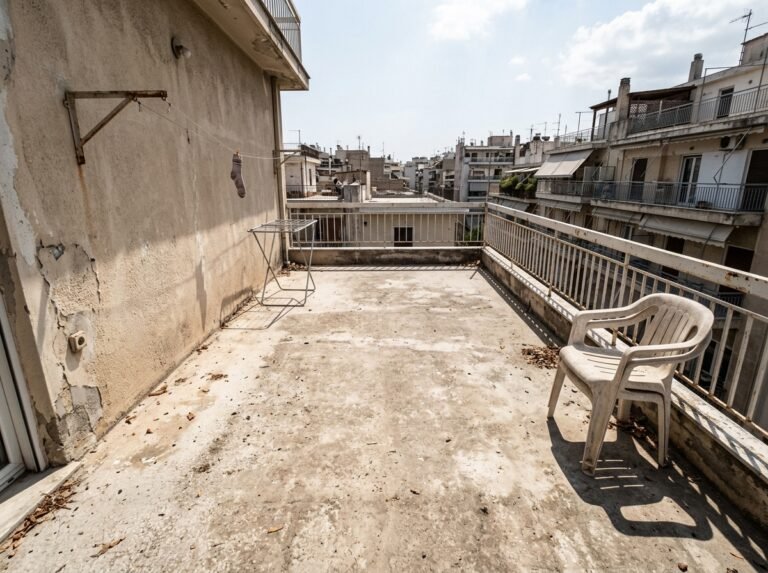
Meanwhile the largest surface in the whole space sits there doing nothing but making everything else look tired. A patio floor is in every photograph and under every piece of furniture. It is usually the reason a space reads as unfinished. New furniture on a stained, weedy slab still looks like a stained, weedy slab with new furniture on it.
The useful part is that fixing the ground rarely costs what people assume. There are five ways out of a bad patio floor, and most patios never need to go past the second.
What Is Actually Wrong With the Floor
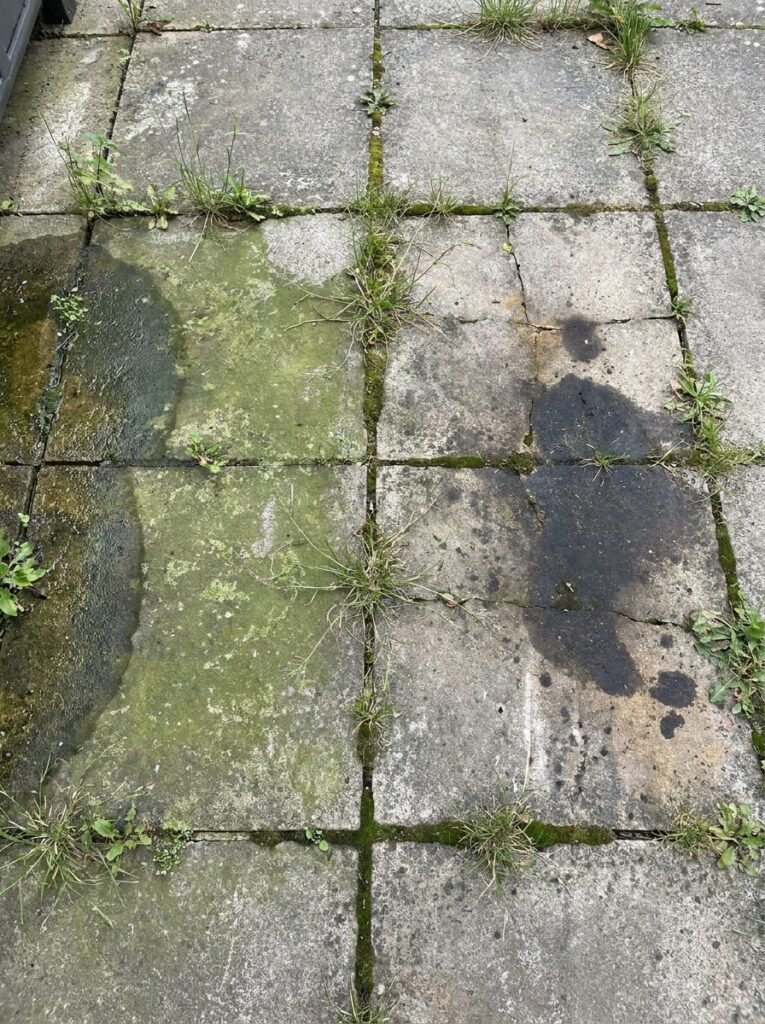
Six problems account for nearly every tired patio, and they need completely different work. Naming the right one first saves both money and a wasted weekend.
- Green or black film. Algae and lichen, worst on shaded and north-facing sides. It washes off.
- Dark patches that survive washing. Usually oil, rust bleeding from metal furniture feet, or tannin staining where wet leaves sat all winter.
- Weeds in the joints. A symptom rather than the problem. The jointing material has washed out or broken down.
- Cracks. Hairline cracks in concrete are common and mostly cosmetic. Stepped cracks, or slabs that rock underfoot, point at the base below rather than the surface.
- Standing water after rain. A fall or drainage issue, and the only one on this list that has to be sorted before anything decorative goes on top.
- Sound but dated. Nothing wrong except color and texture. This is the cheapest problem to have.
Walk the patio the morning after heavy rain. That is when drainage problems announce themselves, and when the algae is at its most obvious.
Clean It Before Judging It
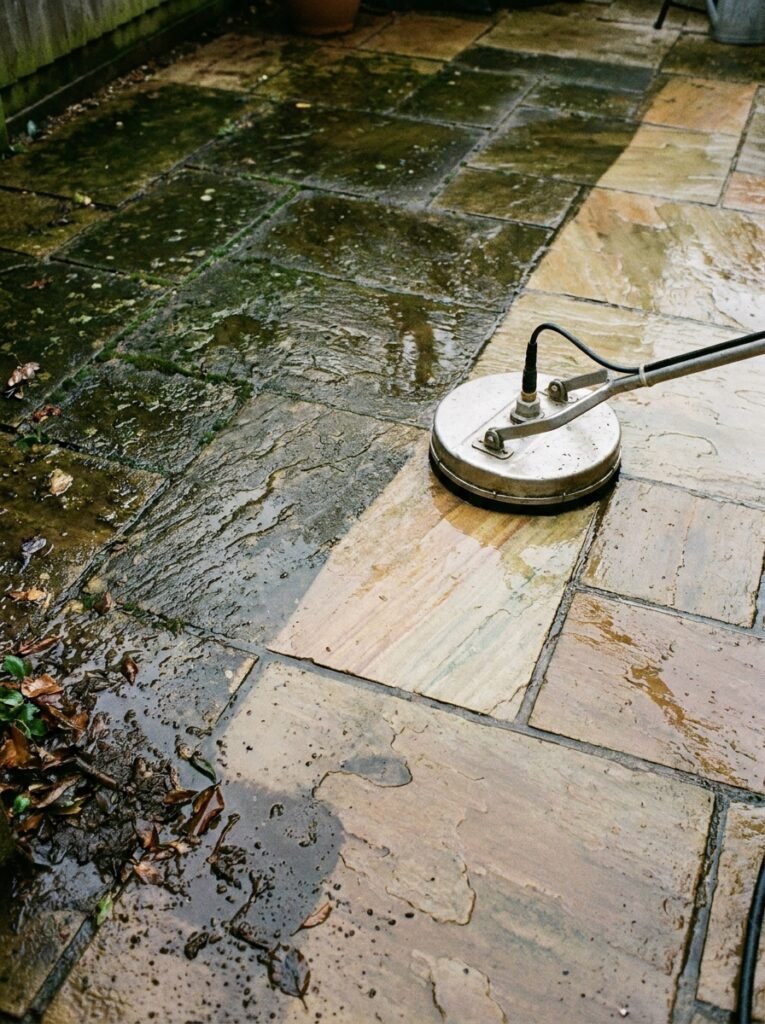
A surprising number of patios get replaced without ever having been properly cleaned. A slab that has not seen a brush in four years is not a design problem yet.
The method matters more than the machine. Sweep first, then apply a cleaner rated for that particular surface. Leave it the dwell time on the label, agitate with a stiff brush, then rinse. Work on an overcast day so nothing dries on the stone before it has done its job.
Points worth knowing before reaching for a pressure washer:
- Use a wide fan tip, keep the nozzle moving, and keep your distance. A narrow jet held still will etch concrete and shred soft sandstone
- A rotary surface cleaner attachment gives an even result instead of the tiger stripes a hand held wand leaves behind
- Washing will strip jointing sand, so plan to re-sand afterwards rather than treating it as a surprise
- Rinse toward drainage and away from doors and air bricks
- Keep bleach-based products off planting, and never mix cleaning products
One buying note. The Consumer Product Safety Commission has issued repeated warnings during 2026 about cheap electric pressure washers sold online. The problem is models that lack a ground-fault circuit-interrupter at the plug, which the agency describes as an electrocution risk. Check for that fitting before buying, or hire a machine instead.
Sort the Joints and the Weeds Stop
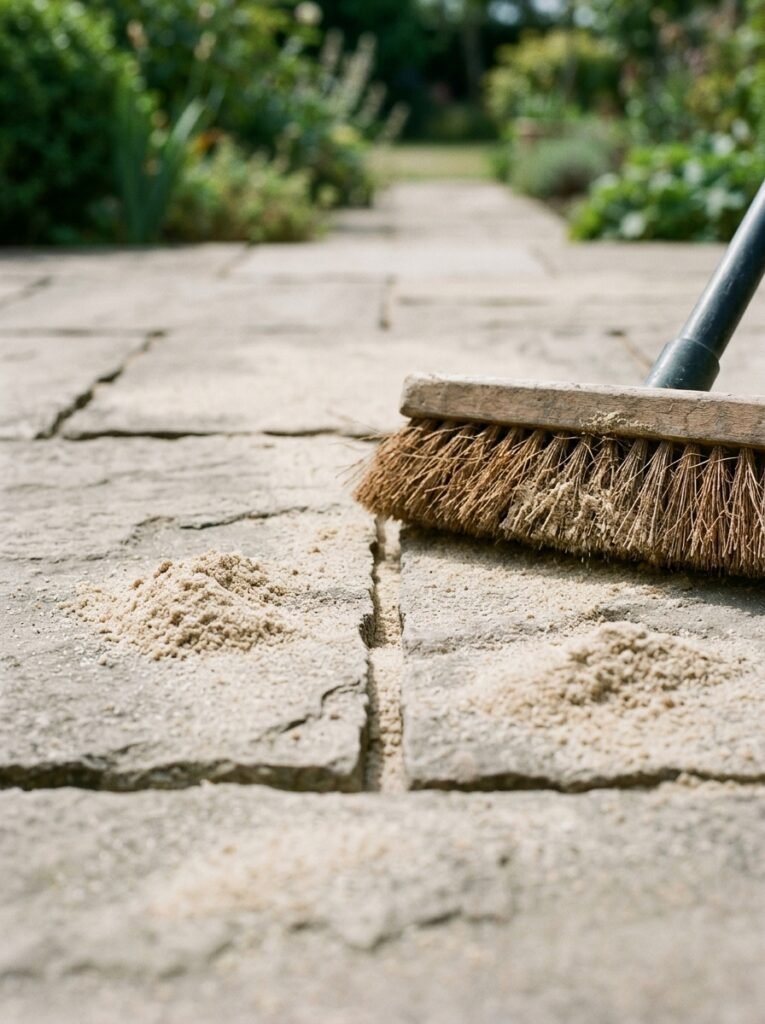
Pulling weeds out of paving joints is maintenance. Refilling the joints is a repair, and it is the difference between doing this every spring and doing it once.
Kiln-dried sand is the traditional filler and washes out over time. Polymeric sand sets firm once activated, resists washout, and gives weeds far less to root into. It has to go down on a completely dry surface and be swept fully into the joints. Misting comes last, exactly as the instructions say. Rushing that step is how people end up with a hazy film across the paving.
On mortared paving, rake out the failed sections and repoint rather than smearing new mortar over old.
Two more jobs belong in the same afternoon:
- Established weeds come out with boiling water and a joint knife, which keeps chemicals away from nearby planting
- Hairline cracks in concrete take a flexible exterior filler. Anything stepped, widening, or rocking deserves an opinion before any money gets spent
Edge restraint is the quiet one. Pavers creep outward over years unless something holds them. Once the outer row has moved, the joints never look right again.
Six Questions Worth Answering Before Spending More
Is this slab worth keeping? If it drains, does not rock underfoot, and has no stepped cracking, almost certainly yes. Sound but ugly is a finish problem, not a structural one.
Will an outdoor rug fix it? It hides, it does not fix. On a shaded patio a rug also traps damp underneath. It leaves a suspiciously clean rectangle when it finally comes up.
How long does a good clean last? Roughly a season or two on a shaded patio, longer on one that gets sun and airflow. Re-sanded joints last considerably longer than that.
Does paving need sealing? Not always. Sealing changes the appearance, can make a surface slick when wet, and commits you to resealing. Plenty of patios look better left alone.
Can this be done in stages? Yes, and it usually should be. Clean and re-joint first, then live with the result for a few weeks before deciding whether anything else is needed.
What about the bit that ponds water? Fix the drainage or accept it. Every option further down this page performs worse over standing water, including the expensive ones.
Cover What Cannot Be Fixed
Some slabs are structurally fine and permanently ugly. Covering is legitimate, as long as it is a decision rather than an accident.
Interlocking deck tiles are the strongest option here. They click together over a sound, level surface, lift out in an afternoon, and leave the original paving untouched underneath. They need a surface that drains, since anything trapped below them stays wet.
Gravel or pea shingle works well for the margins around a slab rather than on it. It tidies the awkward strips that never quite got paved.
Artificial turf over paving is possible, but only where the surface drains freely. Anything that cannot get away underneath simply stays there.
Furniture and large planters cover the worst patches for free, which is worth doing while deciding on anything more permanent.
The honest limit: covering a patio that ponds water makes the puddle invisible, not absent. It will still be there, now under something.
Change the Color Instead of the Slab
Concrete and some paving take color surprisingly well. This is where a dated patio can look different for very little.
Stain penetrates the surface and cannot peel, which is why it tends to age better. Paint sits on top and will blister or lift if moisture is rising through the slab from below.
Before any coating goes down, run the plastic sheet test. Tape a square of plastic tightly to the surface overnight and check underneath in the morning. Condensation means moisture is coming up through the slab, and no film-forming product will survive that.
A few choices that make the result look deliberate:
- Mid gray and warm buff tones hide dirt best. Very dark surfaces get hot underfoot and show every speck of dust
- Test a full coat in an out of the way corner and let it go through rain before committing to the whole area
- Add a grit additive on steps and any shaded run, since coated surfaces can be slick once wet
- Matte and penetrating finishes change the look least, which usually reads better outdoors than a high shine
Lay Something New Over the Top
The last resort is also the one that changes a patio completely. It is worth understanding before it gets ruled in or out.
Three routes avoid digging out what is already there:
- Porcelain pavers on adjustable pedestals
- Thin overlay pavers bonded to a sound slab
- A timber or composite deck framed above the existing surface
The catch is height. Every overlay raises the finished level, and that matters in two places. It eats the clearance under door thresholds. It can also bridge the damp-proof course in the house wall, which causes damp problems indoors. Keep the finished surface well below both, and keep the fall running away from the building.
An overlay also inherits whatever is underneath. If the base has failed, raising the surface just moves the failure up by two inches.
This is the level where twenty minutes with a builder costs less than the mistake it prevents.
The Border Does Half the Work
A crisp edge makes an ordinary middle look intentional, and it is the cheapest visual upgrade on this page.
A soldier course of contrasting pavers around the perimeter frames the whole patio. Steel or aluminum edging does the same job in a thinner line. A mowing strip keeps the mower off the paving edge and stops the grass creeping in.
A gravel margin between the slab and a fence is worth knowing about. It stops rain splashing soil up the fence boards, keeps the awkward gap tidy, and gives water somewhere to go.
Where a patio meets a step or a low wall, clean and repoint that vertical face too. It sits at standing eye level, so it registers more than the flat surface does.
Plant along one side only. Planting all four edges of a patio steadily eats the part of it people actually use.
What the Floor Decides About Everything Else
Once the ground is sorted, most other choices get easier. The floor sets the palette whether anyone plans it or not.
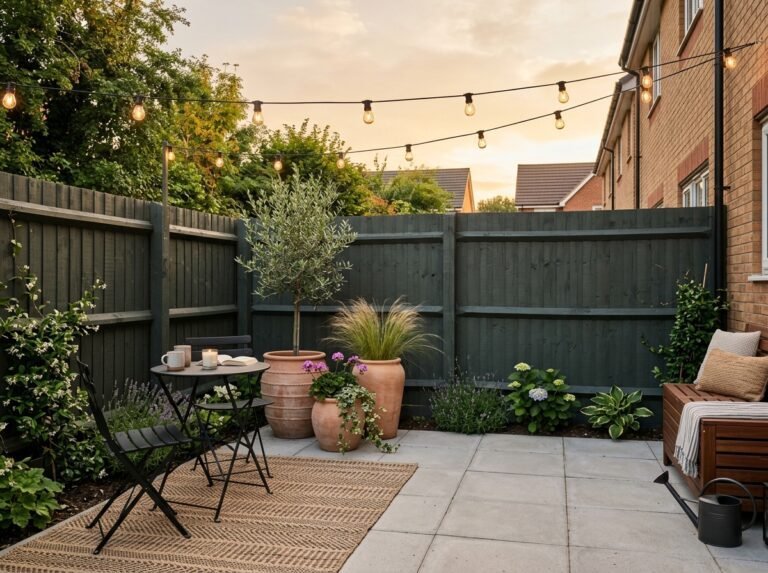
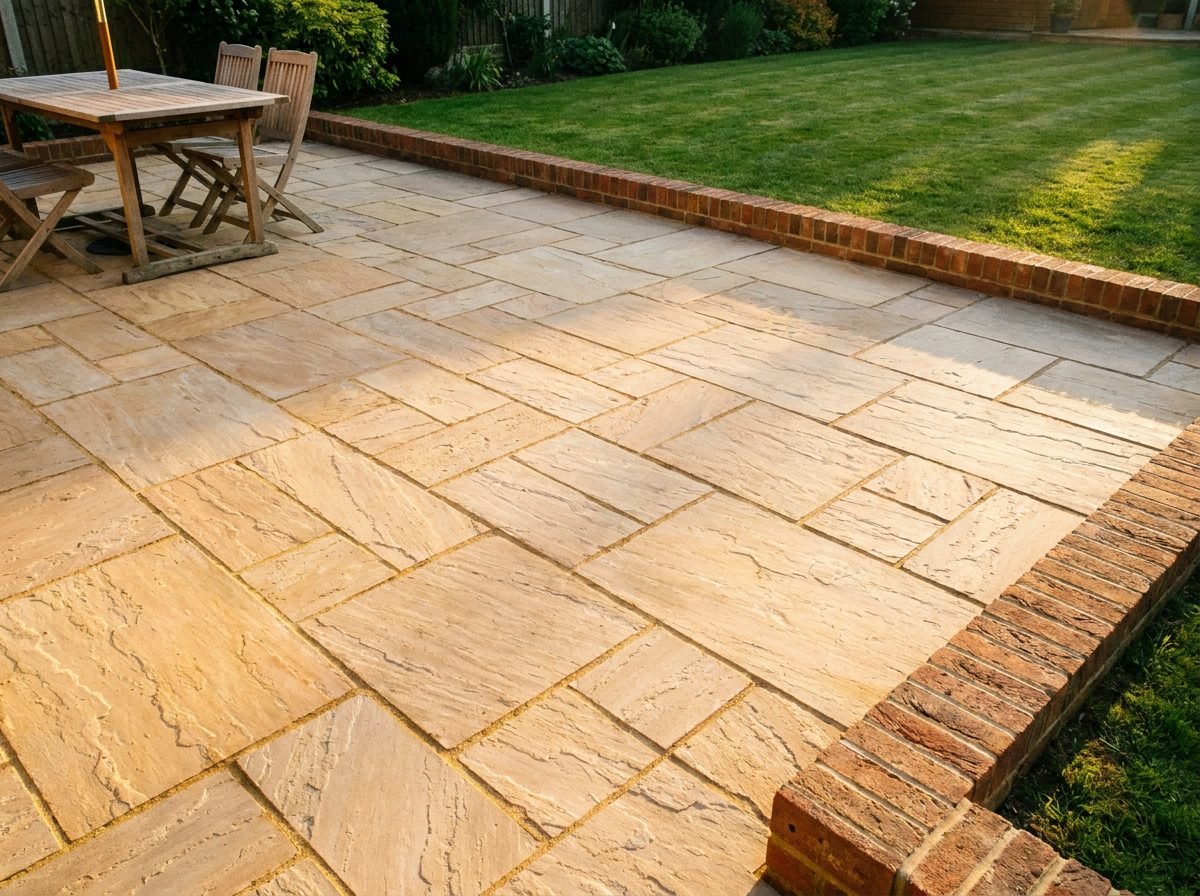
Warm buff sandstone sits happily with timber, terracotta and rust tones. Cool gray porcelain wants black metal, white and strong greens. Fighting the floor is expensive and rarely wins.
Two practical knock-on effects are worth knowing. Dark surfaces store heat and give it back into the evening, which is lovely in April and unpleasant in August. Thin metal chair legs also rock on riven stone. Wide feet or small rigid pads save a lot of irritation at dinner.
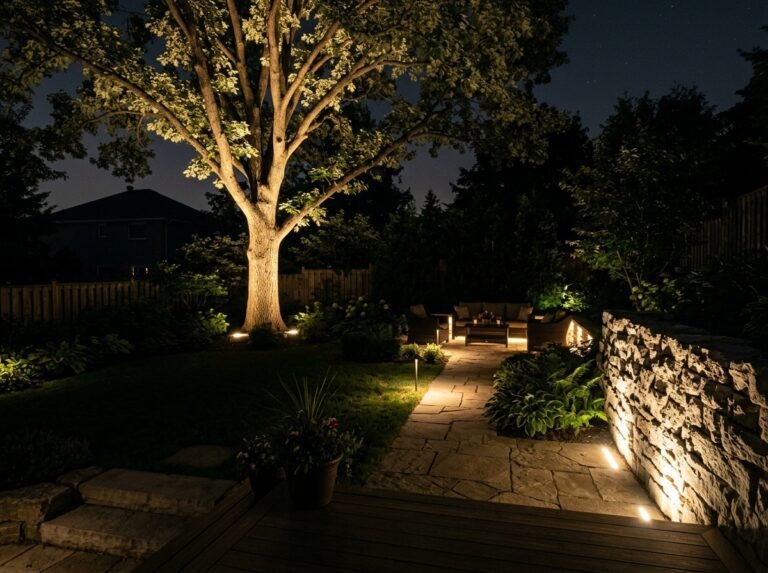
Texture also pays off after dark. A low fixture set close and aimed across a laid surface picks up every joint and ripple. It is one of the easiest effects to get right outdoors. There is more on that in this guide to placing and aiming outdoor fixtures.
Rug, cushion and planter colors are far easier to choose once the ground is settled. Picking them first is how patios end up with three palettes arguing.
One Surface, Five Ways Out
Clean it. Re-joint it. Cover it. Color it. Or lay something over it. In that order of cost, mess and commitment.
Most patios stop at the first two and end up looking better than their owners expected. That is a nicer surprise than any furniture delivery.
The shopping list still matters. It just works far better once it is landing on a floor somebody has already dealt with.