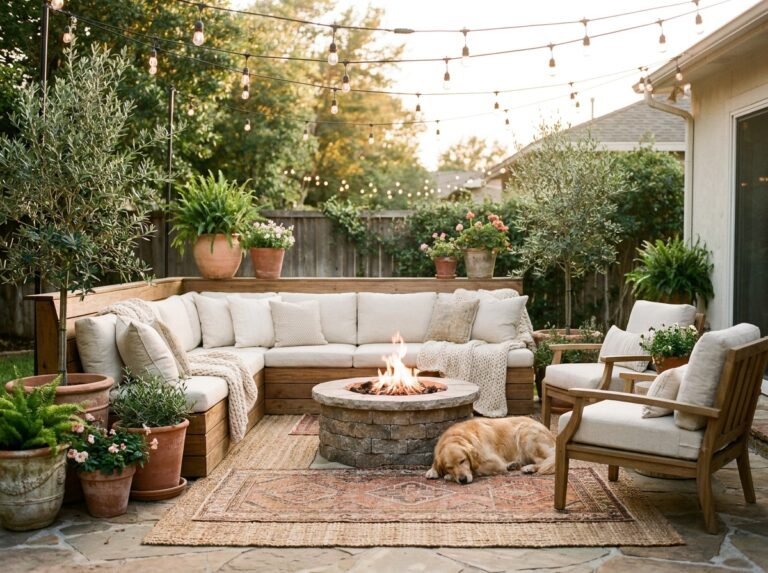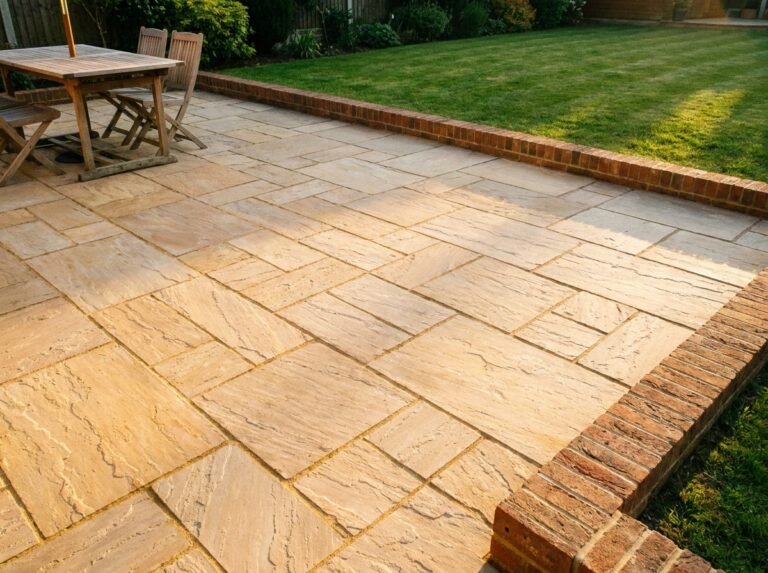
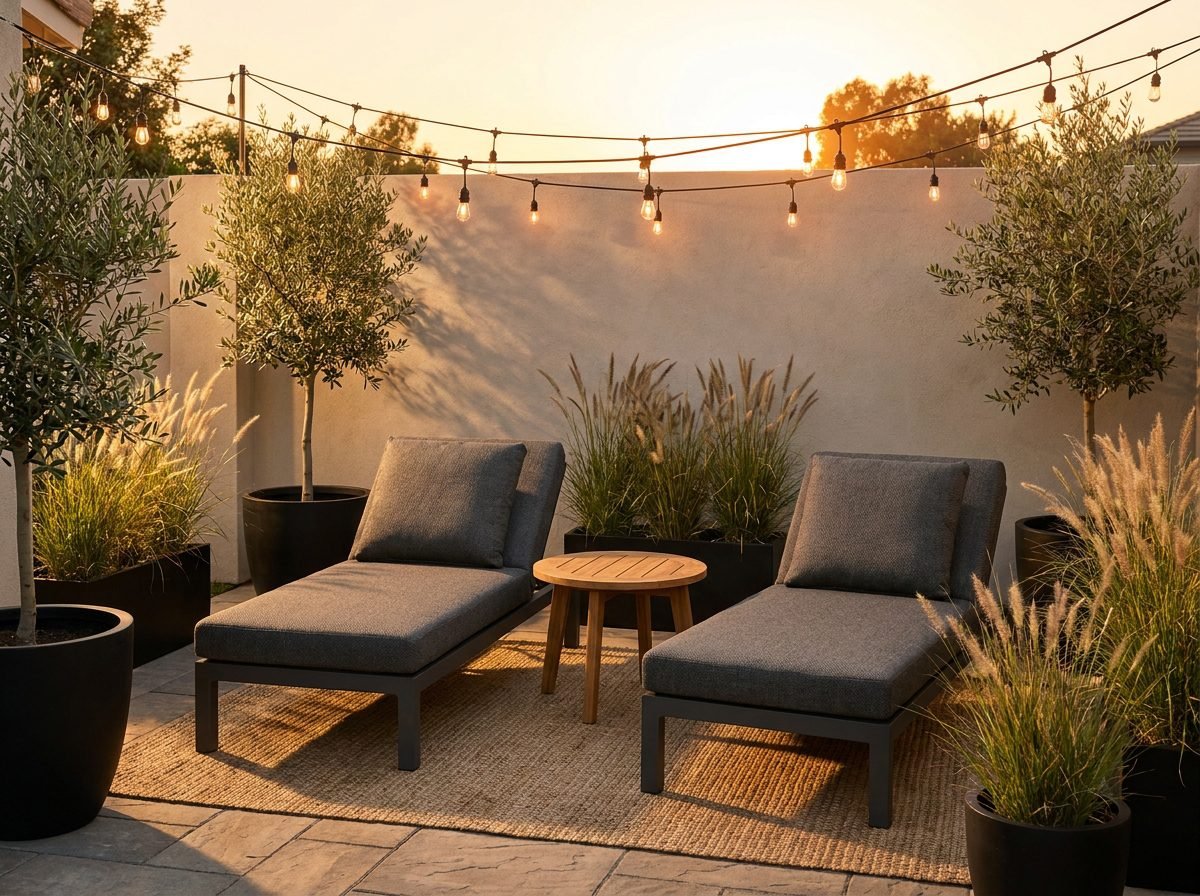
How to Create Your Own Modern Patio Retreat: Patio Furniture Ideas Inside
Picture your patio the way it probably looks right now. There’s a good chance it has a rusty grill nobody really uses, a couple of mismatched chairs, and a plastic side table that’s seen better days.
A lot of small patios end up this way. Not because anyone wants an unused outdoor space, but because nobody ever actually sat down and planned one. Furniture just piles up out there the way things pile up in a junk drawer.
The good news is that turning any patio into a real retreat, the kind of spot you’d choose over the couch, doesn’t need a huge budget or a full renovation. It mostly comes down to choosing the right furniture and being a little intentional about the layout. This guide walks you through exactly how to do that, piece by piece.
The Difference Between a Patio and an Actual Retreat
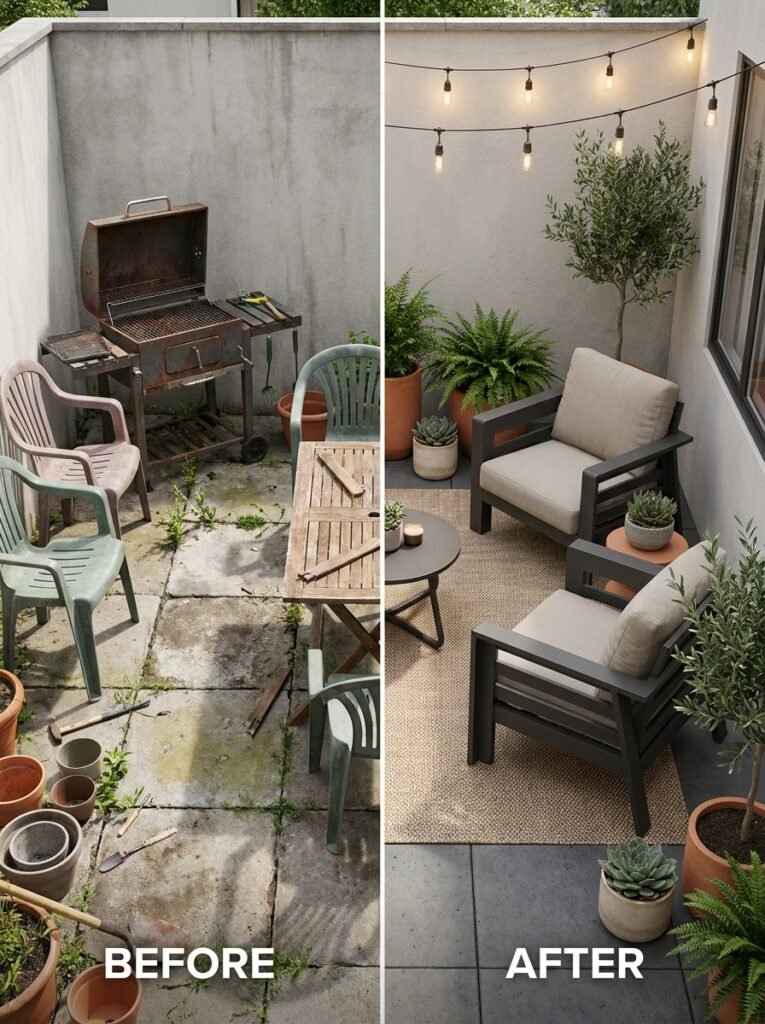
Here’s something that’s easy to miss. A patio with furniture on it isn’t automatically a retreat.
You can have a table and four chairs sitting on plain concrete and still feel like you’re just standing outside near your house. A retreat feels like somewhere you’d choose to go, even if you had other options.
The difference usually comes down to a few things. Comfort matters more than people think, since a chair that looks great in photos but hurts your back after ten minutes never actually gets used. Layout matters too, because furniture crammed against a wall doesn’t invite anyone to stick around.
Mood plays a bigger role than most furniture guides admit, honestly. Lighting, texture, and a sense of privacy do a lot of the emotional work that furniture alone can’t manage on its own.
So before getting into specific pieces, it helps to think of your patio less like an item on a to-do list and more like a small room that just happens to not have a ceiling.
Quick Checklist Before You Buy a Single Piece
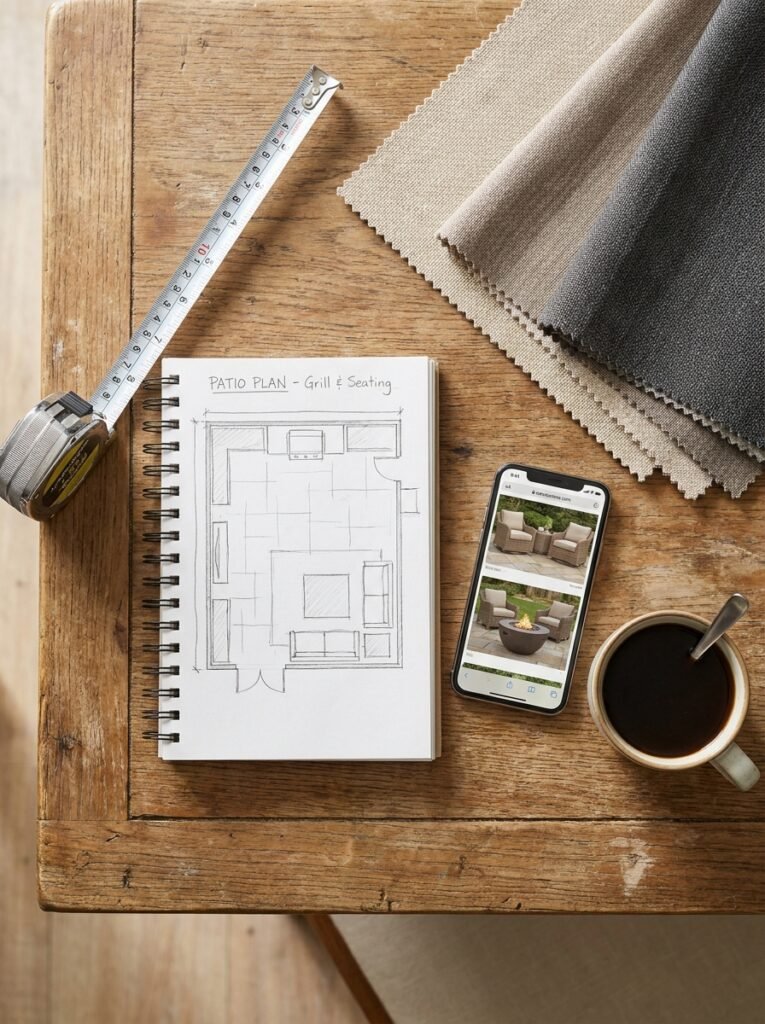
A short list like this one can save you from buying the wrong set entirely, so it’s worth running through before you order anything.
A few things worth figuring out first:
- Measure your actual space, including walkways. You want at least 30 to 36 inches to move around furniture comfortably.
- Decide if you want a dining setup, a lounge setup, or both. Trying to squeeze in everything usually backfires in small spaces.
- Check how much direct sun and wind the area gets, since that affects both fabric choice and how heavy your furniture needs to be.
- If you rent or live somewhere with an HOA, double check rules about furniture size, grills, or string lights before ordering anything.
- Think about where cushions and pillows will go when it rains, because storage matters more than it sounds like it should.
None of this is exciting. But skipping it is exactly how people end up with a beautiful set that doesn’t fit their space or how they actually live.
Picking Furniture That Actually Looks Modern (Without Feeling Cold)
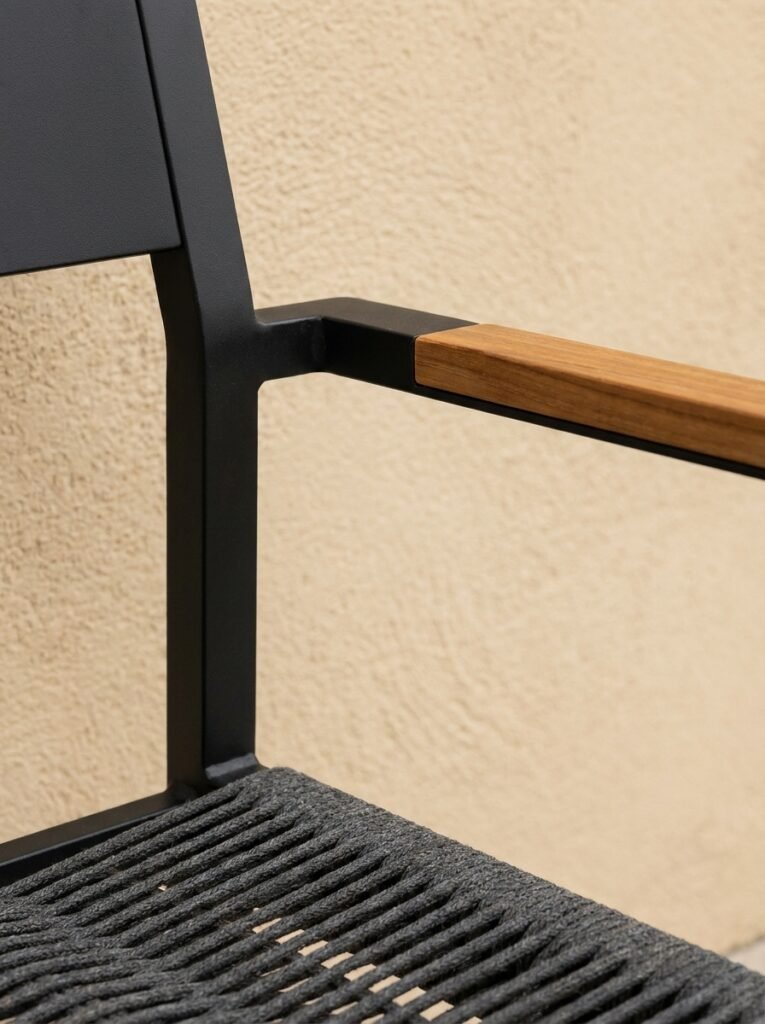
Modern doesn’t have to mean stiff or sterile. Some of the coziest modern patios still lean into clean design, just with warmth built in through material choices.
A few things that tend to read as modern outdoor furniture:
- Clean lines instead of curvy, ornate shapes
- A mix of materials, like a metal frame paired with woven rope or wood accents
- Low profile pieces that sit closer to the ground
- A neutral base palette (charcoal, sand, olive, off white) with one or two accent colors
Getting this mix right is really the whole trick. Too much of one material can feel flat, while too many colors can start looking busy fast.
Materials Worth Knowing About
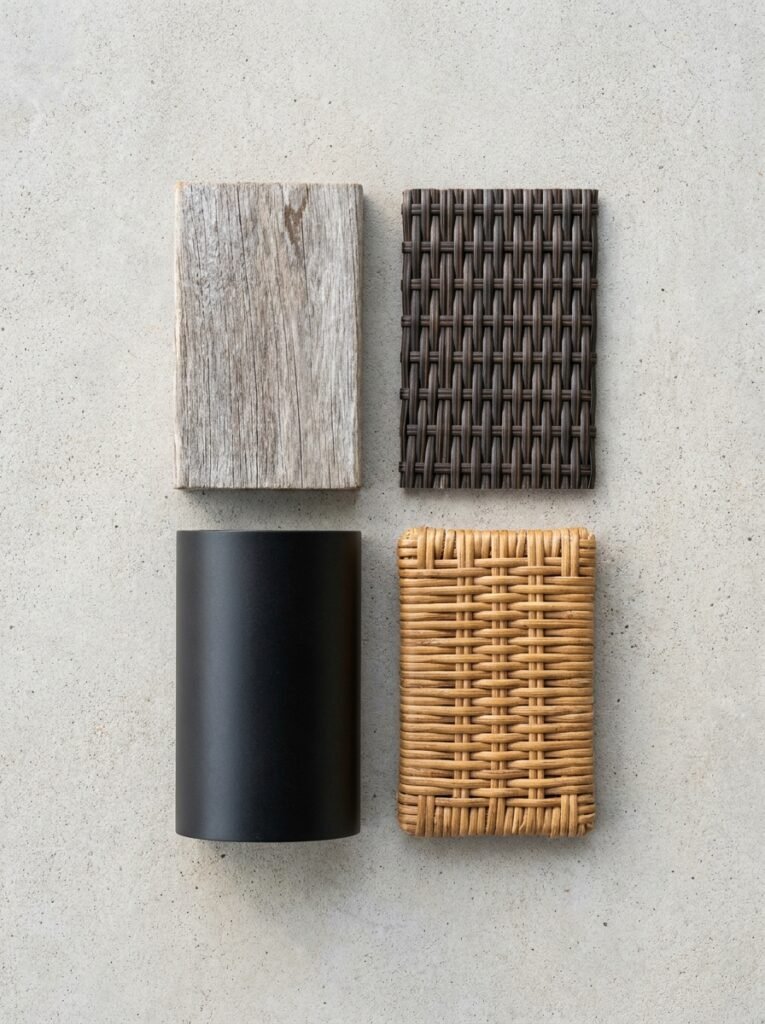
If you’re comparing options, it helps to actually know what you’re looking at.
Teak and eucalyptus wood are popular for good reason. They hold up outside for years and eventually fade to a soft silvery gray, a look a lot of modern patios lean into instead of fighting.
Powder coated aluminum is lightweight, resists rust, and works well if you need to move furniture around often or store it away for winter.
Synthetic or resin wicker looks like traditional wicker but handles rain and sun far better than natural rattan, which tends to dry out and crack outdoors over time.
Matte black steel shows up a lot in modern patio designs because it pairs with almost any color scheme and adds a slightly industrial edge without feeling harsh.
Lounge Seating That Feels Like a Mini Vacation
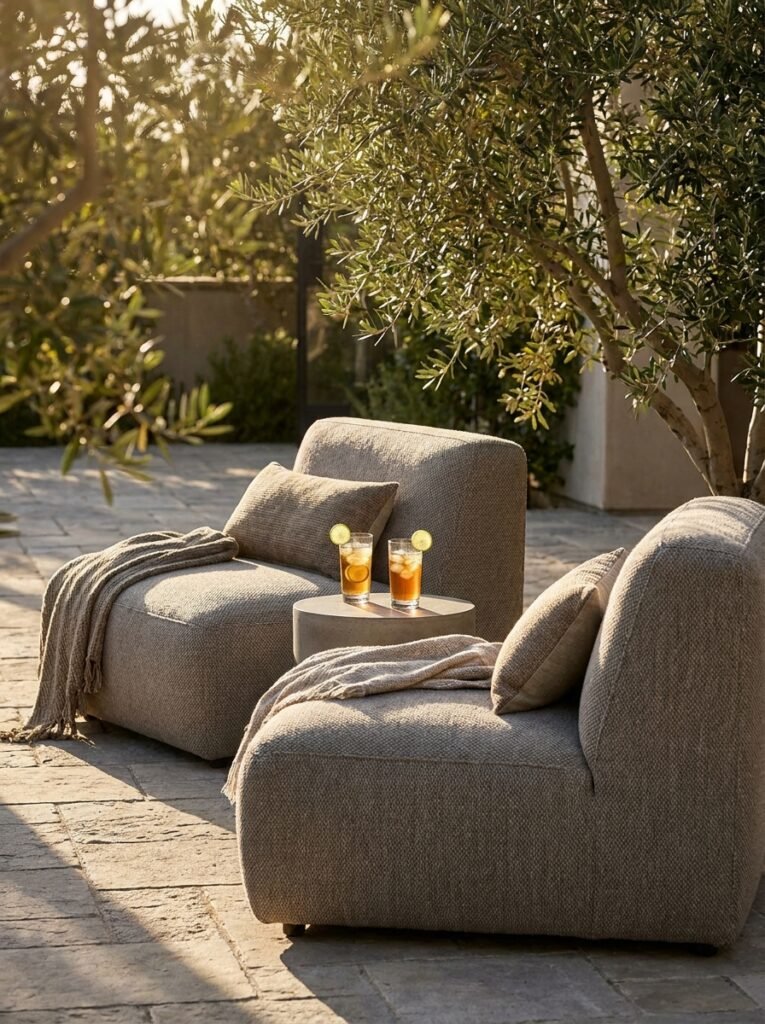
This is the part most small patios skip, and it’s kind of a shame.
You don’t need a full sectional to create a lounge area. A couple of low slung chairs with a small side table between them can do more for the retreat feeling than an entire dining set ever could.
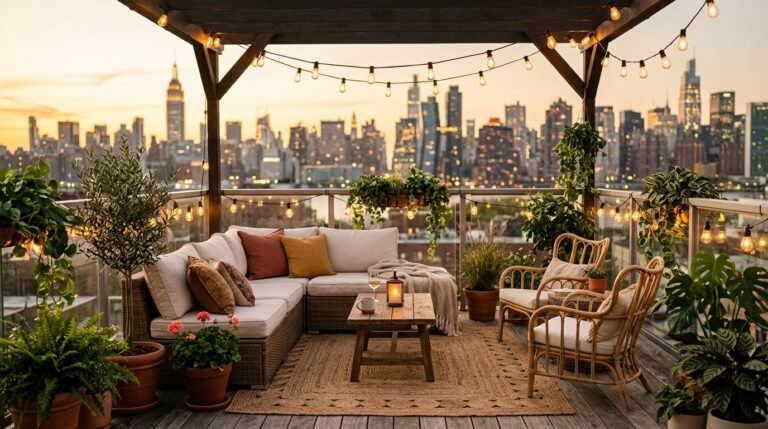
Deep seating chairs with thick, weather rated cushions tend to feel the most like an outdoor living room. If your space is tiny, even one oversized chair with a matching ottoman can work as a little reading nook.
Dining Sets for Small or Awkward Shaped Patios
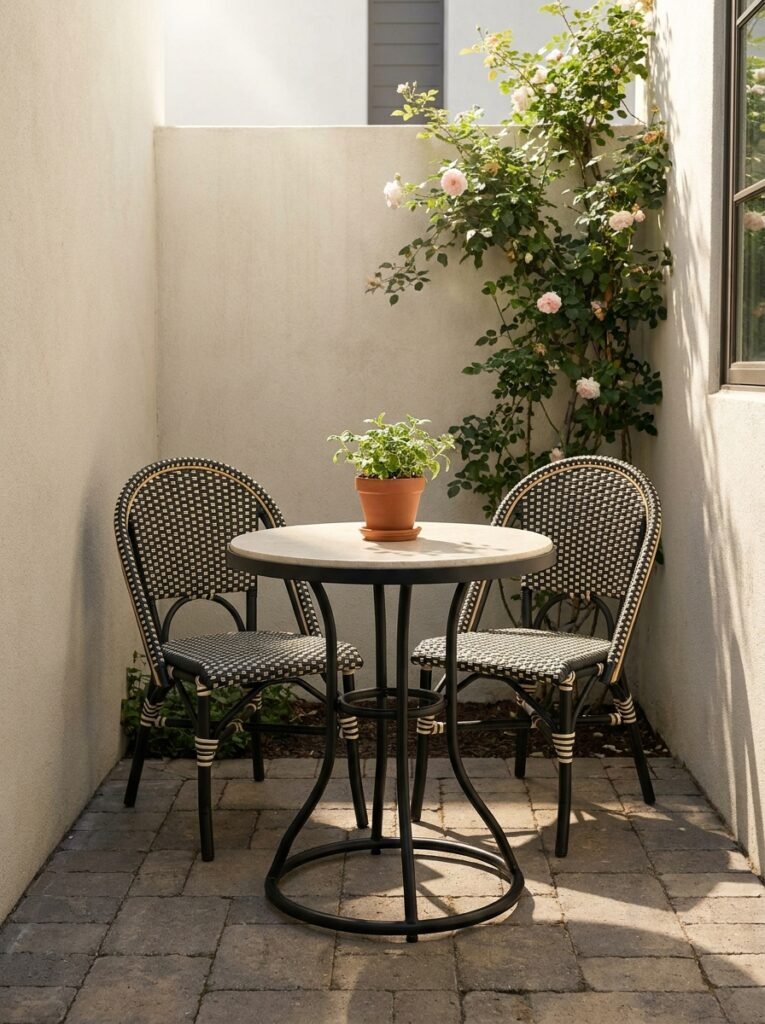
Dining is where most people overbuy. A table for six looks great in a showroom, but it can swallow a small patio whole.
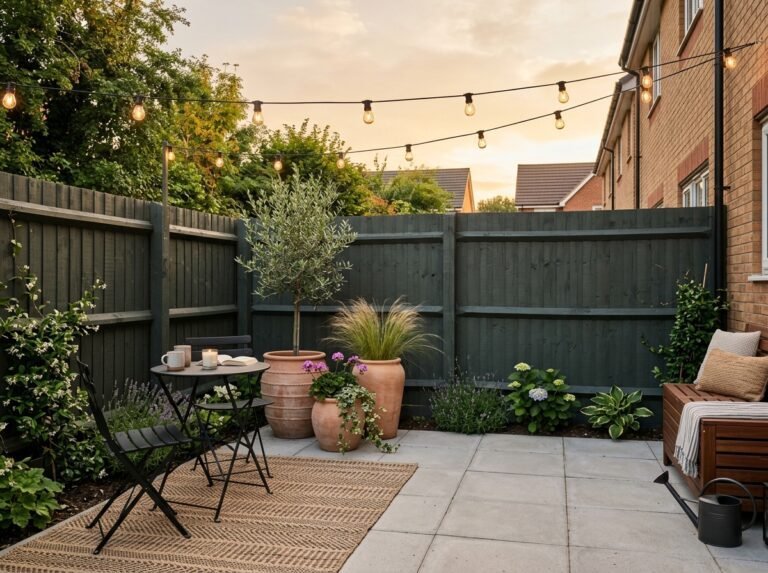
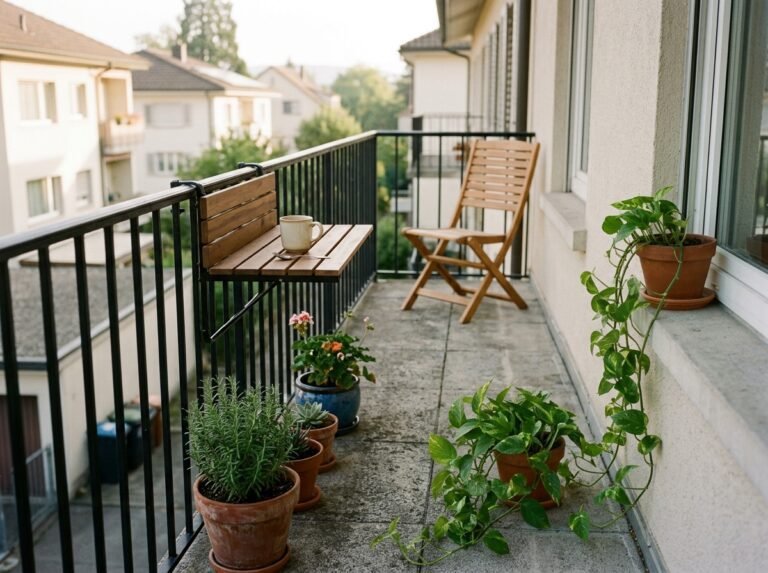
For tight spaces, a bistro set (a small round table plus two chairs) or a drop leaf table that folds down when it’s not in use tends to work much better. Round tables also help in tight corners, since there are no sharp edges to navigate around.
Before you settle on pieces, it’s worth looking through these patio inspiration ideas for turning an underused outdoor space into somewhere you’ll actually want to sit. It’s a useful gut check if your patio has an odd shape or awkward corners to plan around.
Furniture That Pulls Double Duty
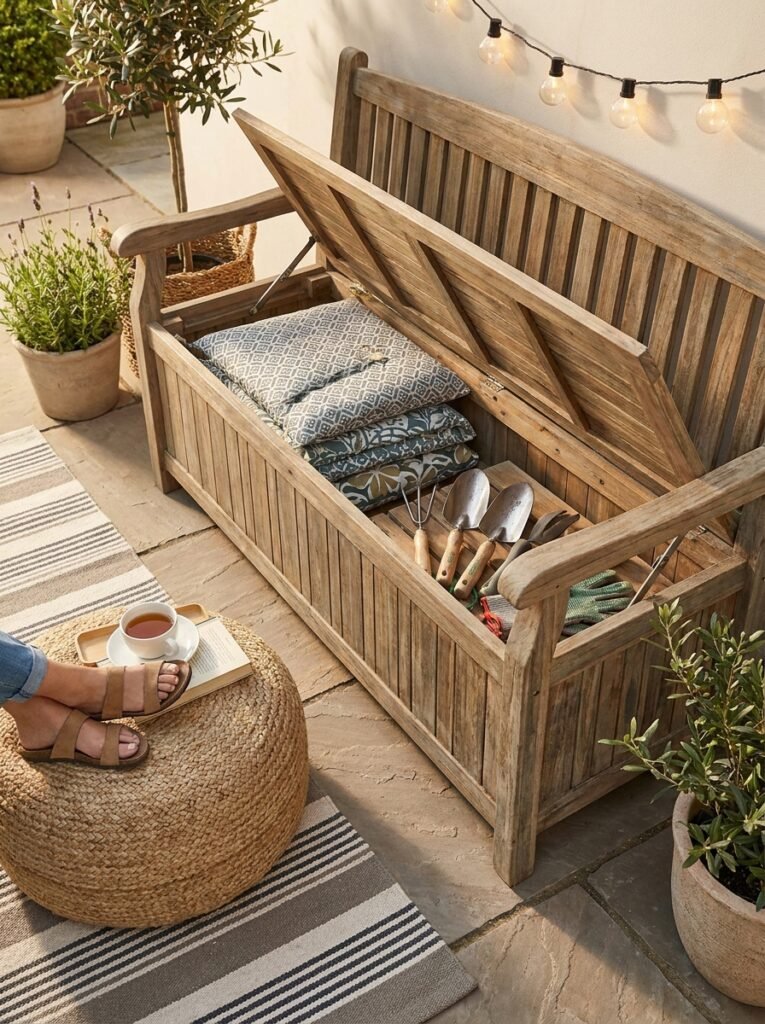
Small patios do best when the furniture works harder than just sitting there looking nice.
A storage bench is one of the smartest additions for a small space, since it gives you extra seating and a place to stash cushions or gardening tools at the same time. Ottomans with hidden storage do something similar for lounge areas.
Stackable chairs are another underrated option. You get full seating whenever guests come over, then tuck everything away the rest of the time.
Side tables that double as extra stools, or a simple garden stool that holds a plant one day and a drink the next, are small details that make a tiny space feel more flexible instead of more cramped.
Adding Shade Without a Full Renovation
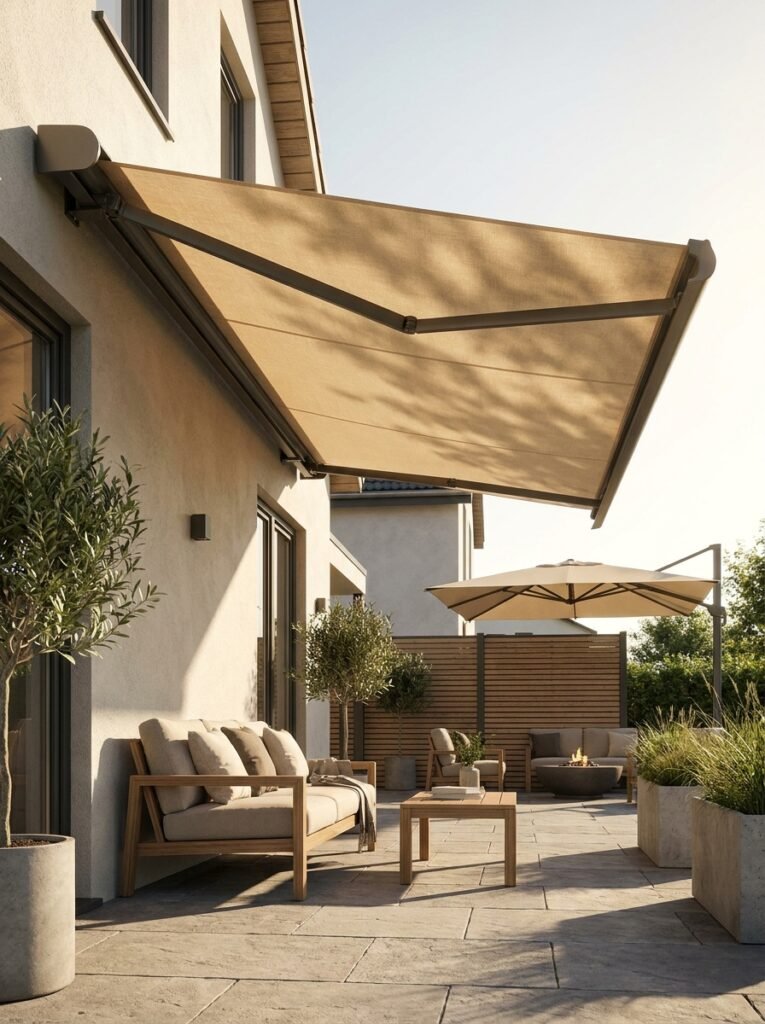
A retreat needs somewhere to escape direct sun, and this is one of the easiest things to overlook until you’re sitting out there sweating.
A cantilever umbrella is a solid option if you want shade that can shift through the day without a pole sticking up through the middle of your table. They cost more than a basic market umbrella, but the extra range of motion is worth it if your patio catches sun from a few different angles.
Retractable awnings work well when your patio sits right against the house, since they fold away completely once you don’t need them anymore. A shade sail is another modern looking option, and it tends to suit small or oddly shaped patios better than a bulky pergola would.
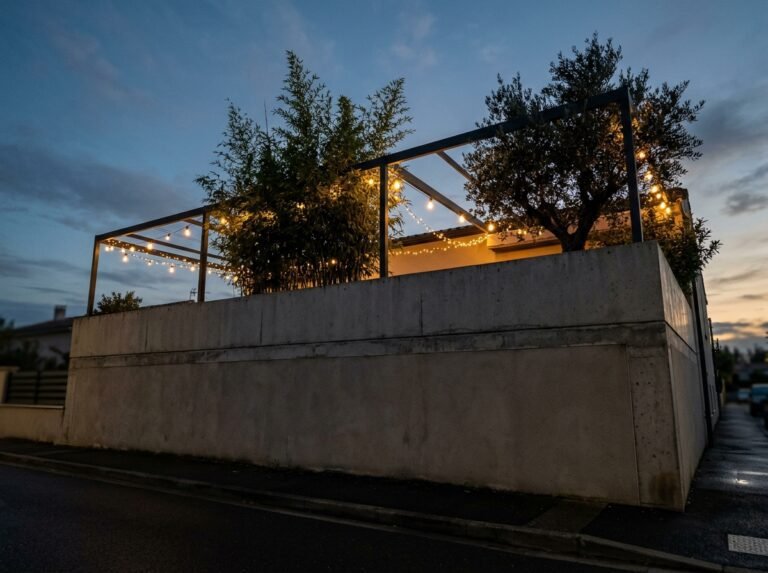
If you want something more permanent, a simple pergola with a few climbing plants trained across the top gives you dappled shade and a bit more privacy from neighbors. It doesn’t need to be elaborate to make a real difference.
Whatever you choose, test it out during the hottest part of your afternoon before committing. A shade option that looks great at ten in the morning can leave you completely exposed by two.
A Simple Layout Formula You Can Copy
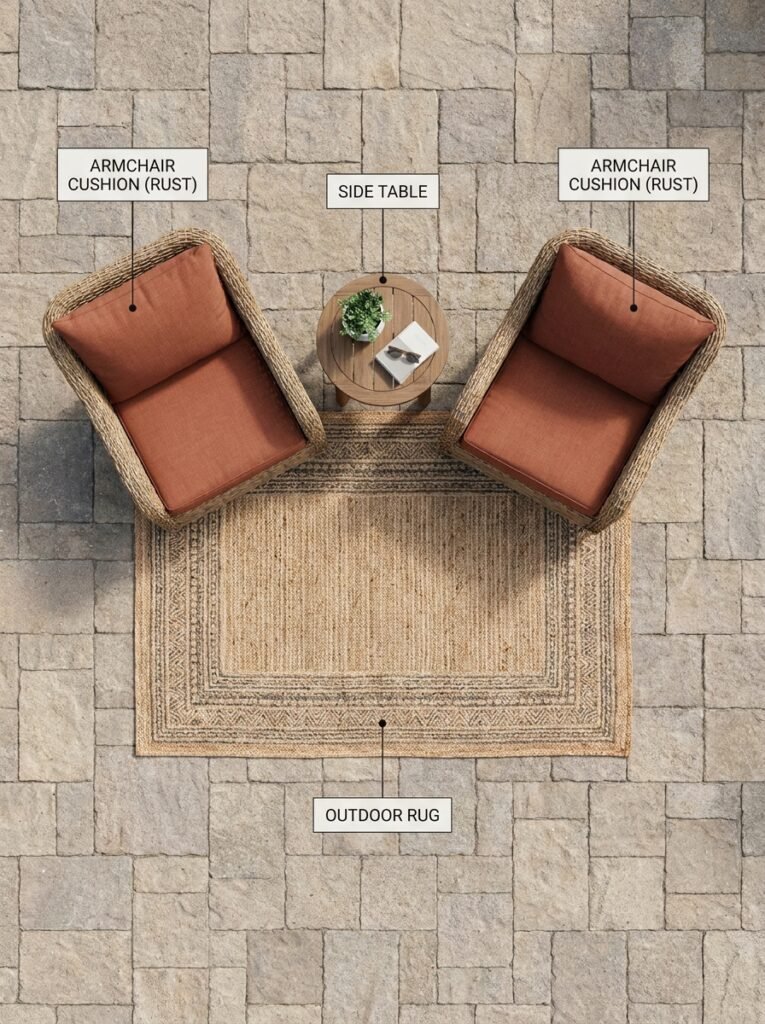
You don’t need a full design plan to pull this off. A simple formula works for most small or awkward patios, and you can adapt it to whatever space you’re working with.
Start with two matching chairs, angled slightly toward each other instead of facing straight out toward the yard. That small angle does more for the retreat feeling than almost anything else on this list, since it signals the space is meant for conversation, not just for parking chairs.
Add one small side table between them, low enough to reach a drink without leaning over. A round table tends to work best in tight corners, since there are no edges to bump into.
Layer in one outdoor rug sized to sit under the seating area, then finish with two or three oversized cushions in a color that pulls from your house, fence, or existing landscaping. Keep the rest of the space open rather than filling every corner just because it’s there.
That’s really the whole formula. No pergola, no built in fire pit, and no big renovation required. Just furniture that fits the space and is arranged like it’s actually meant to be used.
Lighting, Textiles, and the Small Stuff That Ties It Together
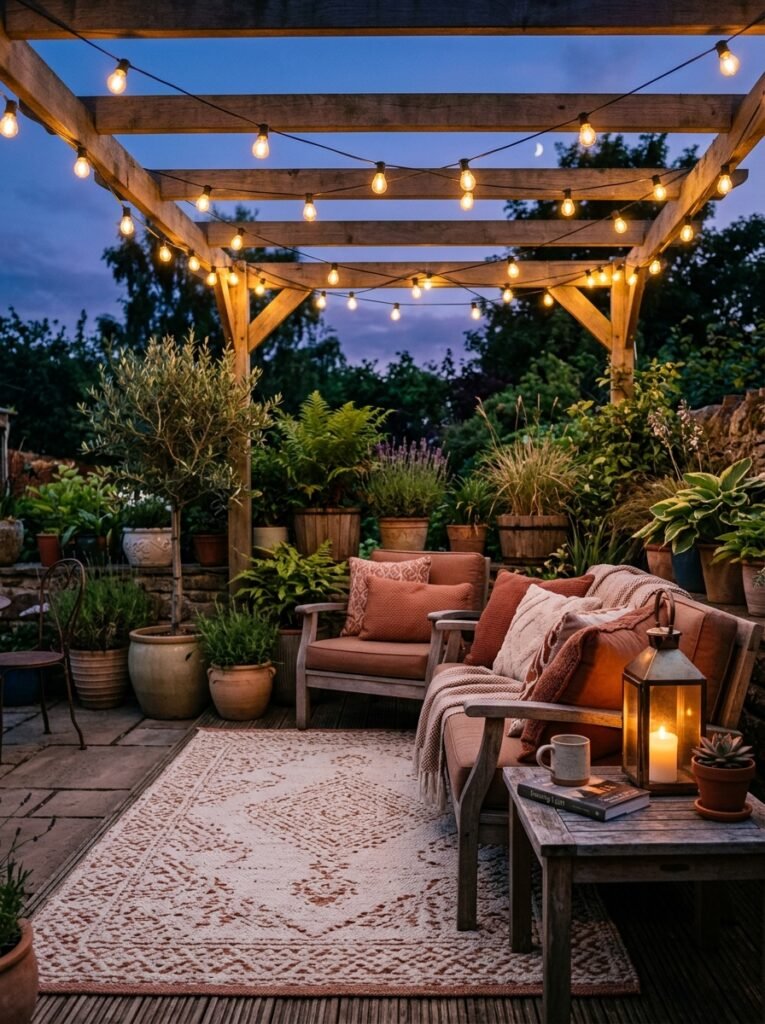
Furniture gets you most of the way there, but a few small details finish the job.
Warm toned string lights or a couple of lanterns change how a space feels the second the sun starts going down. Solar path lights along the edge of the patio are an easy option if you don’t want to deal with cords at all.
An outdoor rug grounds the whole layout and makes furniture look intentional instead of scattered around. Look for rugs rated specifically for outdoor use, since regular indoor rugs mold and fade fast once they’re outside.
Weatherproof cushions and pillows matter more than most people expect. Regular indoor fabric holds moisture and can mildew within a single season, while outdoor rated fabric like solution dyed acrylic dries fast and resists fading in direct sun.
A couple of potted plants at different heights, some candles in hurricane holders, and a small side table for drinks round things out nicely without cluttering the space.
Mistakes That Quietly Ruin a Patio Makeover
A few things quietly undercut an otherwise good patio setup, even when the furniture itself is nice:
- Buying furniture sized for the showroom floor instead of your actual patio
- Skipping weather rated fabric to save a little money upfront, then replacing everything a year later anyway
- Pushing every single piece against the wall, which can make a space feel smaller instead of bigger
- Forgetting shade completely, so the space becomes unusable during the hottest part of the afternoon
- Going overboard on matching sets, which can end up looking more like a showroom display than an actual home
The fix for most of these is just slowing down before you buy. Measure twice, think about how you’ll really use the space day to day, and resist the urge to fill every inch just because it happens to be empty.
Budget-Friendly Ways to Get the Retreat Look
You don’t need a huge budget to make any of this work. A few ways to stretch your budget further:
- Shop end of season sales, since patio furniture prices often drop by late summer
- Mix a couple of higher quality pieces, like the seating you’ll actually use most, with more affordable accessories
- Repaint or reseal an old wood or metal set instead of replacing it entirely
- Sew or order simple cushion covers instead of buying a whole new cushion set
- Check secondhand marketplaces, since outdoor furniture often gets sold when people move and don’t want to pack it
A retreat feeling comes from thoughtful choices more than expensive ones. Some of the coziest patios come together slowly over a few purchases instead of all at once in a single trip.
Frequently Asked Questions
What’s the best furniture for a small modern patio? Look for lower profile pieces with clean lines, like a bistro set or a couple of armchairs instead of a bulky sectional. Furniture on visible legs, rather than boxy solid bases, also tends to make small spaces feel more open.
How do I make my patio look expensive without spending a lot? Put your budget toward one or two standout pieces, like a great pair of lounge chairs, and keep everything else simple. A good rug, some plants, and warm lighting do a surprising amount of visual work for very little money.
What material lasts the longest for outdoor furniture? Teak and powder coated aluminum tend to hold up the best over time. Resin wicker is also quite durable and needs far less upkeep compared to natural wicker or rattan.
Do I need to cover my patio furniture in winter? If you can, yes. Covers, or simply storing cushions indoors, extend the life of your furniture significantly, especially in areas with harsh winters or heavy rain.
Can I use regular indoor furniture on a covered patio? It depends on how exposed the space really is. Fully covered and enclosed patios can sometimes handle indoor furniture for a while, but humidity and temperature swings still shorten its lifespan compared to furniture built for outdoor use.
Making It Actually Feel Like Yours
At the end of the day, a modern patio retreat isn’t about buying the most furniture or the most expensive pieces you can find. It’s about picking a handful of things that fit your space and actually reflect how you want to spend time outside.
Start small if you need to. Even two chairs and a good rug can change how a space feels almost overnight. You can always build from there once you see what you actually use.
Your patio doesn’t need a big renovation to feel like somewhere worth sitting. Sometimes it just needs a little intention and the right furniture in the right spots.