10 Kitchen Decor Ideas That Survive Real Cooking
Here is the problem with most kitchen decor advice: it is written for kitchens where nobody cooks. Open shelves of pristine white dishes, linen towels draped just so, a cookbook propped open at a watercolour illustration. Lovely. Now fry onions in that kitchen for a week and look at it again.
If you actually cook, your kitchen produces grease film, steam, splatter, and heat every single day. Decor that ignores this either gets ruined or gets in your way, and either way you quietly stop loving the room. So this list has one rule: every idea has to look beautiful AND survive real cooking. Where placement matters, I will tell you exactly where things should and should not go. The goal is a kitchen that looks styled on a Tuesday night with dinner going, not just in a photo taken before anyone touched the stove.
Add Open Shelving
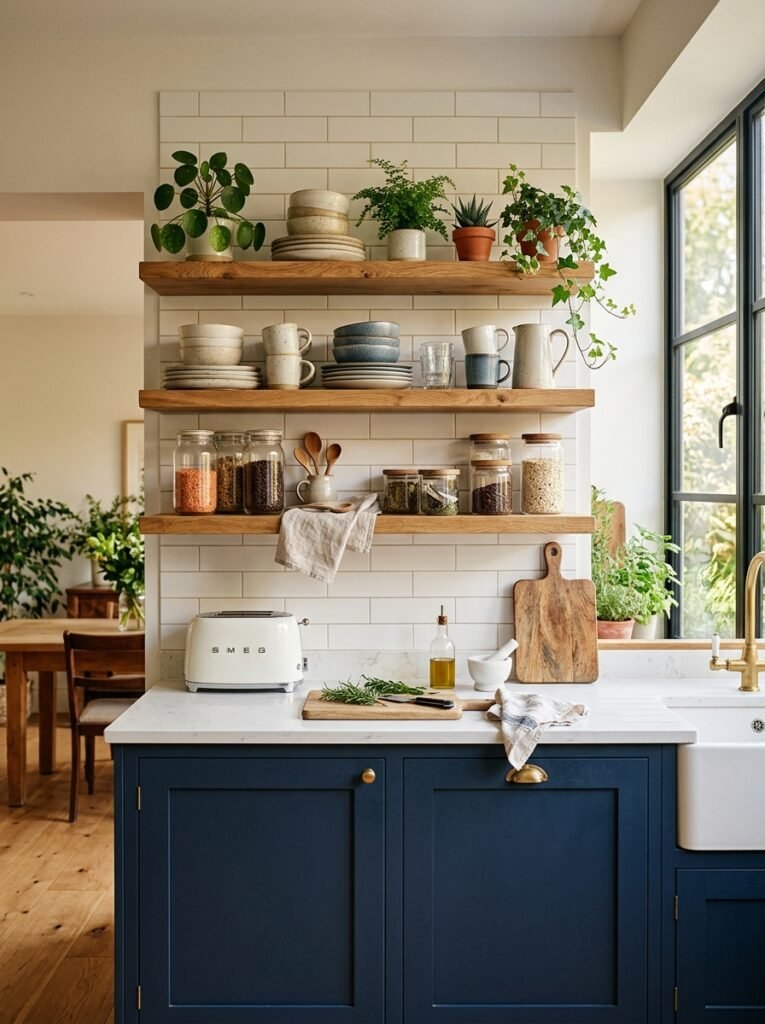
Open shelving is the most loved and most regretted kitchen trend at the same time, and the difference comes down to two things nobody mentions: location and contents.
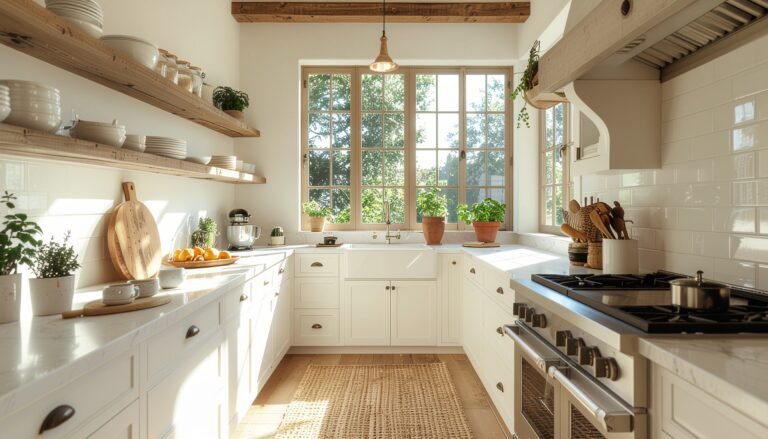
Location first. An open shelf within about a metre of the stove collects an invisible film of airborne grease that turns to sticky dust within weeks, and everything on it needs washing before use. Put open shelves on the wall furthest from the hob, near the sink or the eating area, and they stay clean for months instead. Contents second: display only what you use weekly. Your everyday plates, glasses, and mugs rotate through the dishwasher constantly, so they never sit long enough to gather dust. The decorative jug you touch twice a year belongs behind a cabinet door. Swap one upper cabinet for shelves rather than all of them, and you get the open, airy look while keeping closed storage for the clutter every working kitchen genuinely has.
Hang a Stylish Backsplash
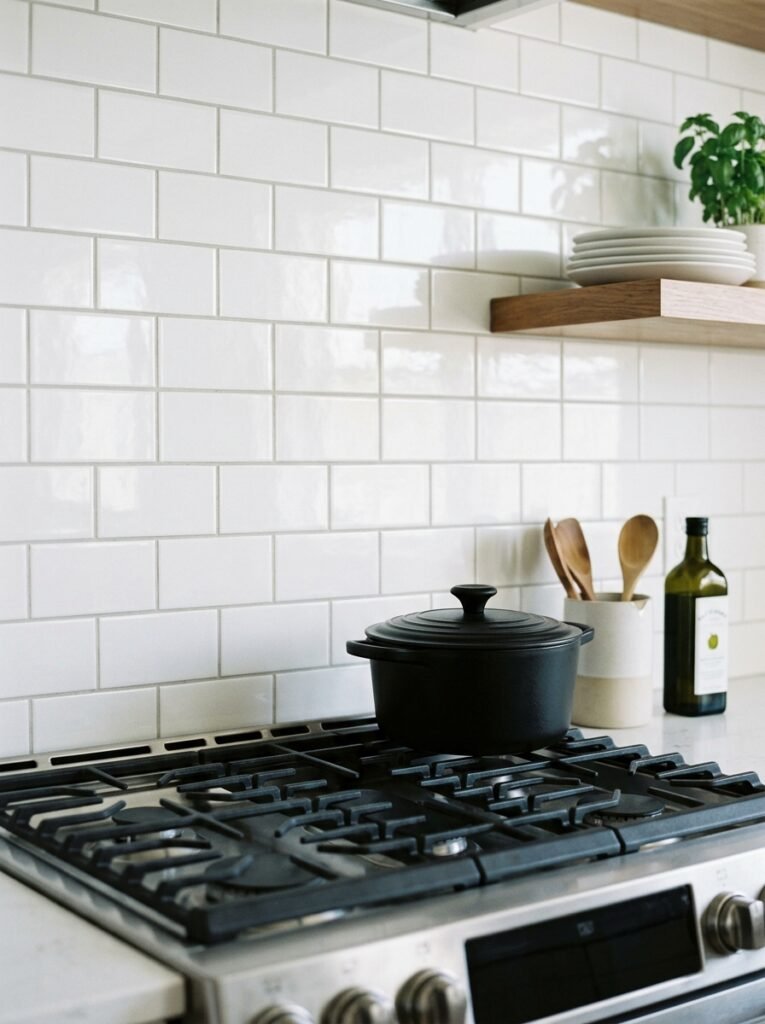
The backsplash is where style and splatter meet, literally, so the material question matters more here than anywhere else in the house. The good news is that peel-and-stick tile has made this a renter-friendly weekend job instead of a tiling project.
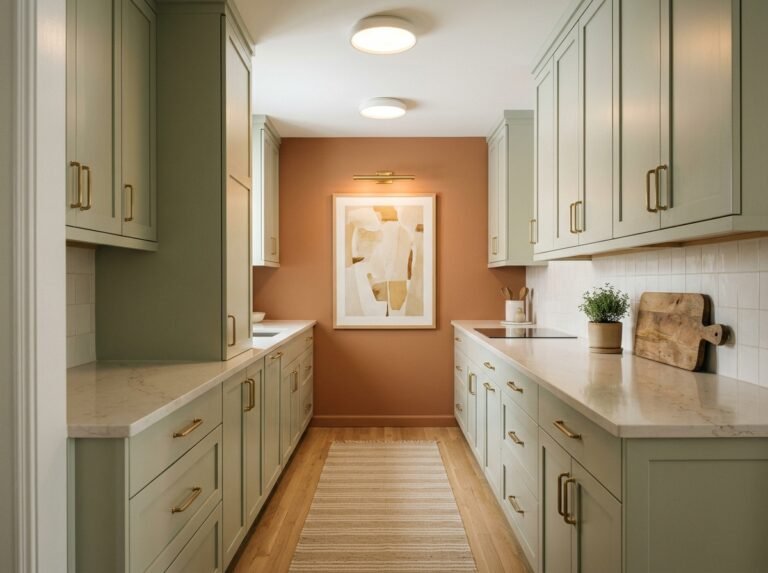
One honest warning from the practical side: cheap peel-and-stick vinyl directly behind a hob can lift and discolour from heat, and textured surfaces trap grease in every groove. Behind the stove specifically, choose smooth, heat-tolerant options, real tile if you own, or quality thicker peel-and-stick panels rated for heat if you rent, and keep the bold textured stuff for behind the sink and counters where it only ever faces water. Style-wise, white subway tile is the safe classic, but if your cabinets are plain, the backsplash is the one place a pattern or warm terracotta tone can carry the personality of the whole kitchen. It is a small surface, so being brave here is cheap.
Upgrade Your Cabinet Hardware
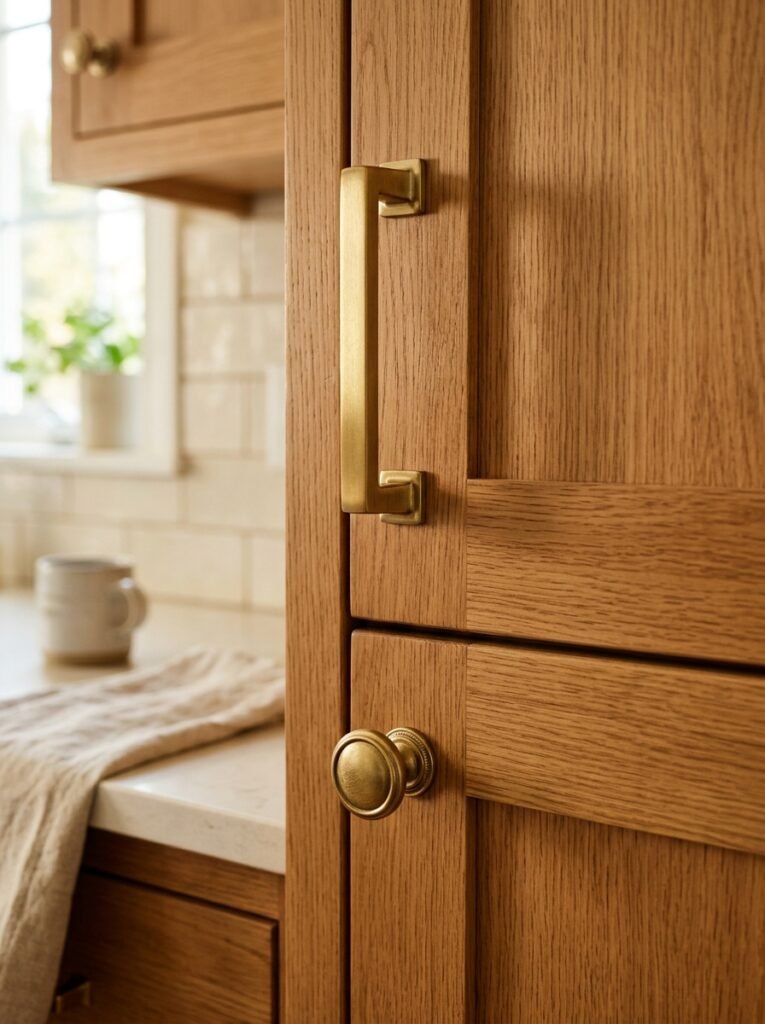
This is the highest return upgrade in the entire kitchen and the one I would do first. Dated or grimy handles age a kitchen more than the cabinets themselves, and swapping them needs one screwdriver and one hour. No skill, no mess, no permission from anyone.
Two practical notes that the showroom never mentions. First, measure the hole spacing on your current handles before buying, centre to centre, because matching the spacing means no drilling and no filling. Second, think about grip with messy hands: you operate these handles with flour, oil, and wet fingers daily, so solid bar pulls and decent-sized knobs beat tiny delicate designs that look elegant and feel fiddly. Finish-wise, brushed brass warms up white and wooden kitchens beautifully, matte black sharpens modern ones, and both hide fingerprints far better than polished chrome, which shows every smudge an hour after you clean it.
Style Your Counter Tops
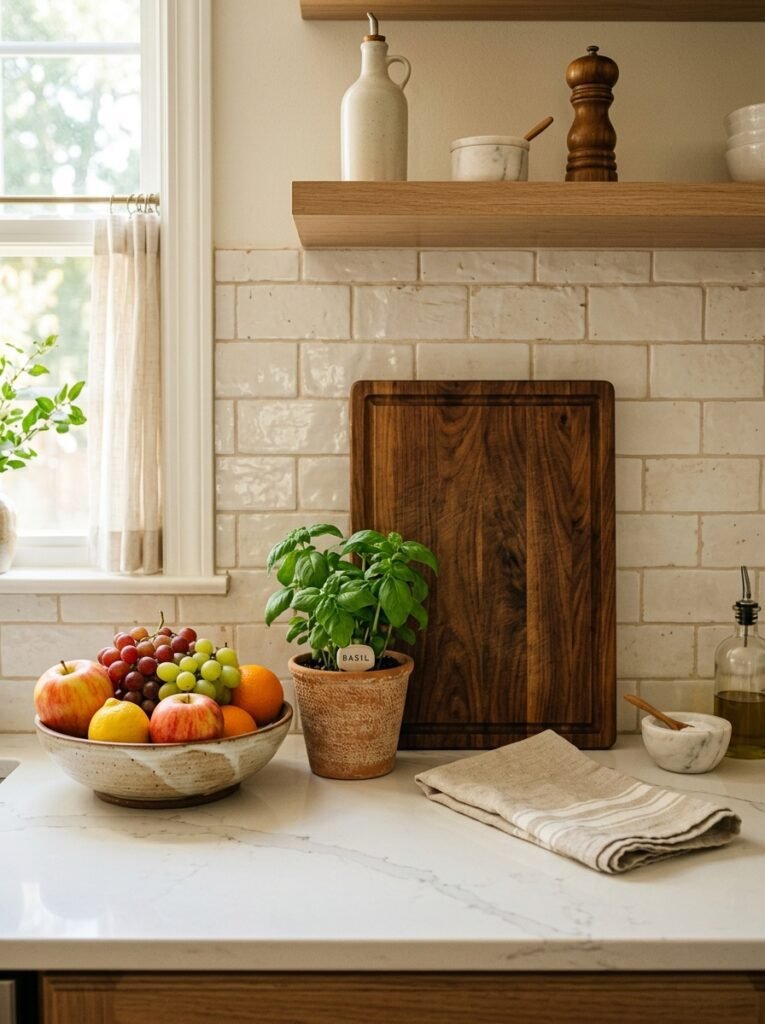
Counter styling in a cooking kitchen is a zoning exercise. You need your main prep area completely clear, because nothing kills the joy of cooking like relocating a vignette every time you want to chop an onion. So pick your styling zones deliberately: the back corner, the stretch beside the fridge, the dead spot under the upper cabinets.
The formula that works is one tall, one wide, one alive: a large wooden cutting board leaned against the backsplash (tall), a ceramic bowl of actual fruit you eat (wide), and a pot of basil or a small plant (alive). Add the things you reach for daily, the olive oil, the salt jar, the good soap dispenser, grouped on a tray so they read as intentional rather than left out. Everything in the styling zone should be either used weekly or wipeable, because counter decor in a real kitchen gets cooked around, and a dusty arrangement of never-touched objects is the opposite of charm.
Add Plants and Fresh Herbs
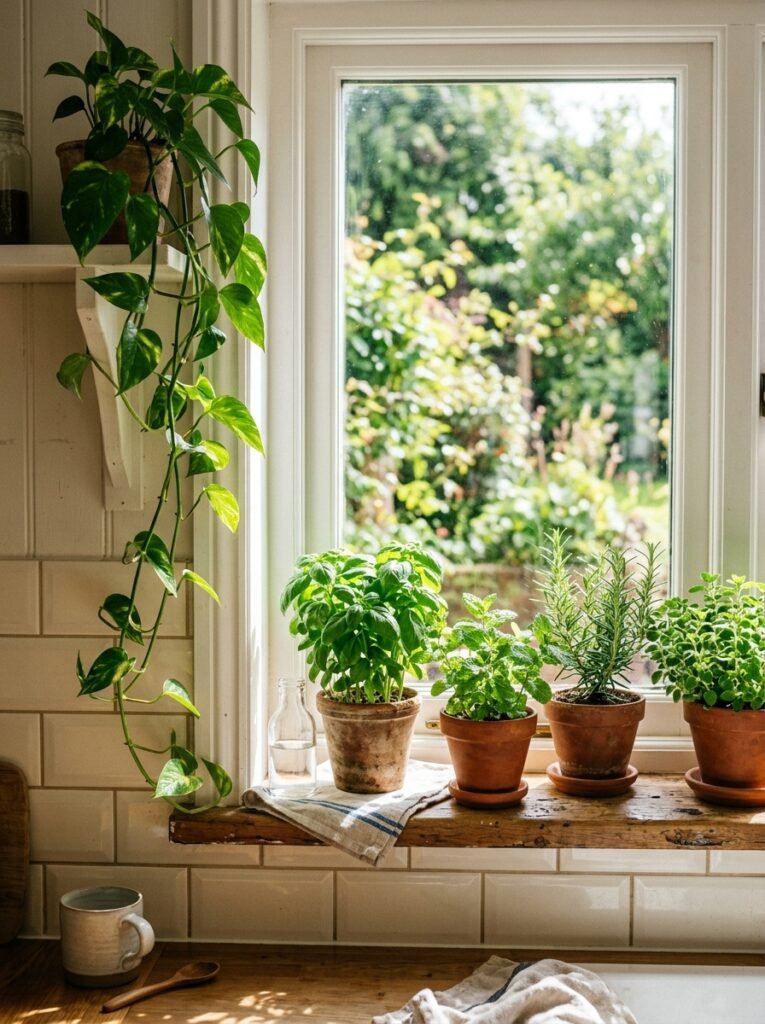
Herbs are the only decor that makes your food taste better, which automatically earns them the windowsill. But let me save you the cycle everyone goes through: the supermarket basil pot that dies in nine days. Those pots are grown for one harvest, with a dozen seedlings crammed together. Split one pot into two or three, water from the bottom, and suddenly supermarket basil lives for months.
Mint, chives, and rosemary are the forgiving starters; mint barely needs permission to grow. Keep the herb pots near the window but away from directly beside the hob, where heat blasts and oil mist coat the leaves of anything you plan to eat. For pure decoration, a trailing pothos on top of the upper cabinets is the classic kitchen move: that dusty dead zone above the cabinets is warm, bright, and out of splatter range, and a vine spilling from it softens the whole room.
Hang a Statement Light Fixture
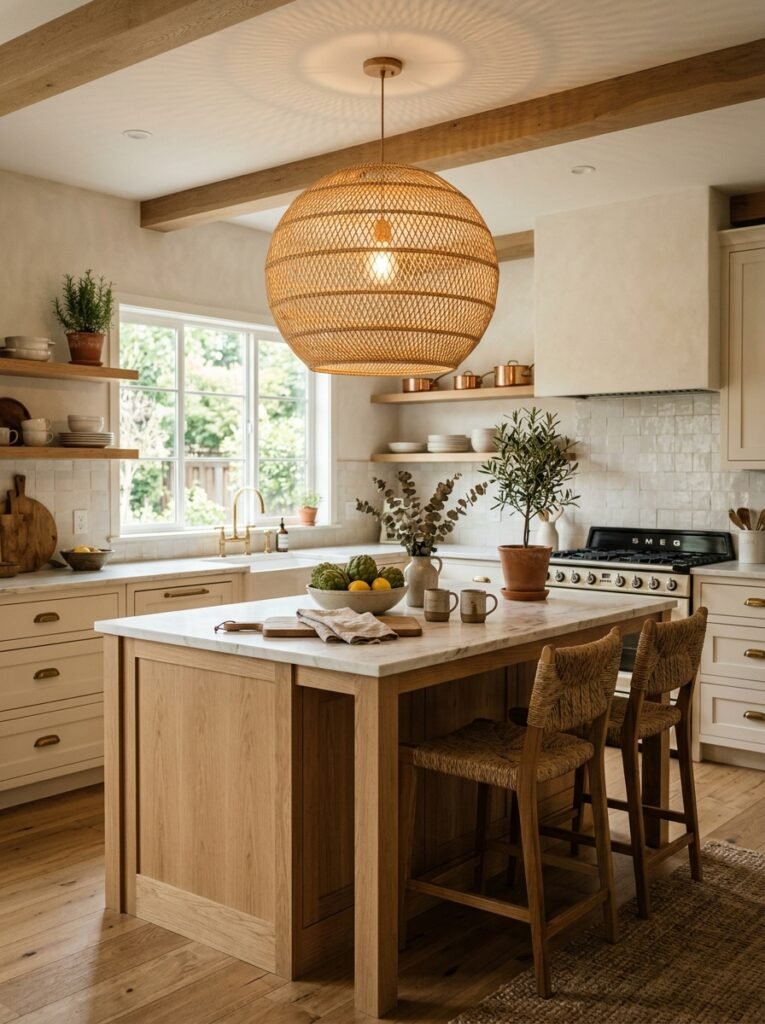
Most kitchens are lit by one flat ceiling light that makes the room feel like a clinic, and changing it is the single biggest mood shift available. A statement pendant does two jobs: it adds a piece of jewellery to a room that is otherwise all cabinets, and it pulls warm light down to where life happens, over the island, the table, or the sink.
The cooking-kitchen consideration is, once again, placement and material. A rattan or fabric shade hanging over the hob area will absorb grease and cooking smells until it is unsalvageable; natural-material pendants belong over the table or island, while glass and metal shades, which wipe clean, can live anywhere. Choose warm white bulbs, around 2700K, rather than the cool blue-white that makes food and people look equally unappetising. If rewiring is not an option in your rental, plug-in pendants that hook over the existing fitting get you most of the effect with none of the electrician.
Display a Cookbook Collection
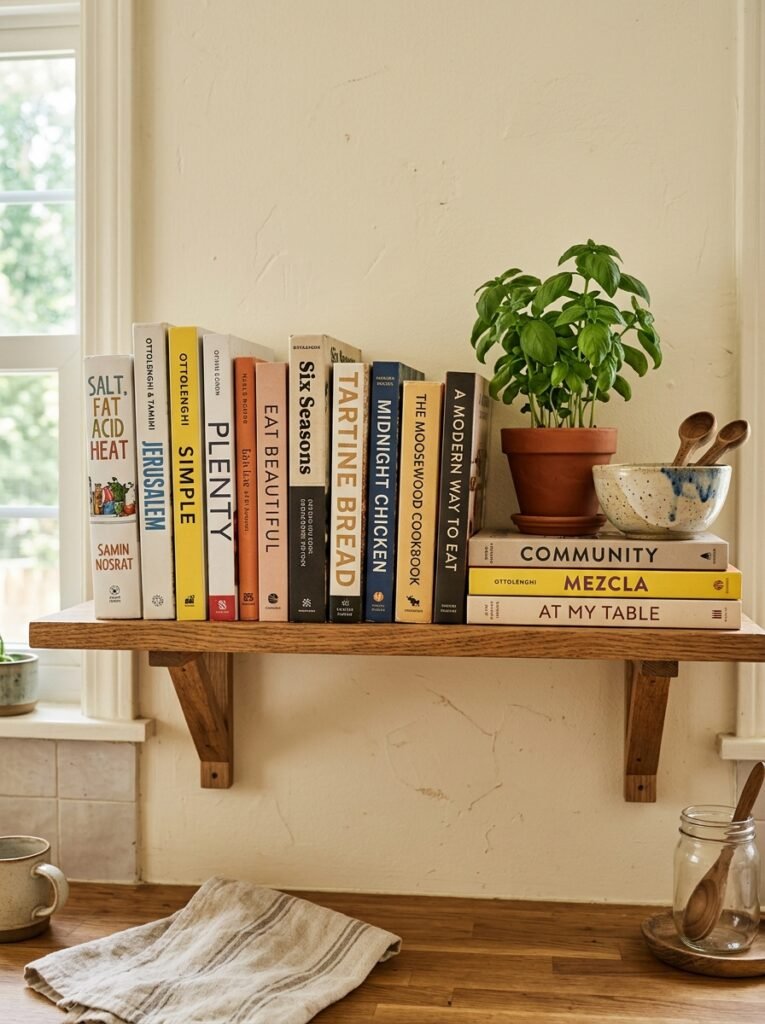
Cookbooks are the rare decor that tells guests who you are: open someone’s kitchen shelf and you instantly know whether they dream in Italian, baking, or barbecue. Hiding them in a cupboard wastes both the colour of their spines and the story they tell.
Display them where you cook from them, but apply the splatter rule one more time: a shelf of cookbooks directly beside the hob ends up with greasy, swollen pages. A shelf at the calm end of the counter, the top of a baker’s rack, or a short row corralled between bookends near the table all work. Stack a few horizontally with a plant or candle on top to break up a long row. And the styling-photo cliché of one book propped open on a stand actually earns its place in a real kitchen if it holds the recipe you are cooking this week, decor and function in one move. Just close it when you fry.
Introduce Warm Natural Materials
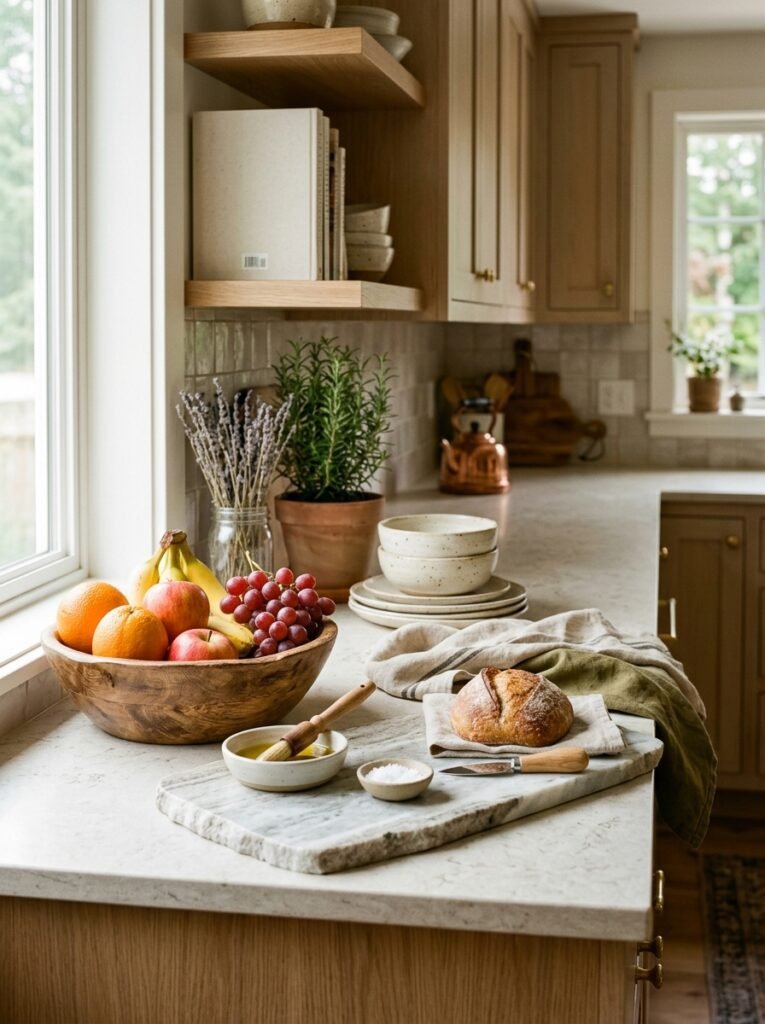
Kitchens skew cold and hard: laminate, steel, glass, tile. Wood, ceramic, stone, and linen are what bring the warmth back, and conveniently, the most beautiful natural objects in a kitchen are also tools. A serious wooden chopping board, a stack of handmade ceramic bowls, a marble pastry slab, linen tea towels actually hanging within reach. Nothing here is “just decor,” which is exactly why it never feels staged.
The habit that makes this work is buying slowly and buying things you will use. One genuinely good cutting board that lives on the counter beats three decorative ones gathering dust. Wood needs an occasional rub of mineral oil to stay rich instead of grey and cracked, a two-minute job once a month. And mix your textures: wood against marble against ceramic reads as collected and warm, while six items in the same pale wood reads as a catalogue page.
Add a Rug to Your Kitchen
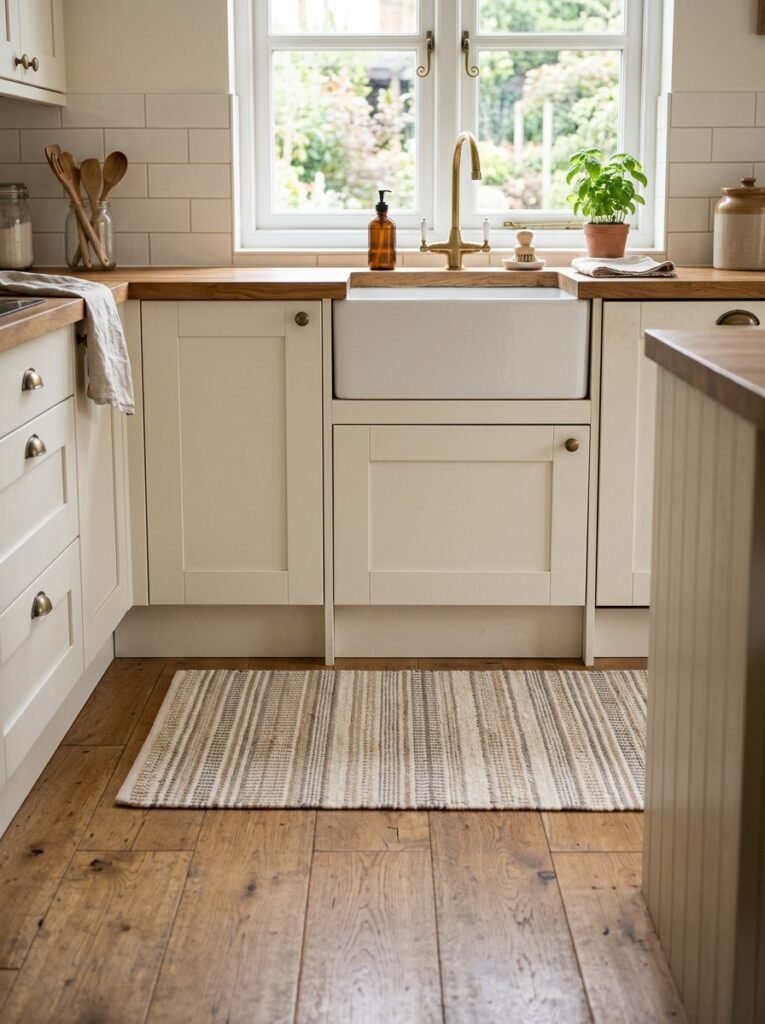
A kitchen rug sounds like a mistake until you understand the modern options, and then it becomes the cosiest upgrade in the room. The trick is one word: washable. Machine-washable flat-weave rugs, and the newer rubber-backed printed ones, are built precisely for the room where things get dropped, and they have removed the old objection entirely.
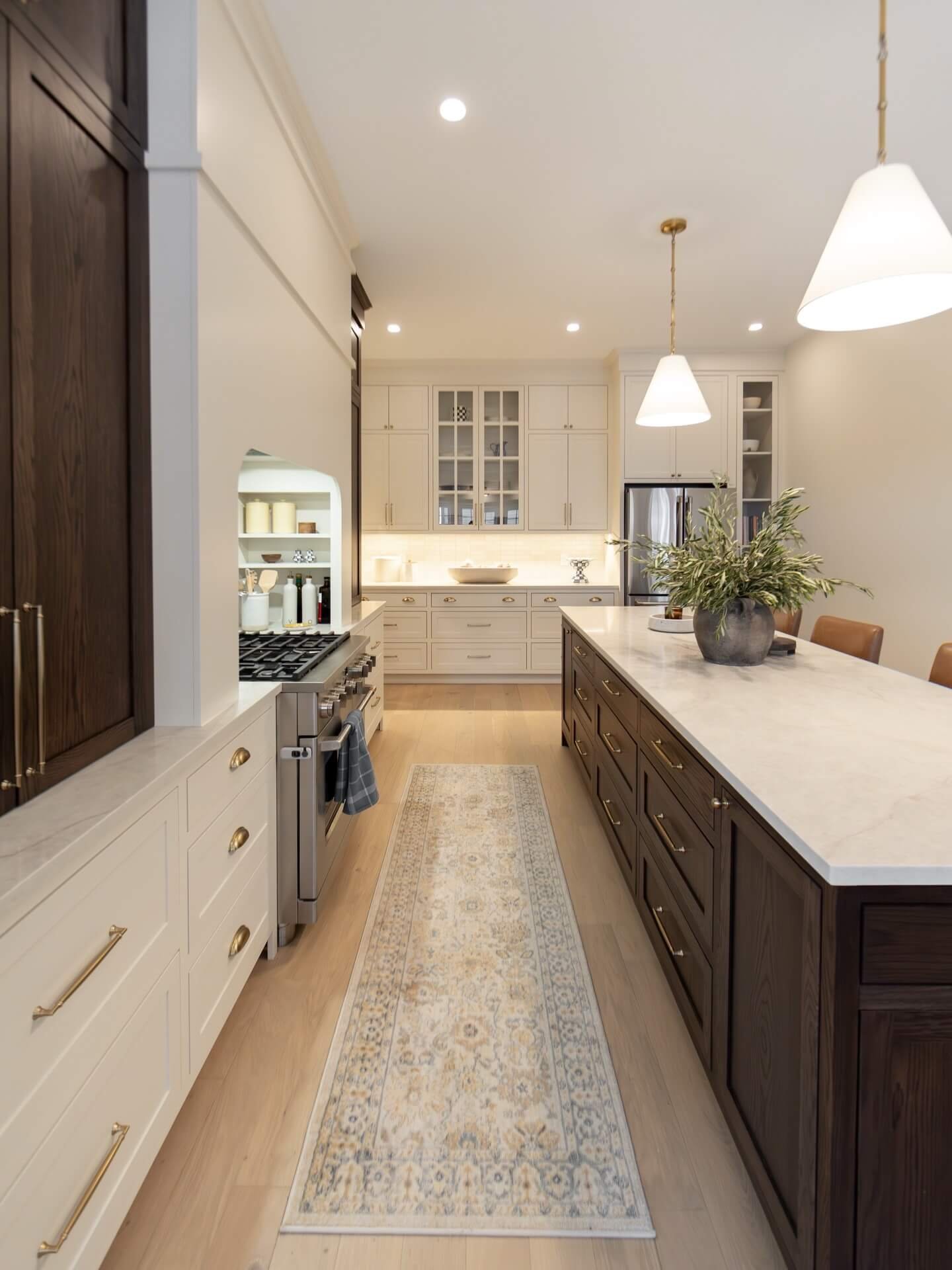
Placement gives you comfort where you actually stand: a runner in front of the sink and prep counter cushions your feet through the longest standing sessions in the house, which your back will notice by the end of a big cooking day. Two rules keep it practical: a non-slip backing or rug pad is non-negotiable on smooth kitchen floors, and skip anything with a thick pile, which holds crumbs like a hairbrush. A flat-weave in a warm pattern hides the week’s sins between washes and instantly makes the kitchen read as a room rather than a workstation.
Hang Wall Art in Your Kitchen
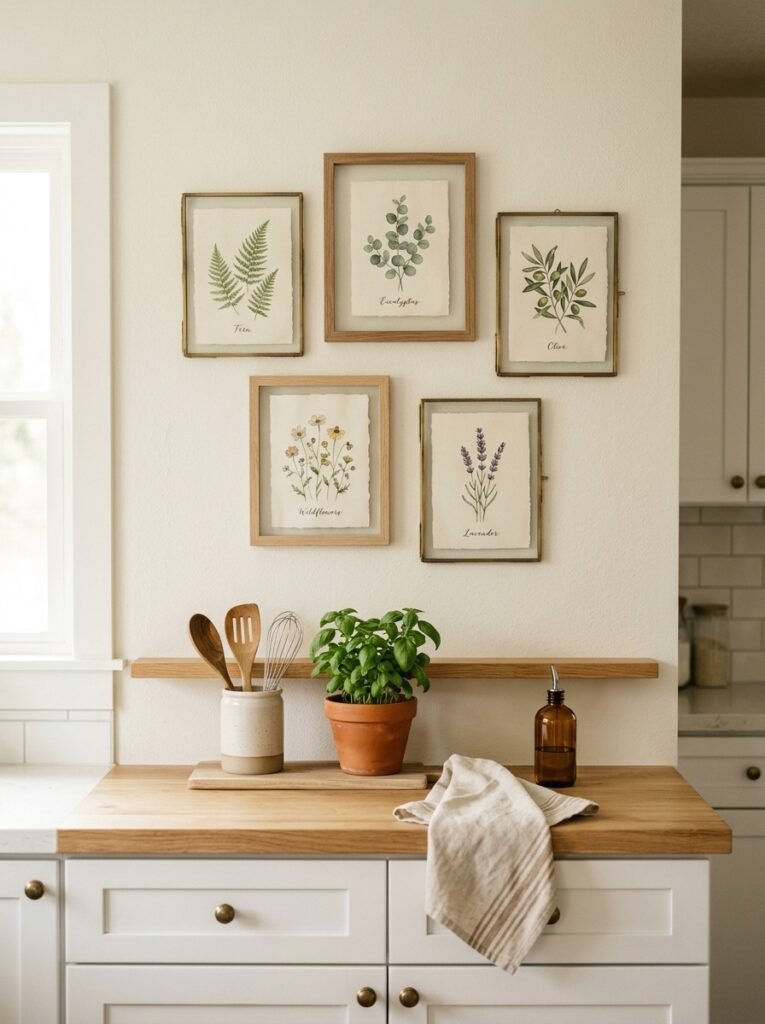
Bare kitchen walls are the last tell that a kitchen was fitted rather than decorated. One or two pieces of art flip that, and the kitchen is a forgiving gallery: nobody expects masterpieces here, so playful works. Food prints, vintage market posters, botanical herbs, a hand-lettered recipe of a family dish, which is my favourite kitchen art idea, because it turns decor into memory.
By now you know what I will say about placement: steam and grease destroy paper, so art lives on the walls away from the hob and kettle, the eating nook, the wall over the radiator, the gap beside the window. Use sealed frames with glass fronts, and save anything genuinely precious for other rooms. If your only available wall is in the splash zone, choose inherently wipeable art: a framed tile, a metal print, or a small chalkboard, which earns its place twice over as the family message board and the most-changed artwork in the house.
Final Thoughts
A kitchen you love is not the spotless one in the photos. It is the one where the decor works with the cooking instead of against it: shelves that stay clean because they are placed right, herbs you actually eat, a rug that goes in the washing machine, art that can take a little steam. Start with the hardware swap this weekend, since an hour and a screwdriver buys you the biggest visible change. Then add one layer a month. By the time you have worked through this list, you will have a kitchen that looks styled mid-dinner on a Wednesday, and that is the version worth falling in love with.