13 Stunning Terracotta and Sage Green Kitchen Ideas for a Warm and Inviting Space
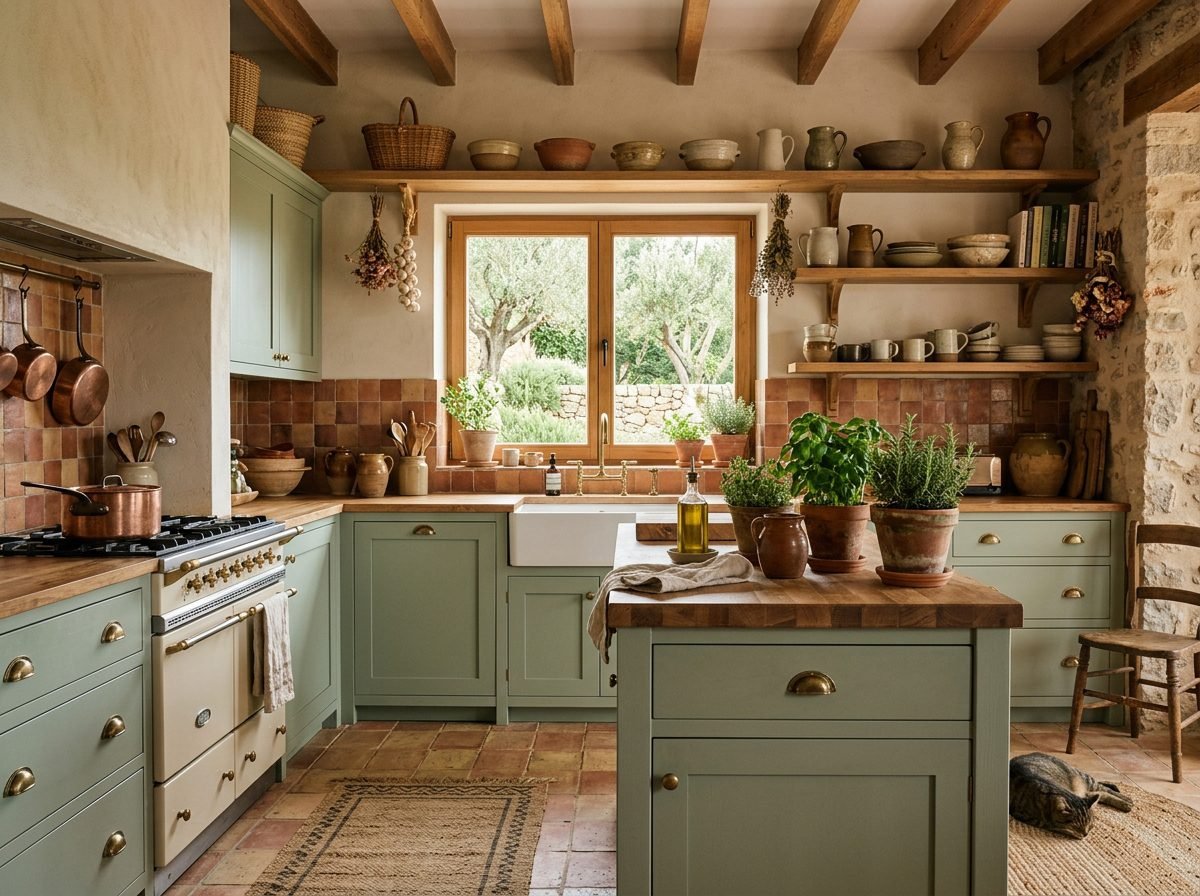
Some color combinations just work, and terracotta with sage green is one of them. There is something about the pairing that feels instantly grounding, like a sunny afternoon in a Mediterranean courtyard or a farmhouse kitchen that has been loved for generations. The warm, earthy orange of terracotta balances the soft, calming green of sage in a way that makes a kitchen feel both alive and peaceful at the same time.
What makes this palette so appealing right now is how forgiving it is. These are natural, imperfect colors that hide everyday kitchen life beautifully, work in both modern and traditional homes, and never feel cold or sterile. I have watched this combination transform kitchens of every size and budget, and the results consistently feel warmer and more welcoming than almost any other pairing.
This guide walks through thirteen beautiful ways to bring terracotta and sage green into your kitchen, from full renovations to small weekend updates anyone can manage.
Sage Green Cabinets With Terracotta Floor Tiles
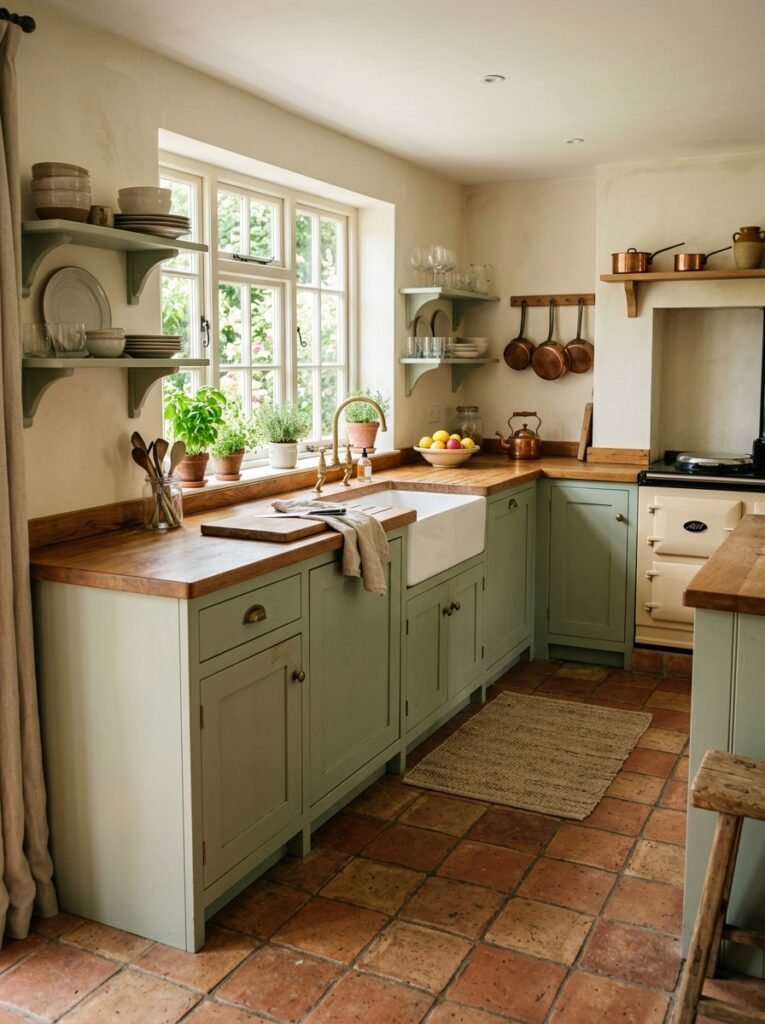
The most classic way to use this palette starts from the ground up. Terracotta floor tiles have been used in kitchens for centuries, and their warm, sun-baked tones create the perfect foundation for sage green cabinetry above.
The beauty of this pairing is the natural balance it creates. The floor brings warmth and rustic character, while the sage cabinets keep the overall feel fresh and calm. Neither element competes with the other, and together they create a kitchen that feels established and timeless rather than trendy.
Choose a matte or lightly aged finish for the floor tiles rather than something glossy. The slightly weathered look is what gives terracotta its charm, and it hides crumbs and everyday wear remarkably well.
Terracotta Backsplash Behind Sage Cabinetry
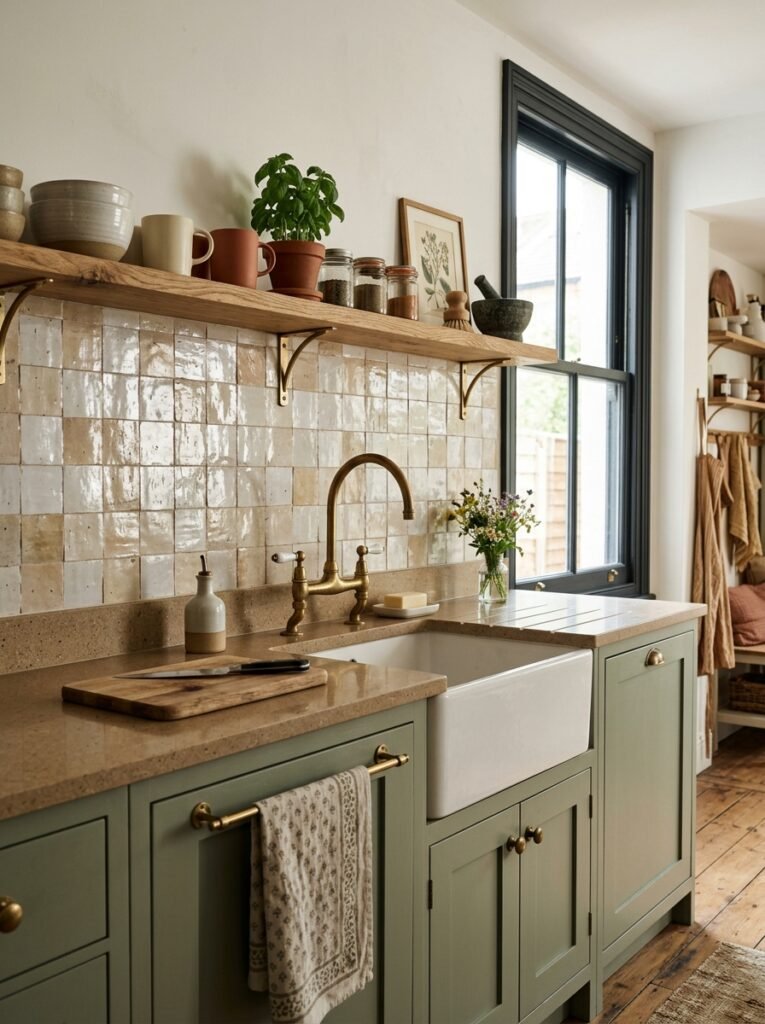
A terracotta tile backsplash brings the earthy warmth of this palette right up to eye level, where you see and enjoy it every day. Square terracotta tiles, zellige-style glazed versions, or handmade-look ceramic tiles in warm clay tones all create a stunning backdrop for cooking.
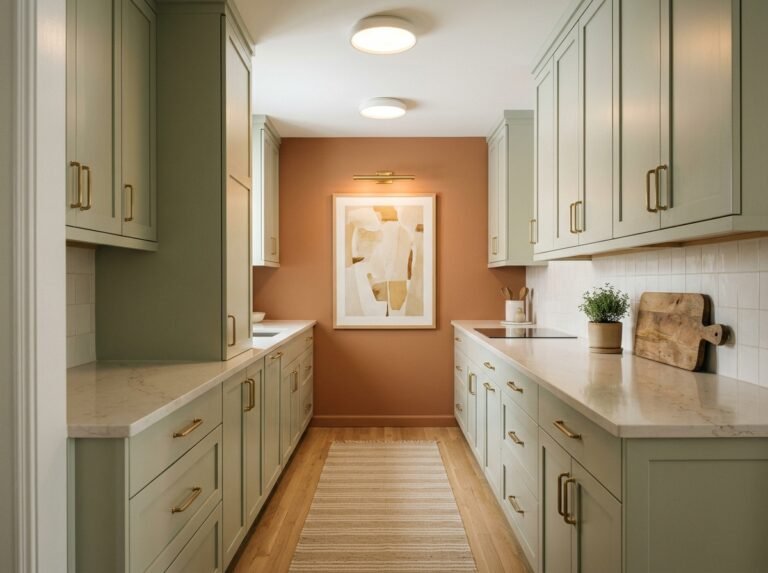
Paired with sage green lower cabinets, the effect is layered and inviting without feeling busy. The backsplash becomes the focal point of the kitchen while the cabinetry provides a soft, restful counterpoint.
Glazed terracotta tiles are worth considering here since they catch the light beautifully and wipe clean easily, which matters in the splash zone behind a stove or sink.
Two-Tone Cabinets in Sage and Cream
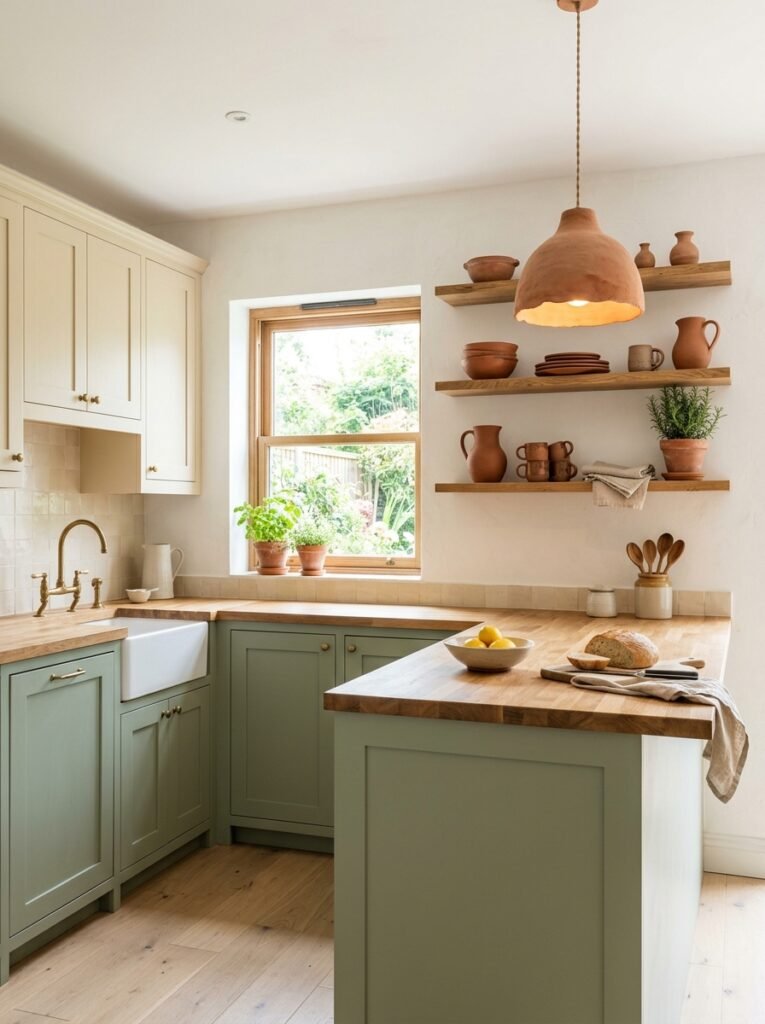
Sage green pairs wonderfully with warm cream, and using both on your cabinetry creates depth without overwhelming the space. The most popular approach places sage on the lower cabinets and cream or warm white on the uppers, which keeps the room feeling light while grounding it with color.
Terracotta then enters through accessories, a tiled floor, pendant lights, or pottery displayed on open shelves. This measured approach suits anyone who loves the palette but wants flexibility to adjust the terracotta elements over time.
The two-tone treatment also works beautifully in small kitchens, where keeping the upper half of the room light prevents any feeling of heaviness.
A Terracotta Kitchen Island as the Centerpiece
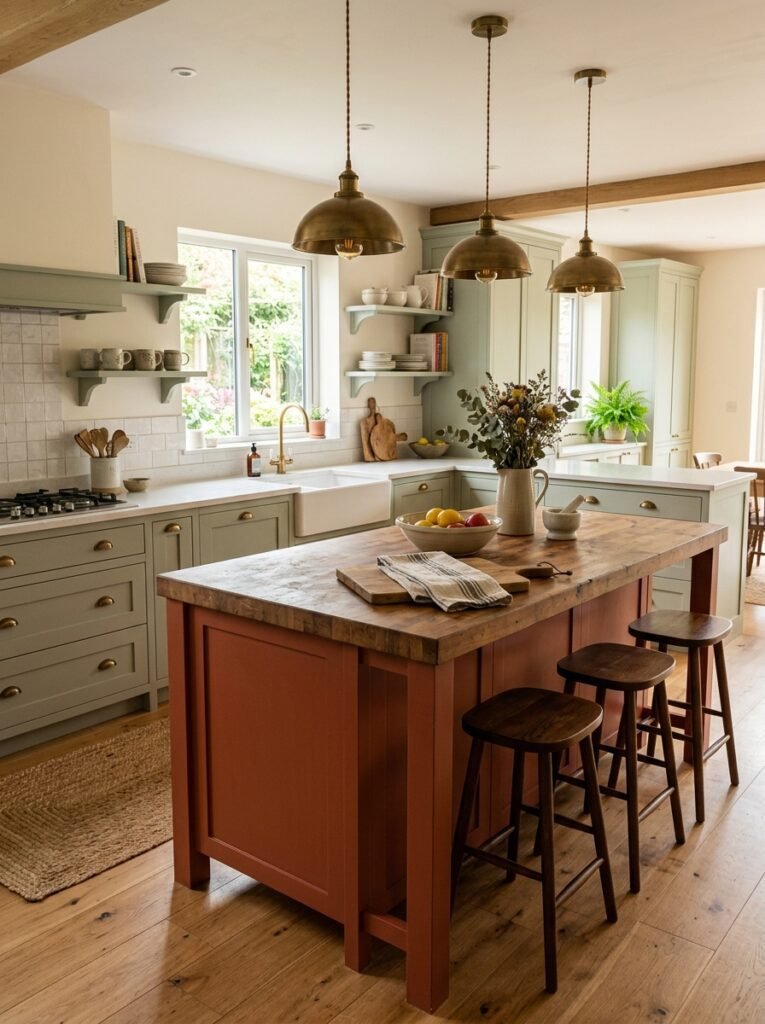
Painting or tiling your kitchen island in terracotta creates a warm, confident centerpiece that anchors the entire room. Surrounded by sage green perimeter cabinets or soft neutral walls, a terracotta island feels bold without being loud.
This approach works especially well because islands are natural gathering spots. The warm clay tone draws people in and makes the heart of the kitchen feel even more welcoming.
A butcher block or warm wood countertop on the island completes the look beautifully, tying the earthy tones together and adding another natural texture to the mix.
Open Shelving Styled With Terracotta Pottery
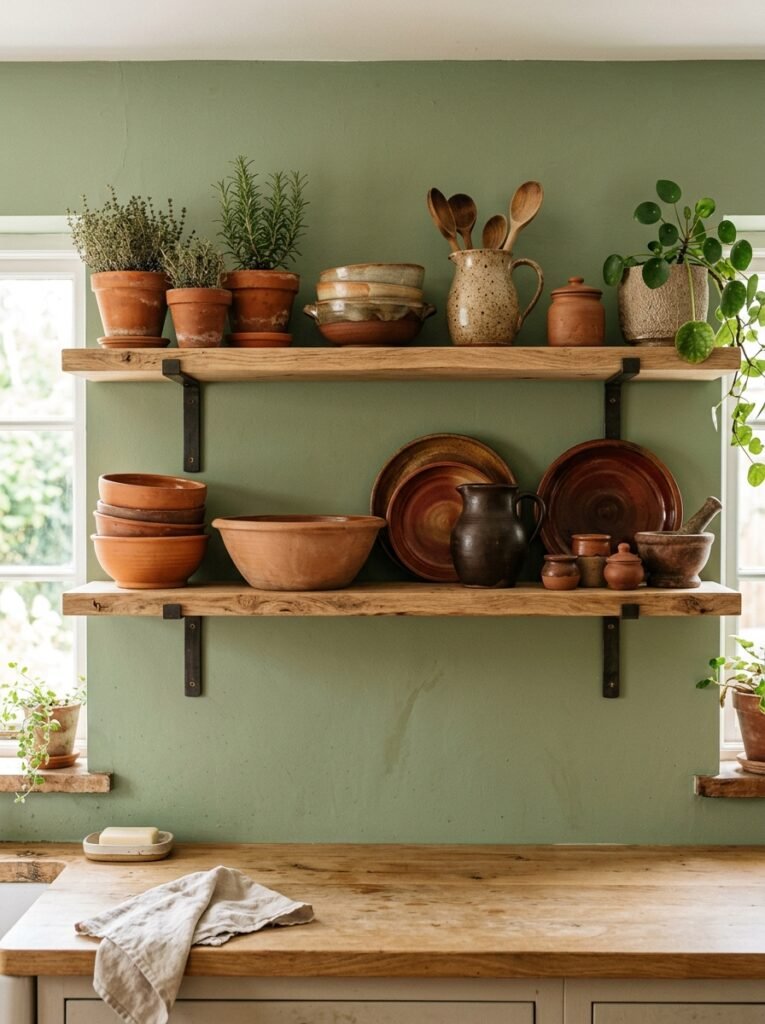
One of the most affordable ways into this palette requires no paint at all. Open shelves styled with terracotta pottery, clay pots, warm ceramic bowls, and earthenware bring the color into a kitchen instantly and authentically.
Against sage green walls or cabinetry, a collection of terracotta pieces looks curated and organic. Mix sizes and shapes, add a few sage-toned ceramics or green glass pieces, and let some shelves breathe with empty space.
This is the perfect starting point for renters or anyone testing whether the palette suits their home before committing to bigger changes. The pieces themselves are widely available and inexpensive at thrift stores, garden centers, and home stores.
Sage Green Walls With Warm Wood and Clay Accents
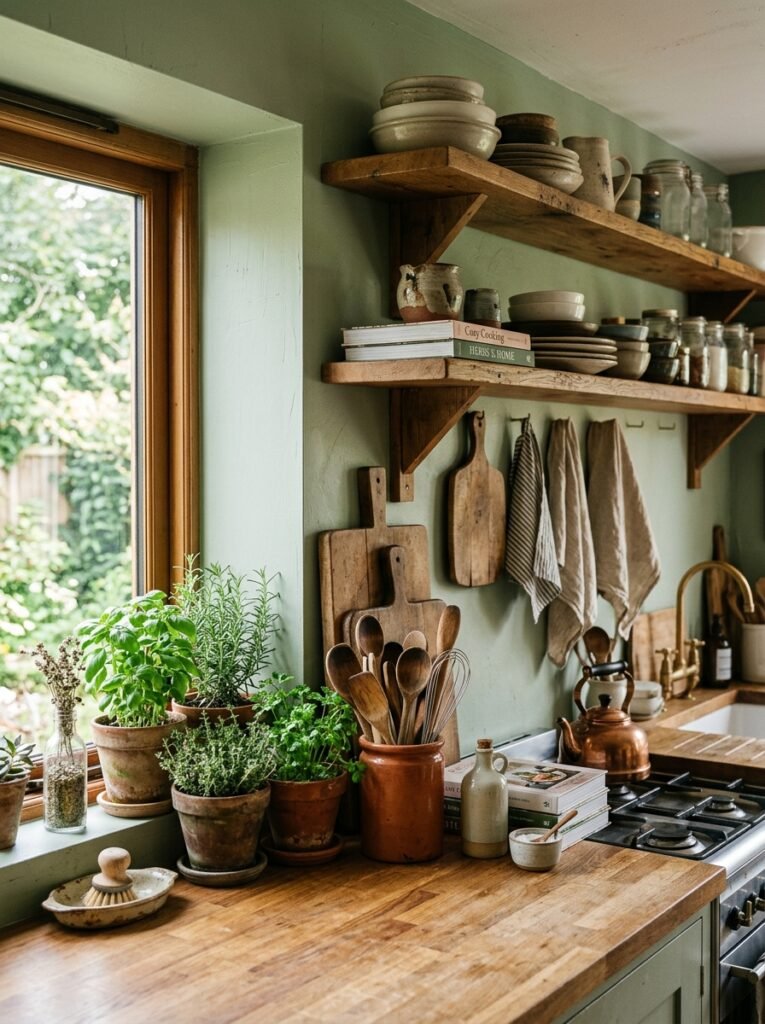
Sometimes the simplest approach delivers the most inviting result. Painting your kitchen walls a soft sage green instantly changes the entire mood of the room, creating a calm, natural backdrop that flatters almost everything placed against it.
From there, terracotta enters through smaller touches. A clay pendant light, a terracotta utensil holder by the stove, warm patterned tea towels, and a few potted herbs in clay pots build the palette gradually and affordably.
Warm wood elements like cutting boards, open shelves, or a wooden table tie everything together. This layered approach creates a kitchen that feels collected and personal rather than decorated all at once.
Checkerboard Terracotta and Cream Floors
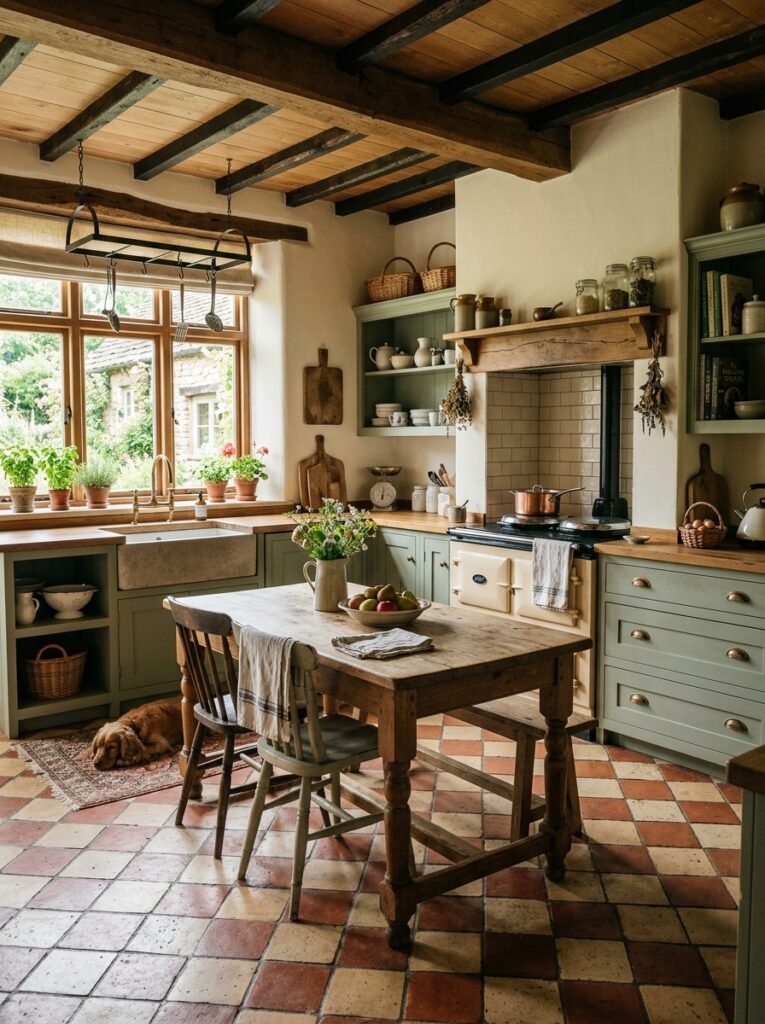
A checkerboard floor in terracotta and cream brings personality and old-world charm that instantly elevates a kitchen. This pattern has graced European farmhouse kitchens for generations, and it pairs beautifully with sage green cabinetry or walls.
The pattern adds visual interest at floor level while the alternating cream tiles keep it lighter and more open than solid terracotta. In a small kitchen, laying the pattern diagonally makes the floor appear larger.
Both traditional tile and budget-friendly vinyl versions of this look exist, so the charm is achievable at nearly any price point.
A Sage Green Range or Statement Appliance
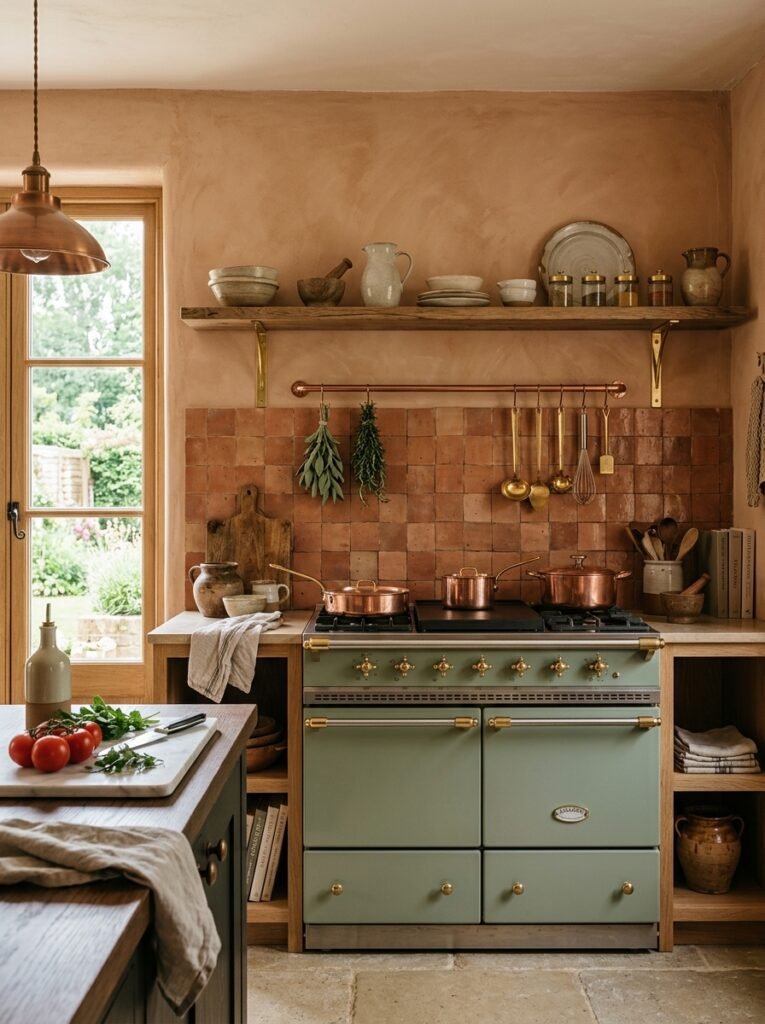
A colored range cooker or statement appliance in sage green brings the palette into the kitchen in an unexpected, high-impact way. Several appliance brands now offer soft green finishes that look absolutely stunning against terracotta tile or warm plaster walls.
The appliance becomes functional art, drawing the eye and setting the tone for the whole room. Surrounding it with terracotta backsplash tiles or warm clay-toned walls creates a vignette that feels straight out of a design magazine.
For smaller budgets, a sage green kettle, stand mixer, or toaster delivers a smaller dose of the same charm sitting on the counter.
Terracotta Plaster or Limewash Walls
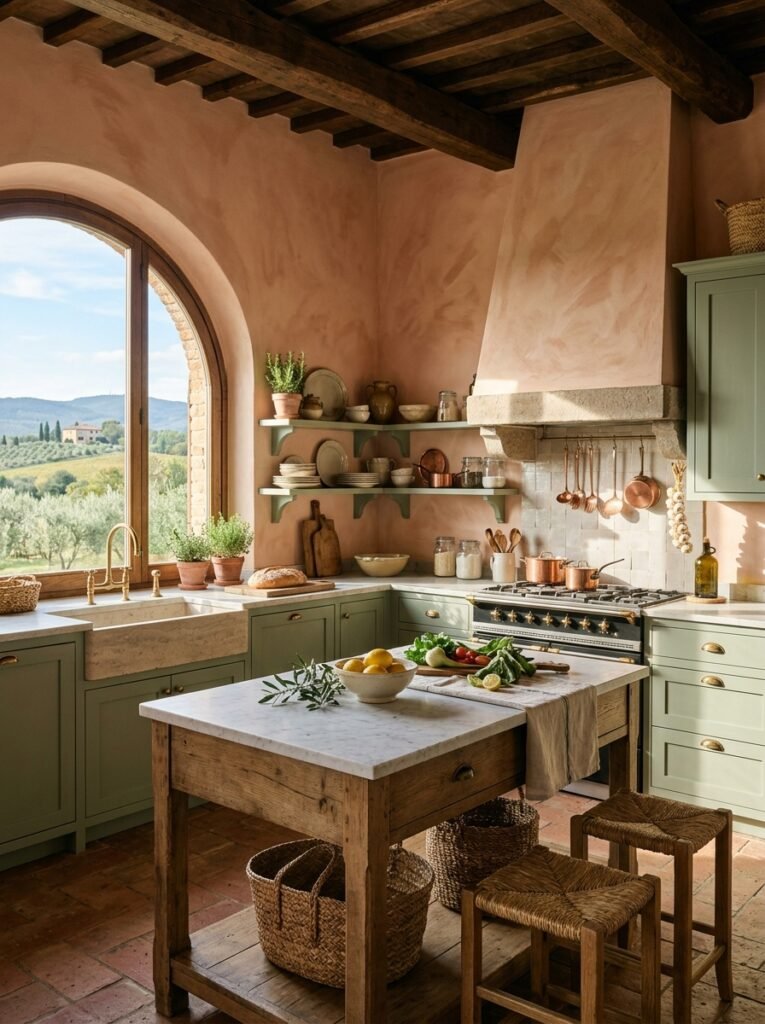
Limewash and plaster finishes in warm terracotta tones create walls with depth, movement, and a soft, sun-washed quality that flat paint cannot replicate. The effect feels distinctly Mediterranean, like a kitchen in a Tuscan farmhouse or a Spanish villa.
Paired with sage green cabinetry, terracotta limewash walls create one of the most atmospheric versions of this palette. The gentle variation in the finish catches light differently throughout the day, making the room feel alive.
Limewash paint has become widely available and surprisingly affordable, and applying it is a manageable weekend project for a confident DIYer.
Sage and Terracotta Tile Mix
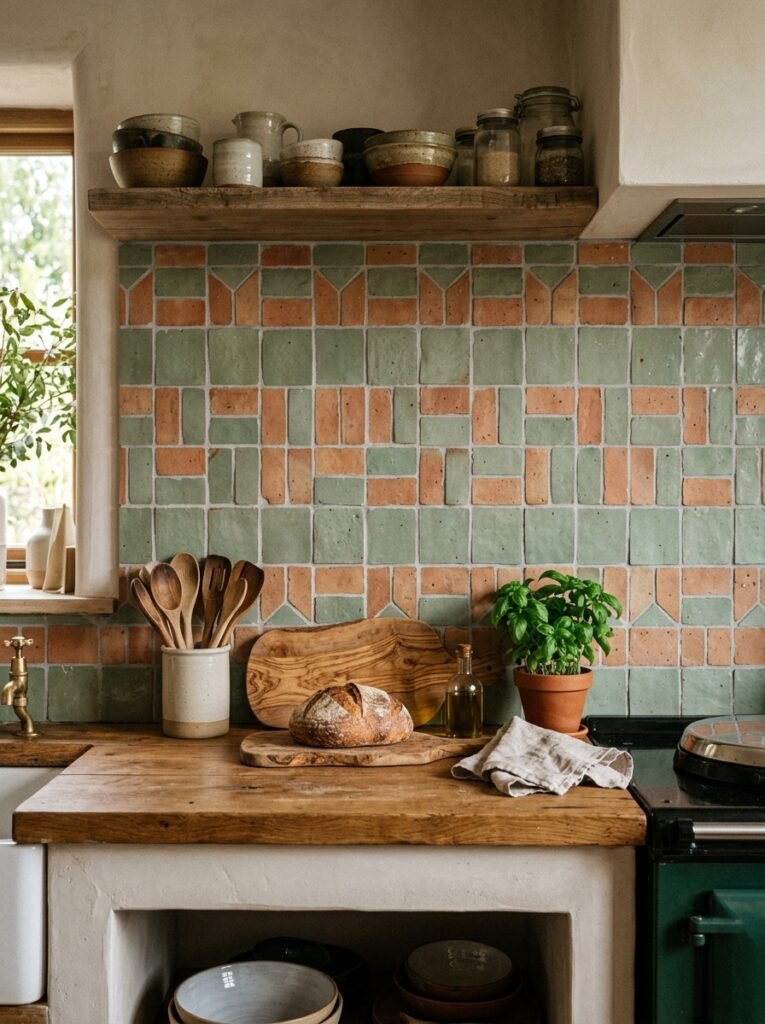
Mixing sage green and terracotta tiles in a single backsplash or floor design creates a playful, custom look that celebrates both colors equally. Alternating squares, geometric patterns, or a gentle gradient blend of the two tones turns a functional surface into a genuine design feature.
Handmade-look tiles with slight color variation work best for this approach, since the natural imperfection keeps the pattern feeling warm and artisanal rather than rigid.
A mixed tile design suits anyone who wants their kitchen to feel truly unique, since no two versions of this look ever turn out quite the same.
Warm Terracotta Pendant Lights
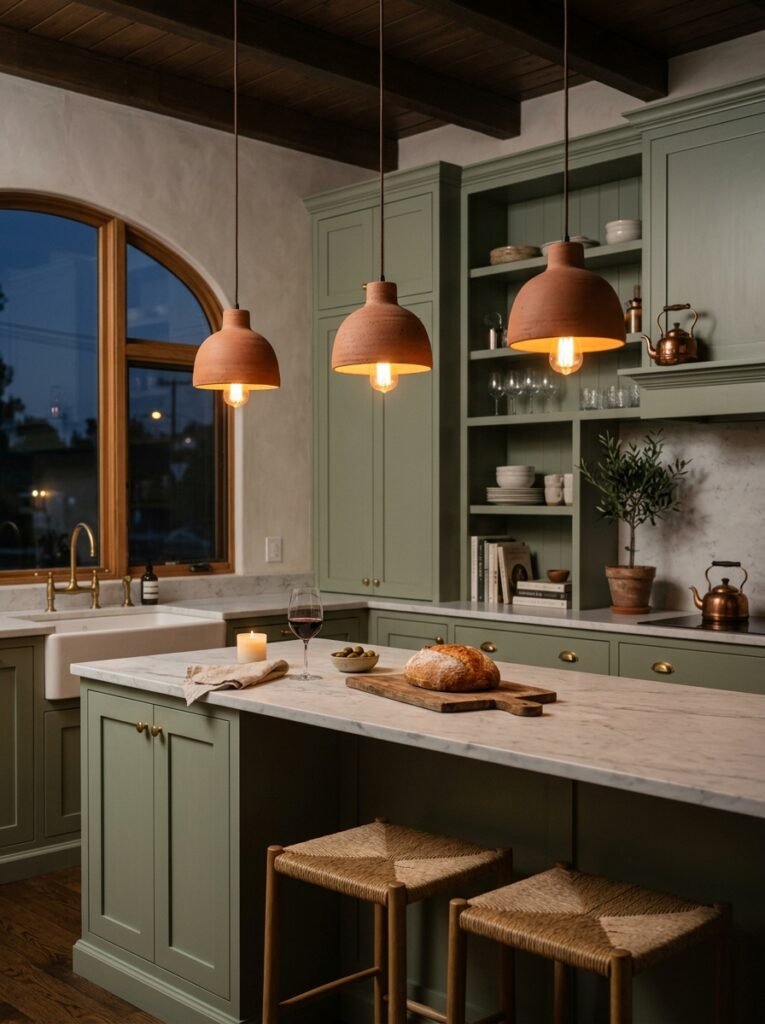
Lighting is an underrated way to introduce color, and terracotta pendant lights have become one of the most beautiful fixtures available. Clay-toned ceramic pendants hung over an island or dining nook add warmth exactly where people gather.
Against sage green cabinets or walls, the warm glow through and around terracotta shades creates an incredibly cozy evening atmosphere. The organic material and handmade quality of ceramic pendants adds texture as well as color.
This single swap can shift the entire feel of a kitchen, making it one of the highest-impact small changes on this list.
A Sage Green Pantry or Interior Surprise
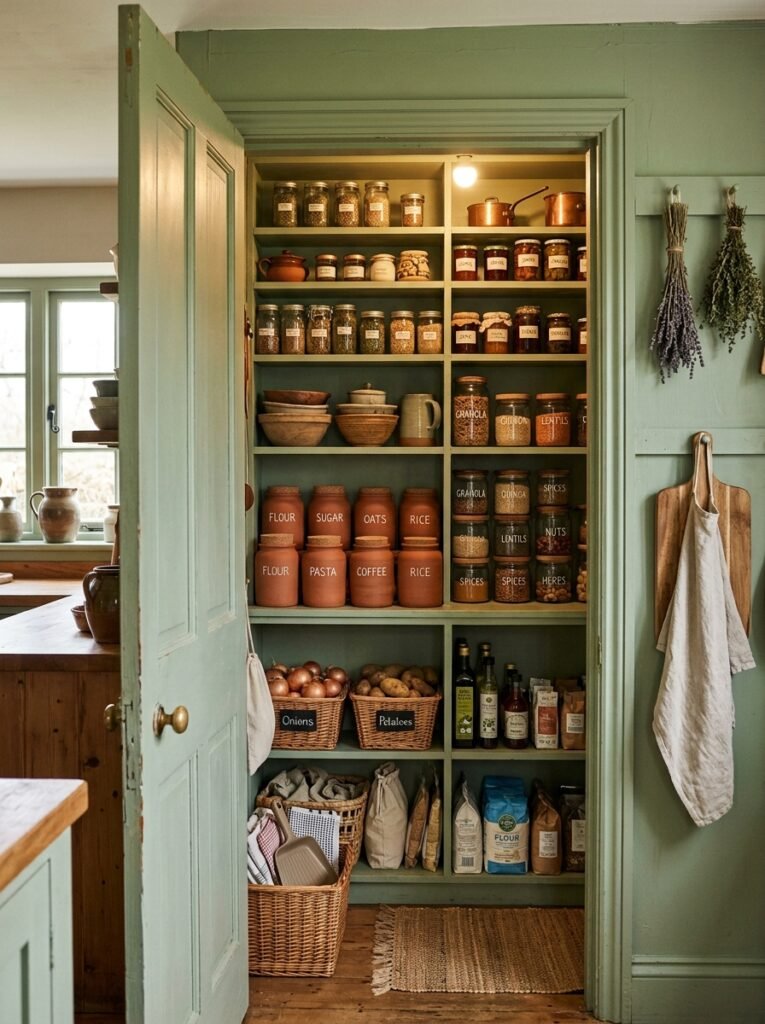
Painting the inside of a pantry, the back of glass-front cabinets, or a small breakfast nook in sage green creates a delightful moment of color that reveals itself as you use the kitchen. These interior surprises make a home feel thoughtfully designed.
Terracotta accents inside these spaces, like clay storage jars in the pantry or warm ceramic dishes behind glass doors, complete the palette in miniature.
This idea suits anyone hesitant about committing to color on the main surfaces. The palette lives in the details, ready to be enjoyed every day without dominating the room.
Natural Textures That Tie It All Together
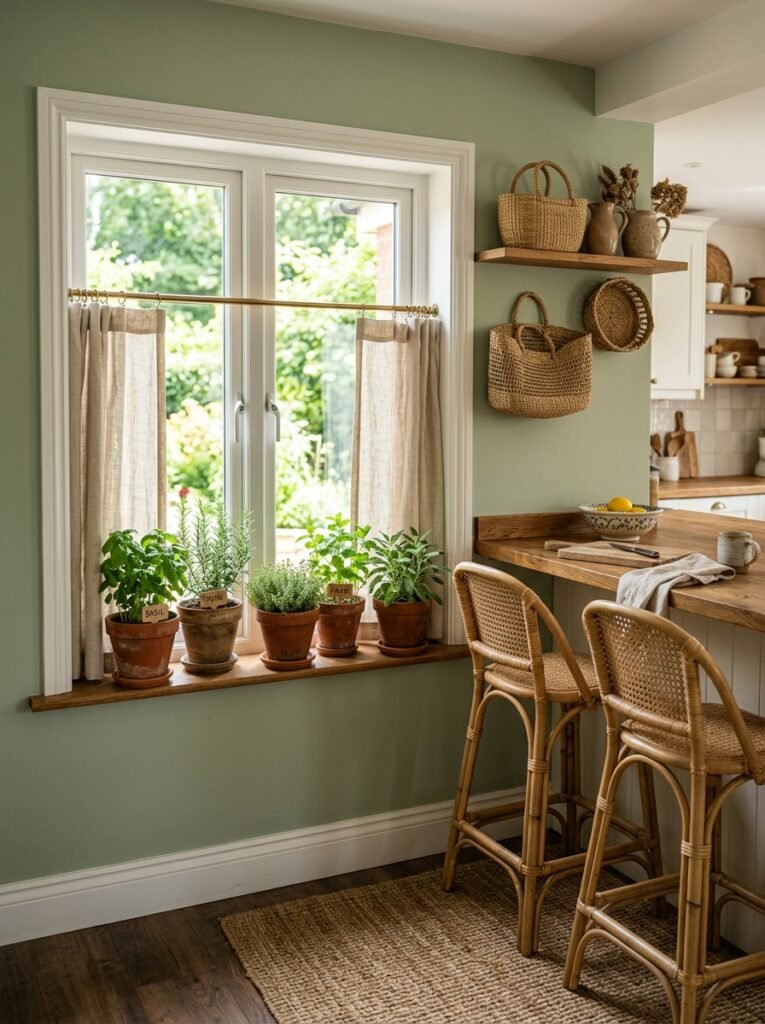
The final idea is less about a single feature and more about the finishing layer that makes this palette sing. Terracotta and sage green are natural, earthy colors, and they look their best surrounded by natural textures.
Woven baskets, rattan bar stools, linen café curtains, wooden bowls, a jute rug, and plenty of potted herbs and trailing plants all deepen the warm, organic feel this palette creates. These textural elements bridge the two colors and keep the kitchen from feeling flat.
Fresh greenery deserves special mention. Herbs in terracotta pots on the windowsill are practically mandatory in this kitchen, bringing living sage tones into the space while staying entirely on theme.
Common Mistakes to Avoid
The most frequent misstep with this palette is choosing the wrong shades. A terracotta that leans too bright orange or a green that leans too minty loses the earthy harmony that makes the combination work. Always look for muted, slightly dusty versions of both colors.
Another common error is using both colors at full strength everywhere. When every surface competes for attention, the calm quality disappears. The most beautiful versions of this palette let one color dominate while the other appears in measured doses.
Skipping the neutrals is a related trap. Cream, warm white, and natural wood give the eye places to rest, and without them the room can feel heavy.
Finally, some people ignore their kitchen’s natural light. North-facing kitchens can make sage green feel grey and cold, so warmer, lighter versions of the color work better there. Testing samples on your walls before committing prevents expensive disappointment.
Frequently Asked Questions
Do terracotta and sage green go together in a kitchen?
Beautifully. Terracotta’s warm, earthy orange sits nearly opposite sage green on the color wheel, creating natural balance. Both are muted, nature-inspired tones, which is why the pairing feels harmonious and calming rather than loud.
What countertop works best with terracotta and sage green?
Warm-toned options work best. Butcher block, cream or beige stone, warm white quartz, and honed marble with soft veining all complement the palette. Avoid stark, cool-toned surfaces, which can clash with the earthiness of the colors.
Is a terracotta and sage kitchen going to look dated quickly?
Unlikely. Both colors have been used in kitchens for generations, particularly in Mediterranean and farmhouse design. Earthy, nature-based palettes tend to age far better than high-trend colors because they are rooted in materials people have loved for centuries.
How do I add this palette to a rental kitchen?
Focus on removable elements. Terracotta pottery, sage textiles, peel and stick backsplash tiles in clay tones, potted herbs, ceramic accessories, and a jute rug all bring the palette in without touching walls or cabinets.
Which color should be the main one, terracotta or sage?
Either works, and the choice depends on the feel you want. Sage as the dominant color creates a calmer, fresher kitchen with warm accents. Terracotta as the lead creates a cozier, sunnier space with cool green relief. Most kitchens lean sage-dominant since it is easier to live with on large surfaces.
Conclusion
Terracotta and sage green together create the kind of kitchen people gravitate toward, the room where guests linger and mornings feel a little softer. The palette works because it borrows directly from nature, pairing sun-baked clay with garden greenery in a combination that has felt right for centuries.
The best part is how flexible the entry points are. A full renovation with sage cabinets and terracotta floors delivers the complete dream, but a few clay pots, a soft green wall, and some warm textiles capture the same spirit for a fraction of the cost. Start where your budget and courage allow, choose muted earthy shades, and let natural textures fill in the rest. A warmer, more inviting kitchen is closer than you think.