Step-by-Step: Creating a Cozy Pink Bedroom From Scratch
Pink has an image problem it does not really deserve. Say the word to most adults and their mind jumps straight to bubblegum walls or a little girl’s nursery, which is exactly why so many people rule it out for their own bedroom without ever giving it a real chance. That is a shame, because the right pink, handled the right way, might be one of the warmest and most genuinely restful bedroom colors available.
I found this out by accident. A rental years ago came with a strange dusty rose accent wall that I planned to paint over within the month. I never got around to it, and slowly built the rest of the room to match instead. That bedroom became the coziest space I have ever slept in, and nobody who saw it used the word girly. They used the word warm.
This guide walks you through the entire process of building a cozy pink bedroom from scratch, in the order the decisions actually need to happen, so you land on something that feels grown up, layered, and genuinely inviting rather than saccharine.
Choose Your Shade of Pink First
Every decision that follows depends on getting this one right, so resist the urge to skip ahead to bedding and paint swatches just yet.
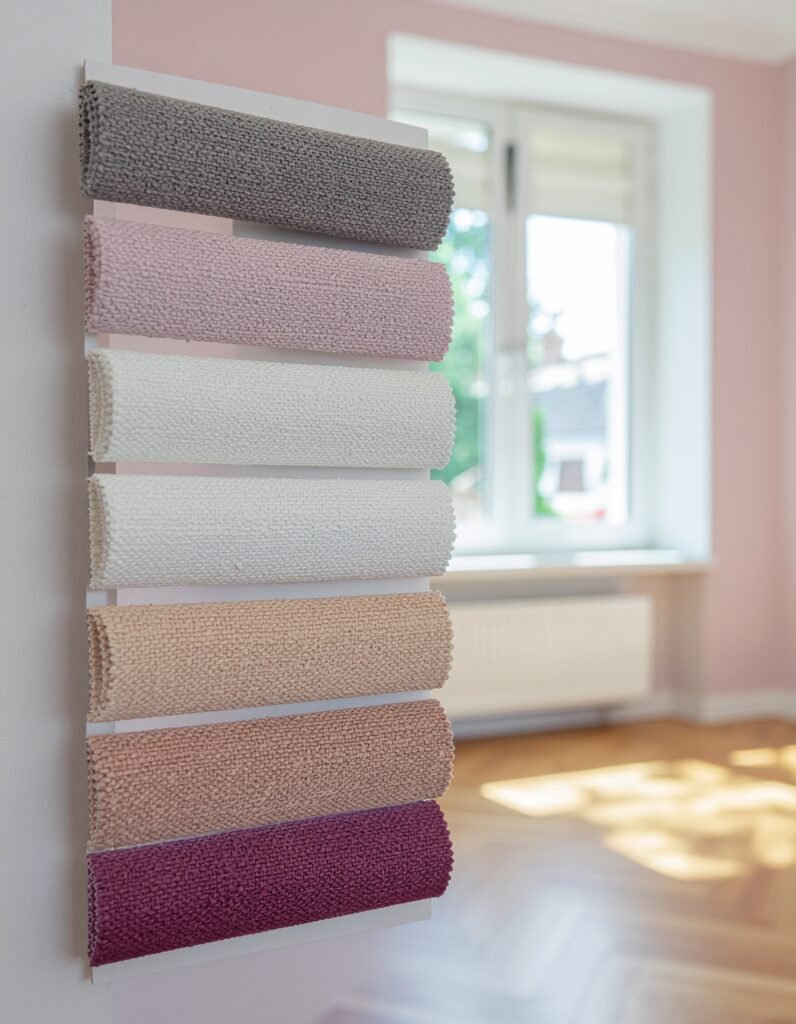
Pink is not one color. It ranges from cool, bluish tones like rose and mauve, through neutral shades like blush and dusty rose, into warm, peachy tones that lean closer to terracotta. Cool pinks can feel a little clinical or candy-like in the wrong light, while warm, muted pinks almost always read as cozier and more sophisticated.
For an adult bedroom, dusty and muted shades tend to work best. Think terracotta pink, faded rose, clay, or dusky mauve rather than anything bright or saturated. These grayed-down versions of pink behave more like a warm neutral than a bold color choice, which is exactly what makes the whole room feel considered instead of themed.
Decide How Much Pink You Actually Want
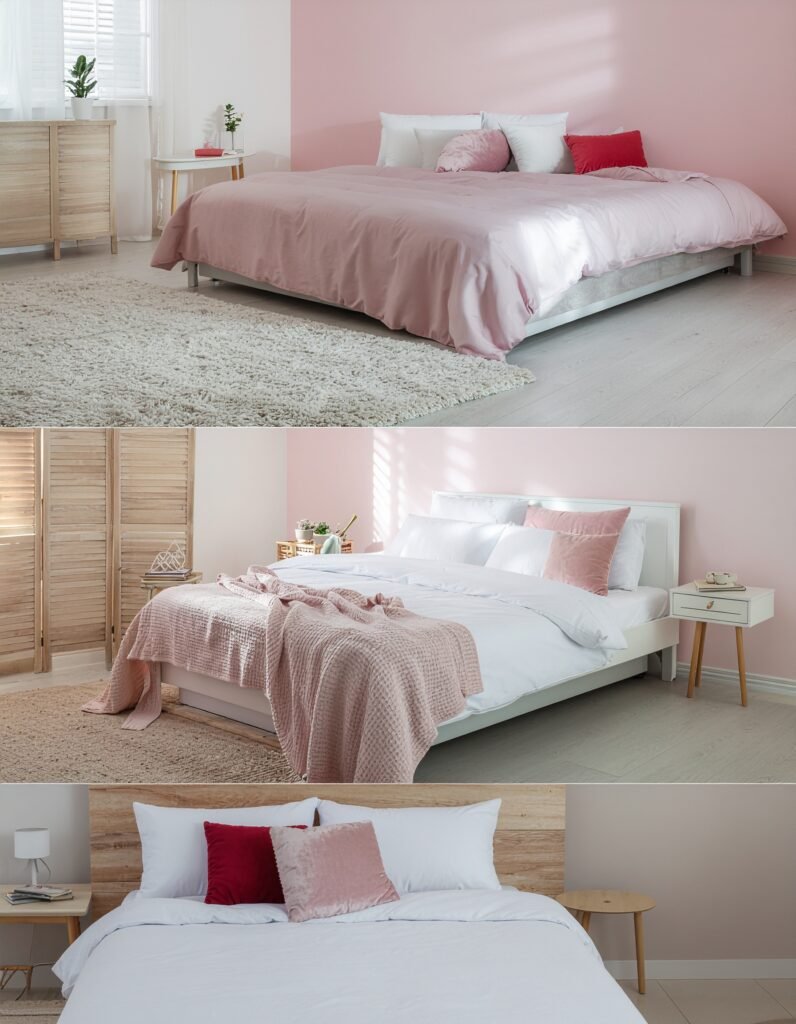
Before buying paint or fabric, decide how pink this room is actually going to be, because that single decision shapes every purchase afterward.
Full commitment means pink walls, acting as the backdrop for everything else in the room. Moderate commitment means one accent wall, or pink through major textiles like bedding and curtains while the walls stay neutral. Light commitment means pink shows up only in smaller accessories, pillows, a lamp, a piece of art, while the walls and furniture stay entirely neutral.
None of these approaches is more correct than another. Renters and commitment-shy decorators often do best starting light and building up, while anyone painting their own walls can comfortably go bolder from day one. Knowing your comfort level now saves you from either an overwhelming room or one that never quite reads as intentional.
Build a Supporting Color Palette
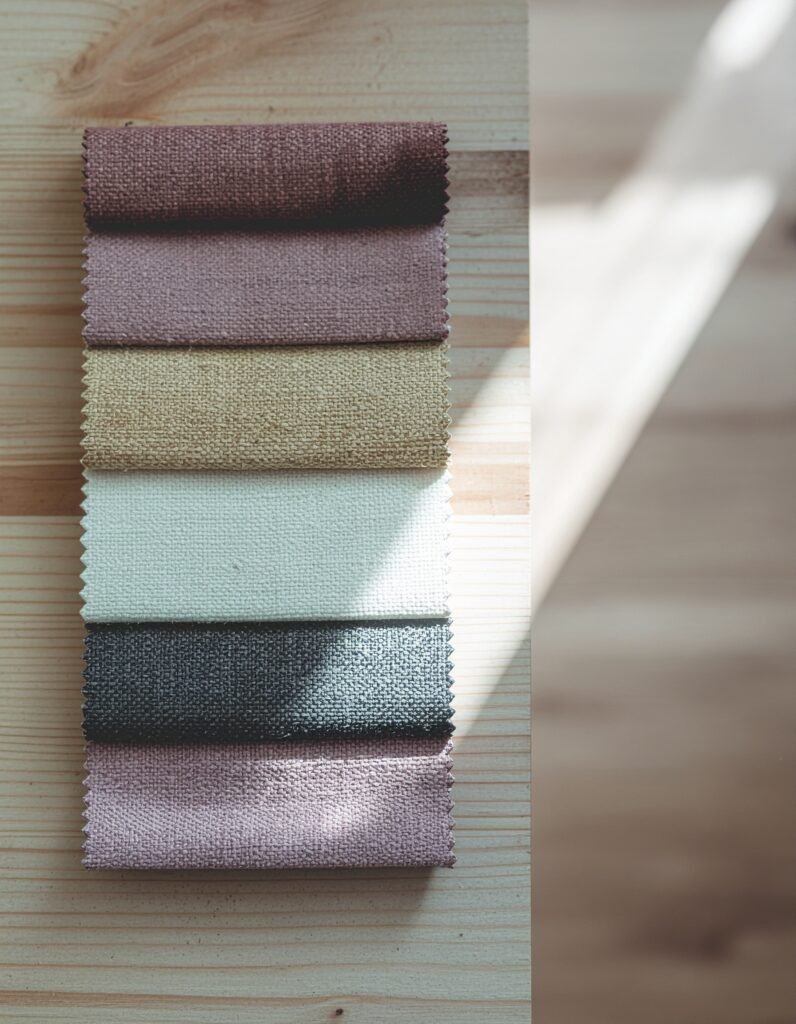
Pink rarely works well alone. It needs partners, and choosing them early keeps every later decision easier and more cohesive.
Warm neutrals are the most forgiving partner, cream, warm white, and soft beige, which let pink feel calm rather than loud. Deep, grounding colors add real sophistication, charcoal, black, deep forest green, or navy, especially in small doses through furniture or trim. Metallics matter too, and brass or warm gold consistently flatter pink far more than cool chrome or silver ever will.
A simple, reliable formula is one dominant neutral, one deep grounding color, and pink itself layered throughout in varying intensities. Settling on this trio before you shop means every pillow, lamp, and frame you bring home already belongs in the room.
Paint or Wallpaper the Walls
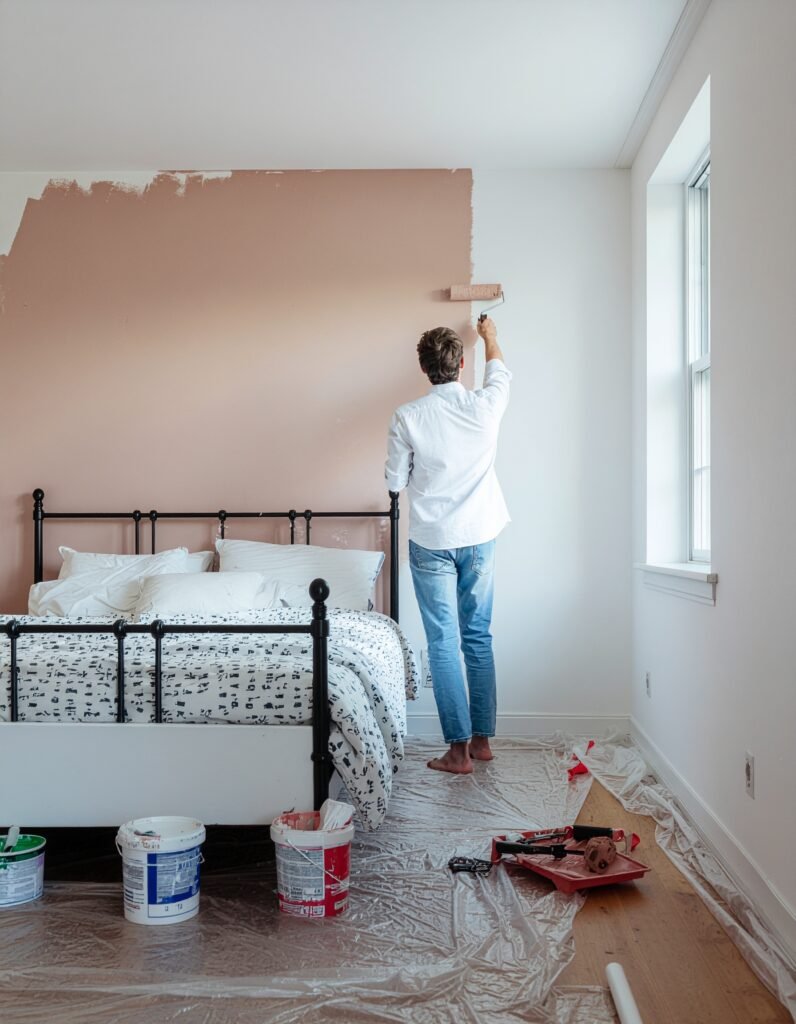
With your shade and your commitment level decided, it is time to actually treat the walls, and this step benefits enormously from patience.
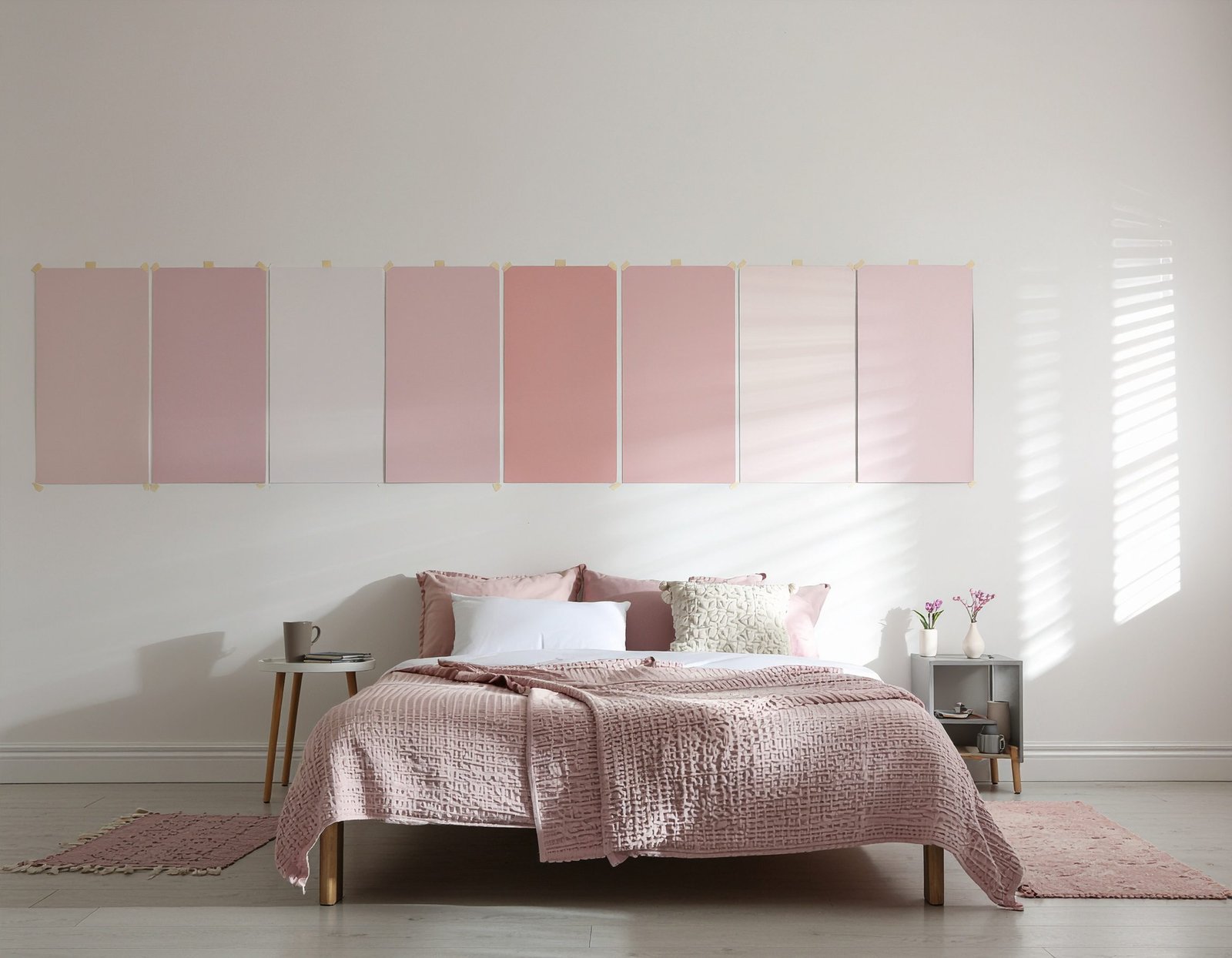
Always test your chosen pink directly on the wall in swatches, viewed morning, midday, and evening, since pink shifts dramatically under different light and can read far pinker or far grayer than the paint chip suggested. A north-facing room often needs a warmer pink to avoid feeling cool and flat, while a sunny south-facing room can handle a slightly cooler, more muted tone. If you want to go deeper into why this happens, this complete guide to bedroom colour schemes breaks down undertones and light direction for every palette, not just pink.
If wallpaper appeals to you more than flat paint, a subtle textured or botanical pattern in blush or dusty rose adds depth without tipping into overwhelming. Whichever you choose, a single feature wall behind the headboard is a wonderful lower-commitment option that still delivers real impact.
Choose Your Bed Frame and Bedding
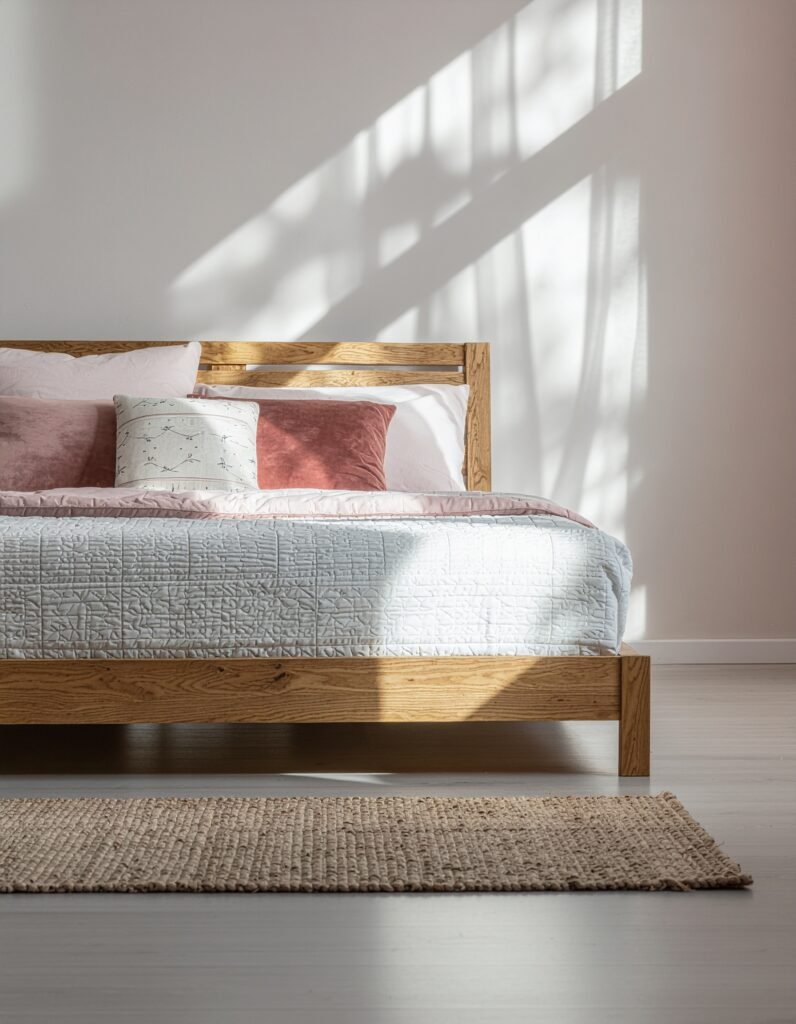
The bed is the visual anchor of any bedroom, so it deserves real thought once your walls are settled.
Wood bed frames in warm oak or walnut tones ground a pink room beautifully and keep it from tipping into anything too saccharine. Upholstered headboards work wonderfully too, especially in a deep, contrasting color like charcoal, forest green, or a rich rust that plays off the pink rather than repeating it.
For bedding, layer rather than match. A neutral base sheet, a textured quilt or duvet in a soft dusty tone, and a mix of pink cushions in slightly different shades create the rich, collected look that makes a bedroom feel finished. A chunky knit throw folded at the foot of the bed adds warmth and breaks up any flatness in the palette.
Bring in Wood Tones and Furniture
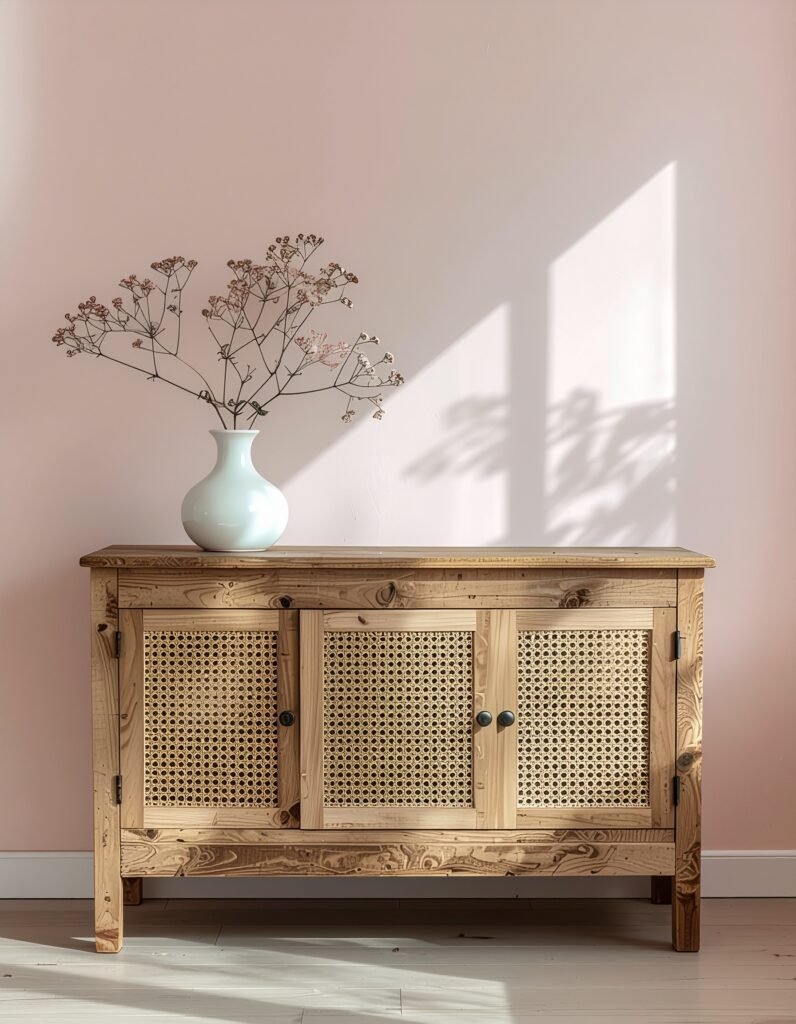
Furniture is where a pink bedroom either grounds itself or drifts into looking like a stage set, so choose these pieces with real intention.
Warm wood, oak, walnut, or a rich vintage stain, is the single most important tool for keeping a pink room feeling adult and lived in. A wooden dresser, a pair of nightstands with visible grain, or a cane-front cabinet all add the organic weight that pure pink and white cannot provide alone.
Mixing wood tones is completely fine, and a vintage piece picked up secondhand often brings more character than anything bought new. If your furniture is currently white or a cooler tone, even one warm wood piece introduced into the room shifts the whole feeling toward cozy rather than candy colored.
Layer In the Right Lighting
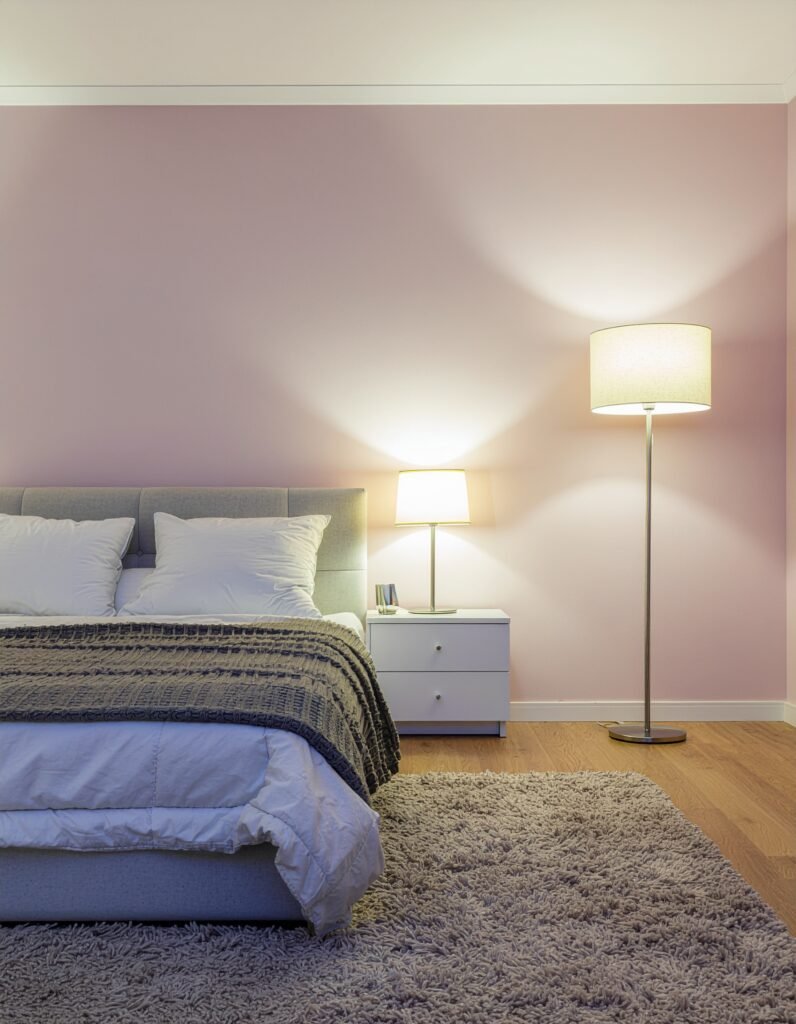
Lighting decides whether your carefully chosen pink glows warmly in the evening or looks flat and strange under a single bulb, so treat this step as seriously as the paint itself.
Warm white bulbs, in the 2700K range, are non-negotiable in a pink bedroom. Cool white or daylight bulbs wash pink out and can push it toward an unflattering, almost clinical tone. Beyond bulb temperature, layer your light sources rather than relying on one overhead fixture. A bedside lamp, a floor lamp in the corner, and perhaps a small strand of warm string lights all create soft pools of light that flatter pink walls beautifully after dark.
A dimmer switch is a small addition that pays off enormously here, letting you shift from bright and functional in the morning to soft and cocooning at night.
Add Texture With Rugs and Textiles
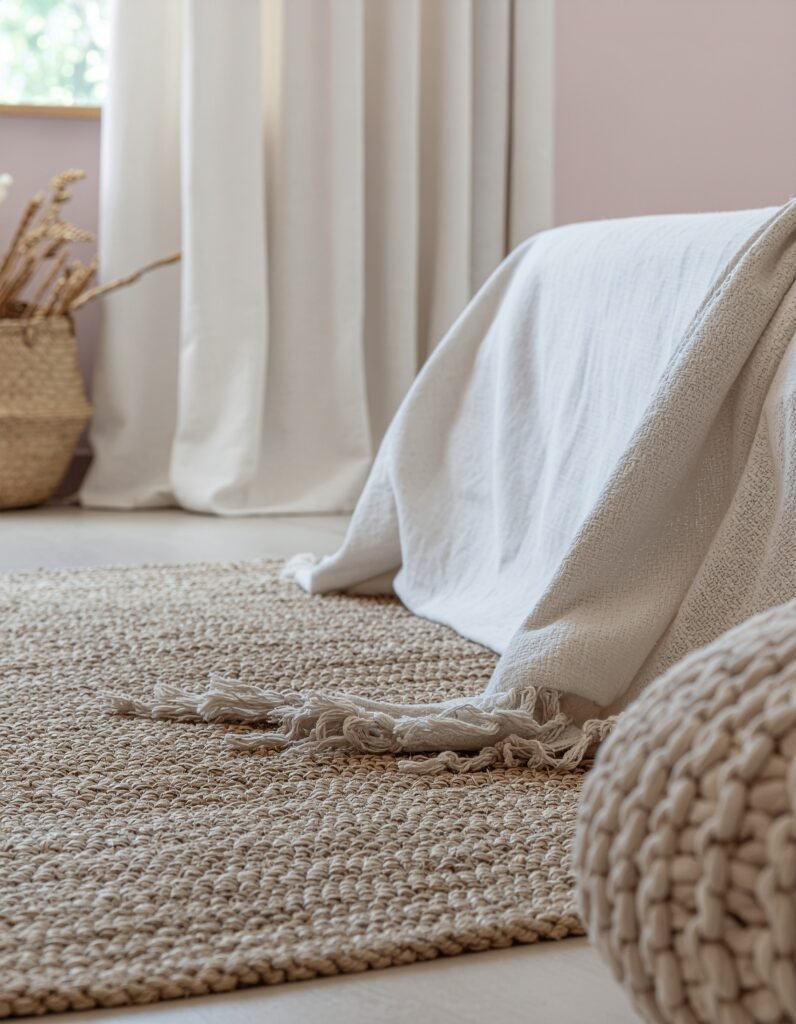
A pink bedroom without texture can feel flat no matter how well the color is chosen, so this step is about giving the room depth you can actually feel.
A natural fiber rug, jute or wool, in a neutral tone anchors the floor without competing with the walls. Curtains in a soft linen or cotton, hung high and wide, filter light gently and add another layer of natural texture. Cushions in velvet, boucle, and linen mixed together on the bed create the kind of tactile richness that photographs well and feels even better in person.
The goal is variety. If everything in the room is smooth cotton in the same shade of pink, the space reads as flat regardless of how nice the color is. Mixing textures is what turns a pink paint job into a genuinely cozy bedroom.
Bring in Plants and Greenery
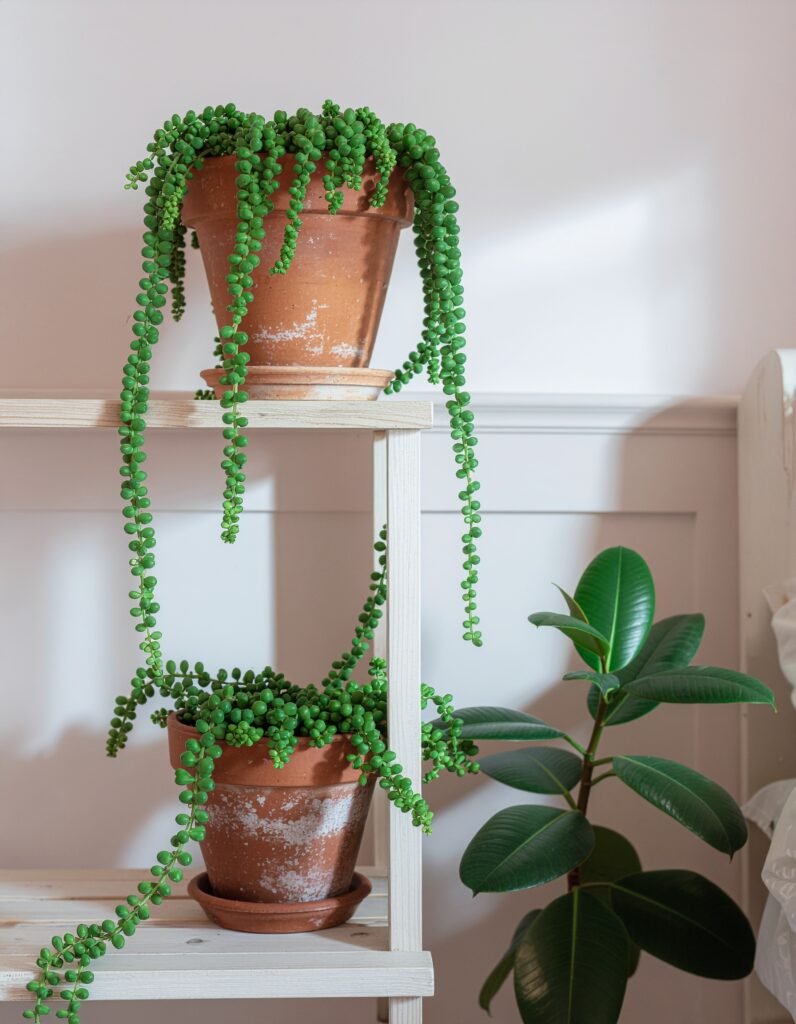
Greenery does something for a pink bedroom that no other element quite manages, softening the palette and adding a living, organic note that keeps the whole room feeling fresh rather than staged.
A trailing pothos on a shelf, a small fiddle leaf fig in the corner, or a simple eucalyptus stem in a vase on the nightstand all work beautifully against dusty pink tones. Terracotta and woven planters suit this palette especially well, echoing the warmth of the walls rather than clashing with them.
Even a single well-placed plant makes a noticeable difference, cutting through any sweetness in the color scheme and reminding the eye that the room is lived in rather than decorated from a single catalog page.
Style the Walls and Surfaces
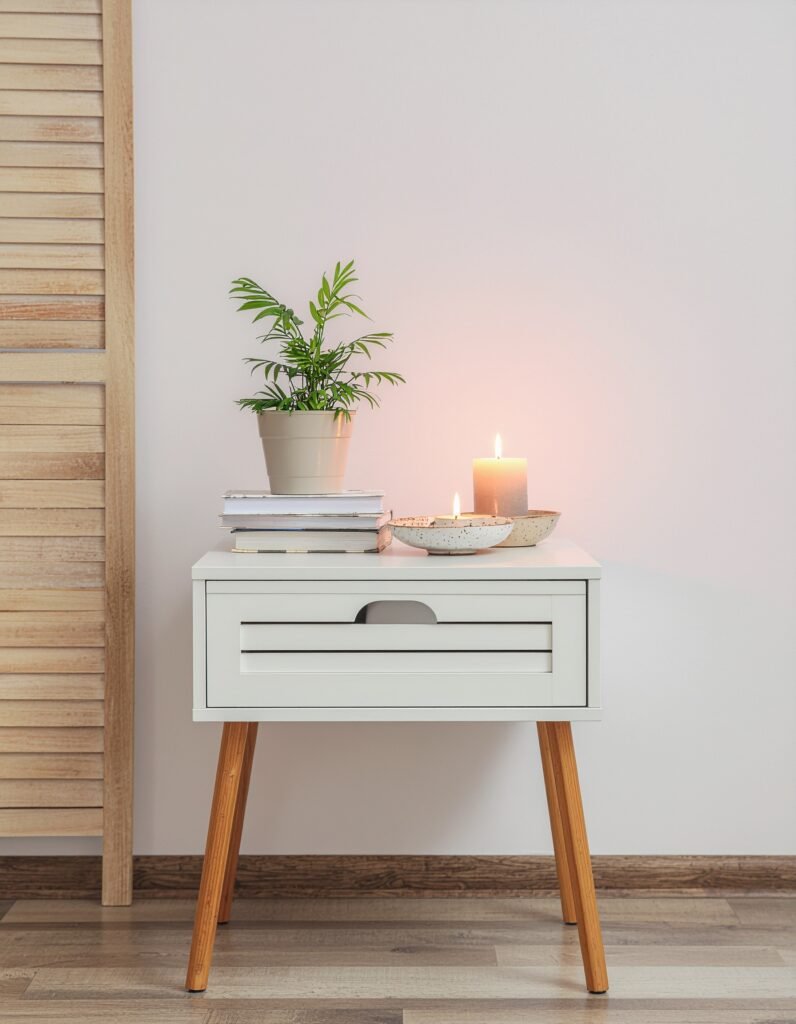
With the bones of the room in place, this step is where the bedroom starts to feel like yours rather than a showroom.
Art is the easiest way to add personality and depth. Botanical prints, abstract pieces in your supporting palette, or black and white photography all provide contrast against pink walls without fighting the color. If you are hanging more than one or two pieces, though, it is worth thinking about how they relate to each other rather than adding them one at a time, and this piece on why your gallery wall feels chaotic walks through exactly how to keep a mixed collection of art looking pulled together instead of scattered. A large mirror bounces light around the room while adding a practical function most bedrooms need.
On surfaces like the dresser and nightstands, keep styling restrained. A small stack of books, a ceramic dish for jewelry, a candle, and a single plant say considered without tipping into cluttered. Leave visible empty space around these objects, since breathing room is what makes a styled surface look intentional rather than crowded.
Do a Final Walkthrough and Edit
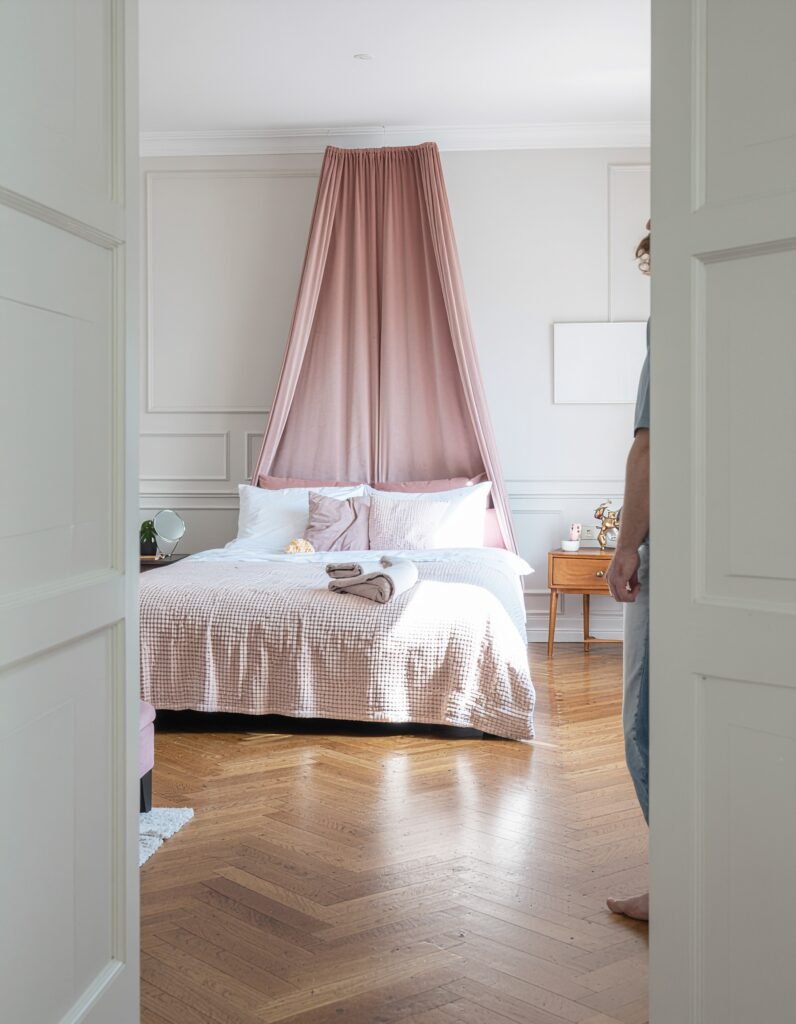
The last step in creating any cozy bedroom is stepping back and editing rather than adding, and it matters more than people expect.
Walk the room at a few different times of day, checking how the pink reads in morning light, afternoon sun, and evening lamplight. Look for spots where the palette feels unbalanced, too much pink bunched in one corner, or a wall that looks bare next to a cluttered dresser, and adjust accordingly.
This is also the moment to remove rather than add. If a corner feels busy, take one object away before buying another. A cozy pink bedroom almost always benefits from slightly less than your first instinct suggests, and that final edit is often what separates a good room from a genuinely great one.
Practical Tips for Getting It Right
A few extra habits make the entire process smoother from start to finish.
- Buy small sample pots of paint before committing to a full can, and test them on at least two different walls.
- Photograph the room in progress, since photos reveal color balance issues that the eye adjusts to and stops noticing.
- Repeat your pink shade at least three times around the room through pillows, art, or accessories so it feels intentional rather than accidental.
- Shop secondhand for wood furniture first, since vintage pieces bring warmth and character that new furniture often lacks.
- Keep metal finishes consistent within the room, choosing brass or warm gold over mixed cool and warm tones.
- Build the room gradually over a few weekends rather than all at once, since cozy spaces tend to evolve rather than appear instantly.
Frequently Asked Questions
What shade of pink is best for an adult bedroom?
Muted, dusty shades like terracotta pink, faded rose, clay, or mauve work best for adult spaces. These grayed-down tones read more like a warm neutral than a bold statement color, which keeps the room feeling sophisticated rather than juvenile.
How do I keep a pink bedroom from looking too girly?
Ground the color with warm wood furniture, deep contrasting accents like charcoal or forest green, and plenty of natural texture through rugs, linen, and plants. Warm lighting and a restrained, edited styling approach also keep the room feeling mature.
What colors pair well with pink in a bedroom?
Warm neutrals like cream and beige, deep grounding tones like charcoal, navy, or forest green, and warm metallics like brass all pair beautifully with pink. Choosing one or two of these as consistent partners keeps the palette cohesive.
Should I paint all four walls pink or just one?
Either works well. A single feature wall behind the headboard offers a lower-commitment way to introduce pink with real impact, while four walls create a fully immersive, cozy effect. Your comfort level and the room’s natural light should guide the choice.
How much does it cost to create a cozy pink bedroom?
The cost varies widely depending on your choices, but paint and textiles can transform a room affordably, while furniture and lighting upgrades add more. Building the room gradually, starting with paint and bedding before adding furniture, keeps the project manageable on most budgets.
Conclusion
A cozy pink bedroom is not about committing to a trend or recreating a nursery from your childhood. It is about choosing a warm, muted shade, giving it thoughtful partners, and layering in the wood, texture, lighting, and greenery that make any bedroom feel genuinely inviting.
Work through the steps in order, choose your shade first, decide your commitment level, build your palette, then layer in furniture, lighting, texture, and personal touches. Edit at the end rather than adding endlessly. Follow that sequence, and the bedroom you build will feel warm, considered, and entirely your own, pink and all.