10 Patio Inspiration Ideas for a Space You’ll Actually Use
Most patios fail for the same reason: they’re treated as leftover space. A couple of plastic chairs, maybe a forgotten grill, and that’s it. But here’s the thing — your patio is the cheapest “extra room” you will ever add to your home. No walls to build, no flooring to install. The structure is already there. All it needs is a plan.
I’ve put together ten patio inspiration ideas below, roughly in the order I’d tackle them. The first few are the foundations — seating, lighting, flooring. The rest are the layers that give the space personality. You don’t need all ten. Honestly, three or four done well will beat ten done halfheartedly.
Create a Comfortable Outdoor Living Room
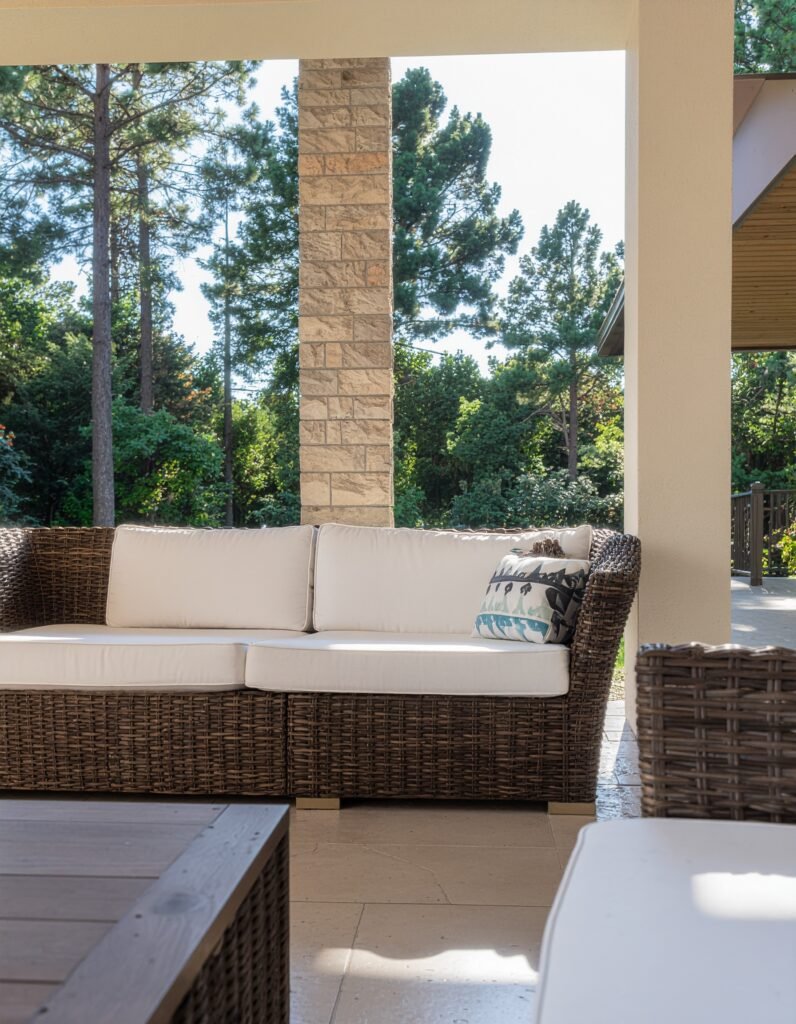
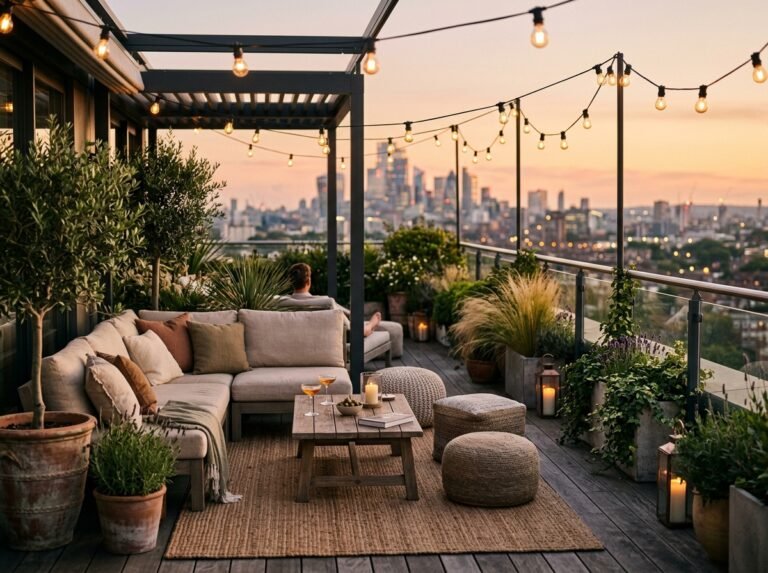
Start here, because seating decides everything else. The mistake most people make is buying dining furniture for a space they actually use for lounging. Be honest about how you’ll use your patio: if it’s morning coffee and evening unwinding, you want a deep-seated sofa or a pair of generous lounge chairs, not a table and four upright chairs.
A weather-resistant loveseat with a small coffee table is enough to anchor a modest patio. If you’re on a tight budget, look at acacia wood or powder-coated steel frames — they hold up far better than cheap rattan-look plastic, which tends to fade and crack within two summers. One more tip: leave at least 45 cm of walking space around the seating. A patio that feels cramped never gets used, no matter how nice the furniture is.
Add String Lights for Evening Ambiance
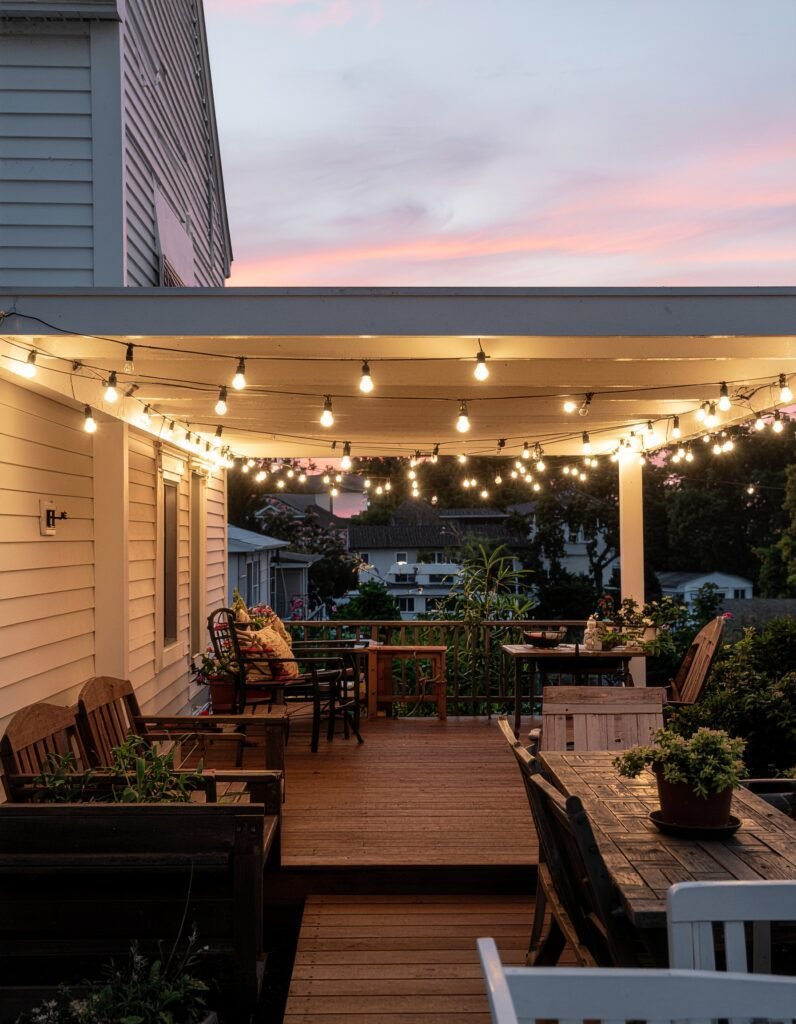
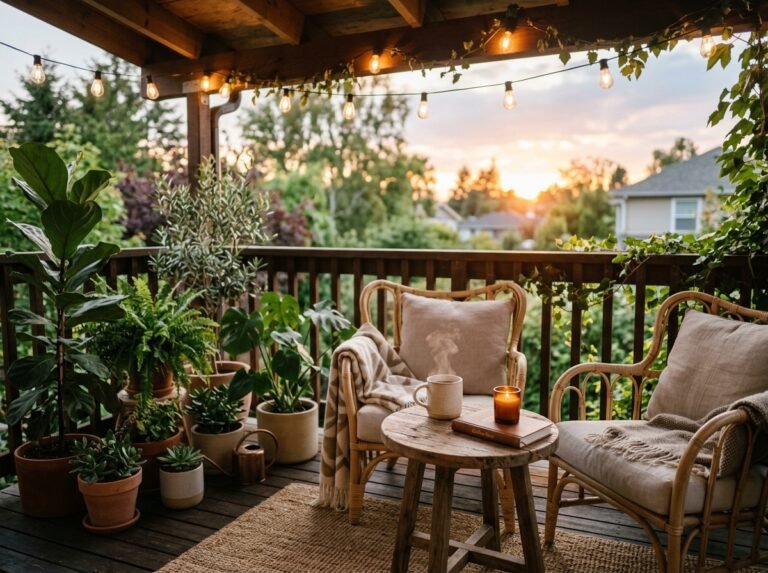
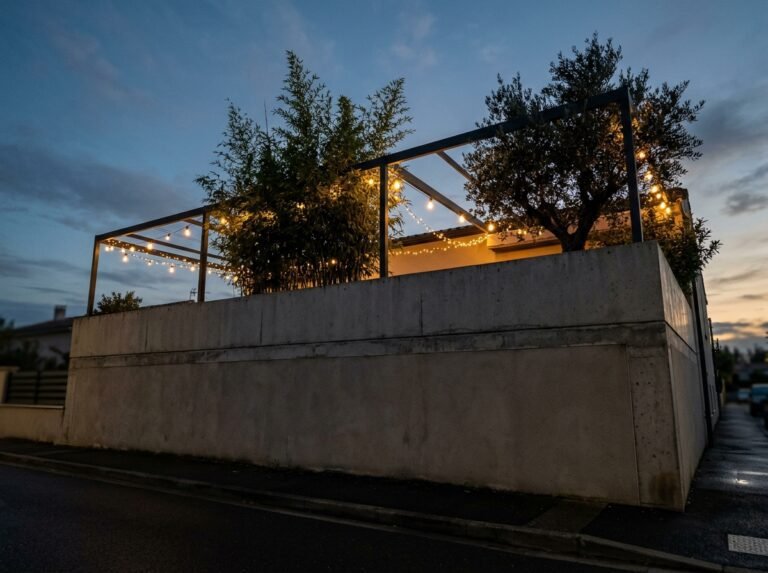
In hot climates especially, the patio really comes alive after sunset — which means lighting isn’t decoration, it’s the whole point. String lights are the obvious choice because they’re cheap and forgiving: a 10-metre strand of warm white Edison-style bulbs usually costs less than a single outdoor wall fixture.
Two practical notes. First, zigzag the lights overhead between two anchor points rather than running them in a straight line along the wall — the overhead “canopy” effect is what makes the space feel enclosed and intimate. Second, check the IP rating before buying. Anything rated IP44 or above handles rain; the unrated indoor strands sold cheaply online will fail after the first wet week.
Lay Down an Outdoor Rug
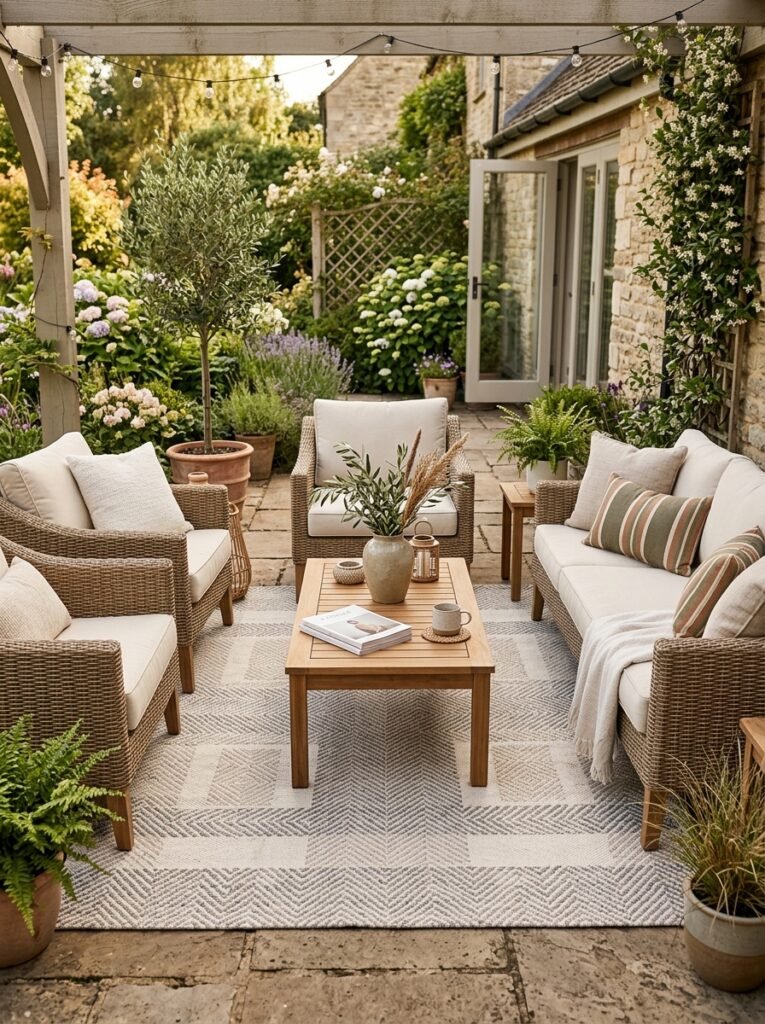
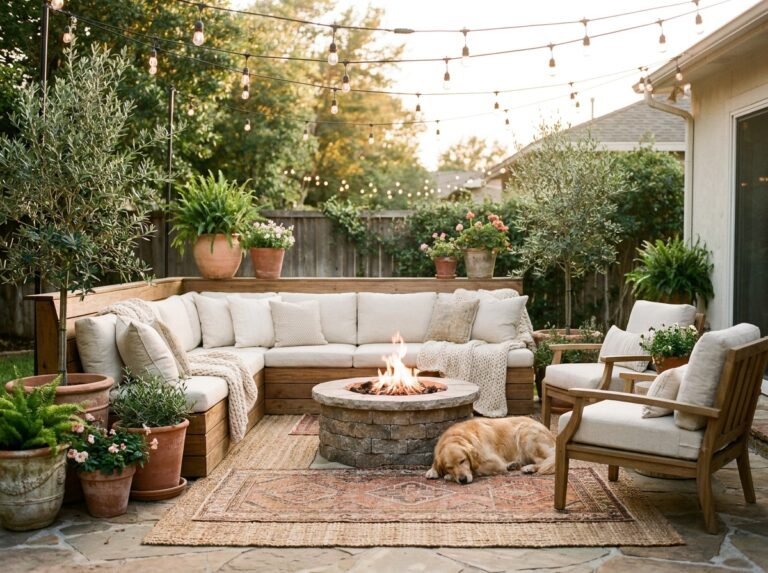
Bare concrete is the giveaway of an unfinished patio. An outdoor rug fixes that in one move it defines the seating zone, hides stains and cracks, and adds the one thing hard surfaces never have: warmth.
Size matters more than pattern here. The rug should be large enough that at least the front legs of every piece of furniture sit on it. A tiny rug floating in the middle of the seating area makes the space look smaller, not bigger. Go for flat-woven polypropylene it dries fast, shrugs off spills, and you can literally hose it down. Skip anything with a thick pile outdoors; it traps moisture and grows mildew.
Bring in Potted Plants and Flowers
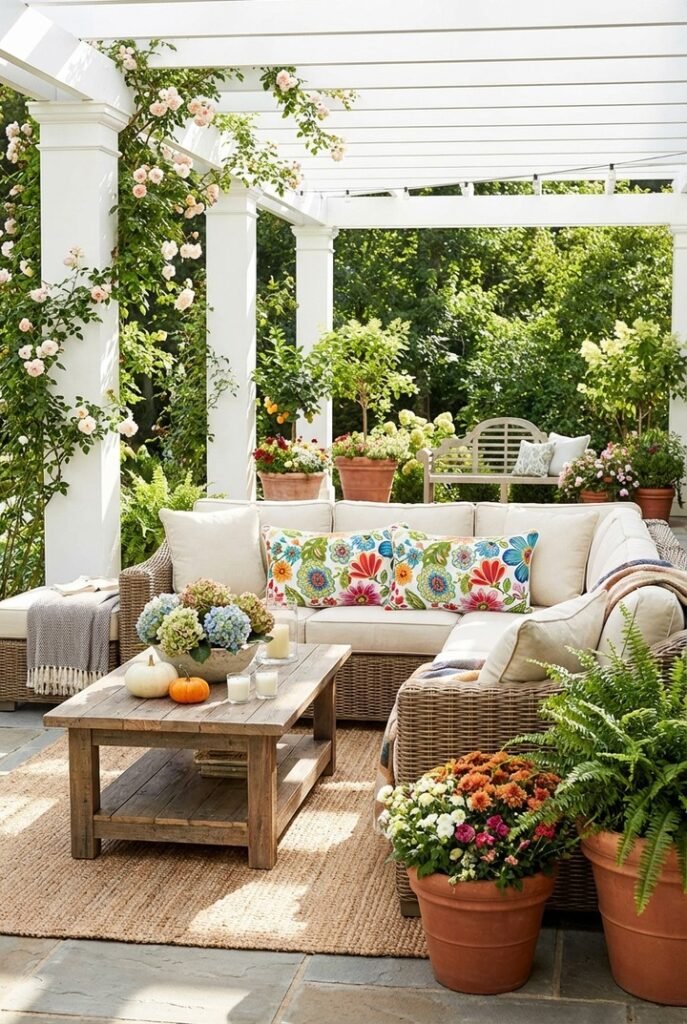
Plants are what separate a patio from a furniture showroom. But scattered single pots look bitty. The trick is clustering: group three to five pots of different heights in a corner one tall (think a small olive tree or a snake plant in a floor pot), one medium, a couple of small trailing ones and you get a lush, layered look from plants that individually cost very little.
If your patio bakes in afternoon sun, choose accordingly: bougainvillea, succulents, rosemary, and lantana thrive in heat and forgive missed waterings. A row of struggling, scorched ferns does more harm to the look of a patio than no plants at all.
Install a Pergola for Shade and
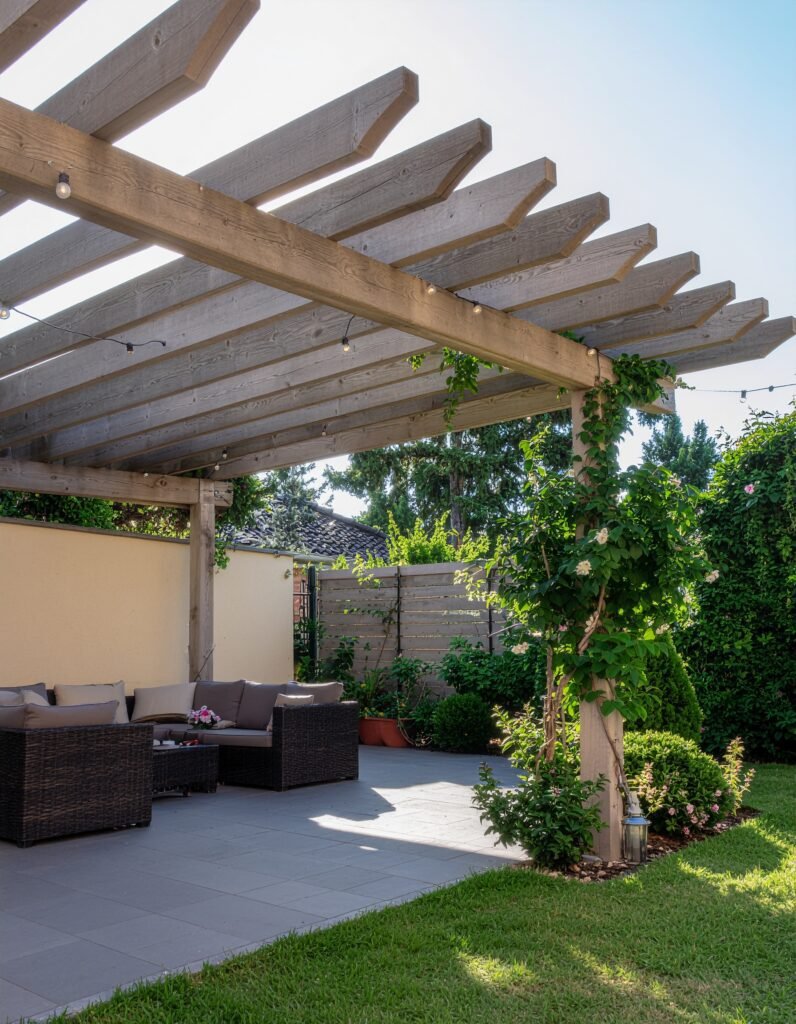
This is the biggest-ticket item on the list, so let me be honest about when it’s worth it: a pergola makes sense if your patio is unusable for hours each day because of direct sun. If shade isn’t your problem, spend the money elsewhere.
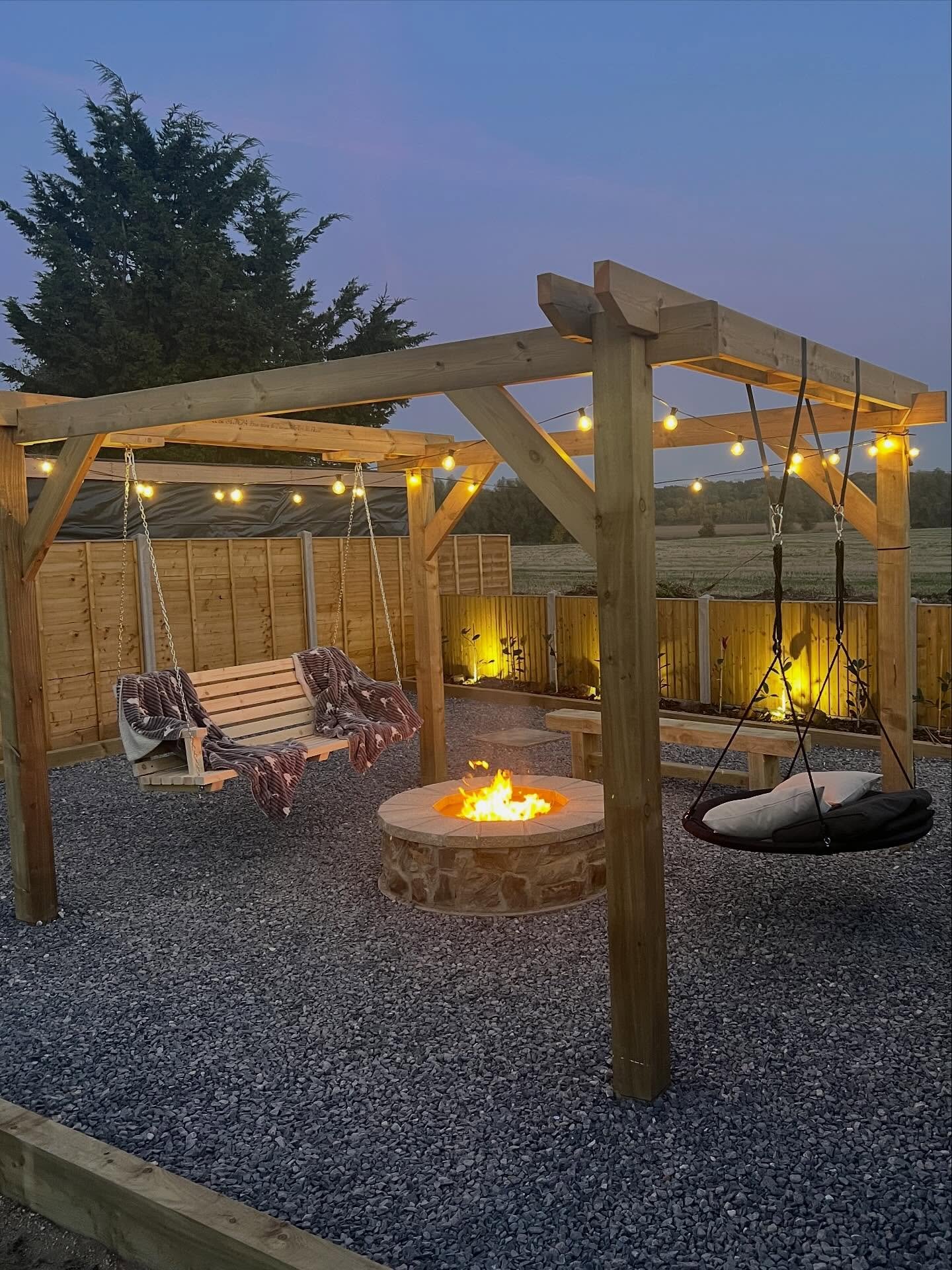
If it is, though, nothing else transforms a patio so completely. A pergola turns open paving into a defined outdoor room, and it gives you a structure to build on string lights woven through the beams, a climbing jasmine or grapevine for natural shade that thickens each year, even outdoor curtains for privacy. Pre-cut kits have made this far more affordable than custom builds; just anchor the posts properly, because a wobbly pergola is worse than none.
Create an Outdoor Dining Space
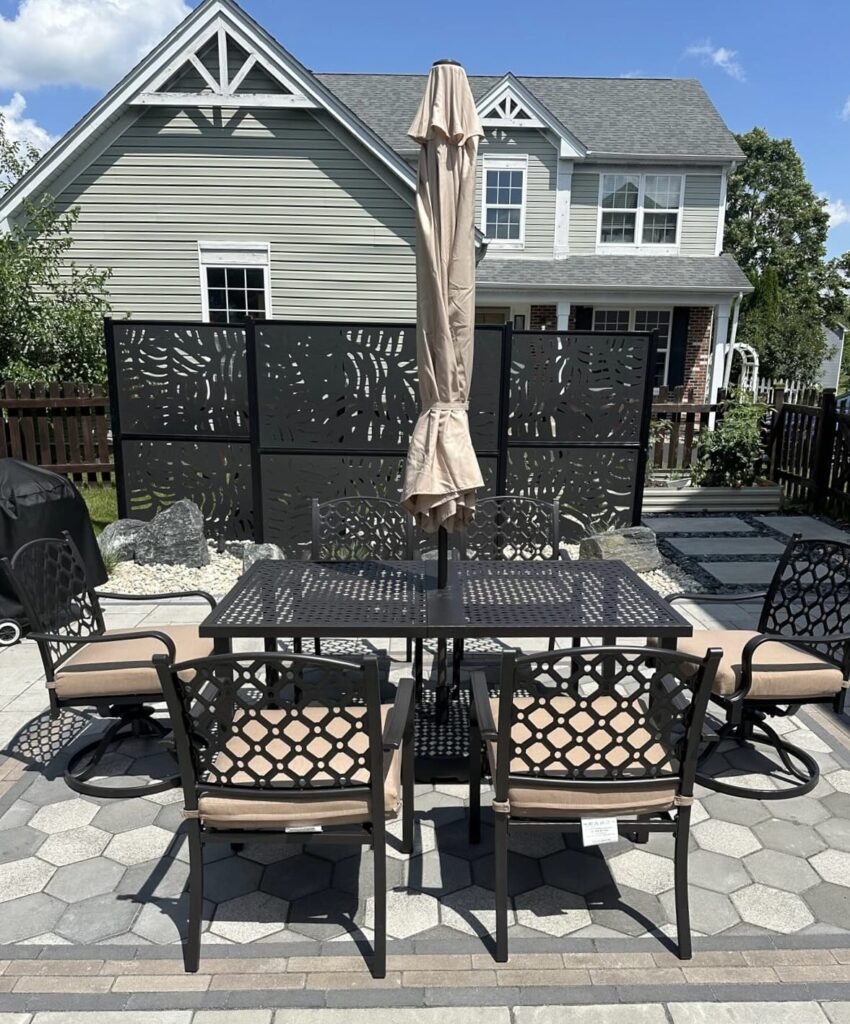
If your patio is big enough for two zones, a small dining setup is worth carving out outdoor meals are simply better, and you’ll find yourself eating outside far more often once there’s a proper table waiting.
You don’t need a six-seater. A round bistro table for two or four takes up less room, encourages conversation, and is easier to move. The detail that elevates it: keep something permanent in the centre a lantern, a potted herb, a hurricane candle so the table looks styled even when it’s not in use. An empty table reads as storage; a dressed one reads as an invitation.
Add a Fire Pit for Warmth
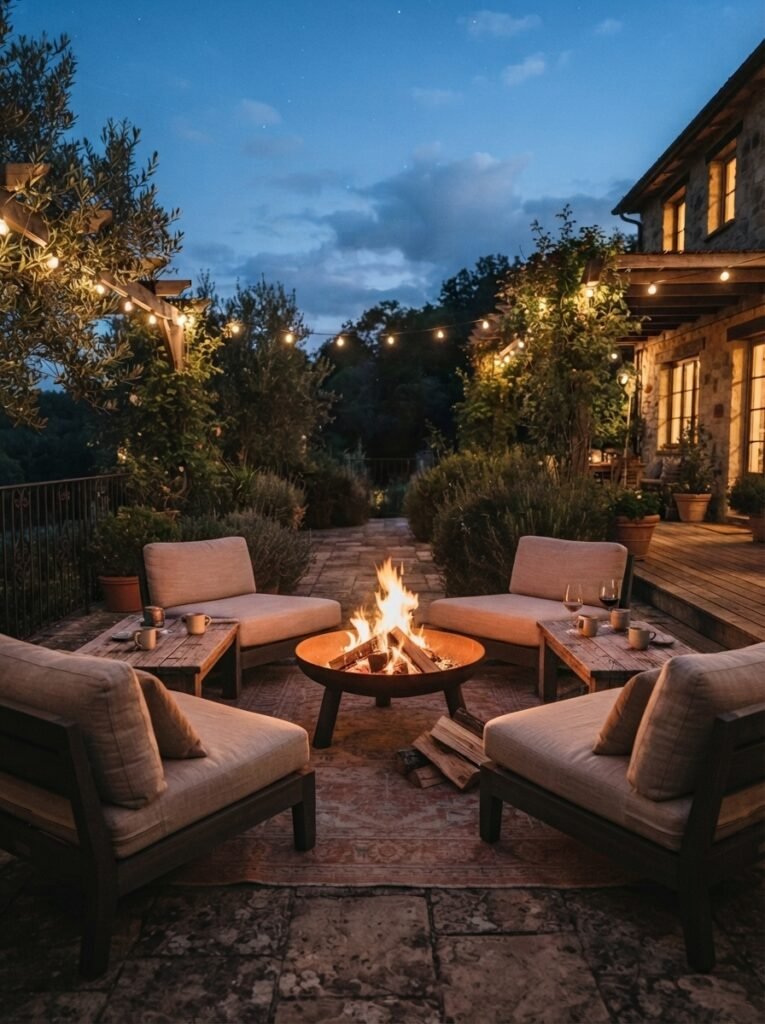
A fire pit earns its keep in two ways: it extends your patio season into the cooler months, and it gives people a reason to gather. There’s a reason every gathering eventually migrates toward the fire.
Choose based on how you live. Wood-burning pits give you the crackle and the smell, but produce smoke and need clearance from walls and overhangs check local rules before buying. Gas and bioethanol pits light instantly and can sit closer to seating, which suits smaller patios. Budget-wise, a simple steel wood-burning bowl starts cheap; built-in stone surrounds are a project for later, not a starting point.
Use Vertical Planters and Wall Decor
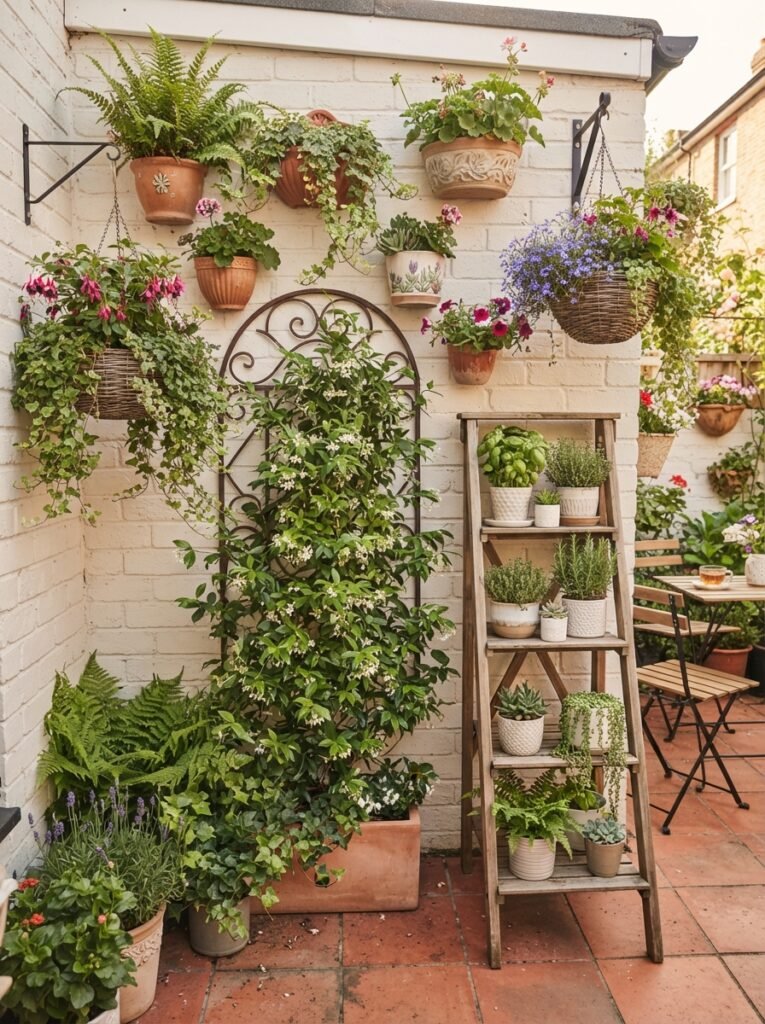
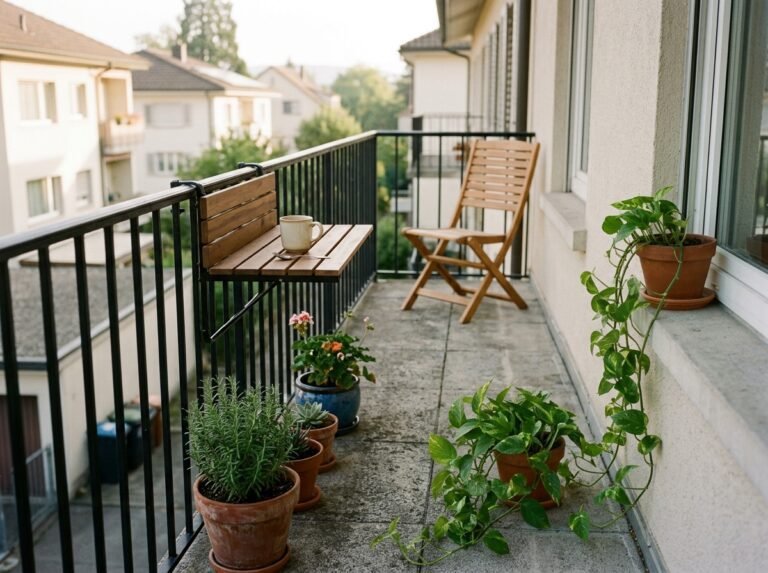
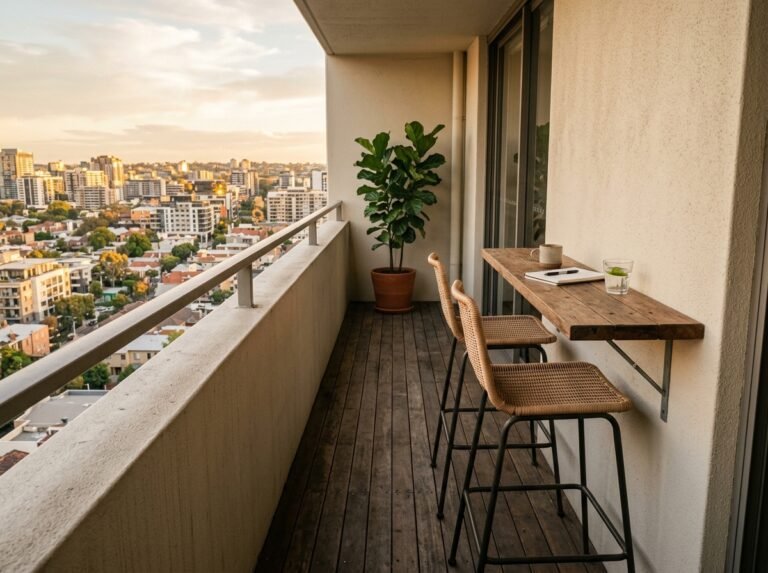
On a small patio, the walls are free real estate. Wall-mounted planters, a couple of hanging baskets, or a simple trellis with a climber give you greenery and visual interest at eye level without sacrificing a single square foot of floor.
This is also where renters should focus, since nothing here is permanent. A freestanding ladder shelf loaded with pots, or hooks over an existing railing, achieves the living-wall effect with zero drilling, the same no-drill logic that makes these balcony and terrace ideas work so well for renters and small spaces. One caution: hang planters where you can actually reach them to water, or they will quietly die at the exact height where everyone can see them.
Style With Outdoor Cushions and Throws
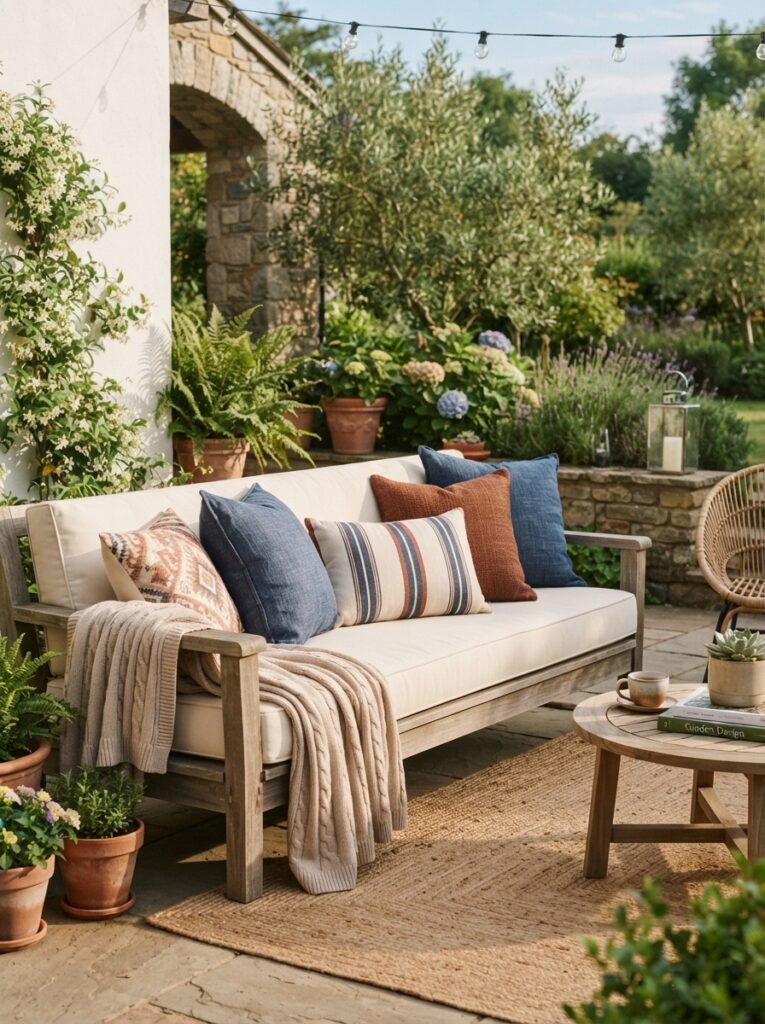
Cushions are the lowest-cost, highest-impact item on this entire list and the easiest to get wrong. The mistake is buying a matching set in one safe colour, which always looks like it came straight off a showroom floor. Instead, pick two or three colours that talk to each other and mix sizes and textures: a couple of large plain cushions, one or two patterned, maybe a striped lumbar.
Buy covers in solution-dyed acrylic or proper outdoor polyester regular indoor cotton fades to grey in a single sunny season. And keep a basket or storage bench nearby for throws, so bringing them out isn’t a chore. Cosy only happens if it’s convenient.
Add Lanterns Along Pathways and Seating Areas
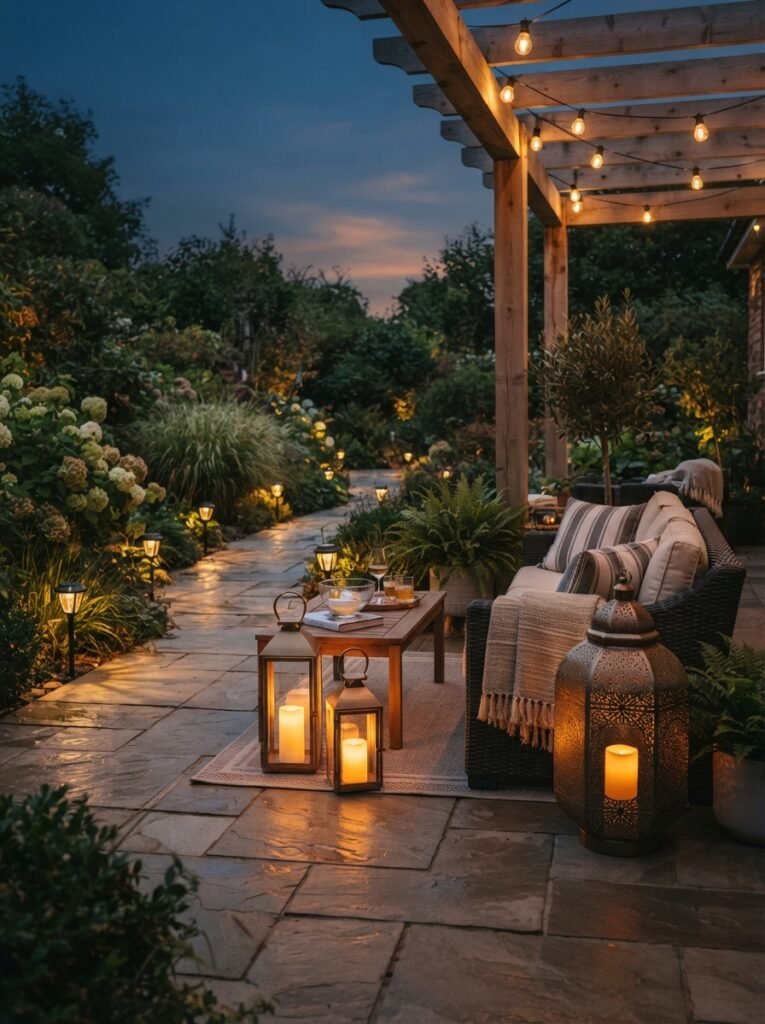
Lanterns are the finishing layer. Where string lights give you the overhead glow, lanterns bring the light down to ground level, which is what makes a patio feel layered and intentional after dark.
You only need a few. One oversized floor lantern beside the sofa makes more of a statement than five small ones scattered about. Along steps or a path, solar lanterns are the practical pick no wiring, no switching on, and decent ones now run all evening on a day’s charge. Group an odd number (three works) at different heights near the seating, drop in flameless LED candles so wind isn’t an issue, and you’re done.
Final Thoughts
Don’t try to do everything in one weekend. Start with the foundations — somewhere comfortable to sit, light for the evening, a rug to ground it — and live with the space for a couple of weeks. You’ll quickly learn how you actually use it, and that tells you what to add next far better than any list can. A patio built gradually around real habits always ends up better than one assembled in a single shopping trip.