Small Bathroom Decor Ideas to Maximize Space and Style
A small bathroom rarely needs more decoration. It usually needs less of something else.
Most advice goes straight to mirrors, shelving and wallpaper, and those all help. None of them fixes three other things. A floor that is full. A door that swings into the only clear space. Air that never properly dries out. Sort those three and the styling becomes easy, mostly because there is finally somewhere to put it.
The Room as It Usually Is
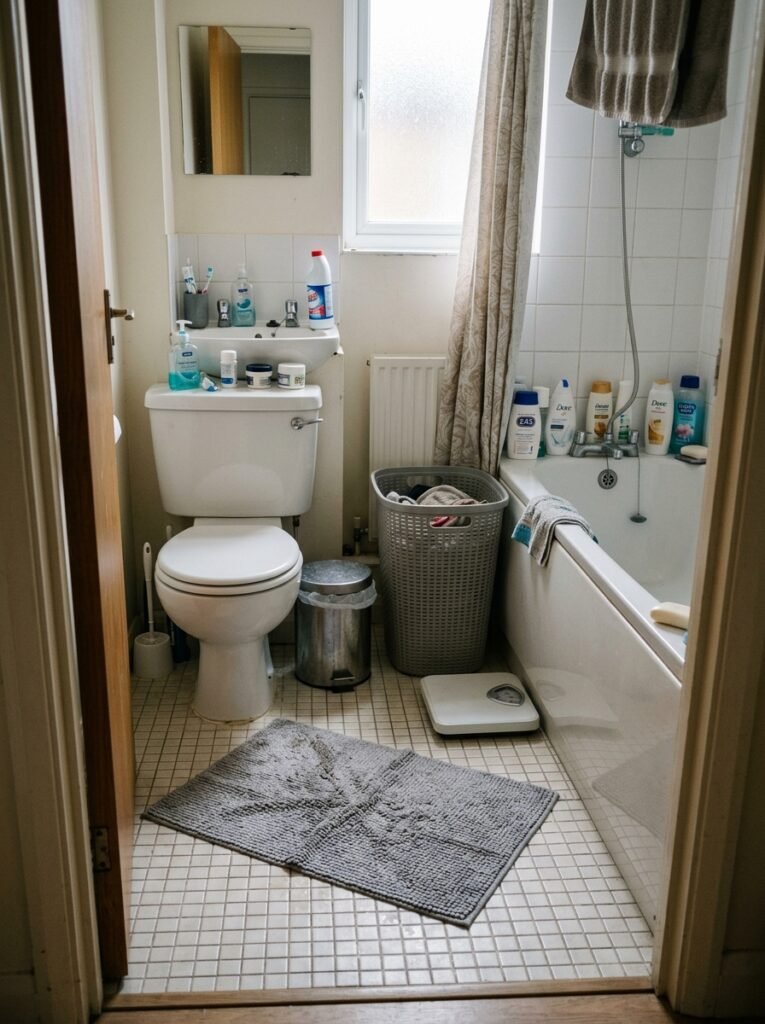
Picture a typical small bathroom on an ordinary Tuesday.
A bath mat that has been down all week, damp underneath. A pedal bin wedged between the toilet and the wall. Three half-used bottles on the cistern and four more balanced on the edge of the tub. A towel over the radiator and another on a hook, both slightly damp. A laundry basket on the floor, because there is nowhere else for it to be. Grout going darker in the corner nearest the shower. And a fan that runs while the light is on and stops the second anyone leaves.
Not one of those is a decorating failure. Every single one is a storage problem or an air problem wearing a decorating costume.
Worth noticing too: what the door reveals. The first thing visible when a bathroom door opens is usually the toilet or the clutter. Nobody chose that. It just happened. That first glance sets the impression of the whole room.
Try counting what touches the floor. In most small bathrooms it comes to five or six separate objects. Almost none of them had to be there.
Everything Standing on the Floor
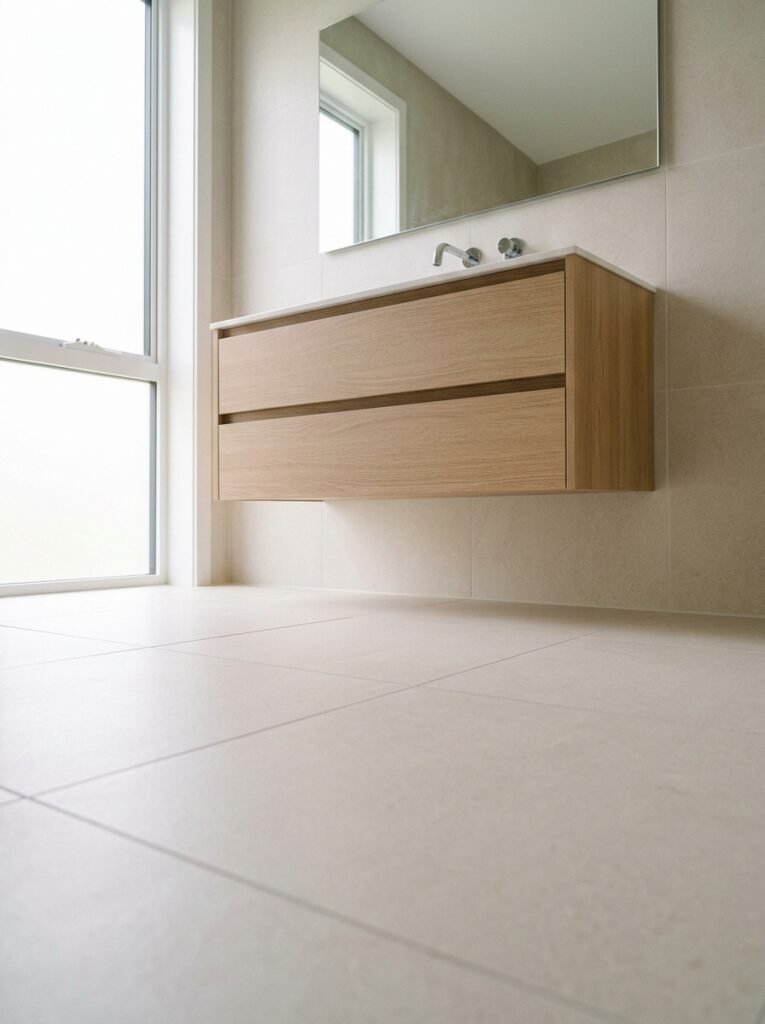
Visible floor is what tells the eye how big a room is. Cover it and the room shrinks, whatever color the walls are.
- The bin. A wall-mounted one, or a slim bin inside the vanity. In a genuinely tiny bathroom, moving it out of the room entirely is a real option
- The laundry basket. The single biggest offender, and the easiest to relocate. An over-door hanging bag holds the same load and touches nothing
- The bath mat. Hang it after every use. Left down it holds water against the floor, stays faintly damp and reads as clutter the rest of the time
- The scales. Upright against the side of the vanity, or underneath it
- Bottles. One caddy or one tray, not a scattering across three ledges
Furniture matters here too. A pedestal basin shows more floor than a vanity unit, and a wall-hung vanity shows more than either. Anything with a visible gap underneath makes the floor read as continuous.
Where there is genuinely nowhere to put things, one closed unit beats five open ones. A single slim cabinet hides a jumble that would otherwise sit on show across three surfaces. Closed fronts also read as one clean plane rather than a wall of small objects.
The measure is simple. If more floor is visible from the doorway, the room feels larger. The number of things competing for attention drops at the same time.
The Door Is Eating the Room
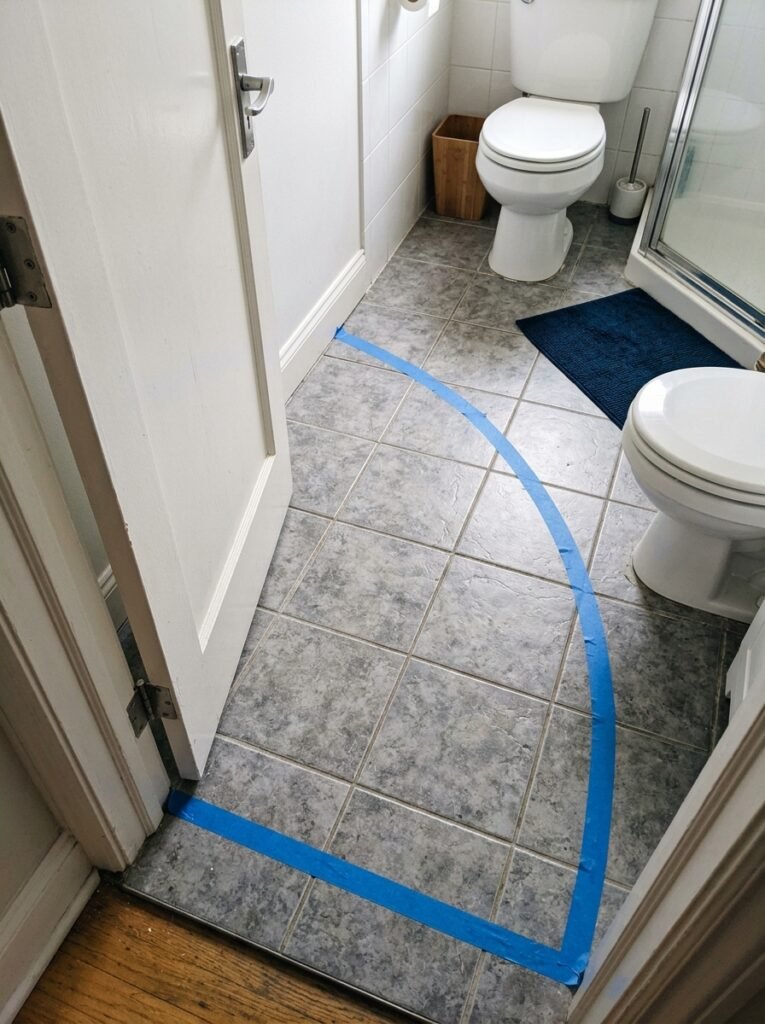
This is the part nobody measures. An inward-swinging door sweeps an arc that has to stay permanently clear. In a small bathroom that arc regularly covers a quarter of the floor.
Rehanging the door to open outward is the cheapest fix and often the largest gain available. It is a hinge and latch job rather than construction. Check what the door hits on the other side first. A hallway or a landing has its own traffic.
Where that is not possible, a sliding or bi-fold door removes the arc entirely. Both cost more, and a sliding door needs clear wall to slide onto.
Two smaller checks are worth a minute each. Check whether a towel bar or a hook sits inside the swing. That quietly stops the door opening fully. Then look at the back of the door itself, which is prime unused space in almost every bathroom.
If the door has to stay exactly as it is, keep that arc completely empty. Everything else goes on the walls.
Five Things People Ask
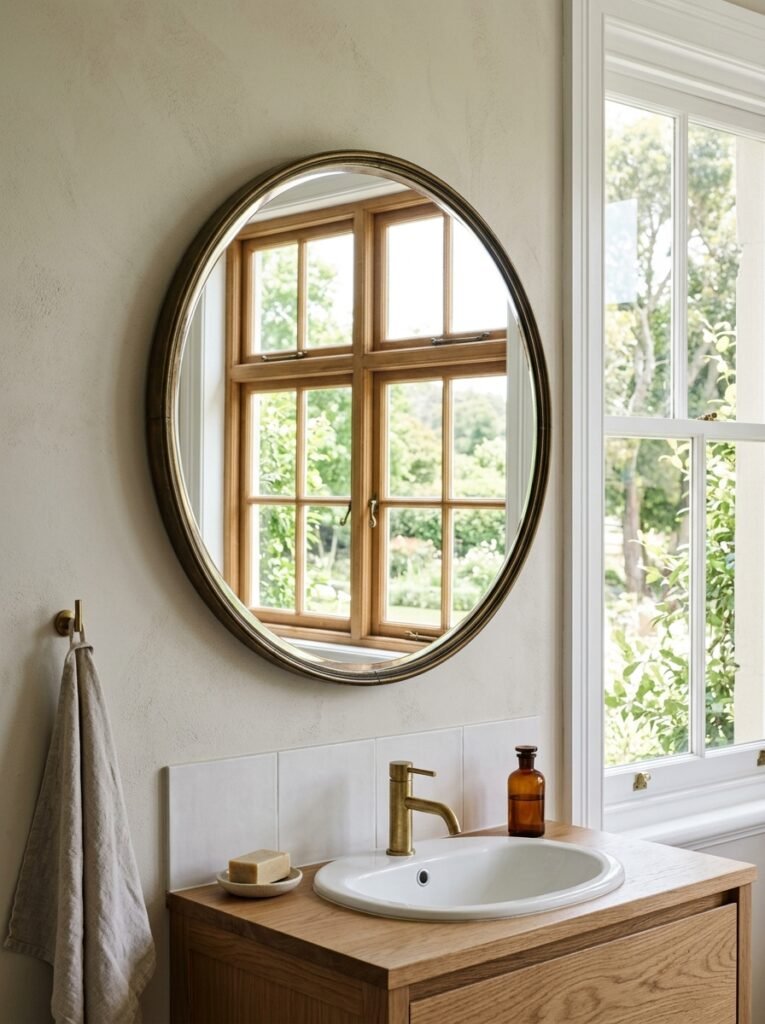
Does a large mirror really make a small bathroom look bigger? It depends entirely on what it reflects. A mirror facing a blank wall doubles the blank wall. A mirror facing a window or a light source doubles the light, and that is where the effect comes from.
Should a small bathroom be light or dark? Either works. What fails is a pale room with clutter in it, because light surfaces show every object standing against them.
Shower curtain or glass screen? A clear screen lets the sightline run all the way to the far wall, which makes the room read longer. A curtain cuts the space visually, but it wins on cost and it suits renting.
Where do towels go when there is no wall space? Hooks rather than bars. A hook uses a fraction of the wall and dries a towel faster. The fabric hangs loose instead of folded against itself.
Can a small bathroom take a rug? A small one that gets hung up after use, yes. A permanent one, no, for the same reason the bath mat gets hung.
Dry Is the Whole Game
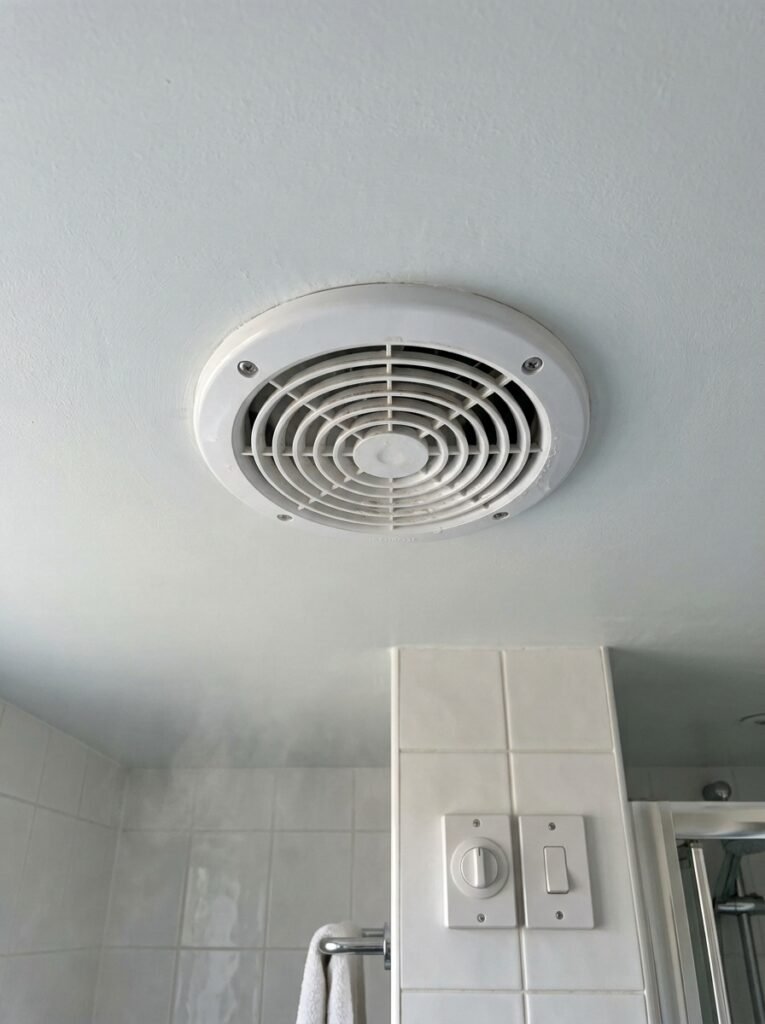
A damp small bathroom looks tired no matter what is in it. Grout darkens, paint bubbles at the edges, mirrors fog and metal spots. Anything made of paper or untreated wood quietly gives up.
The extractor fan is the fix, and most people run it for a fraction of the time it needs. The Department of Energy’s guidance on bathroom exhaust fans recommends about an hour of runtime after a shower. That is what clears the residual humidity. It also recommends a timer switch, so the runtime happens without anyone having to remember.
Four habits do the rest, and none of them cost anything:
- If there is a window, open it and close the door, so the wet air leaves the building rather than the rest of the house
- Squeegee the screen or tiles after showering, which takes about thirty seconds
- Leave the shower door or curtain open afterwards so it dries instead of sitting folded and wet
- Wipe the sill and any ledge where water collects and sits
None of this is decorating. All of it decides whether the decorating lasts.
What Survives the Steam
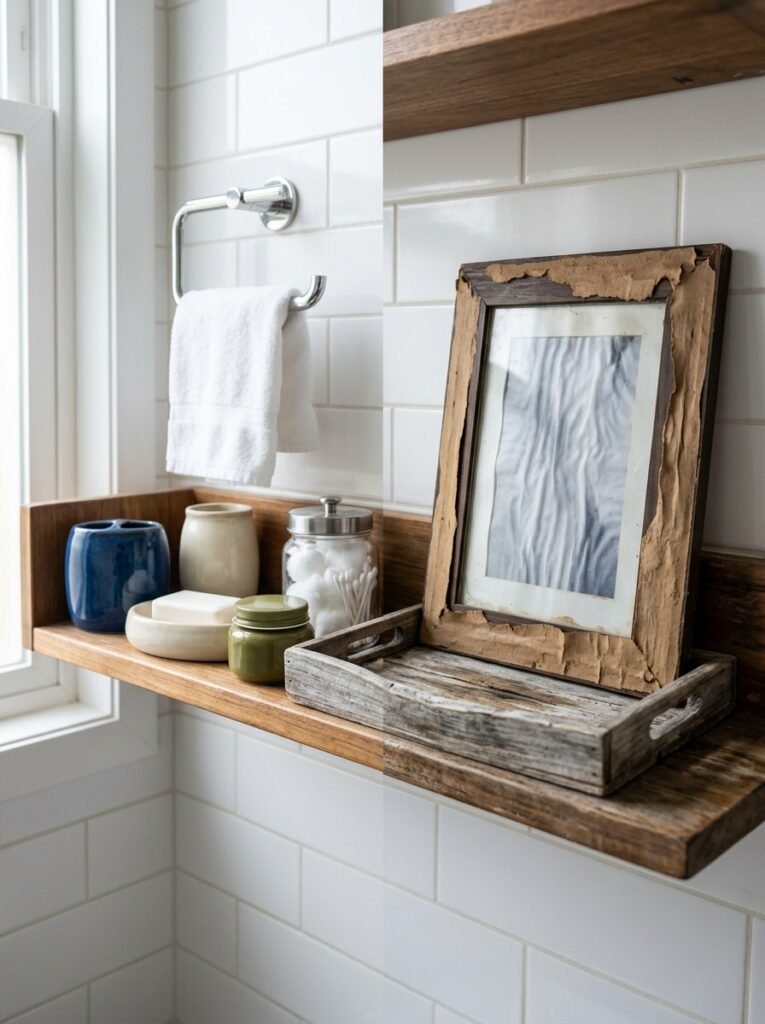
Style in a small bathroom is a materials question before it is a taste question. The room attacks half the things people want to put in it.
What holds up:
- Glazed ceramic, glass and sealed stone
- Stainless steel, solid brass and powder-coated metal
- Acrylic, and synthetic textiles that dry quickly
- Plants that genuinely like humidity
What does not:
- Untreated wood, and MDF with unsealed edges
- Paper prints in unsealed frames, and cardboard-backed art
- Adhesive hooks, which lose grip in repeated steam and drop what they hold
Two materials sit in the middle. Natural fiber baskets look right and last well in a bathroom that dries out properly. In a windowless one that does not, they go musty. Rattan behaves the same way. Both are a fair bet once the ventilation is sorted and a poor one before that.
For anything framed, either seal the back properly or use acrylic glazing and accept that it needs wiping. The wall side of a small bathroom deserves more room than this section allows. There is a fuller list in this piece on wall decor that suits a tight bathroom.
The Surfaces Nobody Is Using
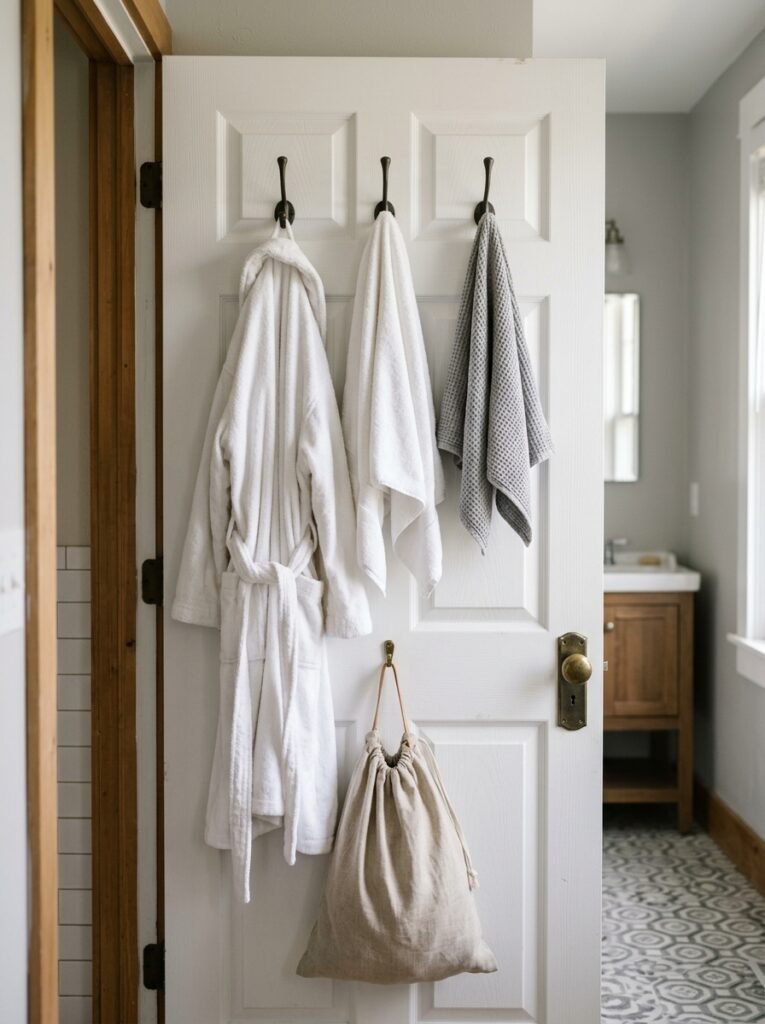
Everything that came off the floor has to go somewhere. Small bathrooms have more spare wall than they appear to.
- The back of the door. Two or three hooks, or a slim rack, and suddenly the towels and the robe have a home
- The wall above the door. A single narrow shelf across that gap holds spare rolls and refills, which are the things nobody needs at eye level
- The window reveal. The returns either side of a window are usually deep enough for a small plant or a candle
- The side of the vanity. The flat end panel takes a hook or a slim rail
- Inside the vanity door. A small rack on the inside face doubles what that cabinet holds
- The corner beside the cistern. Usually just wide enough for a narrow tower unit, and usually empty
One practical note before drilling. Tiled walls take fixings fine, but the drill wants to wander across the glaze. A strip of masking tape over the mark gives the bit something to bite. Drill slowly with no hammer action until the tile is through. Switch over for the wall behind it. Where the position allows, going through a grout line rather than the tile face avoids the risk entirely.
Every one of those keeps the floor clear, which was the point of the exercise.
The Same Room, After
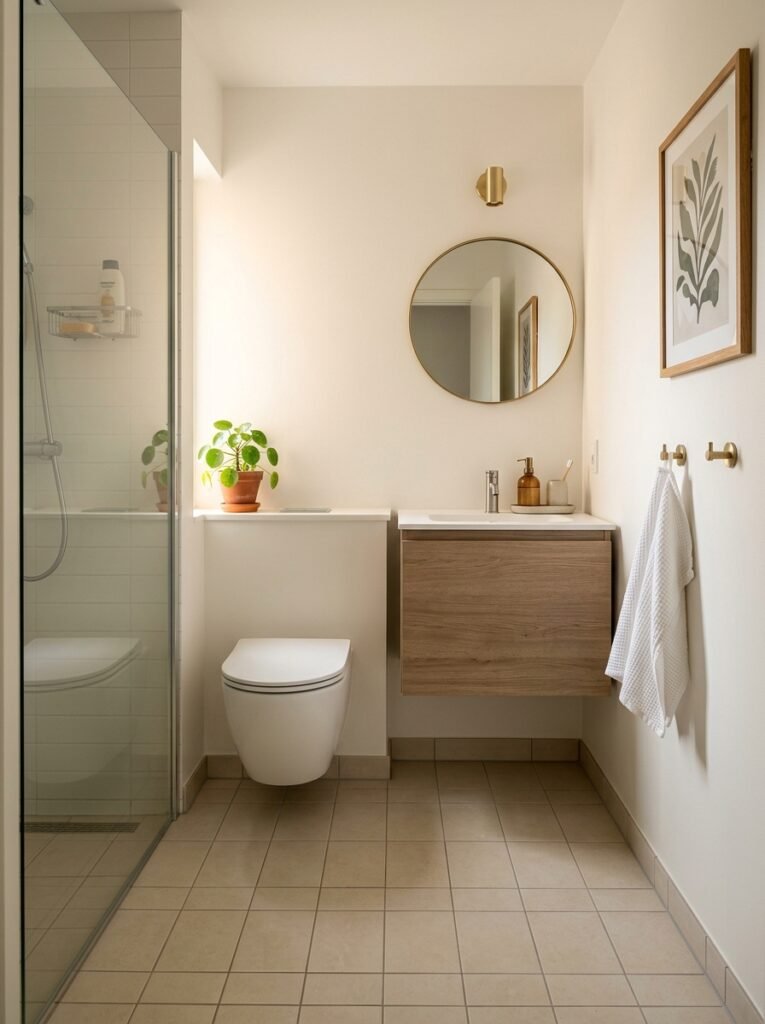
Take the same bathroom from the top of this article and change only what is above.
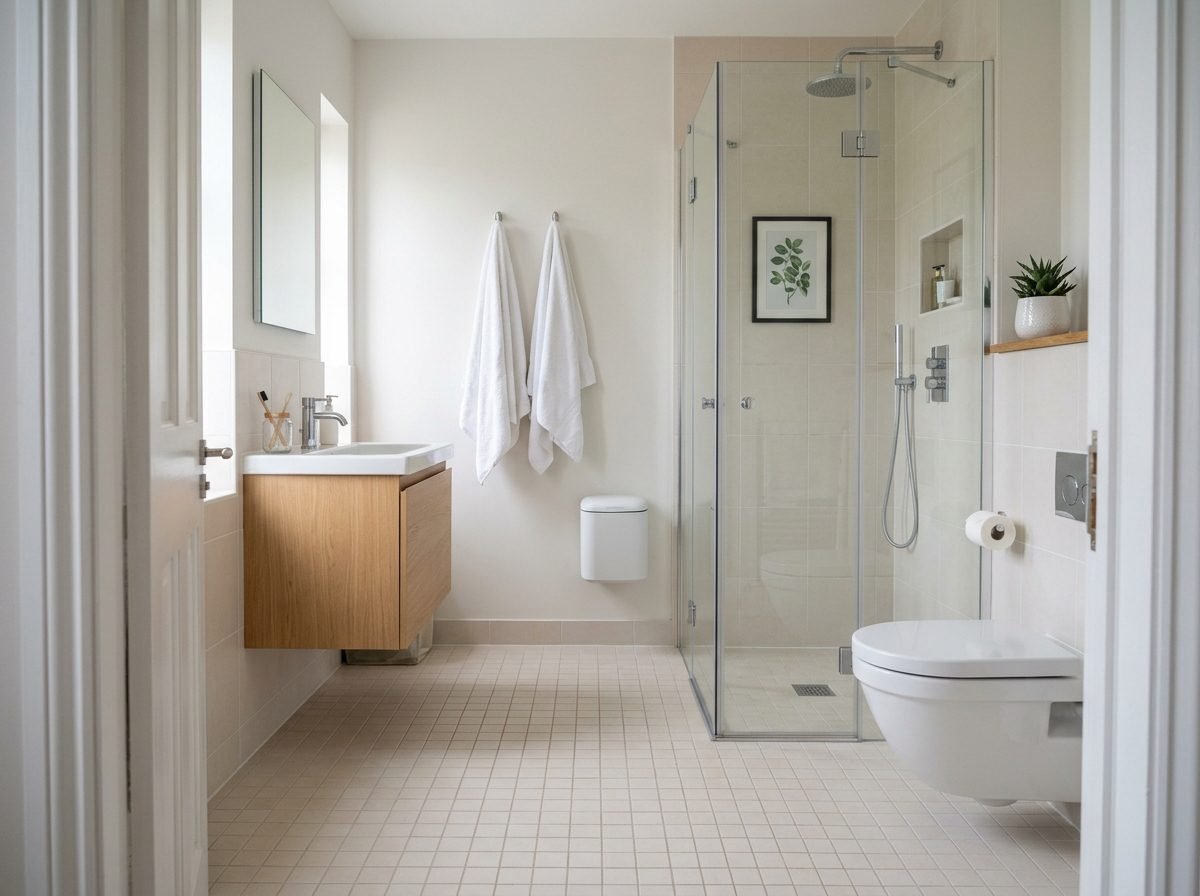
The bin is wall-mounted. The laundry basket lives on the back of the door in a hanging bag. The bath mat goes over the tub edge after use. Seven bottles have become one caddy in the shower and a small tray by the basin. Towels hang on hooks and dry properly between uses. The scales stand upright under the vanity.
The door opens outward, so the floor beside the basin is usable for the first time. The fan is on a timer and runs for an hour after every shower. The grout is staying pale because of it.
Two things now touch the floor: the toilet and the vanity.
The decorating that follows is small, and that is the point. One framed piece in a sealed frame. One plant that likes damp. One mirror positioned to catch the light rather than the blank wall opposite.
The room is exactly the same size as it was. It reads bigger because more of it is visible.
Do Not Decorate a Damp Room
Nothing from a mood board survives a bathroom that stays wet. The paper warps, the wood grays, the baskets smell, and the whole effort looks tired within a season.
The order that works is unglamorous. Dry the room out, clear the floor, deal with the door, and then style whatever is left.
That last step is the cheapest of the four. It is also the only one anybody consciously notices. That is exactly why it gets done first and disappoints so often.