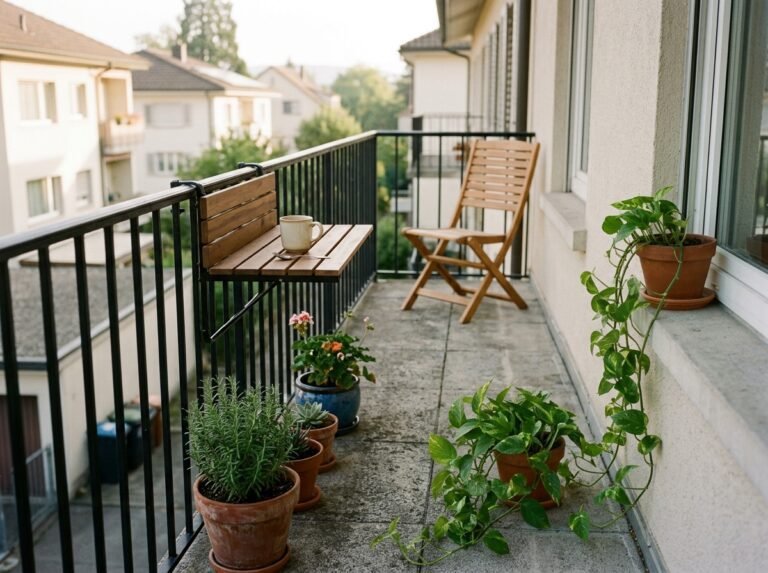
10 Backyard Decor Ideas: How to Zone a Yard That Feels Empty
Empty space is the hardest thing to decorate. A balcony makes the choices for you, because there is only one spot the chair fits. A lawn makes no choices at all. That is why so many backyards look the same: furniture pushed flat against the house, and a wide green nothing beyond it that nobody walks on.
The fix is to stop shopping for furniture. Start dividing the ground instead. Your house works because every room has a job. Gardens work the same way. What follows is one idea split into ten steps. Carve the yard into three or four outdoor rooms. Then give each room a floor, a light, and a reason to walk there. Unlike a balcony or terrace, you also have soil, trees and real distance to work with.
Create a Cozy Outdoor Seating Area
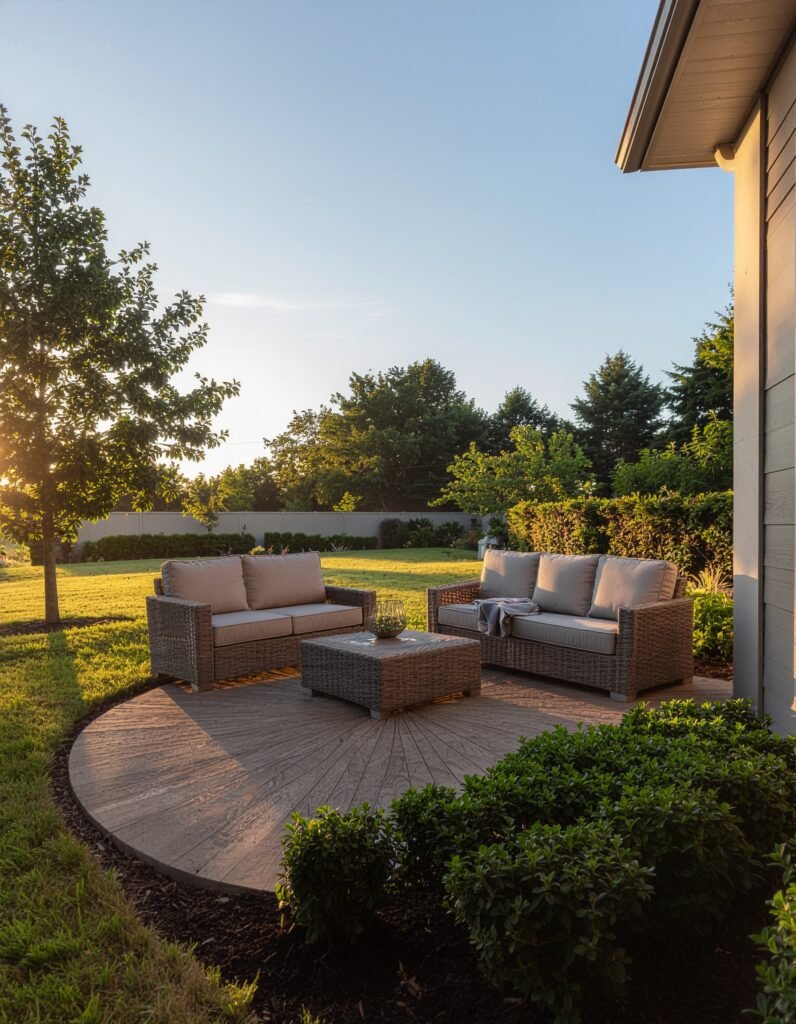
Most people park the sofa against the back wall of the house. That turns the garden into something you look at instead of somewhere you go. It also hands you the worst seat in the place: back to the brickwork, view of flat grass.
Move the whole zone off the wall. Three to five metres out is usually enough. Then turn the seats to face the best thing you own. That might be a mature tree, a planted border, the fence you are about to cover in climbers, or the house itself once the lights come on.
Give the zone edges so it reads as a room. Furniture adrift on a lawn never will. At ground level you have options no balcony owner gets. A gravel pad works. So does a low ring of planting, a switch from turf to paving, or two big pots acting as doorposts. Put something solid behind the seats too. A hedge, a screen, or a fence with growth on it. People settle far more easily when their backs are covered.
Layout does the social work. Keep facing seats within about two and a half metres of each other. Any further and people start raising their voices. Leave roughly 40cm between the seat edge and the coffee table. A yard has room for two sofas facing each other, or a sofa with two angled chairs. Level the ground first. Chair legs sinking into soft turf is what drives everyone back onto the patio.
Add String Lights for Ambiance
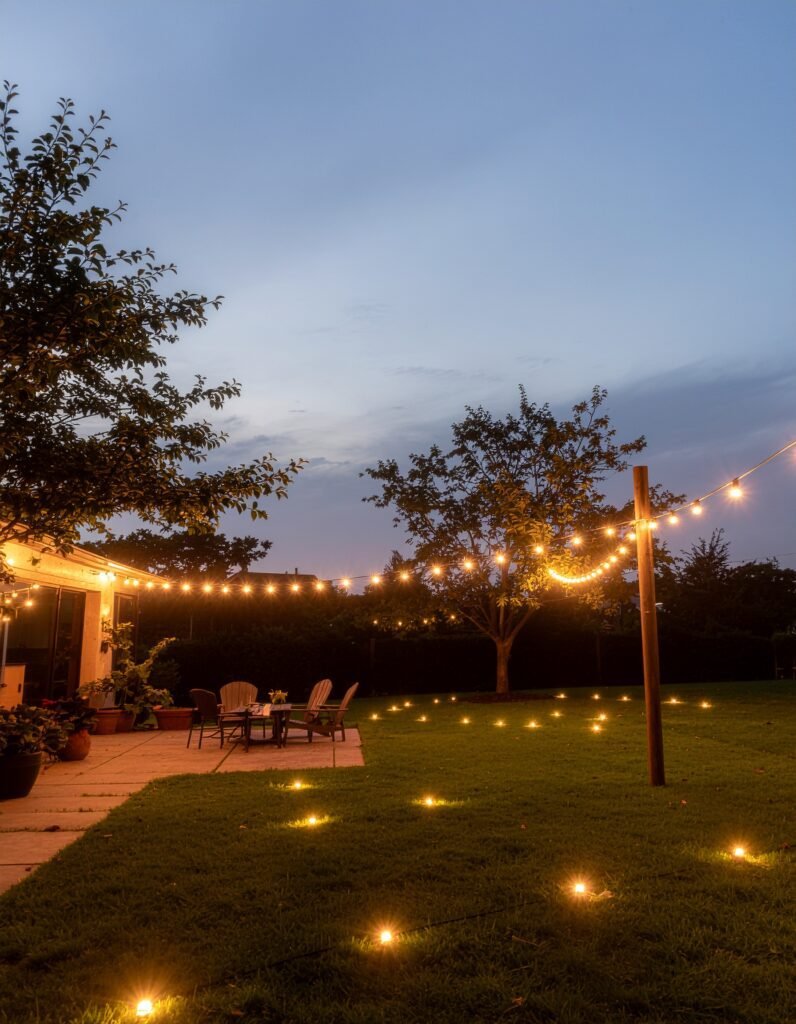
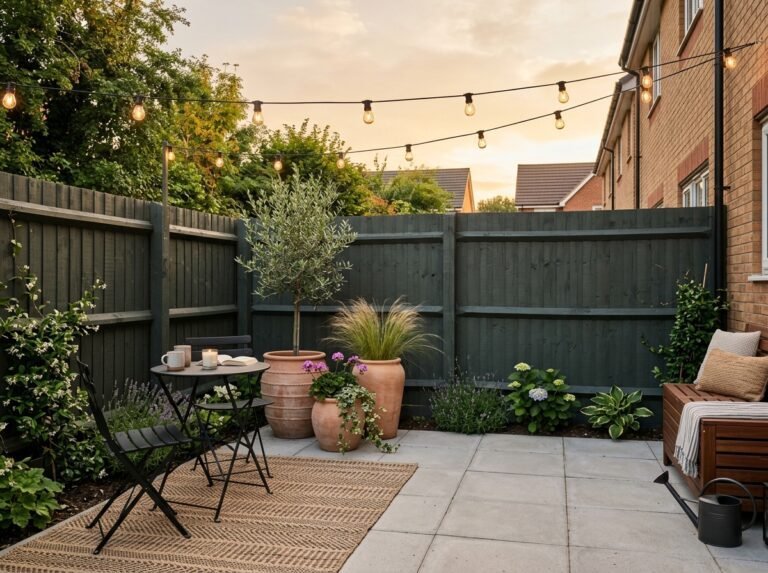
After dark, string lights stop being decoration. They become navigation. One floodlight on the back wall shrinks the garden to the patch it hits, and everything past that turns into a black wall. Two or three separate runs do the opposite. Put one over the seating and one over the table. The yard becomes readable, and people drift between the pools of light on their own.
Trees make this easy, and only ground level gardens have them. Run a strand from the house to a branch, or between two trunks. You get an overhead canopy with nothing to build. No trees yet? Set two or three timber posts into concrete about 60cm deep. Large planters weighted with gravel work too. String the lights between those instead.
A few technical details separate a run that lasts years from one that fails by August. Buy commercial grade strands rated for outdoor use, IP44 or better. For spans over about six metres, hang the lights from a steel support wire rather than trusting the cable itself. Allow a deliberate sag of 30 to 45cm between fixing points, so wind and cold have something to pull against. Keep the lowest point above head height, around 2.4 metres. Plug into an outdoor rated, RCD protected socket. Choose warm bulbs over cool white. And never run a strand directly above a fire pit.
Build or Buy a Fire Pit
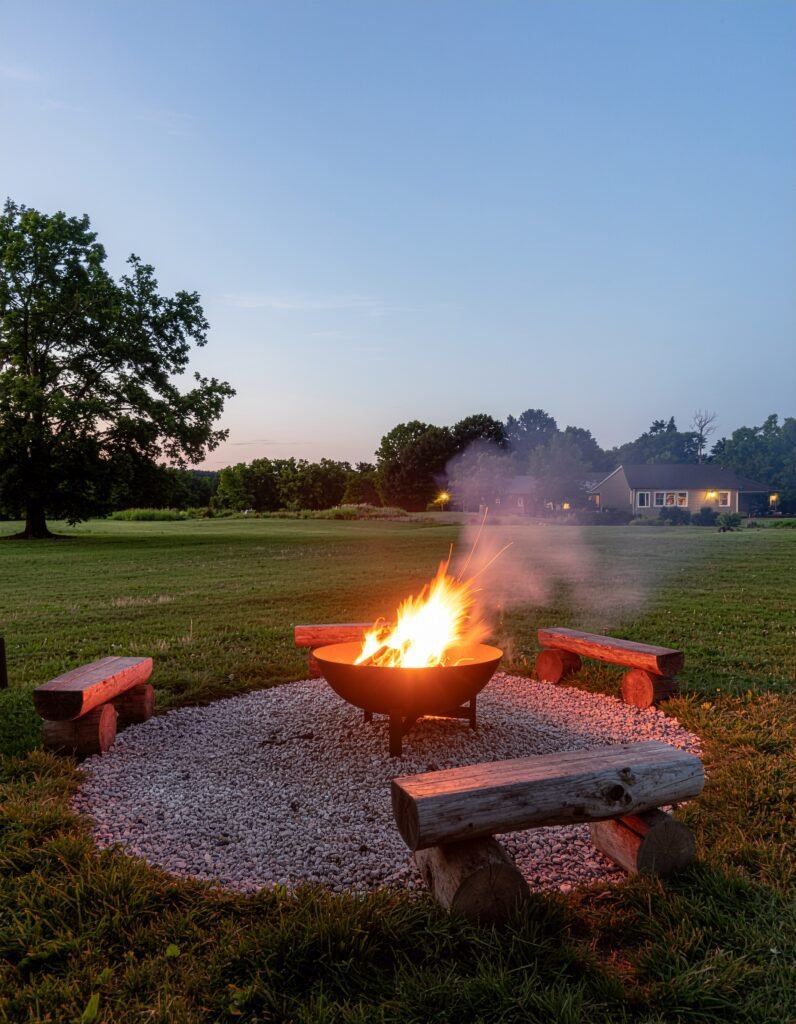
The fire pit earns a garden its evenings. On solid ground you can build the real thing, not a tabletop bowl.
Place it as far from the house as the plot allows. That is a design choice as much as a safety one. A destination at the bottom of the garden forces a walk through the middle of it, and a yard you cross feels twice the size of one you only look at.
Safety sets the minimum. The US Fire Administration advises keeping fire pits at least 10 feet from your home or anything else that can burn. That is a little over three metres. Many local codes ask for more, so check before you dig. Look up as well as out, because overhanging branches are the hazard people forget.
Build on gravel, pavers or bare earth. Never on a timber deck. Never on dry lawn. A ring of retaining wall blocks around a steel insert is a true one weekend project, and it costs a fraction of a shop bought pit. Keep the fuel area small, about a metre across at most. Bigger fires are harder to sit near and harder to put out.
Seating wants to be close enough to feel the heat and far enough to stay comfortable. Two metres back from the flames is the usual sweet spot. Backless benches, a low wall or cut log rounds beat armchairs here, because people lean in, shuffle and rotate around a fire all evening. Note the wind direction before you commit to a spot. Keep a bucket of water or a hose within reach. And give the ash a metal container to cool in for a day before it goes near a bin.
Add Outdoor Rugs
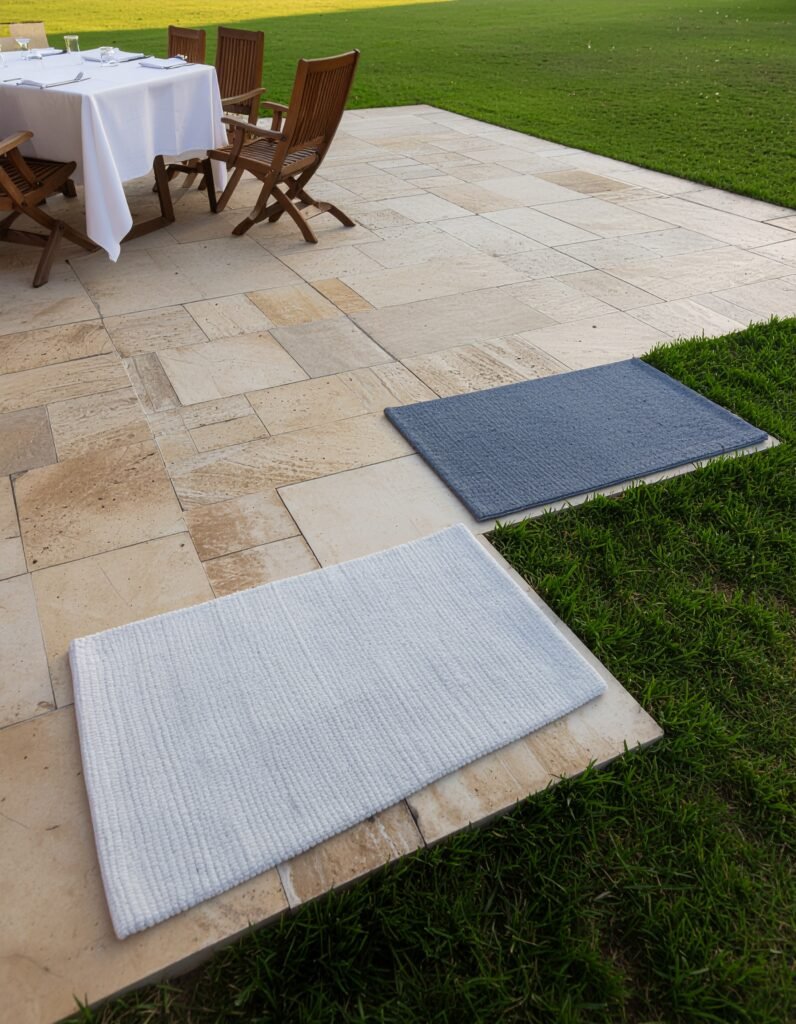
In a zoned garden, a rug is not a soft touch. It is the outline of a room. Put one under the seating group and one under the table. The eye stops reading scattered furniture and starts reading two spaces.
Size it properly or it works against you. Under a dining table, the rug should run at least 60cm past the edge on every side, so chairs stay on it when pulled out. Under a seating group, go big enough that the front legs of every piece land on the rug. A small rug floating in a large set makes the whole zone look undersized.
Material decides how long it lasts. Flatweave polypropylene and recycled PET shed rain, hose down easily and dry fast. Both fade in strong sun after a couple of seasons. Treat them as a three or four year item, not an heirloom. Lift them now and then so the surface underneath dries out.
Then there is the catch only gardens have. Rugs and lawn do not mix. On grass, a rug blocks light, kills the turf within a fortnight and traps damp against the soil. Keep them on hard surfaces only. To mark a zone out on the lawn itself, use landscaping instead. Mow that section on a lower setting. Edge it in brick or steel. Lay a paver circle. Those moves do the same job permanently, and they survive the sprinkler.
Bring in Potted Plants and Flowers
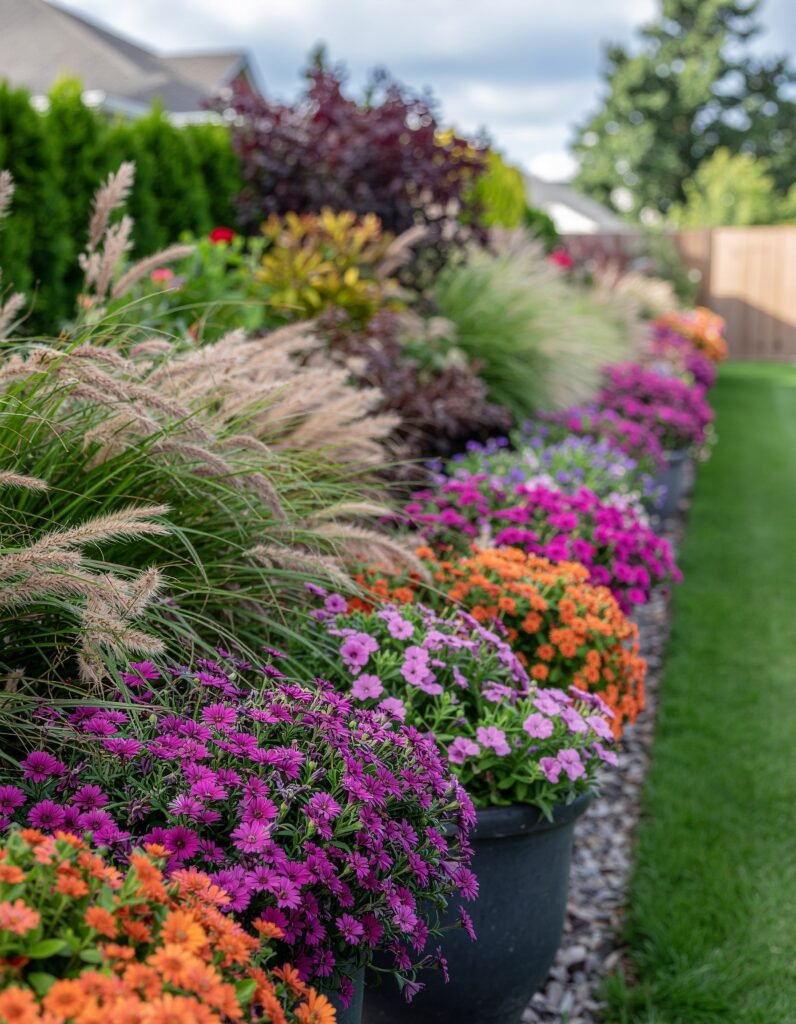
Real soil is your advantage over every balcony and rooftop. Build the planting in two layers and give each one a job.
The permanent layer goes into the ground. That means shrubs, ornamental grasses, climbers, maybe a small tree. Anything planted in soil roots deep and finds its own water. It also improves every season, which is the opposite of how pots behave. Keep something evergreen in the mix so the garden still has shape in January. Repeat the same plant in threes or fives along a border. Buying one of everything is what makes planting look amateur.
The moveable layer lives in containers. Use it for seasonal colour beside the seating, herbs by the kitchen door, and a matched pair of big pots framing a path. Go larger than feels necessary. Anything under 40cm across dries out in a day of real heat, and on hot weekends it needs watering twice.
The usual mistake is doing this backwards. Twenty small pots and nothing in the ground gives you a garden that needs daily watering and still looks temporary in year three. One climbing rose or star jasmine at the base of the fence will beat the whole pot collection within two seasons. Plant in autumn or early spring. Mulch the soil surface to hold moisture. Then let the ground do the work.
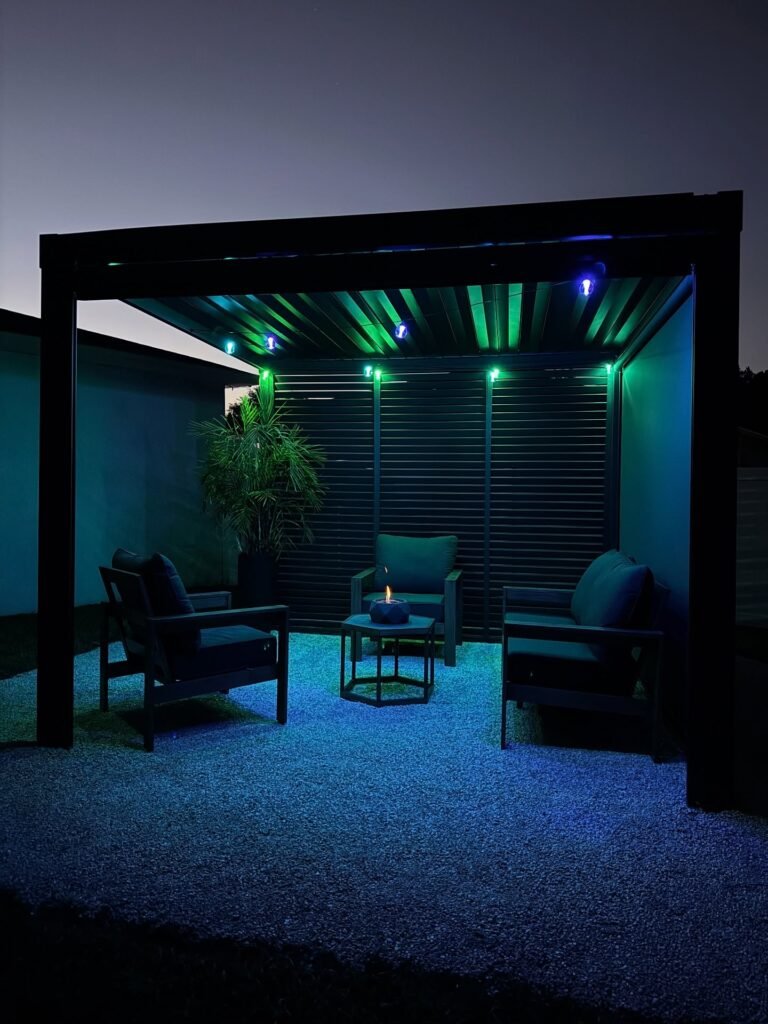
Install a Pergola or Shade Structure
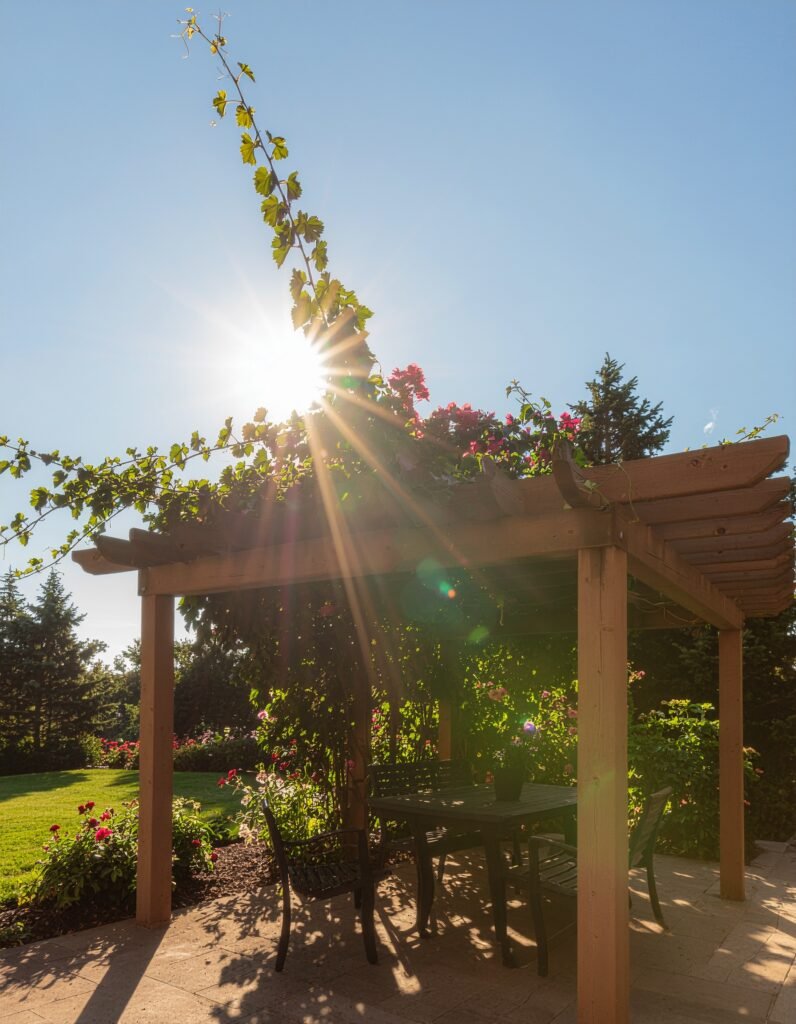
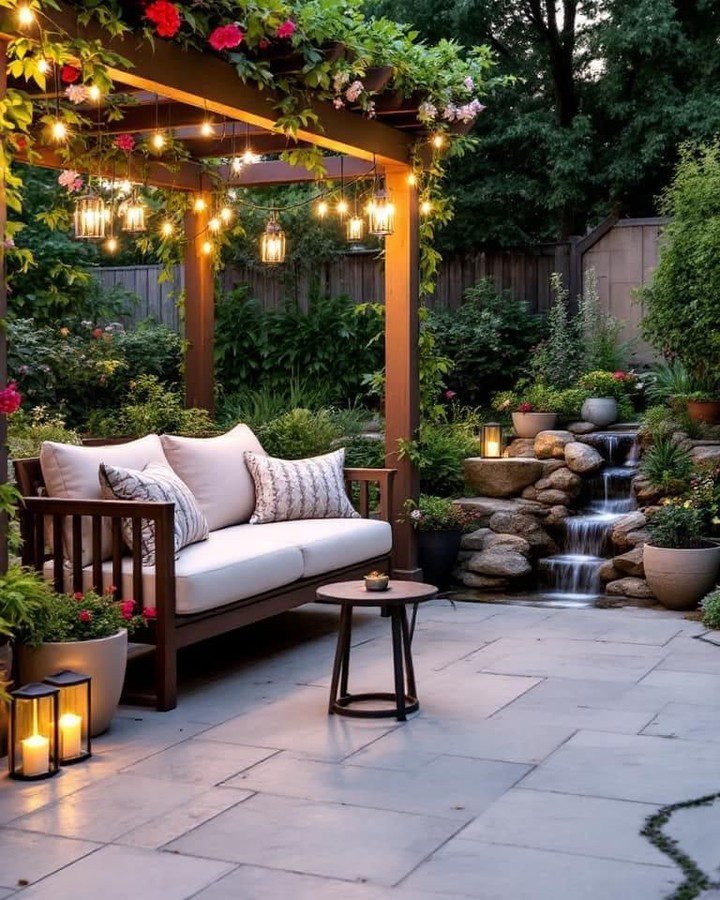
A pergola gives one zone a ceiling. A zone with a ceiling becomes the place everyone gathers. Nothing changes how an outdoor room feels more than that, not furniture and not planting.
Site it where you spend the hottest part of the day. For most households that is over the dining table. Size it generously. Allow at least a metre of clearance past the table edge on every side, so chairs never meet a post. Keep the height at 2.4 metres or more so the structure shelters rather than looms.
Solid ground is the advantage. Posts set into concrete footings carry a bigger, sturdier frame than any rooftop allows. They also carry the weight of a mature climber. Run the rafters across the path of the afternoon sun. Rafter direction controls how much shade you get and when you get it.
Then plant it. Wisteria, grapevine or an ornamental vine gives living shade within two or three seasons. The cover thickens in summer when you need it, then drops back in winter to let the low sun through. No fabric sail does that. Be realistic about vigour though. Wisteria is heavy and needs a strong frame plus two prunes a year. A grapevine or a fast annual climber is a gentler start.
If a full structure is out of reach this year, use a large cantilever umbrella over the same footprint. It creates the ceiling effect for a tenth of the price. Set the base where the posts would go, then build around it later.
Add a Water Feature
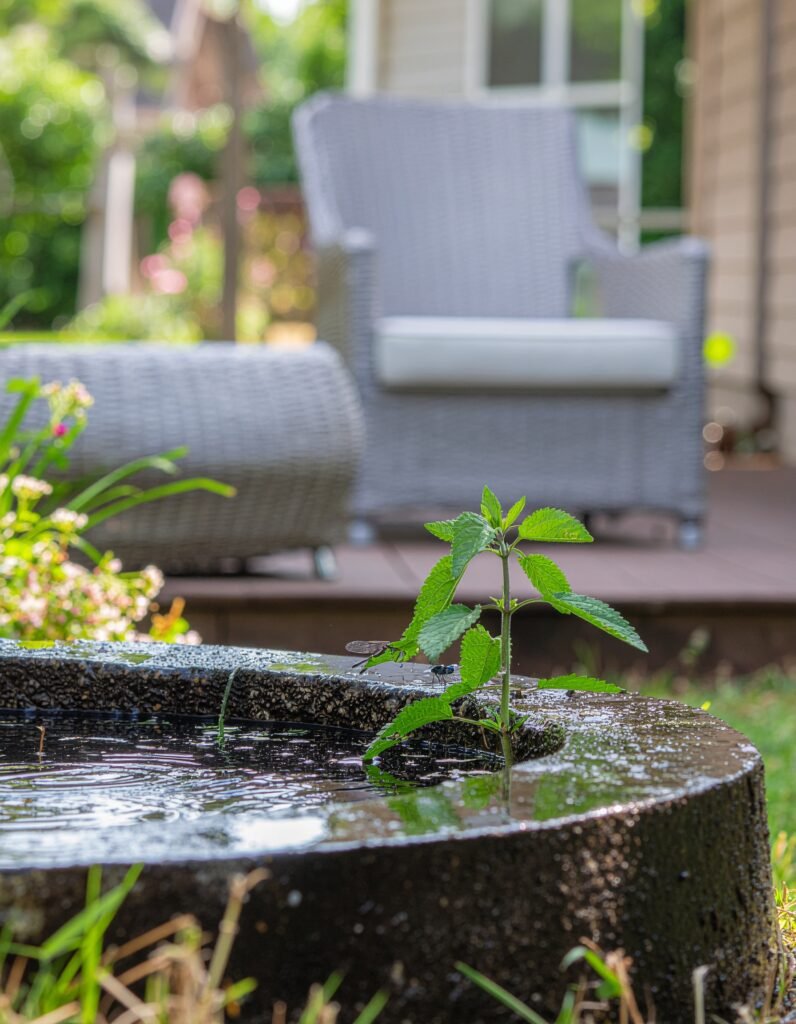
Sound is the layer nobody plans, and it decides whether a garden feels calm. Moving water is how you take control of it. A steady trickle sits under everything else. It masks traffic, air conditioning units and next door’s conversation without you fixing any of them.
Distance is what most people get wrong. A fountain in the far corner is maintenance you cannot hear. Keep it within three or four metres of where you sit. The sound drops off fast, and a small feature disappears under background noise.
Start simple if you want. A solar fountain in a glazed pot needs no wiring and goes together in an hour. Know the limit though. Solar pumps run only in direct sun, and they stop the moment cloud crosses. A mains powered pump is better if you want reliable sound in the evening.
Gardens allow the bigger version. A half barrel water garden or a small pond does far more than make noise. Add an oxygenating plant. Slope one side, or build a ramp of stones, so hedgehogs and birds can climb out. Skip fish if wildlife is the goal, because fish eat the larvae everything else arrives for. Within a season expect dragonflies and bathing birds. Frogs too, with a bit of luck. Match the pump size to the feature, top the water up in summer, and clear the leaves in autumn before they rot.
Create a Vertical Garden
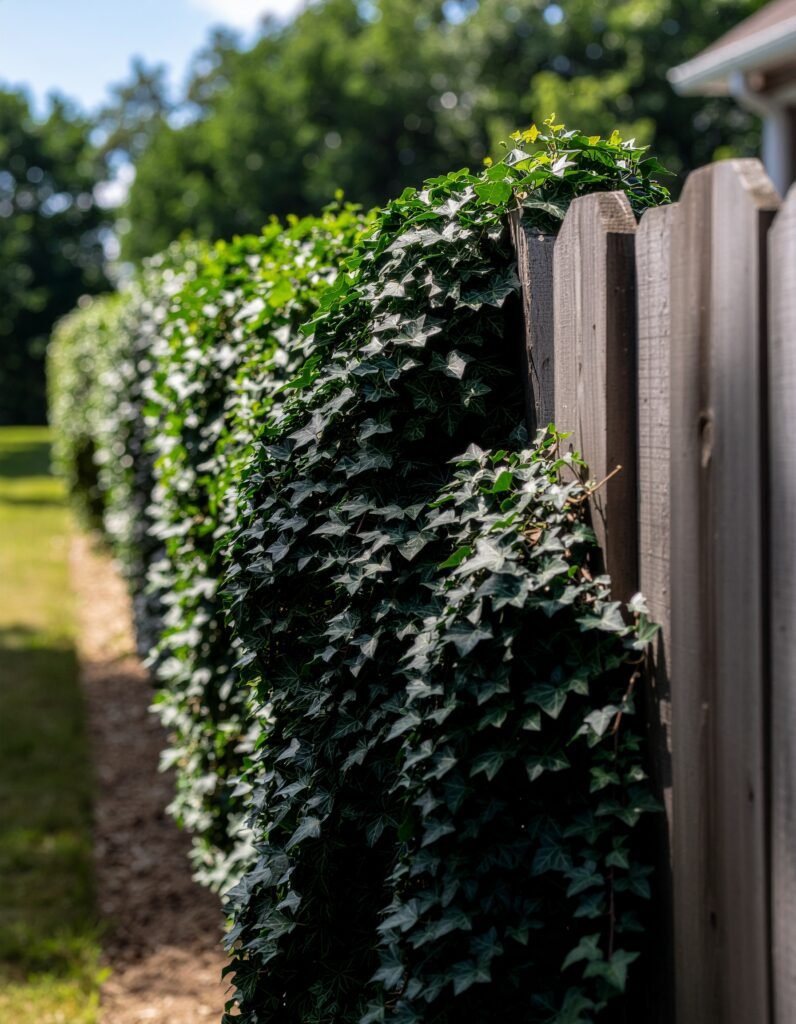
Vertical growing in a garden comes down to one surface: the fence. It is usually the largest thing in view and the least attractive. It also sits behind every other zone as a backdrop. Cover it and the whole garden changes.
Planting into the ground beats mounted planters here. Set climbers at the base, 30 to 45cm out from the fence line where the soil is less dry. Then give them something to grip. Run galvanised wire horizontally through vine eyes at roughly 45cm spacing. Hold the wire about 5cm clear of the panels. Air can then move behind the growth, and the timber stays sound.
Match the climber to the light. Star jasmine and honeysuckle take sun and put scent right where you sit. Climbing hydrangea and ivy handle the shaded fence most gardens have on one side. Clematis wants cool roots and a sunny head, so plant it behind a low shrub. Expect two seasons before it reads as real cover. Prune once a year so growth does not pile up along the top rail.
Save mounted planters and hanging baskets for spots near the house. That is where instant greenery pays off, like herbs by the kitchen door where you will remember to water them.
One warning before any of it. Confirm which fence is legally yours. Fixing wires or planters to a neighbour’s panel causes more disputes than any other garden job.
Style an Outdoor Dining Area
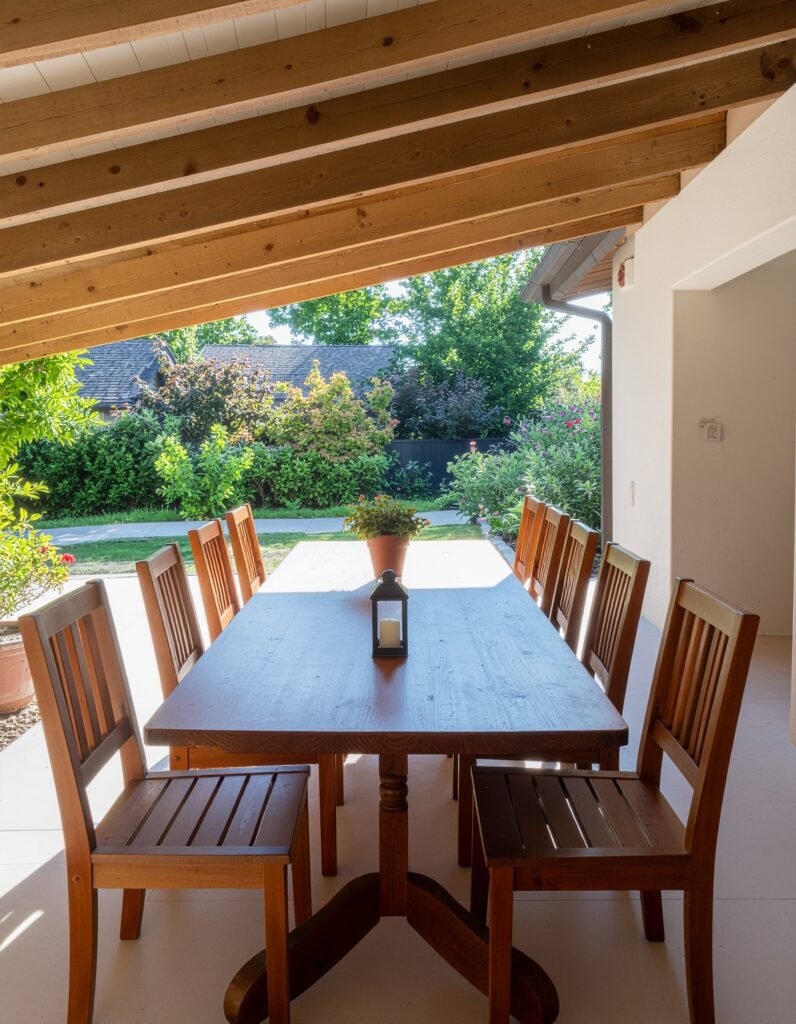
The dining zone has one hard requirement. It has to be near the kitchen. Anything beyond fifteen or twenty steps from the back door becomes a birthday-only table, because nobody carries plates that far on a Tuesday. Give it the most sheltered spot you have, usually under the pergola.
Space is what a garden offers that a balcony never will, so spend it on the table. Allow 60cm of table edge per person. Leave a clear metre on all sides so chairs pull out and people pass behind them. A table for six or eight turns the garden into where gatherings happen. A bistro set for two keeps it somewhere you drink coffee alone.
The surface underneath has to be hard and level. On grass, legs sink after rain and the table rocks through every meal. The turf beneath gives up by midsummer. Paving, decking or a compacted gravel pad solves all three problems.
Style it so it always looks ready. A lantern or a potted herb in the centre is enough, and it can live there for good. Skip tablecloths outside of real occasions. Outdoors they gather leaves, lift in the wind and add a chore to every meal. Hang light directly above the table, roughly 75 to 90cm above the surface for a fixed pendant. A string line across works too. Keep cushion storage close by. A bench box within reach is the difference between cushions that come out daily and cushions that stay in the shed.
Add Lanterns and Candles
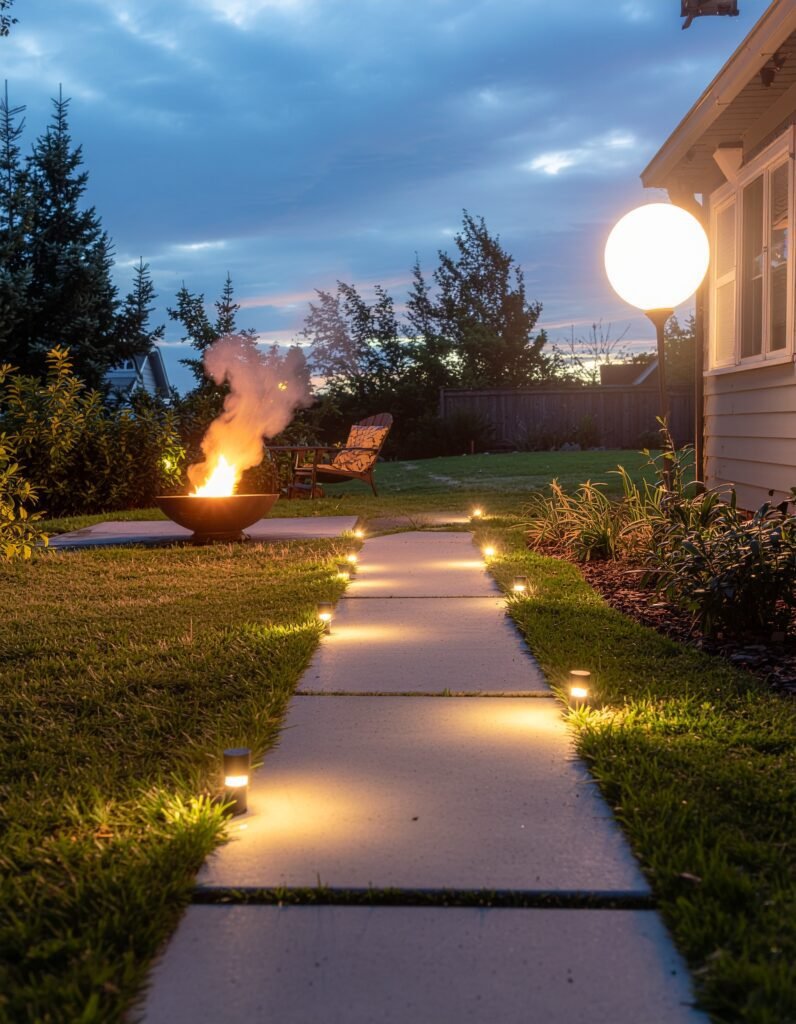
Lanterns finish the lighting scheme. In a garden they also do a job smaller spaces never give them. They show people the route between zones. If the walk from the table to the fire pit needs a phone torch, that far zone stops getting used after dark. Solar stake lights along the path edges fix it cheaply and switch themselves on at dusk.
Keep path lighting low and aimed down. Anything at eye level glares and ruins night vision. The garden then feels less safe rather than more. Position lights at turns, steps and level changes instead of lining both sides like a runway.
Then layer the atmosphere on top. Use one or two oversized floor lanterns beside the seating. Add a cluster of small ones down the centre of the table. Hang a few from a branch, which is the trick only gardens with trees get. Sheltered ground level space makes real flame far more workable than a windy rooftop. Even so, flameless LED candles on a timer are the version you will light every night rather than only on special evenings.
Two rules hold the scheme together. Keep every bulb warm, in the 2200K to 2700K range. Cool white outdoors reads as a car park. And aim for pools of light with real darkness between them. Over-lighting flattens a garden, wipes out the sky, and disturbs the wildlife you planted for.
Final Thoughts
Walk to the bottom of your garden tonight and ask where the rooms are. If the honest answer is a patio and then grass, that is a starting point, not a failure.
Choose three zones: sitting, eating and fire. Space them apart on purpose so the garden has to be walked through. Give each one a floor, a light and one plant. Then stop and live with it for a season. The pergola, the water feature and the fence climbers can layer in over the next year. They will be better decisions for the wait. By then you will know which corner holds the evening sun and which one nobody visits. If the patio is your only hard surface right now, start there with ideas for a patio you will actually use. A yard built zone by zone beats one decorated in a single weekend.