13 Balcony Furniture Ideas for Comfort and Style
Most balcony furniture disappoints for one reason, and it has nothing to do with taste or budget. People buy the piece they like, put it out there, sit down, and discover they are looking at a railing.
Everything below is chosen against what a balcony actually does to furniture. A fixed barrier at eye level. A floor that stains. Weather with nowhere to drain, and wind arriving from a direction nothing at ground level ever meets.
None of that is a reason to buy something ugly and practical. It is a reason to check four or five things before ordering. Most take a tape measure and ten minutes. Get those right and almost anything you like will work.
Measure the Railing, Not the Floor
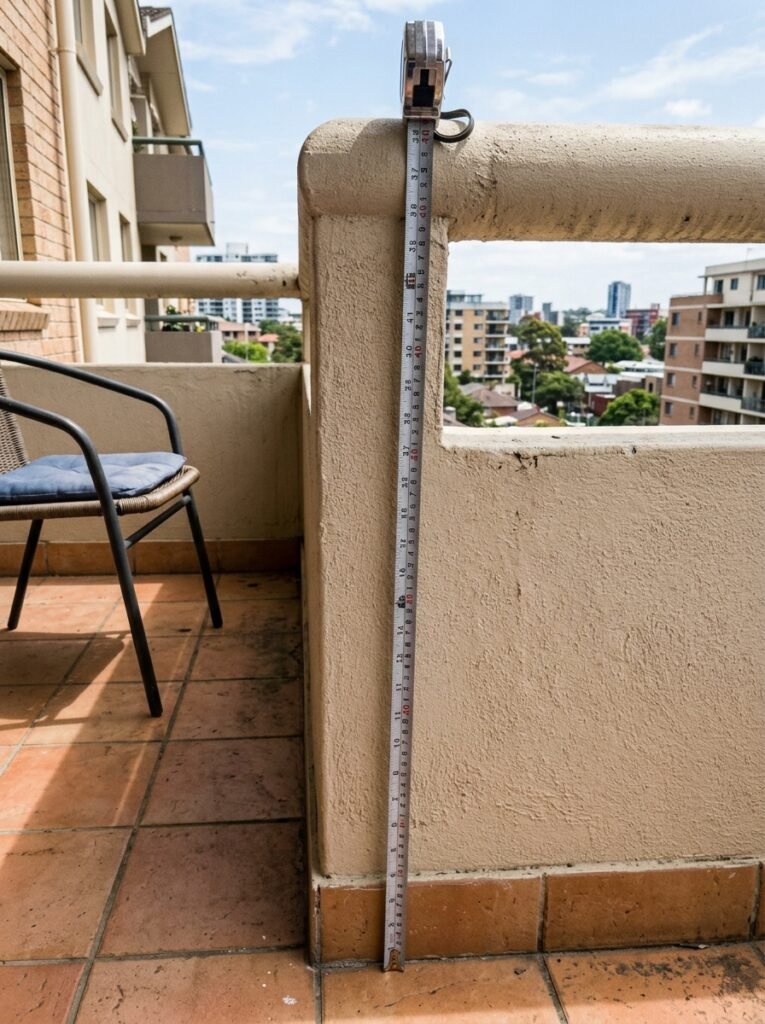
Balcony guards are built to a height that has nothing to do with sitting down. Commonly adopted model codes put houses around 36 inches and apartment buildings around 42. The figure varies by jurisdiction and by the age of the building. Measure yours rather than assuming.
Measure from the finished floor to the top of the rail or its cap. If deck tiles or a raised surface are going down later, subtract their thickness. Raising the floor lowers the effective height of the railing. It is one of the few decisions that improves the view rather than blocking it.
Then use the arithmetic nobody publishes. Seat height plus roughly 30 inches equals your seated eye level.
That single sum decides whether a balcony gets used:
- A low lounge seat at 15 inches puts your eye near 45 inches. On a 42-inch solid balustrade you spend the evening looking at the top edge of it
- A dining-height seat at 18 inches puts you near 48 inches. Workable, but only just
- A counter-height seat at 26 inches puts you near 56 inches, clear of any residential guard by a comfortable margin
Thirty inches is an average, not a rule. Torso length varies, so the number is worth checking once. Sit upright on a dining chair and measure from the seat to your eye. Use your own figure from then on.
The balustrade type changes the answer completely. Glass keeps the view at any seat height. Vertical bars give you a striped version of it. Solid masonry, render and infill panels are the ones that punish low seating. They are also extremely common on apartment balconies.
A wide top cap makes it worse than the height alone suggests. A deep coping stone or broad timber cap blocks the downward angle as well as the horizontal one. Two rails of identical height can behave very differently.
There is a two-minute test that settles all of this before any money moves. Stack books or a crate to the seat height you are considering. Sit on it and look out. If the view is wrong there, it will be wrong on a chair you have paid for.
Four Tests Any Piece Has to Pass
Beyond the view, four things decide whether a piece survives out there.
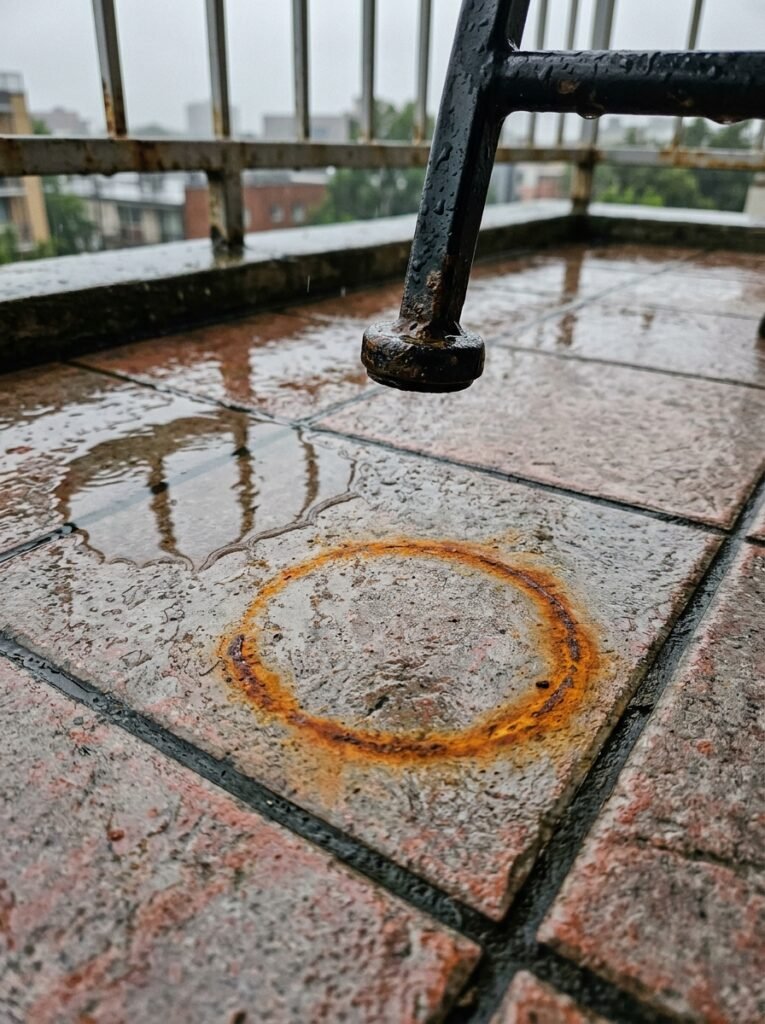
Does it mark the floor? Balcony floors are tile, concrete or a waterproof membrane. Metal feet standing in water leave rust rings that do not come off. On a rental that is a deposit conversation.
Rust is not the only mark. Cheap rubber feet degrade in sunlight and leave dark grey rings on pale tiles. Those are just as permanent, and far more common than people expect.
Does it dry? Nothing on a balcony drains anywhere. Solid seats hold puddles, closed frames trap water inside and rust from within, and thick foam stays damp for days.
Hollow frames need drainage holes at their lowest point. Turn a chair over in the shop and look. Plenty of outdoor furniture is sold with sealed tube ends, and every drop that gets inside stays there.
Cushions have the same problem in a different form. A cushion that feels heavy the morning after rain is holding water inside the foam. It will still be damp two days later. Quick-drying foams have open channels and shed water in hours.
Is it heavy enough? The National Weather Service notes that high winds can blow objects around. Isolated damage becomes possible once winds are sustained at 40 to 50 mph. On a balcony, anything light enough to carry out one-handed is light enough to move on its own. And it has a long way to fall.
Surface area matters as much as weight. A light chair with a solid back panel catches wind like a sail. A slightly lighter chair with a mesh or slatted back lets it pass through and stays put. Weight is the crude measure, but shape is what decides it.
Is it comfortable for the length of a real sit? Balcony sits are short, usually twenty minutes to an hour, which changes the calculation. A hard shell that would be intolerable at a dining table is fine for a coffee.
For short sits, seat depth matters more than padding. Anything deeper than about 20 inches makes an upright person slouch. A cushion behind the back fixes it. Shallower seats feel better outdoors than they look.
Materials deserve more room than this section allows. There is a full rundown of frames and finishes in this guide to choosing outdoor furniture that lasts.
Seating That Gives the View Back
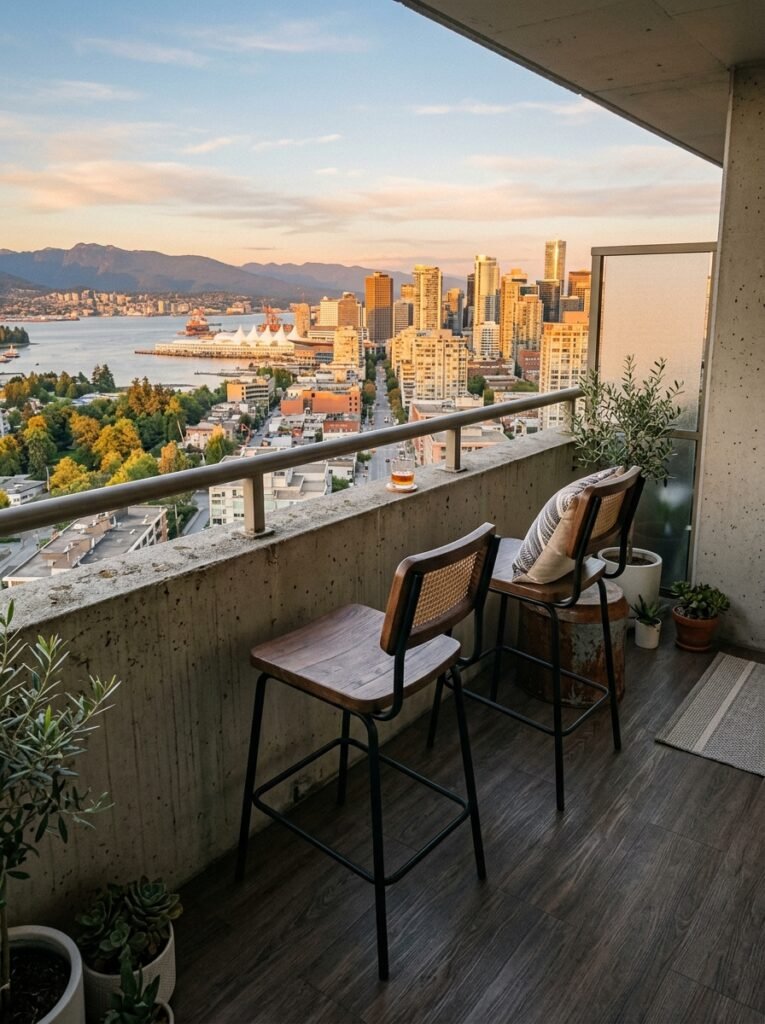
These four answer the same question. How to get your eye above the balustrade without giving up comfort.
There is a trade-off running underneath all of them. Higher seats are less relaxing than low ones, so the target is not the tallest chair available. It is the lowest seat that still clears the rail.
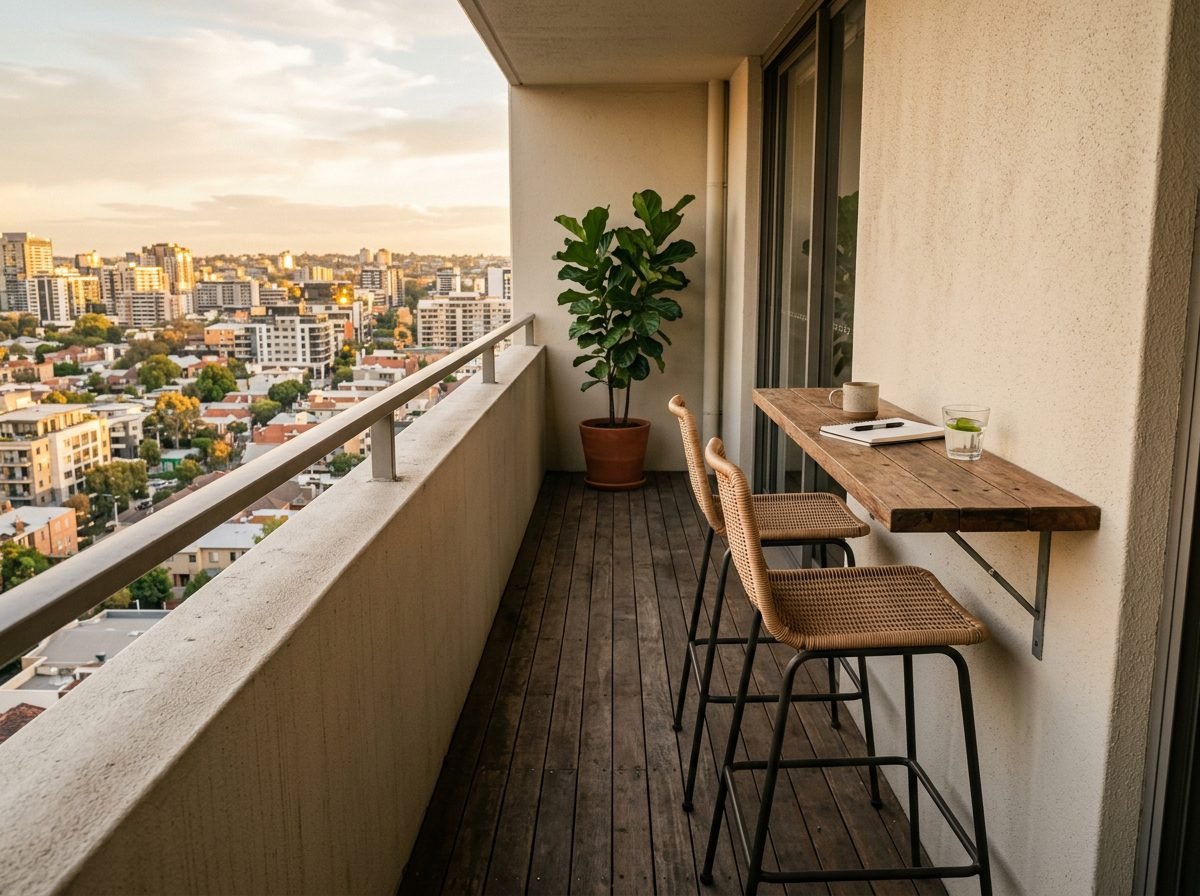
1. A counter or bar-height pair. The single most effective fix for a solid balustrade. Two stools at 26 to 30 inches put your eye well clear of the rail. They also take less floor than lounge chairs, because there is no reclined footprint.
Two details make the difference between a stool that gets used and one that gets ignored. It needs a footrest bar, because dangling feet become uncomfortable within about ten minutes. And it needs some back support, even a low one, or nobody stays longer than a drink.
2. A high-seat armchair rather than a low-slung one. Look for a seat height at or above 18 inches. Deep low loungers photograph beautifully and are the worst possible choice behind a solid rail.
Listed seat heights are often measured to the frame rather than the cushion. Measure to the top of the cushion once it has been sat on. A soft seat can lose two or three inches under weight. That is the difference between clearing a rail and not.
3. A chair angled along the balcony rather than square to the rail. If the seat has to be low, turn it. Looking down the length of the balcony gives the eye somewhere to travel instead of stopping three feet away.
This works best on balconies that are longer than they are deep, which is most of them. On a square balcony there is no length to look down, and height becomes the only answer.
4. A swivel seat. Uncommon outdoors and genuinely useful on a narrow balcony. One chair serves both the view and the doorway without being dragged around.
Check the mechanism before buying. Open bearings seize outdoors within a season or two. A swivel that no longer swivels is just a heavy chair. Sealed mechanisms are the only ones worth having.
Seating That Survives the Floor
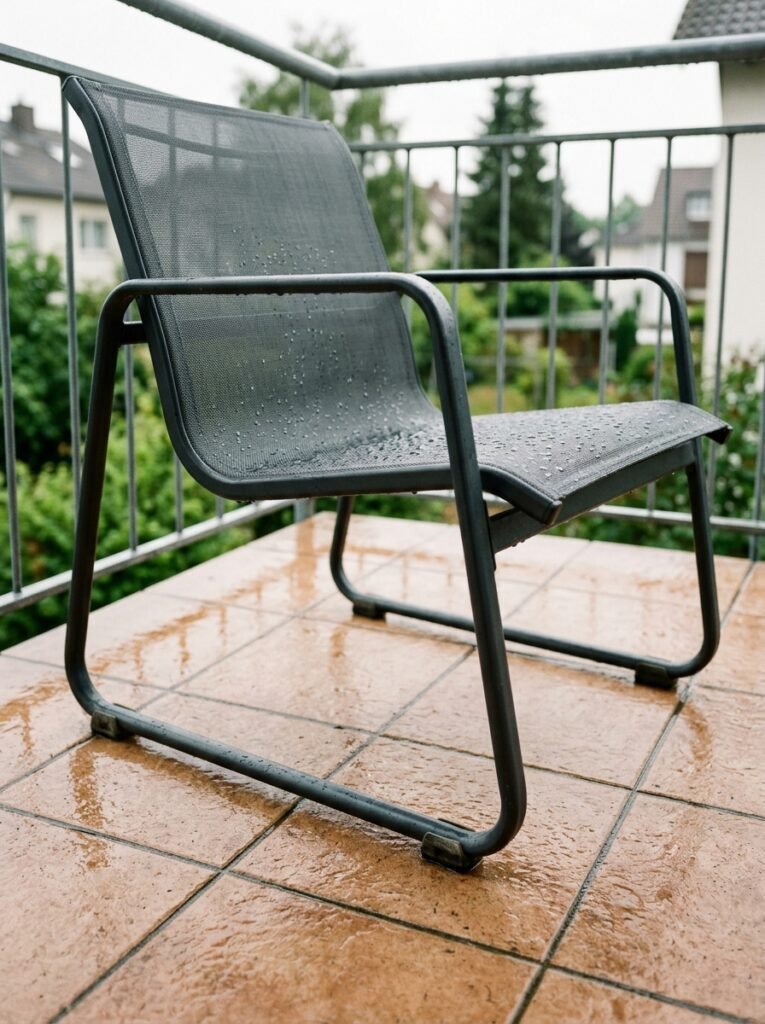
The next three are about the surface underneath. That is the part of a balcony that costs money to get wrong.
5. Sled-base or wide-footed frames. A continuous runner or broad foot spreads weight across the floor. Concentrating it on four small points is what cracks tiles and dents membranes.
A sled base solves a second irritation at the same time. Narrow feet drop into tile joints and drainage channels, so the chair rocks. A continuous runner bridges the gaps and sits flat on an uneven floor.
6. Anything with replaceable glides. Feet are consumable. A frame with screw-in or push-in glides can be re-padded every couple of years for pennies. A frame with the feet welded on cannot.
The glide material is worth a moment of thought:
- Nylon slides easily and wears down fastest, which suits pieces that get moved often
- Rubber grips well and can leave dark marks on pale tiles in strong sun
- Silicone is the usual compromise, gripping without marking
- Felt is useless outdoors. It absorbs water and holds it against the floor
Measure the stem diameter before ordering replacements. Sizes are not standard, and a glide that is slightly too small works loose within weeks.
7. Sling or mesh seating. Fabric stretched over a frame with nothing behind it drains instantly and dries in minutes. It is the most underrated balcony seat type there is, and it removes the cushion problem entirely.
Slings also stay cooler in direct sun than a solid seat, because air moves through them. They do stretch over time. Better designs let the fabric be re-tensioned or replaced rather than needing a whole new chair.
Tables That Work Out There
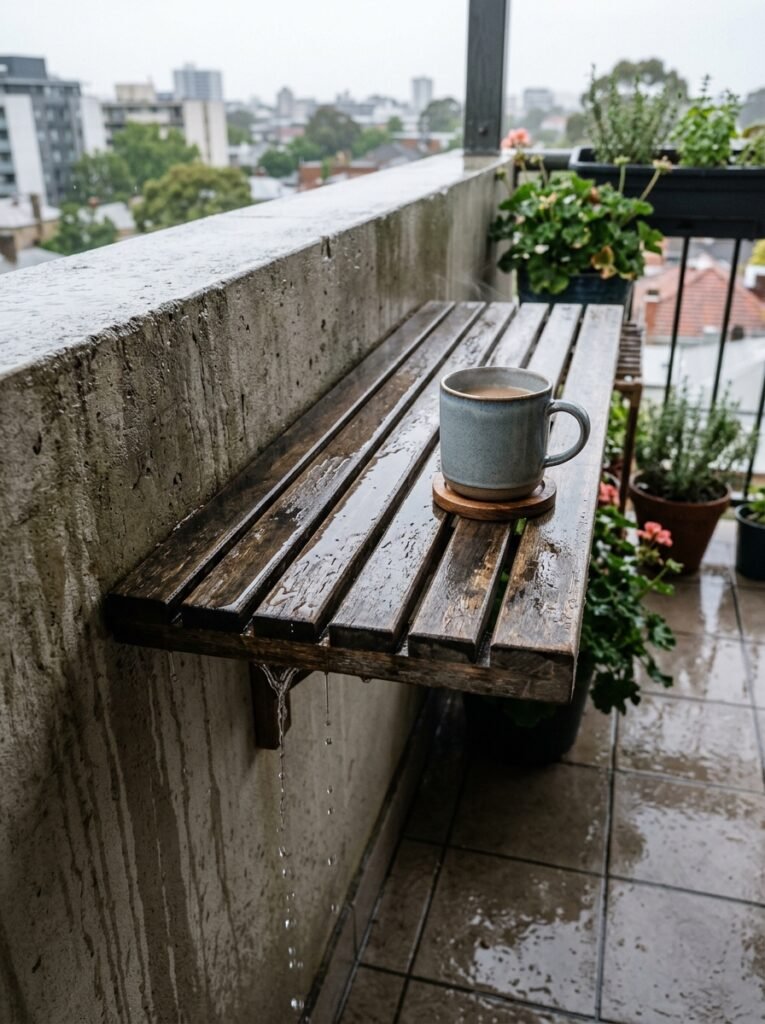
Tables fail on balconies for reasons that have nothing to do with looks. Depth, drainage and how easily they move are what decide it.
Height is the other one. A table should sit roughly 10 to 12 inches above the seat, so a bar-height stool needs a bar-height surface. Pairing a tall stool with a normal side table is a common and very uncomfortable mistake.
8. A narrow wall-side table, 8 to 12 inches deep. A table against the wall rather than in the middle keeps the floor clear. It still holds a mug, a plate and a phone. Depth is what makes a balcony table unusable, not length.
In an owned flat this kind of table can be fixed to the wall. That removes the legs and frees the floor beneath. In a rental, a freestanding version pushed tight to the wall does most of the same job.
9. A slatted top rather than a solid one. Rain runs through instead of pooling, and it dries between showers. Solid tops need wiping every time before you can put anything down.
Check the gaps between the slats. Anything much wider than a quarter of an inch will catch the base of a mug and tip it. Where the gaps are generous, a small tray solves it. Lift the tray off afterwards and the table drains.
10. A nesting pair. Two small tables stack into one footprint. Each person gets a surface when there are two of you. It takes one table’s space when there is one.
The smaller table in a nesting pair is usually the lightest thing on the balcony. That makes it the first thing to move in a gust. Keep it stacked under the larger one when it is not in use, or weight it with something.
Fitting Two People Without Blocking the Door
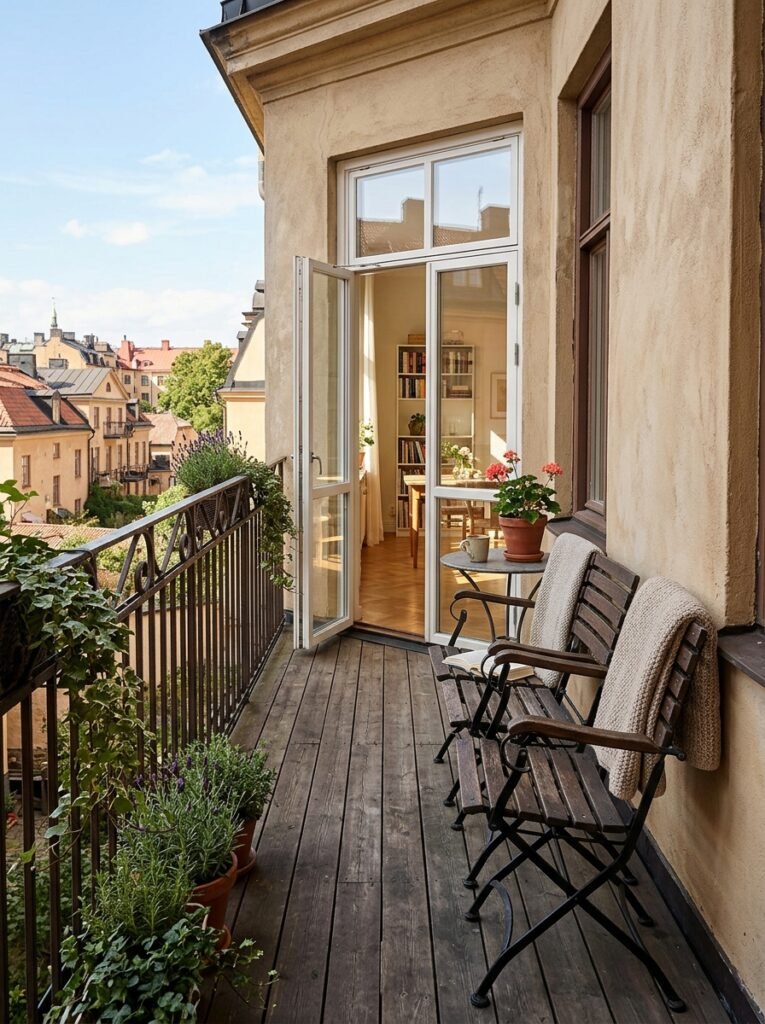
Two seats is where most balconies run out of room, and the usual arrangement is the least efficient one available.
Before placing anything, check which way the door opens. A balcony door that swings outward sweeps an arc that must stay permanently clear. That arc regularly takes a quarter of a small balcony. Mark it with tape and treat it as furniture that is already there.
11. Two chairs angled in the same direction. Facing each other eats the whole width of a balcony. Both chairs angled toward the same corner keeps a walking strip. It is also more comfortable for conversation than people expect.
It also settles an argument nobody mentions. Two chairs facing each other means one person has the view and the other has a wall. Angling both in the same direction gives them the same one.
12. A backless stool as the second seat. It slides fully under a table and weighs almost nothing to move indoors. It also needs no clearance behind it to sit down.
Match its height to the main chair within an inch or two. Conversation across a large height difference is awkward. The person on the lower seat looks up all evening.
13. One wide chair instead of two narrow ones. A single generous armchair is sometimes sold as a chair and a half. It takes less floor than two chairs plus the gap between them. And it is more comfortable nine evenings out of ten.
It needs one cushion rather than two, which halves what has to come indoors after rain. For a balcony used mostly by one person, with an occasional second, it is usually the better buy.
Quick Answers Before Ordering
What is the most common balcony furniture mistake? Buying a low lounge chair for a balcony with a solid rail. It is comfortable, it looks right in the photo, and it removes the entire reason for sitting outside.
Are cushions worth it? Only if they live indoors between uses. Anything left out permanently stays damp underneath. There is no airflow beneath a cushion sitting on a wet seat.
How heavy does furniture need to be? Heavy enough that it does not move when you push it with one hand. Light aluminium and plastic chairs are the ones that travel. On an upper floor that matters far more than in a garden.
Can I put furniture legs directly on the balcony floor? Better not to. Felt is useless outdoors, but rubber or silicone glides cost very little and prevent both rust marks and scraping.
How do I stop chairs scratching the tiles? Lift rather than drag, and check the glides twice a year. Most scratches happen once a glide has worn through and the bare frame is in contact with the floor.
Does the frame really need drainage holes? Any hollow frame does. Water gets in through joints and fixing points whatever the finish. Without a drain hole at the lowest point it simply sits there.
Can I fix anything to the railing itself? Ask before you do in a rental, and never hang weight on the outer face. Anything on the outside of a railing can fall into a public space below.
What about winter? Either buy pieces that stack or fold and bring them in. Or buy pieces built to sit out and accept the weathering. The pieces that suffer are the ones caught between the two.
What Fails First, and Why It Is Usually the Feet
Balcony furniture rarely fails at the part you look at. It fails at the four points touching the ground.
Water sits on a balcony floor longer than on decking or grass. There is nowhere for it to soak away. Feet stand in that water, and whatever protection the manufacturer applied wears off first at exactly that point.
The sequence is predictable. The coating wears through. Moisture wicks up inside a hollow leg and rust forms where nobody can see it. The frame then fails at the ankle a year or two later.
Joints are the second failure point. Where two different metals meet, such as a steel bolt through an aluminium frame, corrosion accelerates at the contact point. It is worth checking fixings at the same time as the feet.
Chips in a powder-coated finish deserve immediate attention for the same reason. Once water gets under a coating it spreads sideways beneath it. By the time the damage shows, the repair is far larger than the chip.
Three habits stop nearly all of it:
- Lift and move pieces occasionally rather than leaving them in one spot all year
- Replace glides when they flatten, before the metal is in contact with the floor
- Tip furniture up after heavy rain so the legs drain rather than stand
Twice a year is enough. Turn each piece over, check the lowest two inches of every leg, and run a hand over the welds. Five minutes in spring and autumn adds years to almost anything out there.
Buying Order When the Budget Is Split
If everything cannot be bought at once, order matters more than brand.
Buy the seat first, and buy it at the right height. Everything else on this page is a refinement of a decision that has already been made correctly or incorrectly.
Buy the table second, and buy it narrower than feels sensible. Almost nobody regrets a table that is too slim; plenty of people regret one they have to edge around.
There is one exception to that order. If the balcony is genuinely exposed, buy weight before comfort. A chair that has blown over twice does not get sat in a third time.
Buy comfort third. Cushions, throws and a footrest are cheap and easy to change. They are also pointless under a chair that was the wrong height to begin with.
As a rough split, half the budget belongs in the seating. A quarter goes to the table, and the last quarter to comfort and glides. Spending evenly is how people end up with a balcony where nothing is quite right.
Two notes on saving. Frames are the safest thing to buy secondhand, because the parts that fail are visible and replaceable. Slings and cushions are worth buying new. End of season is when good pieces get discounted, which is the cheapest time to fix a height mistake.
Not More Furniture, Better Placed
A balcony that seats two comfortably, with the floor visible and the door still opening, wins. It beats one with three pieces crammed onto it every time.
The test is not how much fits. It is whether someone can walk out with a cup in each hand and sit down without moving anything. And then see something other than a railing.
Almost every balcony that fails that test fails it for the same reason. One piece too many, bought before the first one had been lived with for a fortnight.
Get that right and the styling takes about twenty minutes.