Rooftop Decor Ideas That Boost Curb Appeal
Curb appeal means what a property looks like from the street. A rooftop is mostly invisible from there. Behind a parapet, three or four storeys up, it may as well not exist.
Mostly, though, not entirely. A narrow band of any rooftop does show from outside. Several other audiences see the whole thing too, from angles the owner never does. Working out which parts those are is more useful than another list of ideas. It settles where effort is worth spending. It also settles where it is not. That single distinction changes almost every buying decision that follows.
Find the Parapet Line Before Anything Else
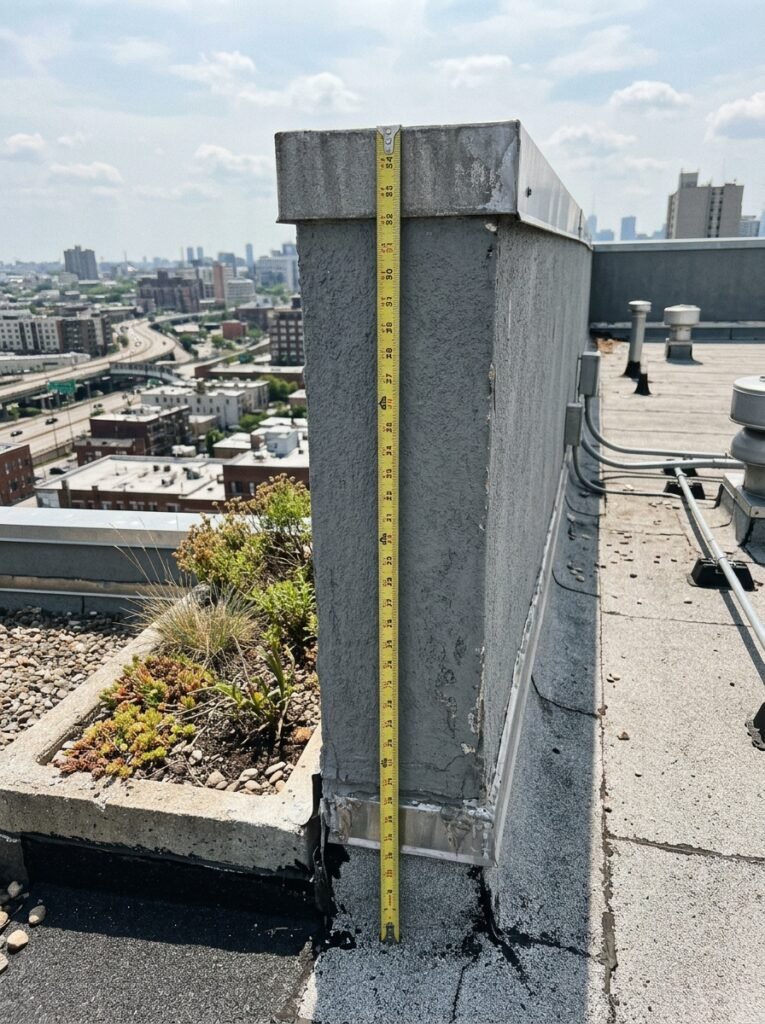
Measuring the height of the parapet wall or railing from the roof surface is the first real step. A tape measure does the job in under a minute. That single number divides the rooftop into two spaces.
Everything below the line is private. Everything above it is public. The public part is usually a band a foot or two deep, no more.
Then comes the step almost nobody bothers with. Walking down and crossing to the far side of the street shows exactly what registers from outside. Looking up at the building from there reveals the entire curb appeal budget, nothing more. A photograph taken at that spot becomes the brief for everything that follows. A phone camera is all it takes.
Two variables change the answer completely:
- Distance. The further back the viewing point sits, the more of the roof surface comes into view. Checking from directly across the road, and again from the end of the block, usually gives two different answers.
- Balustrade type. A solid parapet hides almost everything below its top edge. Glass or open railings hide nothing at all. The rules in this piece largely invert for that case. Worth checking which type applies before reading further.
The Five Things That Actually Show From Below
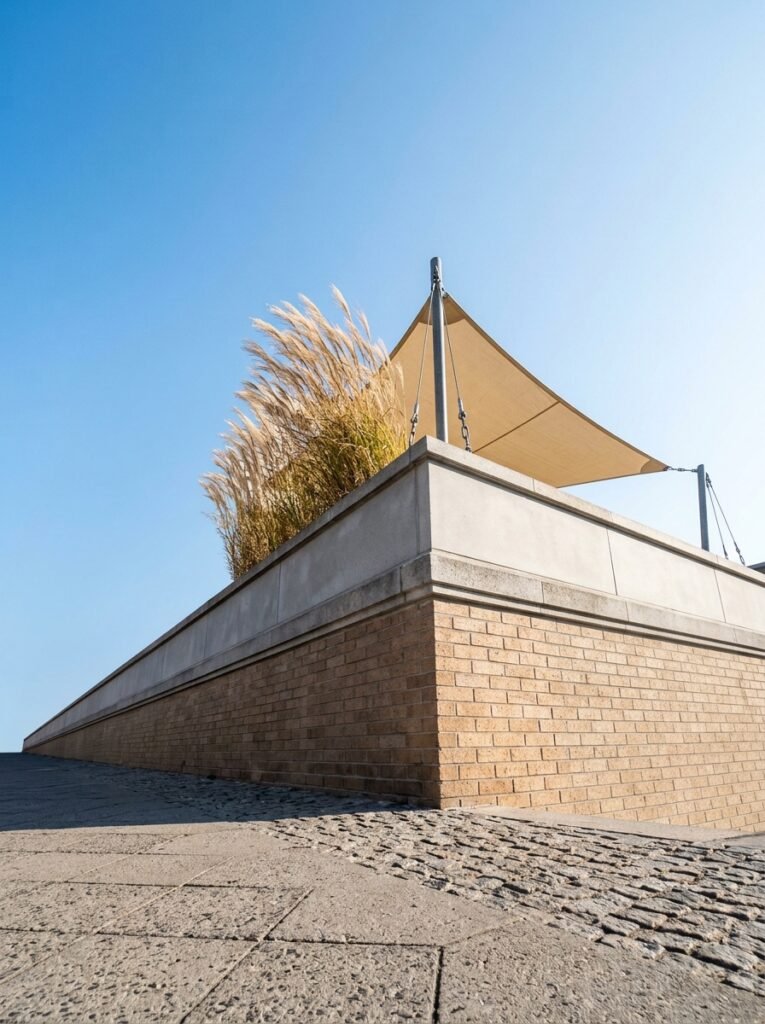
Once the line is established, the list of things visible from street level turns out to be short. Five items, and everything else is invisible regardless of cost.
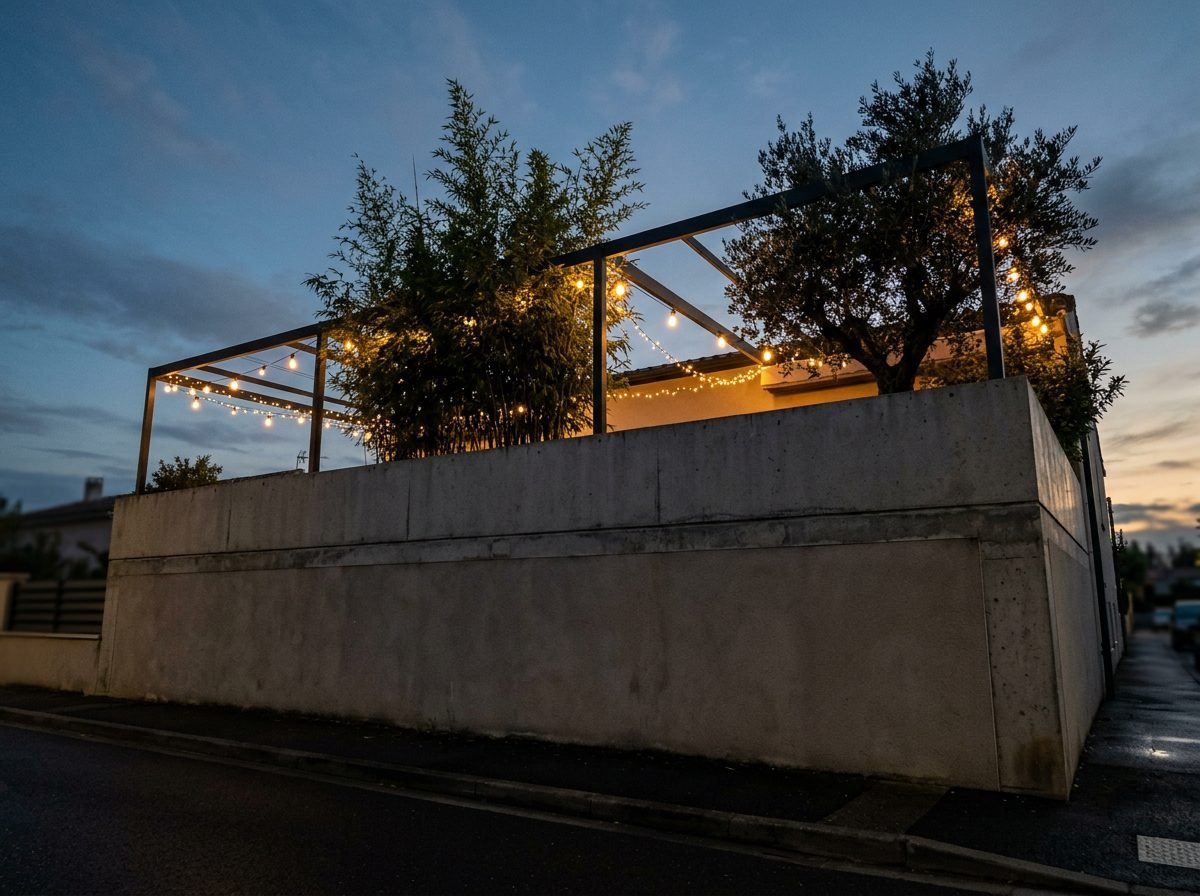
Tall planting. Anything that grows above the parapet reads from the ground. Bamboo, olive trees, tall grasses, a climber on a trellis. This is the most reliable signal that a roof is cared for.
Overhead structures. A pergola top, a canopy frame, or a shade sail is visible from further away than anything else here. It is the strongest single sign that a roof is actually in use. Even a bare frame counts, before any fabric goes up.
An open umbrella. Visible when up, gone when folded, which makes the colour a bigger decision than it looks. A strong shade functions essentially as a flag.
The top edge of screens. Trellis or slat panels read from below as a single horizontal line. Keeping that line level matters more than the material does.
Anything lit after dark. This earns its own section further down. The rules for light differ enough to need separate treatment.
One seasonal note on the planting. Anything deciduous clears the parapet for half the year and disappears for the other half. That missing half is often when a building looks bleakest. One evergreen shape above the line earns the space it takes.
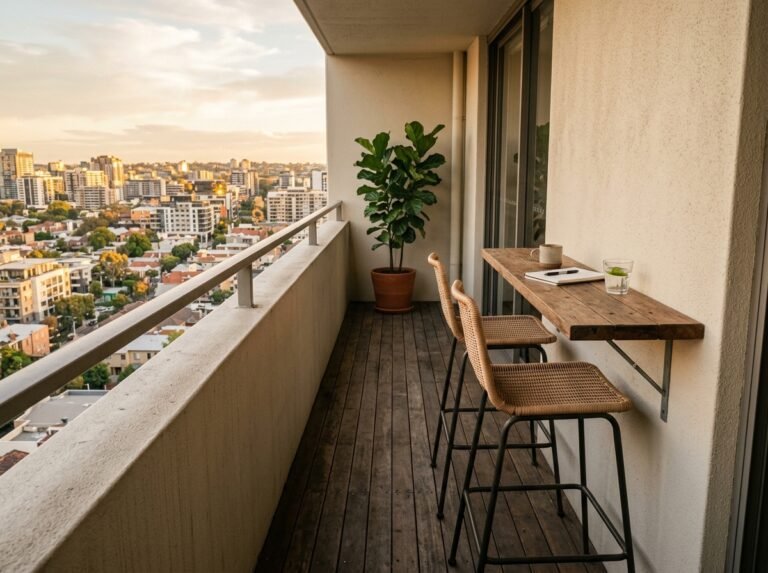
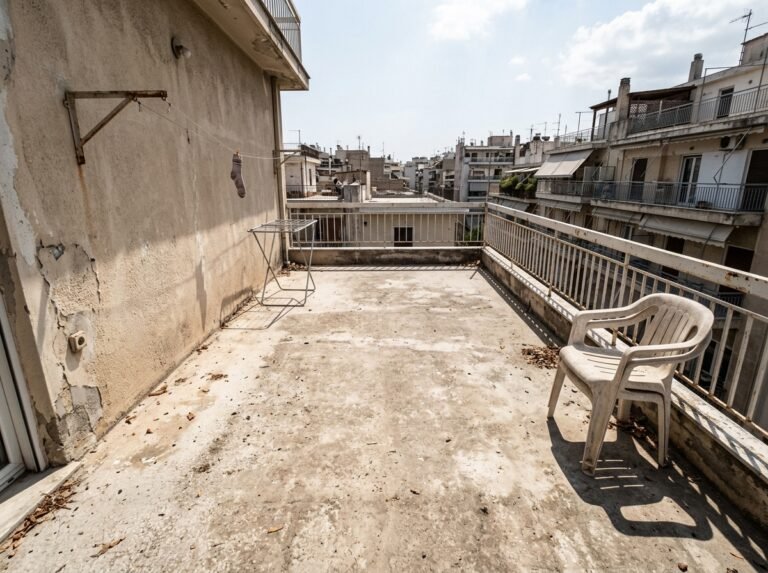
What does not show: furniture, rugs, cushions, floor-level planters, the table, the whole surface underfoot. That is most of what people actually buy. None of it earns anything from the street.
What Must Never Sit on That Line
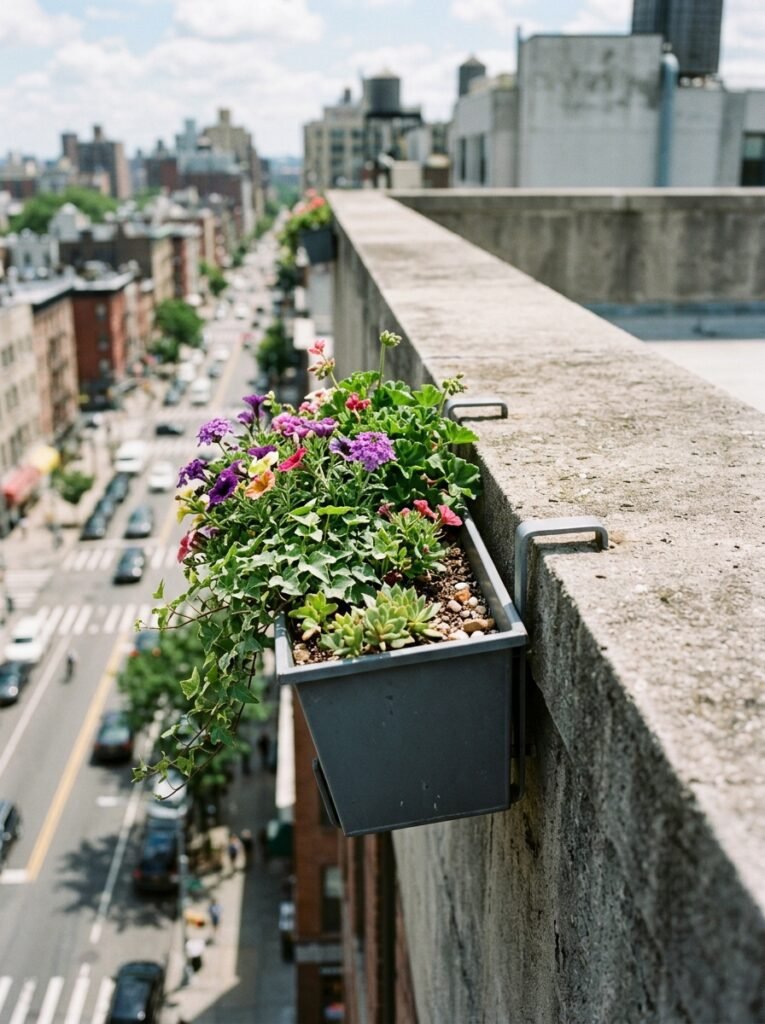
The parapet top both shows from the street and creates real risk. That makes it the wrong place for almost everything.
Nothing should sit loose on top of a parapet, full stop. A pot, a lantern, or an ornament there has a clear drop onto the pavement below. Wind at roof level runs stronger than at ground level. It is funnelled by the building itself. That makes anything unsecured far more likely to move. A gust that barely stirs a garden can tip a light pot off a ledge. Planters belong hooked over the inside face, never balanced loose on the top edge.
Then there is a second category. Things visible from below that quietly undo the effort:
- Drying racks, hose reels, and stacked storage boxes standing proud of the line
- Tarpaulins and loose covers, which move in the wind and draw the eye more than any colour choice
- A folded umbrella left leaning against the wall rather than put away
- Satellite dishes and aerials, which cannot always move but can usually be screened
Getting that utility corner out of sight is the single highest-value move available from the street. Removing an eyesore tends to do more visible work than adding one more nice thing ever does. It also usually costs less.
Seen From Above, a Rooftop Is a Floor Plan
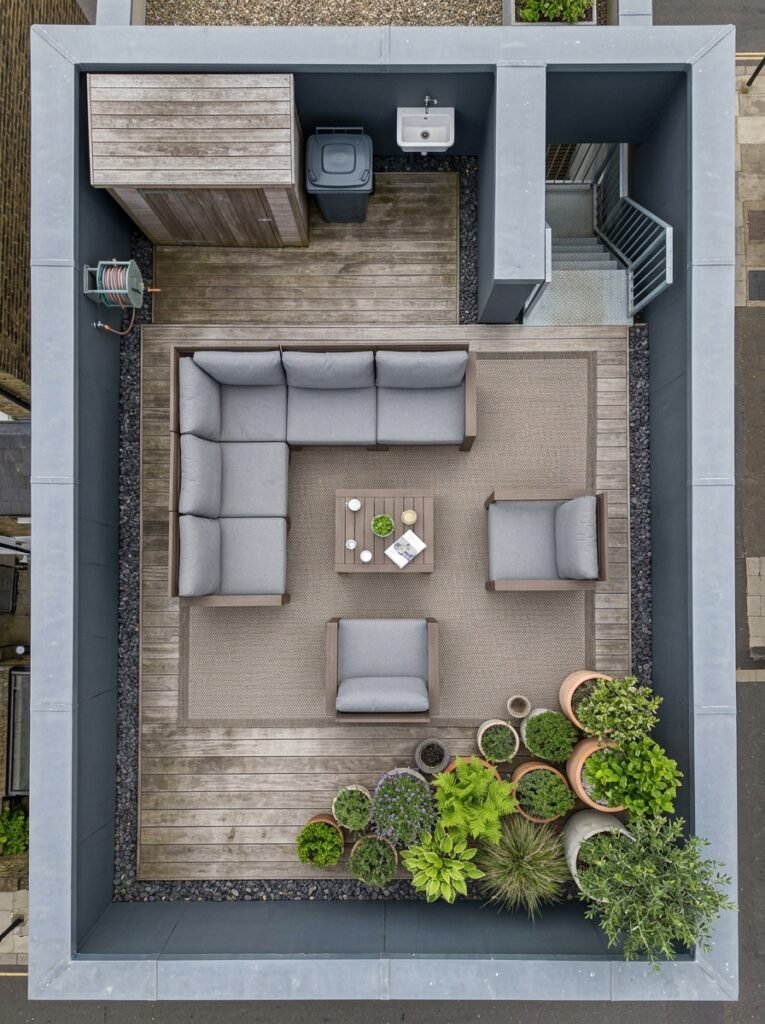
There is a second audience nobody plans for. Anyone in a taller building nearby sees the whole rooftop surface from above. So does anyone in a flat directly opposite. Dense streets multiply this audience considerably.
From that angle a roof stops reading as a room. It becomes a plan drawing instead. Shapes, edges, and alignment are what register. Clutter shows in a way it never does at eye level, where furniture naturally hides behind other furniture.
What reads badly from above:
- Objects scattered with no alignment to anything else
- Pots in mismatched shapes and heights
- A rug set at an angle to the building edges
- A coiled hose, and cables crossing open surface
What reads well:
- Furniture and rugs squared up to the building edges
- Pots grouped together rather than dotted around
- One continuous floor treatment rather than three
- A utility zone contained in a single corner
There is a free way to check this. A building’s satellite view shows this exact angle already. It is unflattering. It is also how a fair share of the audience actually sees the space. Most of them never mention it.
Light Travels Further Than Anything Else Up There
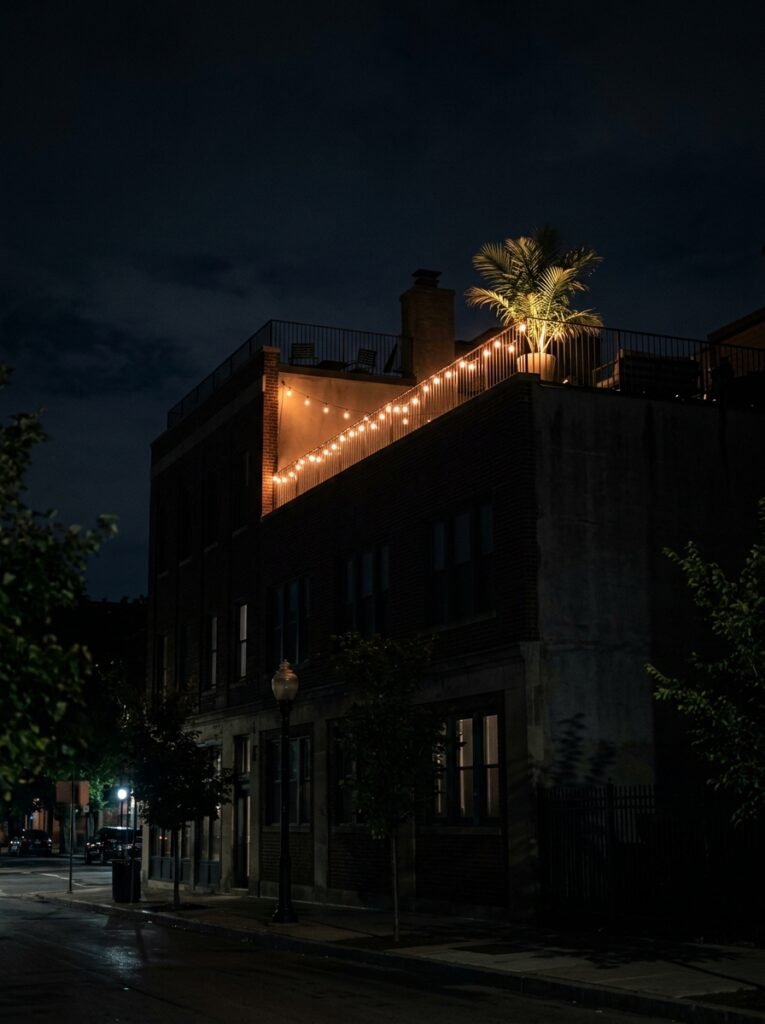
After dark the whole calculation reverses. A rooftop invisible at noon becomes the most conspicuous thing on the building by nine in the evening. Every darkened window around it makes the contrast sharper.
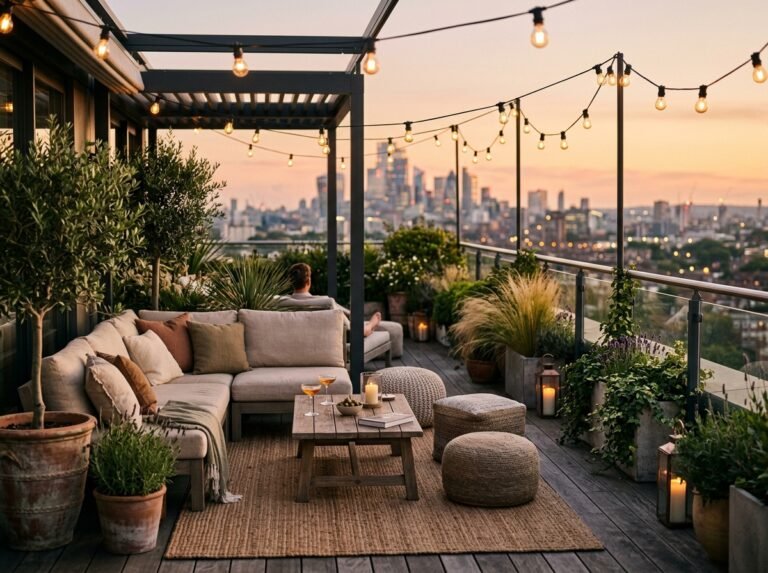
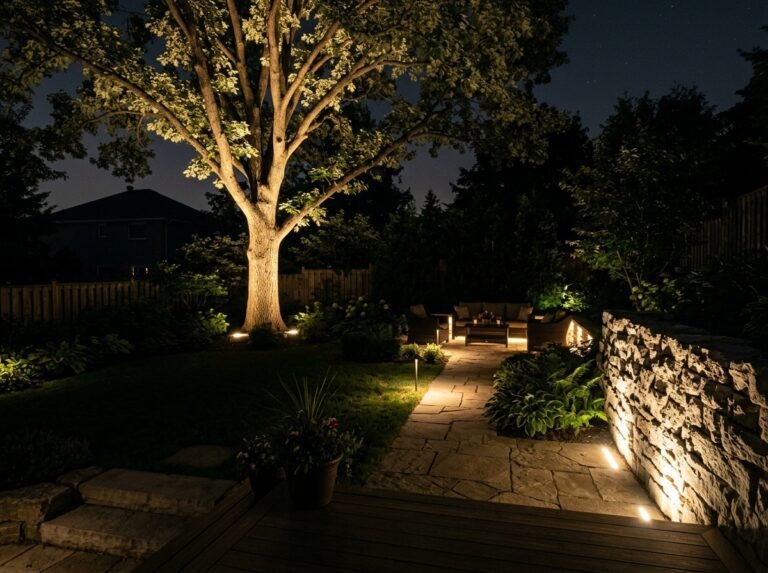
Warm string lights above the parapet read clearly from street level. That makes them the highest-visibility purchase on any rooftop. A light aimed up into a tall plant shows twice. Once as the lit plant, once as the glow itself. Two fixtures doing the visible work of four.
Two cautions come with that reach. Restraint reads as design. Brightness reads as a work site. Fewer, warmer fixtures beat more, brighter ones every time. Light at roof level also travels into windows above and opposite. Worth considering before installing anything that stays on all evening. A neighbour’s bedroom window is an easy thing to overlook from up there.
A timer solves most of it. Lights that come on at dusk and go off at a sensible hour look deliberate. Lights burning at three in the morning look forgotten. Most modern plug timers handle this for very little money.
Quick Answers on What the Neighbours See

Is any of this visible from the street at all? Only the band above the parapet. Measuring that height and photographing it from across the road settles the question. It usually turns out smaller than expected. Most people overestimate it before checking.
Does a rooftop actually add value to a property? Usable outdoor space generally helps. The stronger case is about listing photographs rather than curb appeal, covered further down. That case tends to be the more financially significant one.
What if the balustrade is glass? Then everything shows, including the floor and every object on it. Most of this article inverts. Treat the whole rooftop as visible and prioritise tidiness over height.
Is permission needed for anything tall? Frequently, yes. Fixed structures, tall screens, and anything attached to the building can require consent. In a leasehold flat it almost always does. Checking with a landlord or management company first saves an expensive mistake.
What is the cheapest thing that shows from the street? Three tall plants in heavy pots. Position them where the parapet sits lowest, or where the roof steps down. A single afternoon covers the whole job.
The First Three Seconds at the Top of the Stairs
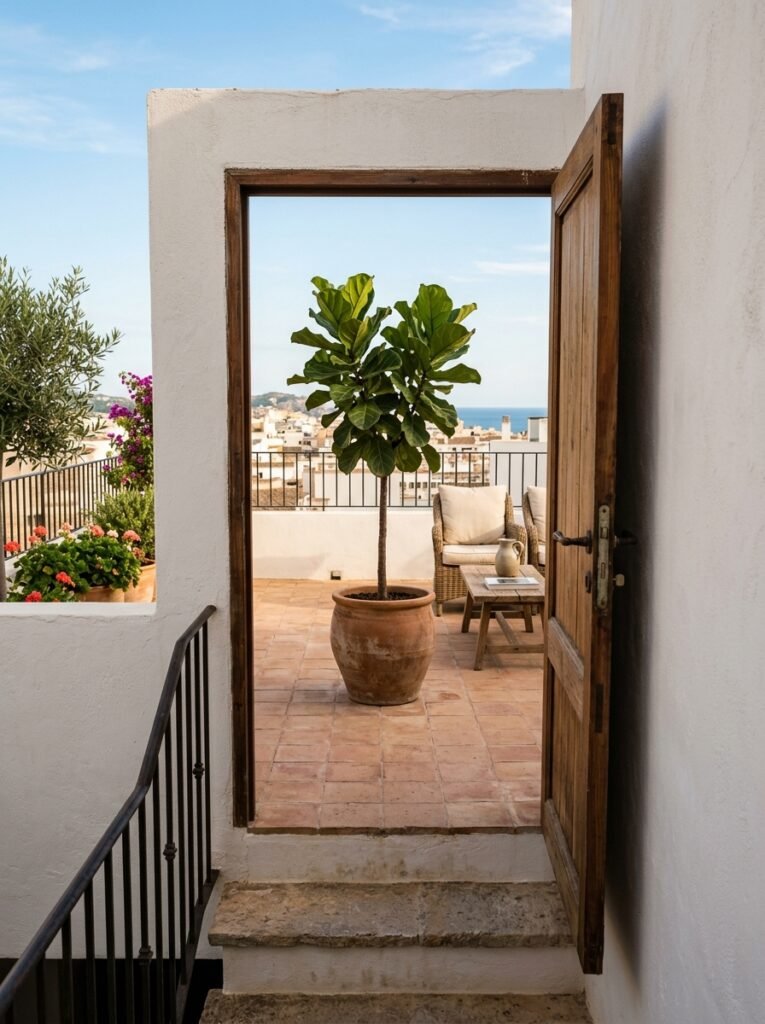
There is a third audience. On an ordinary evening it matters most: whoever gets invited up. Their opinion is the one that actually gets spoken out loud.
The arrival point is a hatch, a door, or the head of a stair. It reliably gets the least thought of anywhere on a rooftop. It is also where every visitor forms an impression first, before looking at anything else.
What those three seconds usually contain is a storage box, a coiled hose, and the back of the furniture. None of it is intentional. It is simply what accumulates near a door nobody photographs.
They should contain three things instead. A clear landing with nothing to step around. Something worth looking at opposite the door. Enough light to arrive safely.
Turning the seating to face the arrival costs nothing. It changes the whole sequence. Keeping the first metre completely clear costs nothing either. Both take an afternoon, not a renovation.
If the Property Is Going on the Market
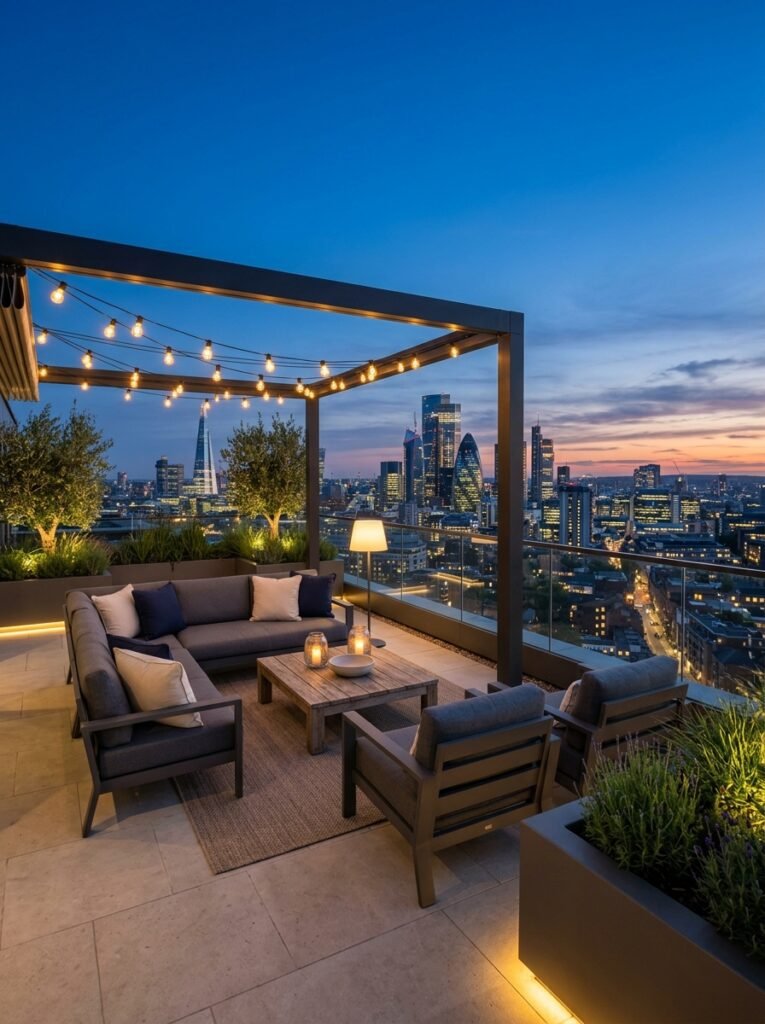
This is where a rooftop genuinely earns its keep. It has little to do with the street. It has everything to do with how a buyer imagines living there.
The National Association of Realtors’ research on home staging puts numbers on this. In their survey, 83 percent of buyers’ agents said staging helped buyers picture a property as their future home. Roughly half of sellers’ agents observed that staging reduced time on the market.
A rooftop follows that logic more sharply than most spaces. An empty roof in a listing photo reads as a maintenance area. A furnished one reads as an extra room. The difference is a few pieces of furniture and an afternoon, not a renovation budget.
Cheap staging for a photograph comes down to four things:
- Borrow or hire seating for the day
- Remove everything that is not part of the picture
- Clean the surface properly
- Shoot at dusk with the lights on. Evening shots of rooftops outperform midday ones almost every time.
Where the Money Should Actually Go
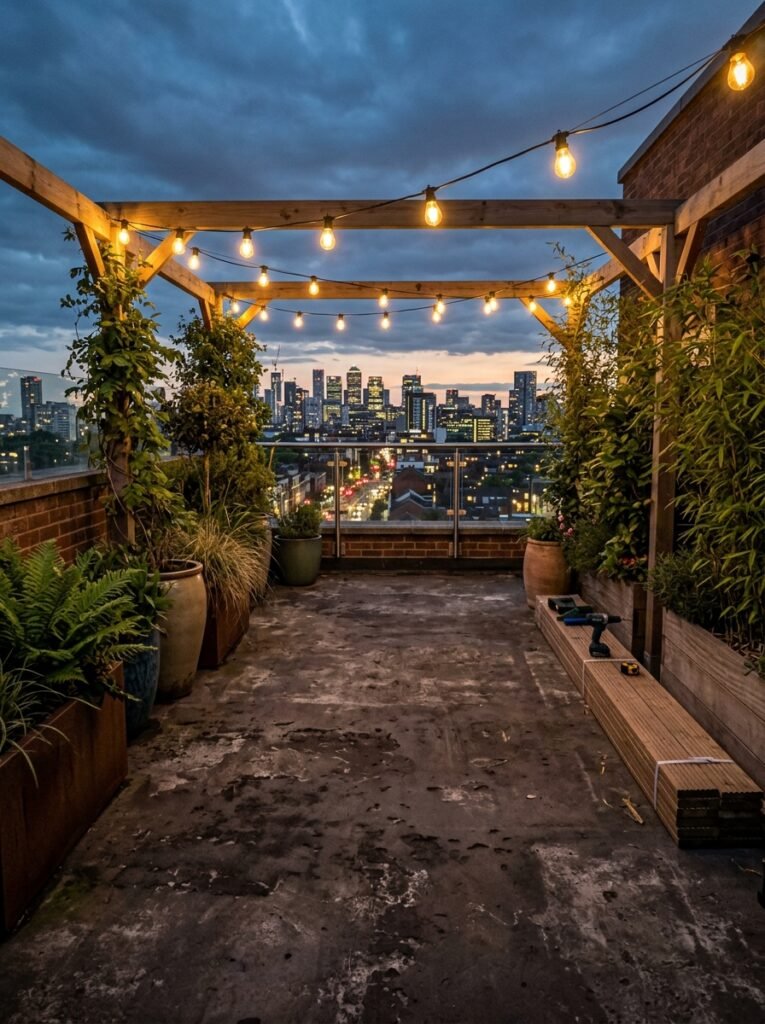
If curb appeal is genuinely the goal, the spending order is unusual. Worth stating plainly, since it runs against instinct.
Height first. Tall planting or a single overhead structure, because nothing else clears the parapet. Without it, nothing else on this list gets seen at all.
Light second. It has the longest reach of anything you can buy. It works on the audience furthest away, long after the sun goes down.
Screening third. Hiding the utility corner removes more from the view than most additions add to it. Subtraction wins here.
Floor level last. Rugs, cushions, the table, and the surface underfoot are invisible to everyone outside the building, regardless of price.
If comfort rather than visibility is the real goal, that order reverses completely. There is a full setup guide in this piece on putting a rooftop together from scratch. For a tighter budget specifically, this guide to affordable rooftop ideas covers how to sequence spending safely.
It Is the Top Foot That Decides It
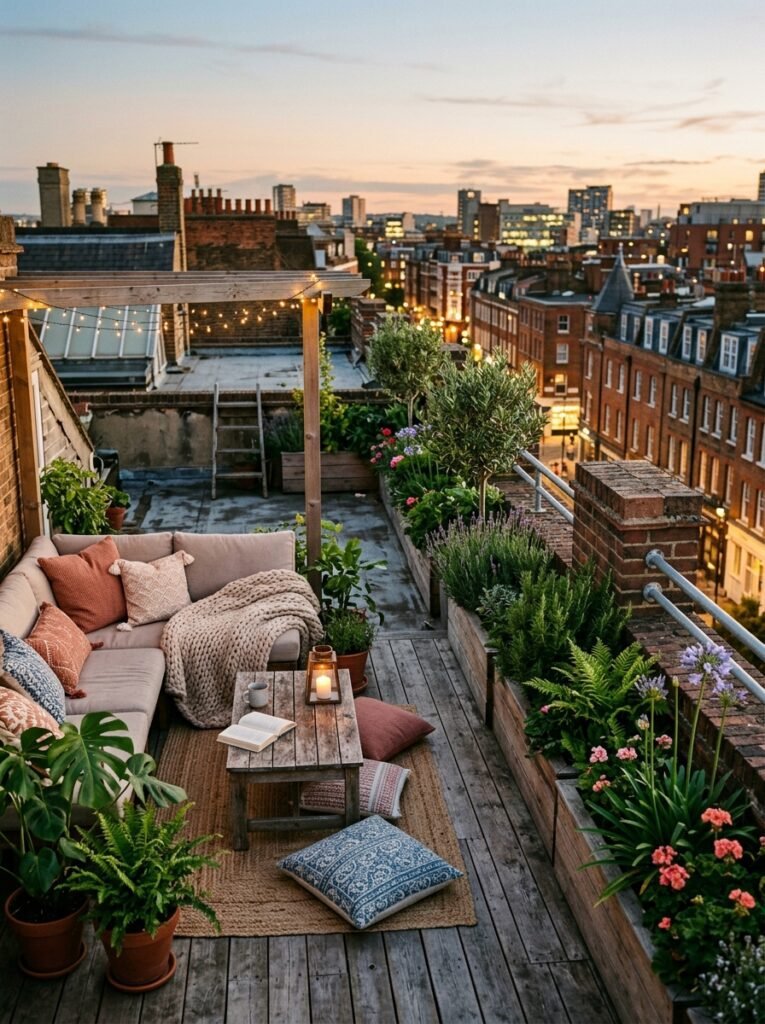
To everyone outside the building, a rooftop is a strip a foot or two deep above a wall. Plus whatever glows there after dark. That is the whole visible budget, however much gets spent on the rest.
Everything below that line belongs to the people using it. That is a good thing, not a limitation. The comfortable, personal, slightly untidy parts of a rooftop cost nothing in appearance.
Spend on the top foot for the street. Spend on everything underneath it for the people who actually sit up there. That order rarely fails.