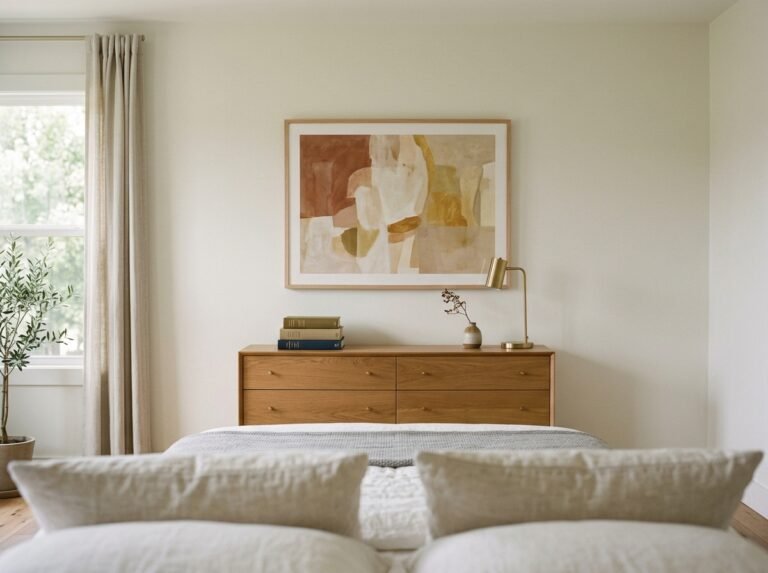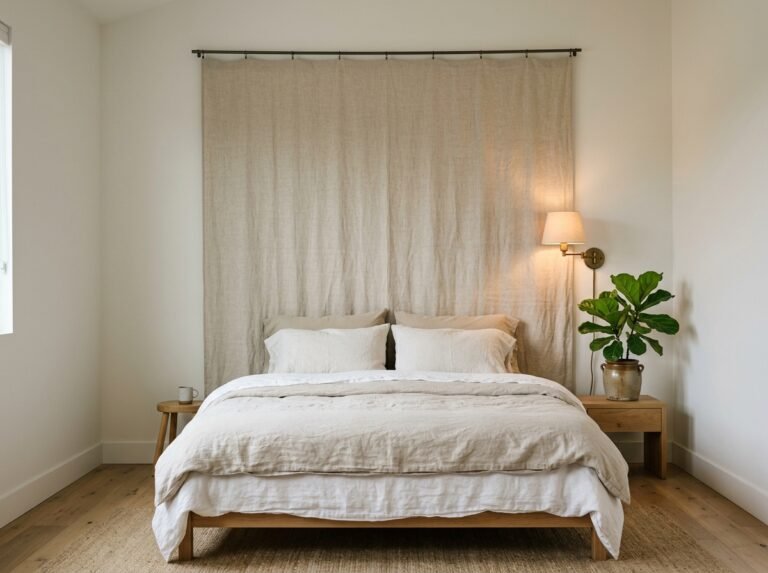
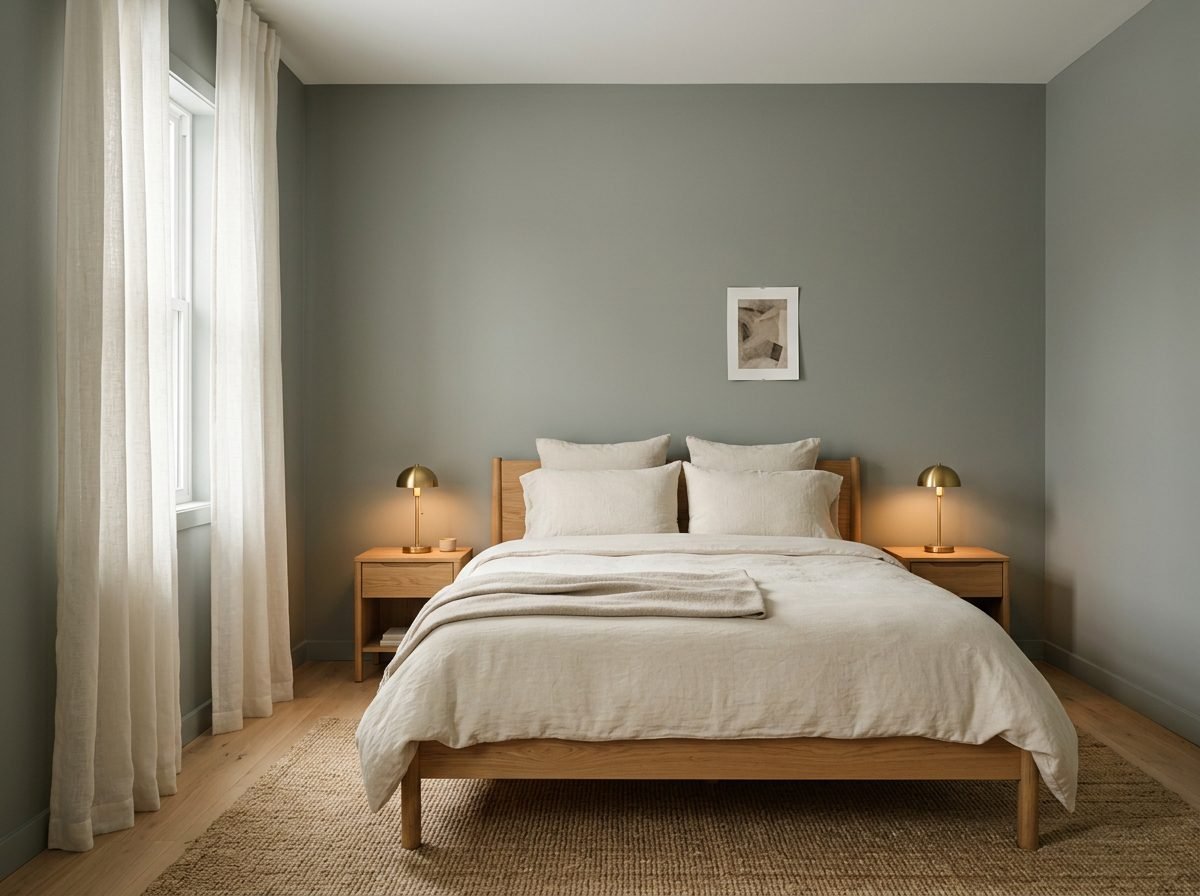
Green bedroom with wood furniture: how to pair sage and olive with oak, walnut and more
Most green bedroom ideas assume an empty room. Yours probably has a wood bed frame, a dresser or a pair of nightstands that are staying put. The green has to work with them.
Decorumy built this guide around the wood instead of the paint chip. It shows how to read your furniture’s undertone, which greens suit each wood family and how to test a color before buying a full can. It also covers lamp color, bedding and the mistakes that make a green bedroom look muddy or heavy.
Match the green’s undertone to your wood. Warm, yellow-leaning olive and sage suit oak, pine and honey finishes. Gray-leaning sage softens red-toned oak, cherry and mahogany. Deep forest and olive greens work with walnut and espresso when light bedding and warm lamps keep the room from feeling heavy. Test a large swatch beside the furniture first.
How do you tell what undertone your wood furniture has?
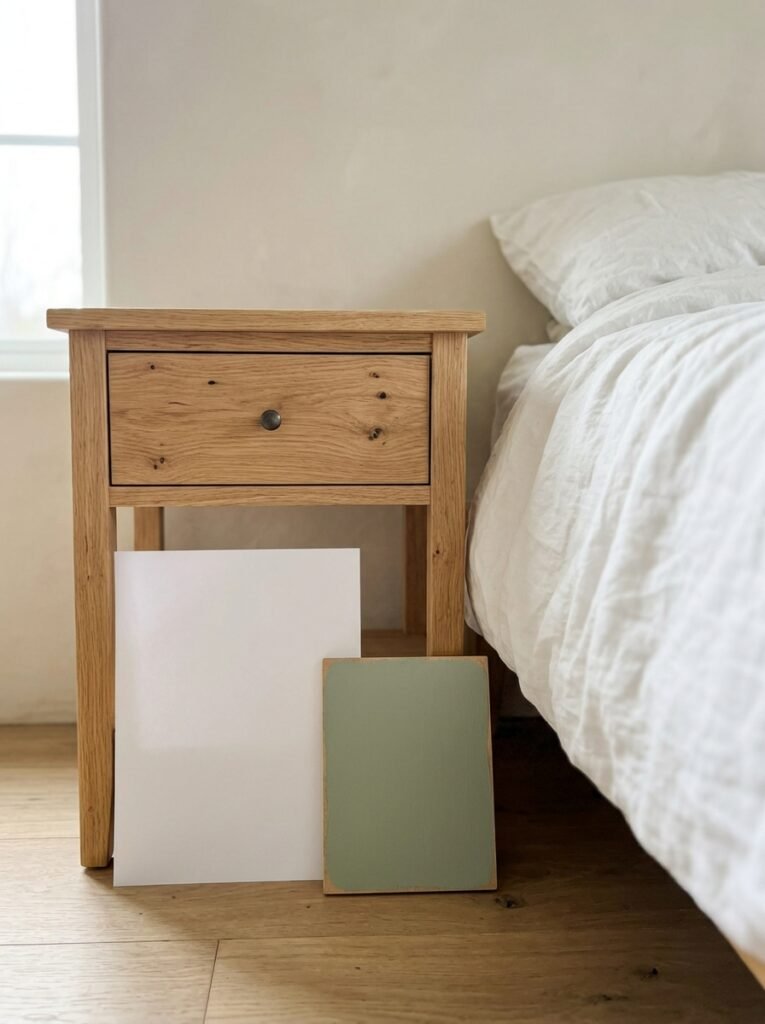
Hold a sheet of plain white paper against the wood in daylight and ask which color the wood leans toward: red or pink, yellow or orange, or brown and gray. That lean is the undertone. It decides which greens look natural beside the piece.
Stain and age change the lean, so judge the furniture in your room, not by the name of the wood. Check the surface people see most, such as the bed frame, the nightstand tops or the dresser front. Look at it in morning light and again under your lamp. Many woods look warmer after dark.
A simple three-way sort works for most bedrooms:
- Red or pink leaning: red oak, cherry, mahogany and many reddish stains.
- Yellow or orange leaning: pine, golden oak and honey finishes.
- Brown or neutral: many white oak finishes, walnut, espresso and gray-washed wood.
Your pieces may not match. Pick the wood with the most visible area, usually the bed. Treat the rest as supporting pieces.
Which green goes with each wood tone?
Warm greens suit yellow-leaning wood. Gray-leaning greens calm red-leaning wood. Deep greens balance dark brown wood. Each pairing below explains why it works and what to watch.
Oak furniture
Sage with a gray or soft yellow lean works with most oak. Red oak tends to carry a pink or reddish tone. A gray-leaning sage calms that tone. A bright, clean green can push it forward, because red and green sit opposite each other on the color wheel.
Golden oak and many white oak finishes lean yellow or tan. They look natural with a warm sage or a light olive. BEHR’s green paint guide notes that sage and olive coordinate naturally with warm whites, tan, brown and wood. Add cream bedding so the pairing has a light layer.
Pine, honey and golden wood
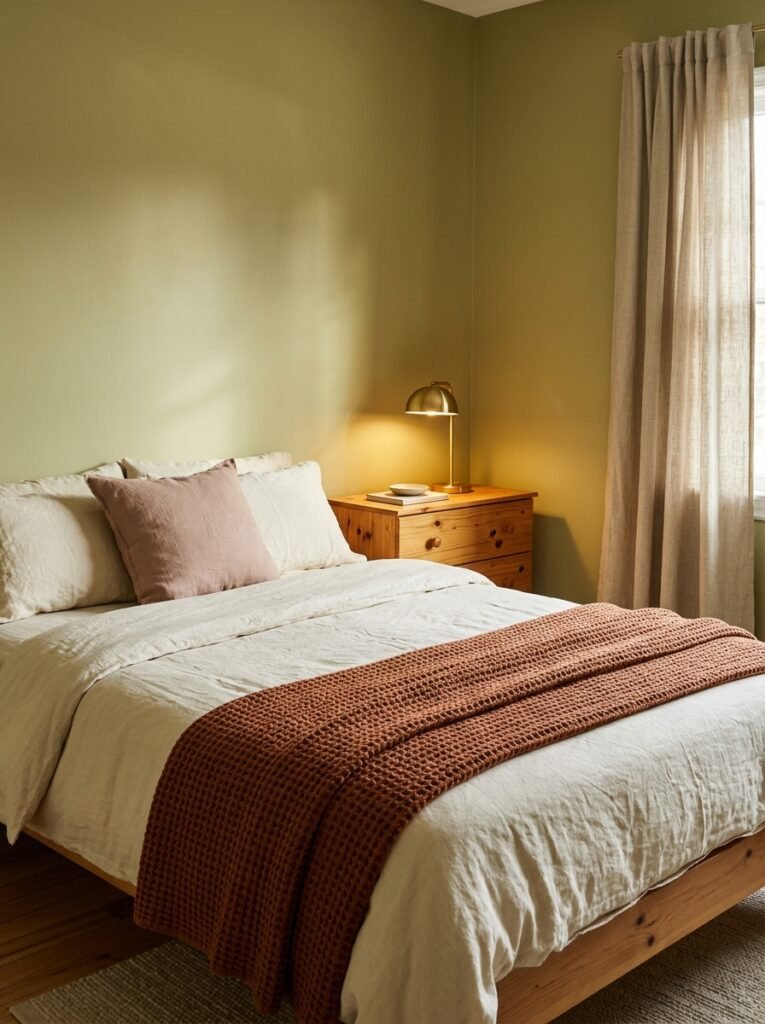
Warm sage and olive suit pine and honey finishes because they share a yellow base. The risk is a room where everything is yellow-green and orange-brown, with no relief. Add white or cream linens and one cool note, such as a gray-blue throw, so the pairing has contrast.
Pine also tends to warm with age. Judge the tone you have today, not the tone it had when you bought it.
Cherry and mahogany
Choose a muted sage, a gray-green or a deep forest green. These woods lean red, so a clean, bright green can make them look orange or loud. A softened green lets the red read as rich. If the wood has a glossy finish, keep the wall matte so two shiny surfaces do not compete.
Walnut and espresso
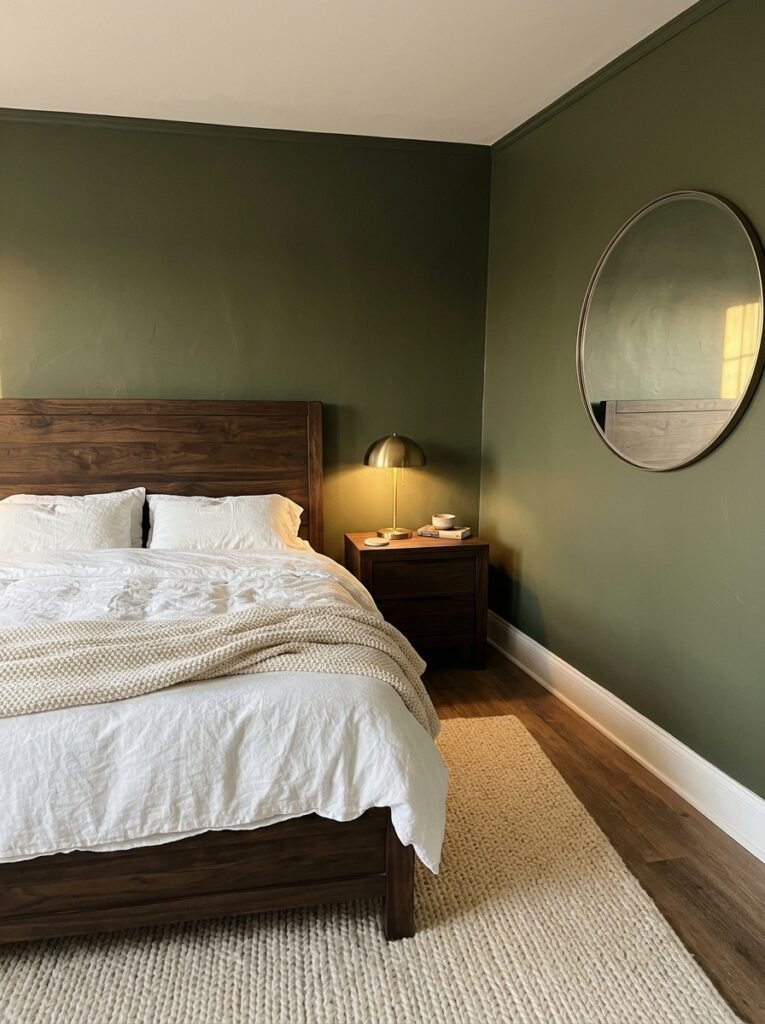
Deep olive, forest and mossy greens work with dark brown wood because both sit in the same low-light range. The room can feel heavy, so keep one large light surface, such as cream bedding. Use warm lamps instead of a single overhead light.
Mixed wood tones
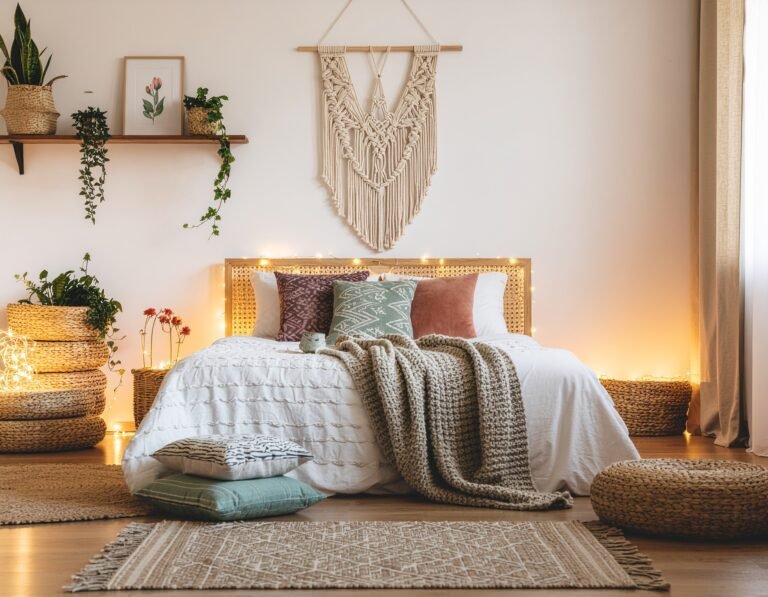
When the woods do not match, let the green act as the link. Choose a muted, mid-tone green. Then repeat one other material in two places, such as brass hardware, rattan or linen. Rattan and jute also tie mismatched pieces together, as the boho bedroom ideas guide shows.
Avoid adding a third wood tone to a room that already has two. The eye reads more than two woods as a mismatch.
How do sage, olive and forest green differ in a bedroom?
Sage leans gray, olive leans yellow and brown, and forest leans blue or black. The same BEHR guide groups greens by yellow, blue and gray undertones and advises relating them to the room’s existing finishes.
| Green | Undertone | Works well with | Watch for |
|---|---|---|---|
| Sage | Gray | Red oak, cherry, mahogany, white oak | Can look cold in a dim room under cool bulbs |
| Olive | Yellow and brown | Pine, golden oak, walnut | Can look muddy beside orange wood with no light layer |
| Forest | Blue or black | Walnut, espresso, mahogany | Can feel heavy without light bedding and warm lamps |
If you are still choosing a wider palette, the bedroom color scheme guide covers which tones read calm. This article stays with the pairing of green and wood.
How do you test a green before painting?
Paint a large sample board and prop it next to your wood furniture. Do not judge a color from a small paper chip or a screen. Follow these steps:
- Paint a white or primed board at least two feet square. Two coats give a truer color.
- Prop it on the floor against the furniture you plan to keep, not alone on the wall.
- Check it in morning, midday and evening light.
- Check it again under your bedside lamps after dark.
- Hold your bedding next to it.
- Leave it for two or three days before deciding.
Many people choose a matte or eggshell finish for bedroom walls because it reflects less lamp glare. Check the paint label for the finish options.
Does bedroom light change how green looks next to wood?
Yes. Daylight direction and bulb color both shift a green. Cooler light can make a gray-leaning sage look cold and flatten red wood. Warm light brings out the yellow in olive and the orange in pine.
In the Northern Hemisphere, a north-facing room usually has cooler light, so a green can look deeper and grayer there. Test a slightly warmer green in that room.
For lamps, ENERGY STAR’s color and mood guide explains that most certified bulbs match incandescent warmth at 2200K to 3000K, while whiter light starts around 3500K to 4100K. A 2700K bulb sits inside that warm range. Use the same bulb color in every lamp so the wall does not shift from one side of the room to the other.
What should go on the bed and windows?
Cream or warm white linens are the safest base for green and wood. They give the room a light layer and separate the green from the wood. Add one accent color, not several.
- Terracotta or rust suits olive and golden oak.
- Blush or dusty pink suits sage with white oak or walnut. The cozy pink bedroom guide shows how to keep pink calm.
- Oatmeal or gray-blue suits sage with red oak.
For curtains, choose linen in cream, oatmeal or a slightly lighter green than the wall. Matching the wall exactly can look flat. For hardware, brass tends to suit olive and forest. Matte black tends to suit gray-leaning sage. Those are preferences, not rules.
How do you keep a dark green and dark wood bedroom from feeling heavy?
Add a large light surface and warm lamps. A deep green with dark wood can feel like a cave without both. Use these fixes:
- Choose white or cream bedding, the largest light area in the room.
- Light the room with two or three lamps instead of one ceiling light.
- Paint the ceiling a warm white instead of the wall color unless you want a full enclosed look.
- Hang a mirror on a wall that catches window light.
- Leave some wall visible between the furniture and the corners.
You can also make the green lighter. A mid-tone olive or sage gives the same earthy look with less weight.
Can you get a green bedroom without painting?
Yes. Bedding, curtains, art and a headboard cover can bring in green without a paint can. Choose a muted green that matches your wood’s undertone, using the same logic as above. One large green textile, such as a duvet cover, does more than several small accents. A single leafy plant on the dresser adds a natural note without taking over.
This option suits renters. It also lets you test a shade before committing to the walls.
What should you know about ventilation when painting?
Paints release solvents while you use them, so open windows and follow the label. The EPA’s page on volatile organic compounds explains that paints, varnishes and wax contain organic solvents that can be released during use and, to some degree, in storage.
Keep the bedroom door closed and the window open while painting and during drying. Follow the manufacturer’s directions for drying time before you sleep in the room. A low-VOC paint can reduce solvent release, but it still needs fresh air.
What mistakes make green and wood look wrong?
- Choosing from a screen or small chip. Colors shift on a screen and in a different room.
- Using a bright, clean green with red wood. It can make the wood look redder.
- Matching bedding exactly to the wall. The room looks flat without a light layer.
- Going deep green with dark wood and no light surface. The room feels heavy.
- Mixing three or more greens with no anchor. Repeat one material or one light color instead.
- Using different bulb colors in the same room. The wall looks like two colors.