Small Backyard Decor Ideas for a Yard You Can See All at Once
The first time I measured a small backyard properly, I felt a little silly. I had been calling it tiny for two years. It came out at 14 feet by 18 feet, which is not tiny at all.
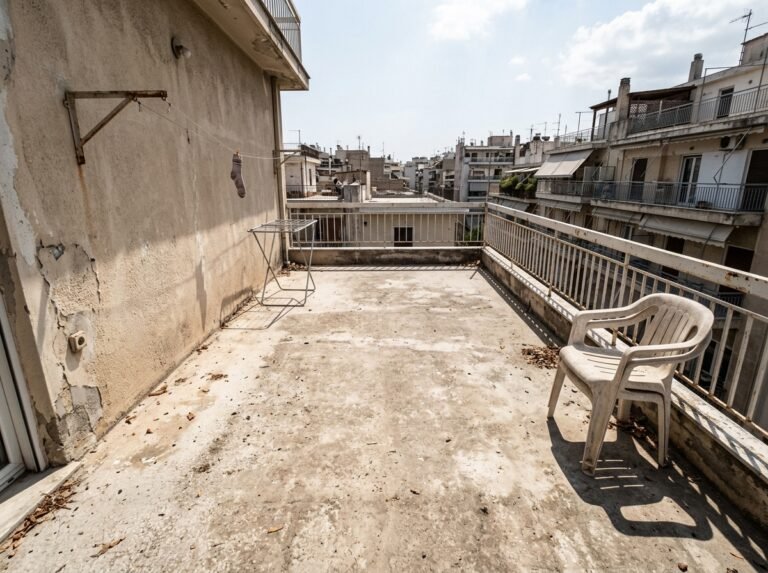
It just felt that way because of what was sitting in it. A plastic table. Four chairs nobody used. Two bags of soil, a hose in a heap, and a grill with a cover that had gone green.
The size was never the problem. The problem was that I could see all of it from the kitchen window in one look. Almost none of it was nice to look at.
That is what makes a small yard different. There is no distance to hide behind. Every object is on display at the same time, so a few rough ones drag down the whole space. The upside is that it works in reverse too. Fix three or four things and you notice straight away. That is not true of half an acre.
Three Things You Can Fix This Weekend
Before you spend a dollar on decor, try these.
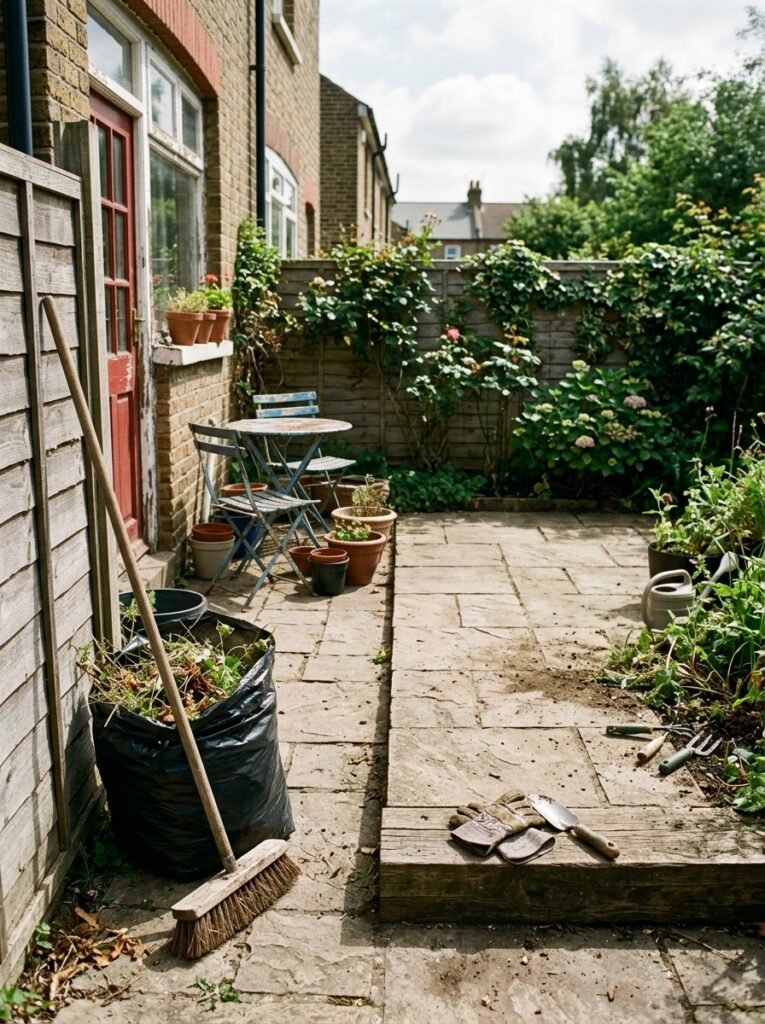
- Take everything out. All of it, onto the driveway or the side path. Then put back only what you actually use. Most people find that a third of it never goes back.
- Clean the surfaces properly. Sweep, pull the weeds out of the paver joints, cut the grass short, and edge it. This costs nothing and it changes how the yard photographs.
- Move the seating off the fence line. Angle two chairs into a corner instead of lining them flat against the boards like a waiting room.
Give it an hour and then look again from inside the house. Nine times out of ten the yard already feels bigger. Now you can see the real issues instead of guessing.
That last part matters. A lot of people buy a pergola when what they needed was a bin store and a bag of gravel.
Why a Small Yard Feels Cluttered and a Big One Feels Empty
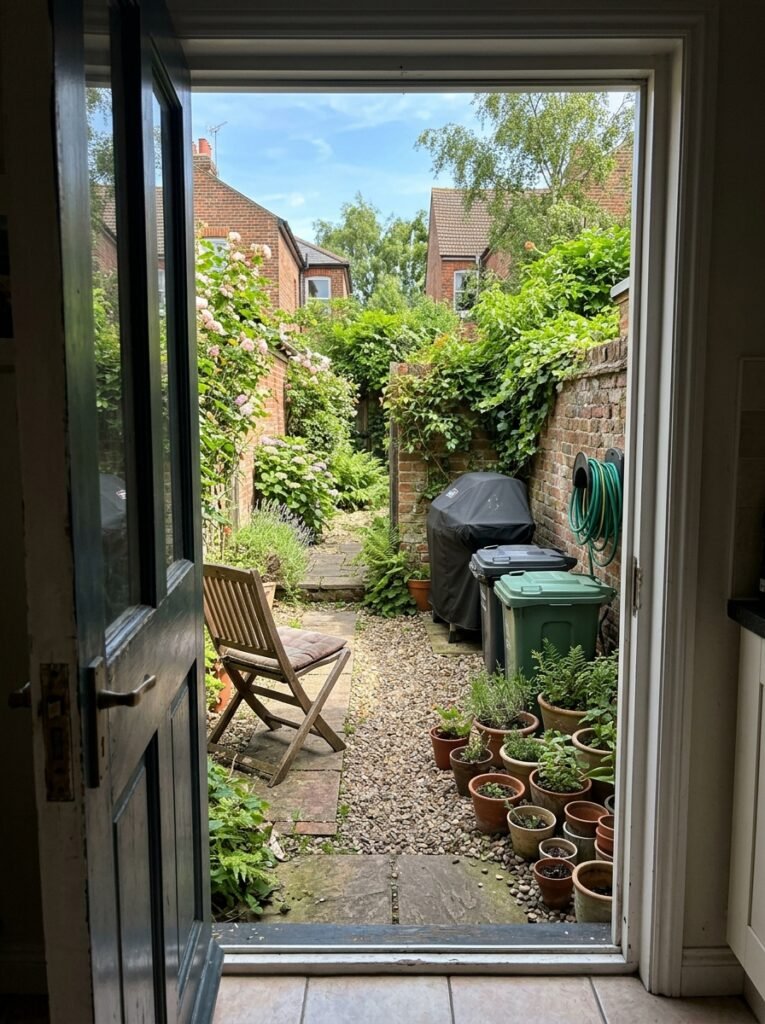
In a big yard your eye travels. There is space between things, so each item gets its own moment. In a small yard everything arrives at once and the objects start competing.
That is why the usual advice to add more decor often backfires out here. Nine small pots read as mess. Three big ones read as a plan.
Here is a quick test. Stand at your back door and count the separate things you can see. Chairs, pots, the grill, the bins, a bird feeder, a hose reel, a sad wind chime. Once you get past ten or so, the space feels busy. It does not matter how nice each piece is on its own.
Also worth remembering: you look at a small yard from inside far more often than you sit in it. The view from the kitchen window or the back door is the view that counts. Style for that first.
Your Fence Is Half the View, So Treat It Like a Wall
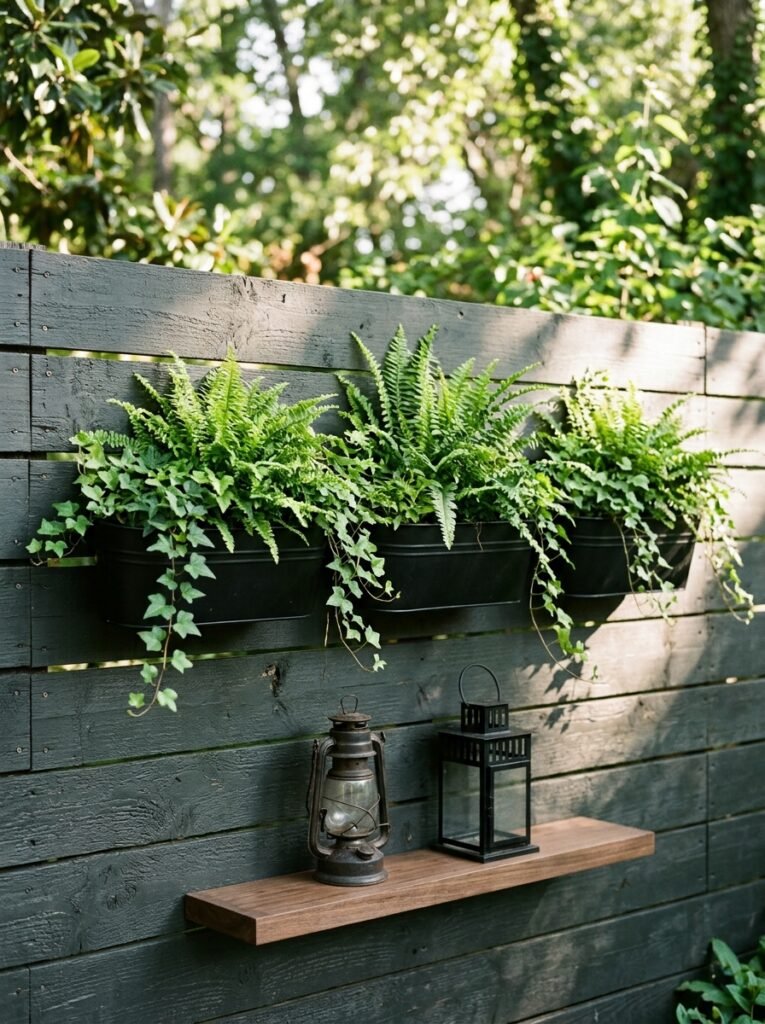
In a yard this size the fence is not background. It is the biggest surface you own, and it usually gets ignored.
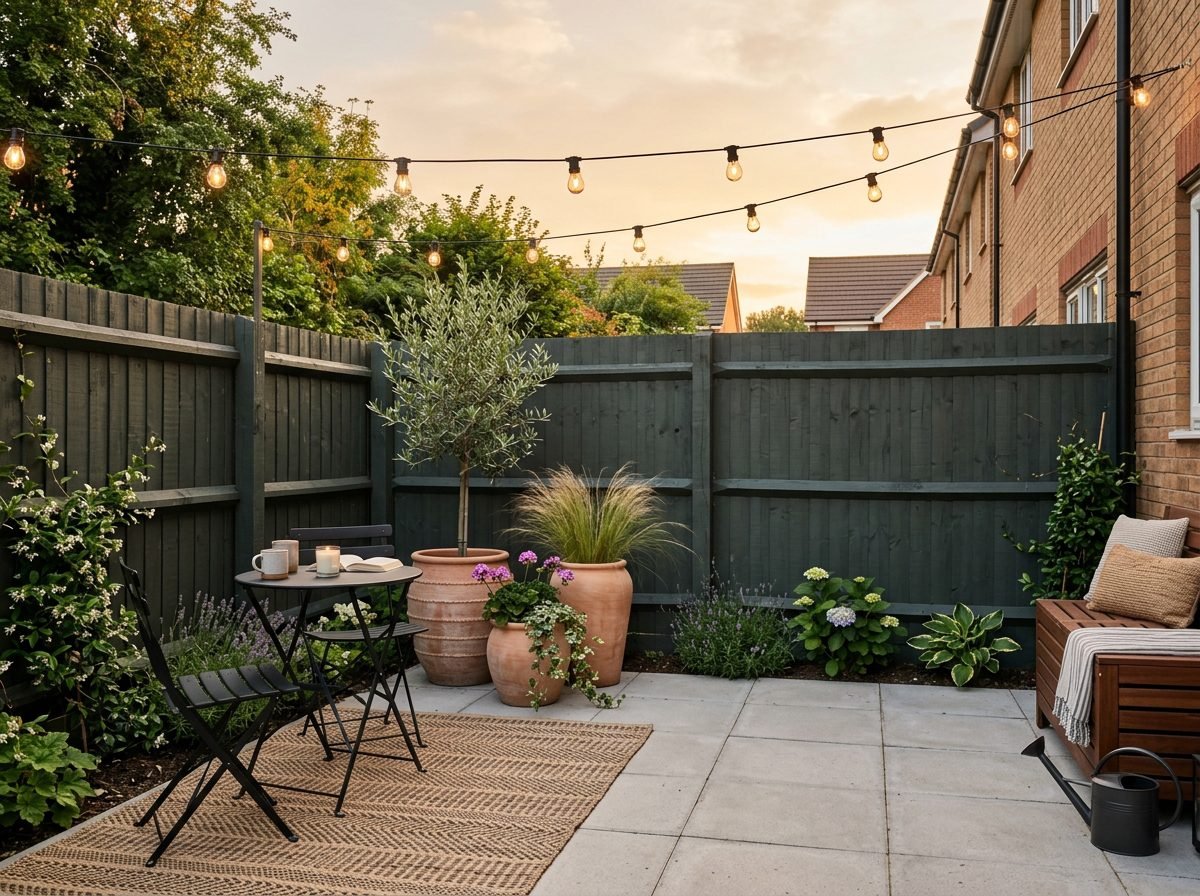
Paint is the cheapest upgrade there is. A dark color, charcoal or a deep forest green, makes the boundary recede and makes green foliage pop against it. Pale orange fence stain does the opposite. It grabs attention and shoves the edges of the yard right in your face.
Pick one fence to be the interesting one and leave the others plain. Cover all three sides in shelves and planters and you have wallpapered a small room in competing patterns.
Options that work well on the feature side:
- Slatted screen panels fixed over the existing boards
- A trellis with one climber trained across it
- A row of three matching wall planters, hung at eye level
- A single narrow shelf for lanterns and a couple of trailing plants
Want to try the outdoor mirror trick? Keep it out of direct midday sun. Angle it slightly toward a planted area. Mirrors that catch full sun get uncomfortably bright, and birds do fly into them.
Measure the Space Before You Buy the Furniture
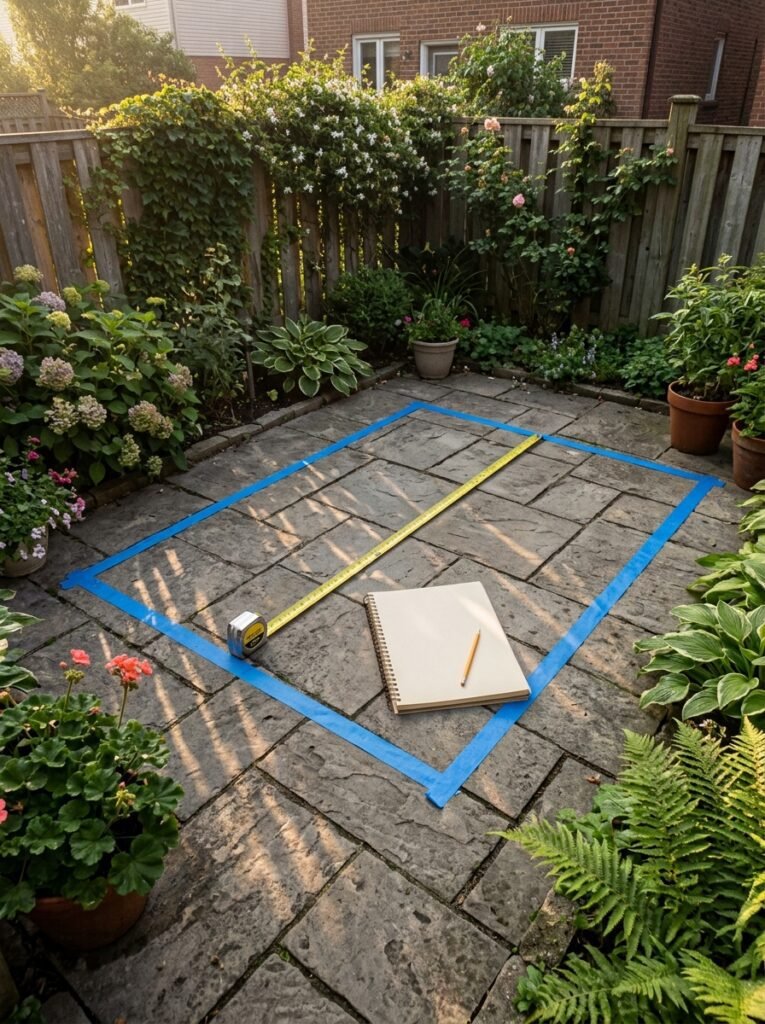
This is where most small yards get ruined. Someone falls for a six seat dining set online. It arrives, and the yard turns into a furniture showroom with a footpath around the edge.
Do the boring thing first. Lay out the footprint with painter’s tape, or a garden hose if you are on grass. Live with it for a day.
Numbers worth keeping in mind:
- Leave 24 to 30 inches for any path you walk regularly
- Allow about 18 inches between a seat and a coffee table
- Allow roughly 36 inches behind a dining chair so you can push it back and stand up
A bistro set for two, used every morning, beats an eight seater used twice a summer. Host a few times a year? Buy folding chairs and hang them in the shed. Do not size the whole yard around one big night.
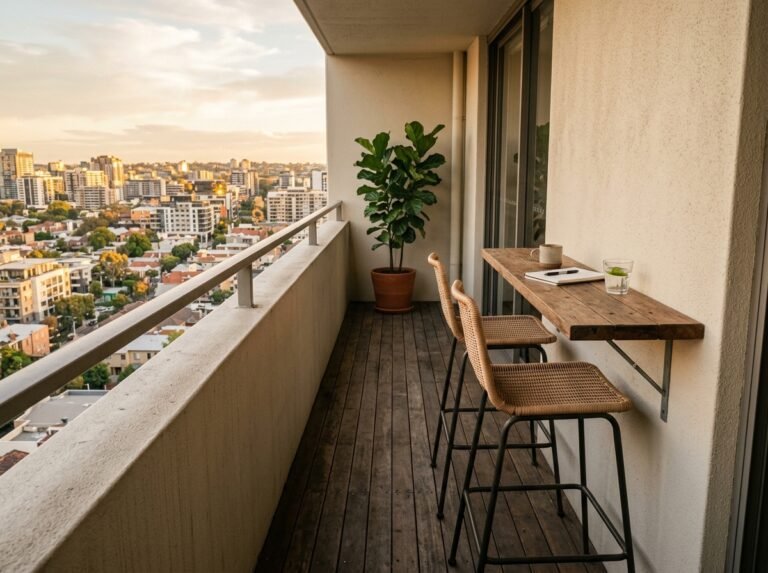
Two small details make a real difference in a tight yard. Furniture with visible legs feels lighter than furniture with a solid base. You can see the ground running underneath it. And armless chairs take up noticeably less visual space than chunky armchairs.
Still narrowing down styles and materials? This walkthrough on building a modern patio setup around the furniture you pick goes deeper on comfort and durability.
Give the Yard One Thing Worth Looking At
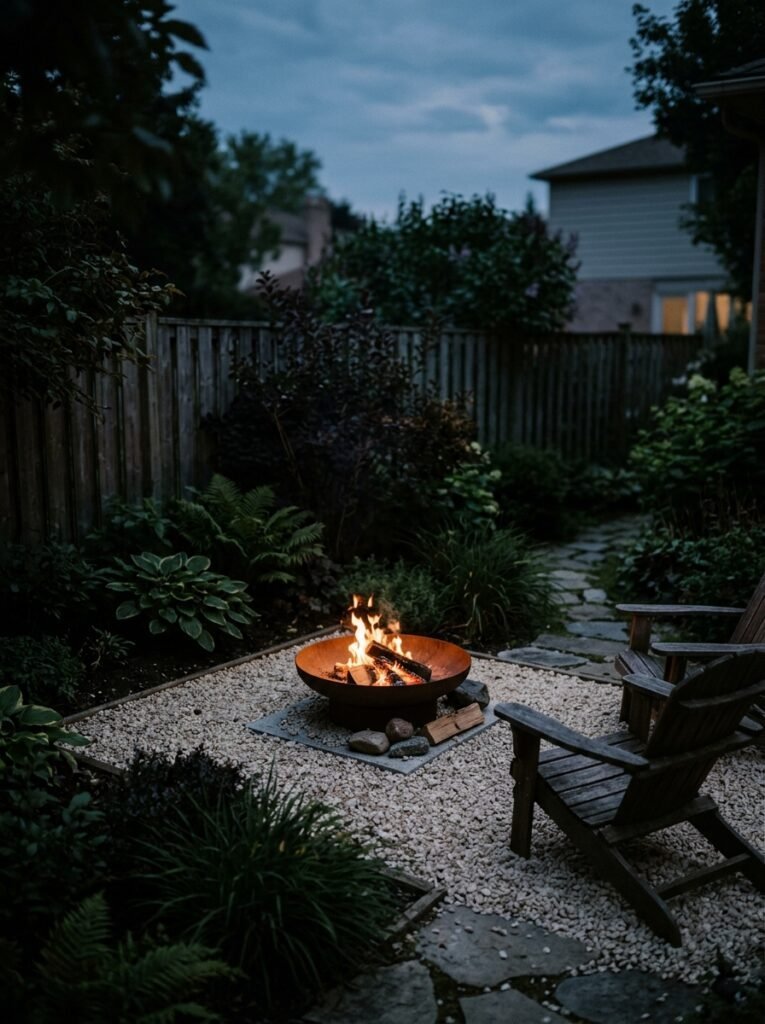
Small yards need a destination. Without one, your eye just bounces around the edges and lands on the bins.
Choose a single focal point and put it where you see it from the house. Some that work:
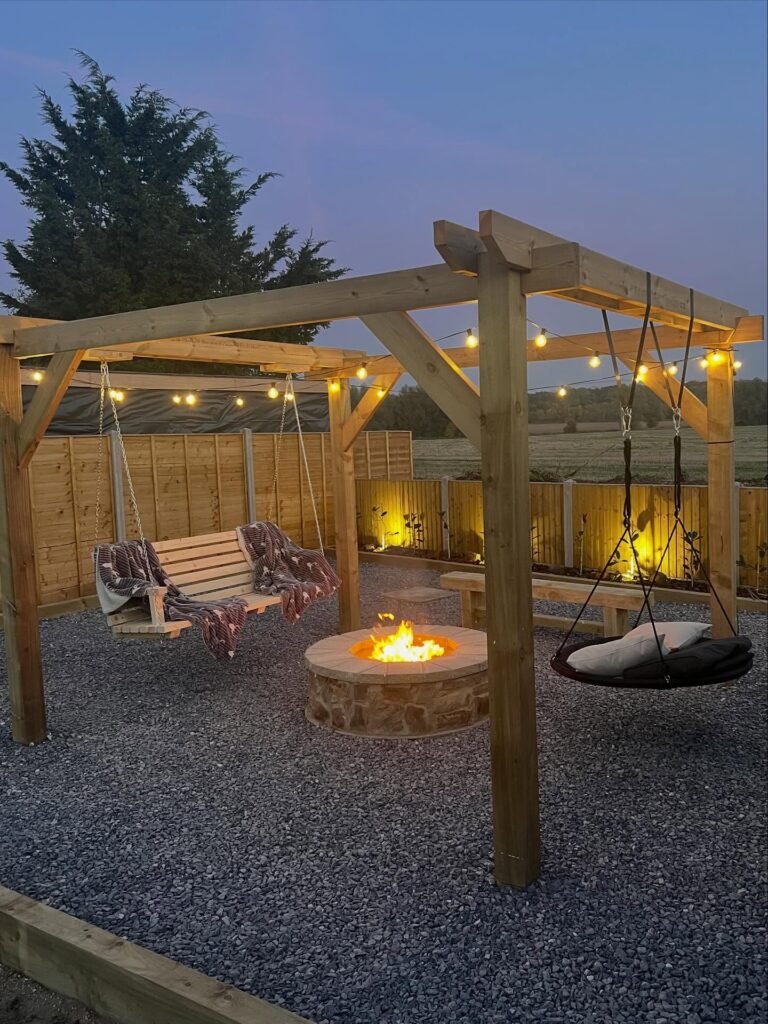
- A fire bowl on a gravel square
- One small tree or large grass in an oversized pot
- A wall fountain or a simple water bowl
- The back door itself, painted a color you like
- A weatherproof piece of art on the feature fence
The rule is one. Two focal points in a 200 square foot yard means neither wins. Everything else you add should be quiet and support the main event.
I painted a back gate soft olive green one weekend. It did more for the space than the four planters I bought that month.
Hide the Bins, the Hose, and the AC Unit
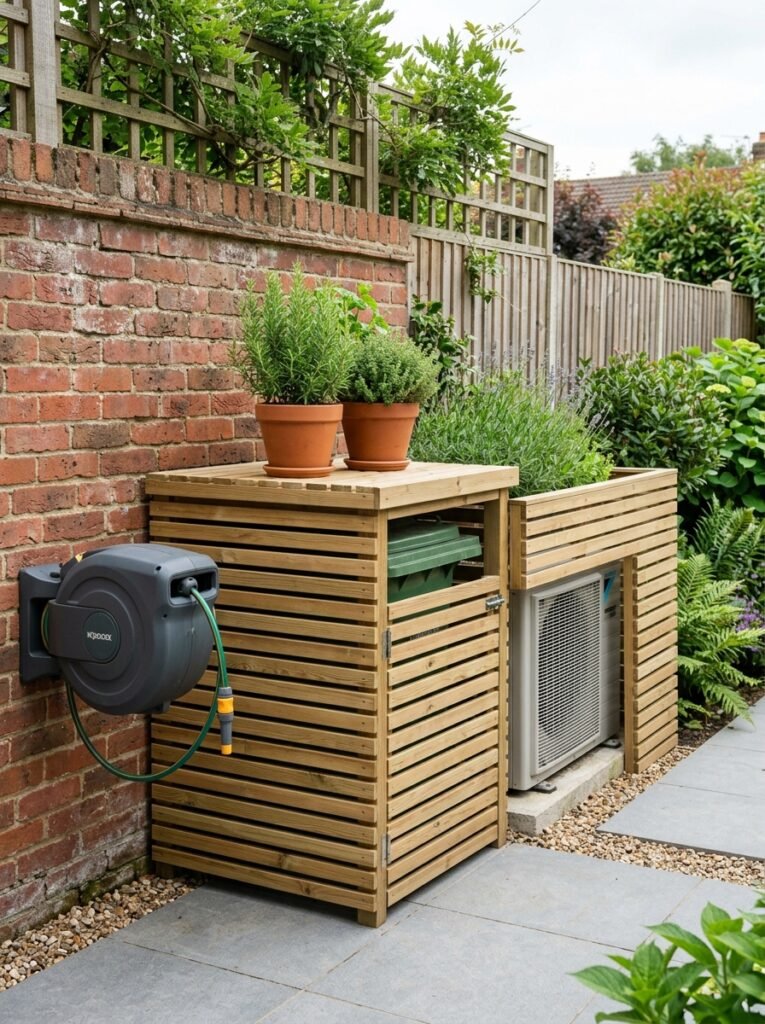
Nobody photographs this part, but it is usually the reason a small yard looks unfinished.
- Trash and recycling bins: a slatted store with a flat lid gives you a surface for two pots on top. A pair of tall planters can also screen them for less money.
- Hose: a wall mounted reel or a hose pot takes it off the ground and stops it snaking across your one open area.
- Tools and cushions: a storage bench does two jobs, seating and hiding, which is exactly what you want when floor space is short.
- Air conditioning unit: screen the sides but leave it plenty of breathing room. Check the manual for your model, since most makers ask for clear space around the unit and nothing sitting over the top of it.
Screening works best when it matches something else in the yard. Same slat spacing as the fence panel, or the same stain as the bench. Otherwise you have added another new element to an already busy view.
Lighting Does More Out Here Than It Does in a Big Yard
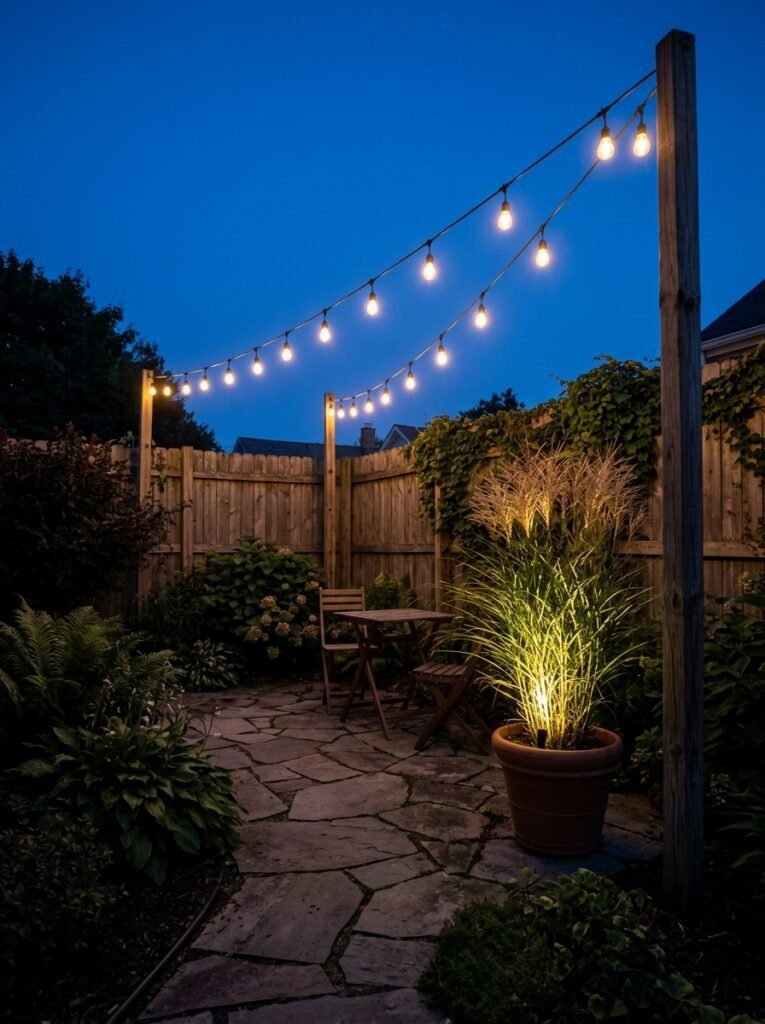
Because the whole space is within reach, a small yard is one of the easiest places to light well.
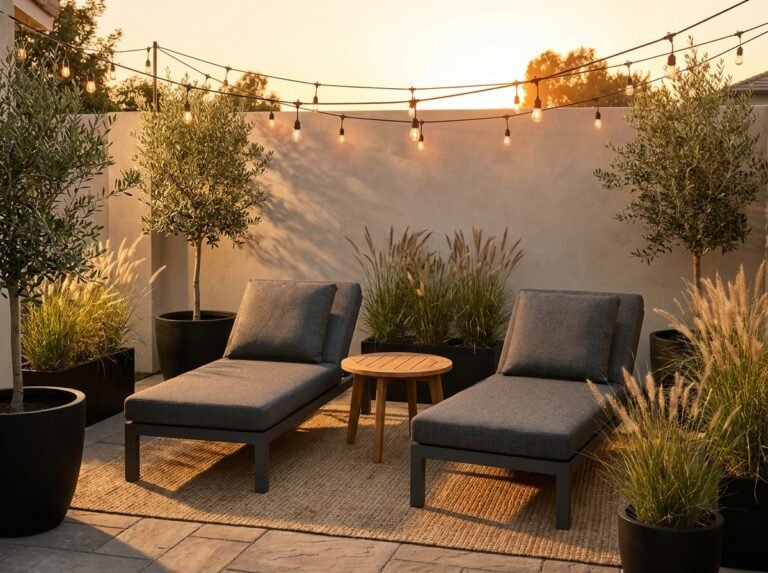
String lights strung overhead are the classic for a reason. They create a ceiling, and a ceiling is what turns a patch of concrete into a room. Run them in two or three straight lines rather than a spiderweb.
Go warm. Bulbs around 2700K look like candlelight. Cool white floodlights make the space look like a parking lot and make plants look gray.
Do not light everything. Leaving the far corners dim gives the yard depth, which is the one thing small spaces struggle to fake. Pick two or three things to light. The seating area, one plant lit from below, maybe the path to the door.
On power, plug in sets are far more reliable than solar in a shaded yard. Use outdoor rated cords and an outdoor rated outlet with GFCI protection. Anything permanent is worth handing to an electrician.
Plants That Earn Their Space in Pots
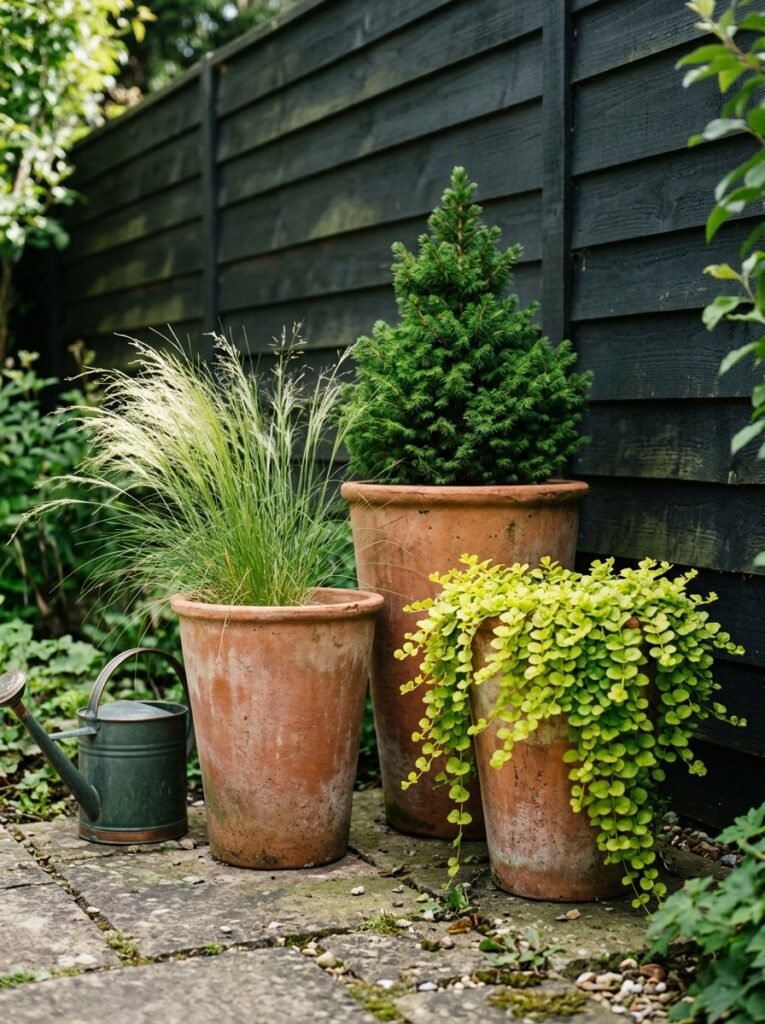
When the ground is mostly paved, pots do the work. A few habits make them look intentional rather than accidental.
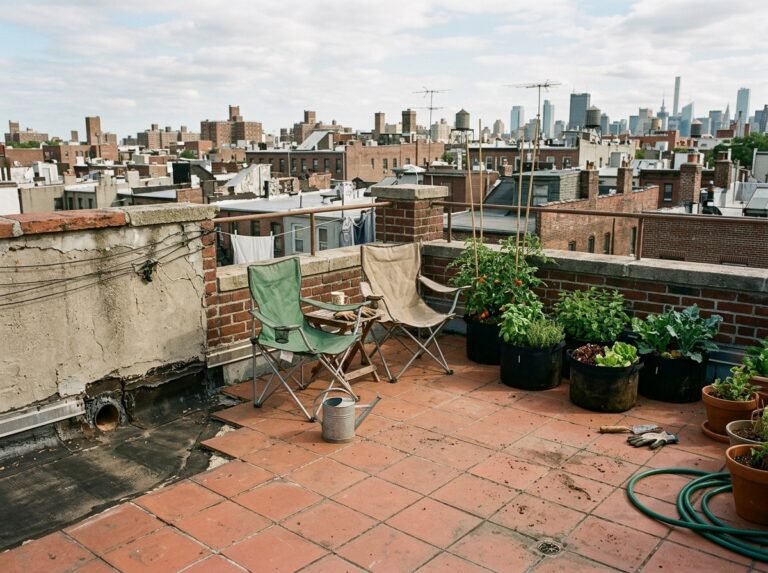
Go fewer and bigger. Three large pots beat nine small ones every time. Big pots also hold moisture longer, so you are not watering twice a day in July.
Group them in odd numbers at different heights. A tall one, a medium one, a low trailing one, all in the same material, reads as a designed arrangement.
Grow upward where you can. Climbing jasmine, clematis, or a climbing rose on the feature fence gives you greenery without using any floor.
Keep at least one or two evergreens in the mix so the yard is not bare from November to April. Ornamental grasses, small conifers, and boxwood in pots all carry a small space through winter.
Buying anything you expect to come back next year? Check your zone on the official USDA Plant Hardiness Zone Map first. It is the standard reference for which perennials survive winter where you live. Container plants sit more exposed to cold than the same plant in the ground.
Last tip: put the herbs by the door. Herbs at the back of the yard get admired. Herbs by the door get used.
Two Small Yards, Two Different Approaches
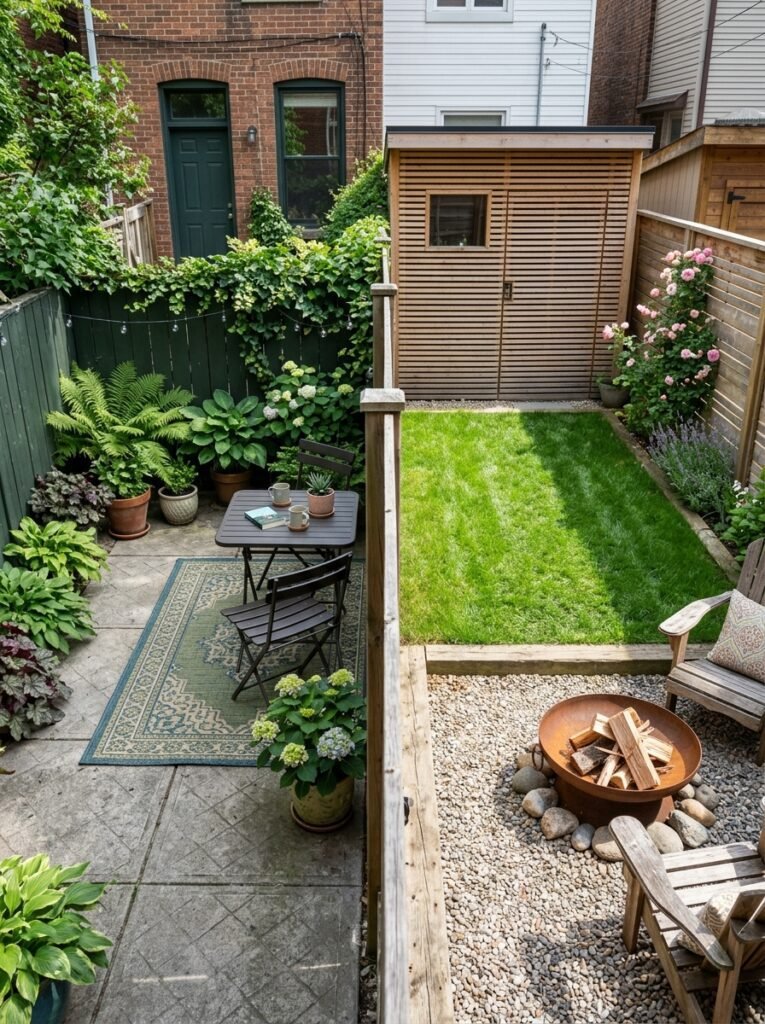
My neighbor and I both have small yards on the same street. We ended up in completely different places. There is no single right answer here.
Hers: 12 by 15 feet, concrete slab, north facing and shady. She painted the fence dark green, hung three planters on one side, and put in a bistro table for two with a rug underneath. Shade plants in four big pots, a strand of warm string lights, done. Total spend was under a few hundred dollars and it is the nicest coffee spot on the street.
Mine: 18 by 20 feet, patchy grass and a shed. I kept a small square of lawn, laid gravel in the sunny corner for a fire bowl, and screened the shed with slats and two tall planters. One storage bench, no dining set at all. We eat inside and sit outside, which turned out to be how we actually live.
Same street, same problem, opposite plans. Hers is a morning yard, mine is an evening one. Work out which one you have before you buy anything.
Mistakes That Make a Small Yard Feel Smaller
I have made most of these.
- Buying furniture sized for the yard you wish you had
- Using four different ground materials in one small space, so gravel, pavers, decking, and fake turf all fight each other
- Lining every piece of furniture flat against the fences
- Collecting lots of small pots instead of a few large ones
- Hanging so much on the fences that the walls close in
- Decorating before fixing the basics, like a cracked slab or a leaning panel
- Putting an outdoor rug on grass or on a corner that never dries out, which kills the grass and rots the rug
- Forgetting the view from inside, which is where you see the yard most
None of these are disasters. But in a space this size, two or three at once add up. That is the difference between a yard you use and a yard you walk past.
Questions People Ask About Small Backyards
How do I make a small backyard look bigger? Reduce the number of separate objects, keep the edges dark, and leave one open area with nothing in it. Empty floor space is what reads as roominess. Overhead string lights help too, since a defined ceiling makes the space feel intentional rather than cramped.
What is the cheapest way to improve a small yard? Clean up, paint the fence, and add lighting. That combination costs very little and changes the whole feel. Furniture and planting can come later, in stages.
Should the fence be dark or light? Dark almost always works better in a small yard. It makes the boundary recede and gives plants something to stand out against. Light colored fences bring the edges forward and show every mark.
Can I use an outdoor rug on grass? Only briefly, for a party. Left down, it will kill the grass underneath and hold damp against itself. Rugs belong on hard surfaces that drain and dry.
How much furniture is too much? If you cannot walk from the back door to the far corner without turning sideways, you have too much. Take one piece out and see if you miss it.
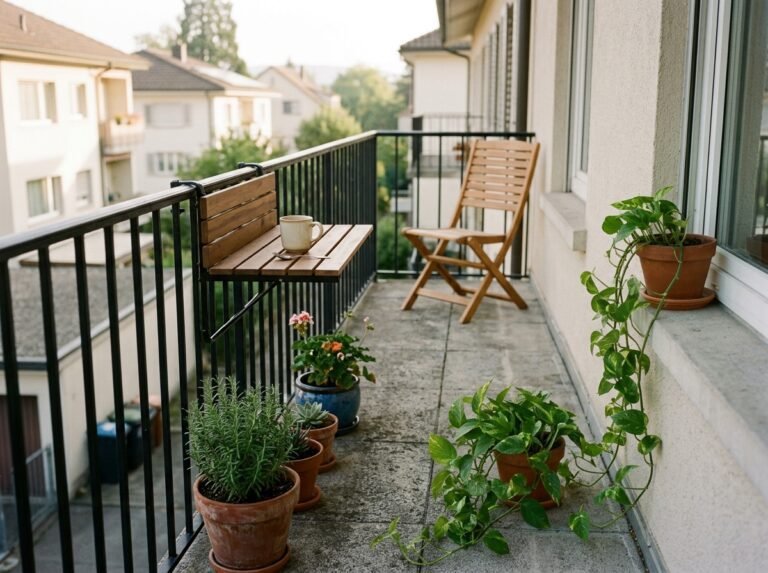
I rent. Is any of this worth doing? Plenty of it. Pots, lighting, freestanding screens, and furniture all leave with you. Ask before painting anything, since many landlords will say yes to a neutral fence stain.
Start With the Corner You Look At Most
If the whole list feels like a lot, ignore it and do one thing.
Stand at the window you look out of most often. Find the corner your eye lands on first. Fix only that corner: clear it, add one decent chair or one big pot, and put a light on it.
That one corner will make the rest of the yard look worse by comparison. Sounds like a problem. It is the most useful thing that can happen. It shows you exactly what to do next, and it costs almost nothing to find out.
Small yards reward patience more than budget. Do a corner a month. By the end of summer you will have a yard you use instead of one you keep meaning to fix.