Bedroom Wall Decorating Ideas Without Painting Anything
There are only two ways to change a bedroom wall that cannot be painted. Cover it. Or make it the least interesting thing in the room.
Almost every no-paint idea falls into one of those two camps. They suit different problems. Choosing the wrong one has a familiar look. Peel-and-stick wallpaper curling off a textured wall. A careful arrangement of frames that still leaves the room looking beige.
No Paint and No Holes Are Two Different Rules
These get treated as the same restriction. They lead to opposite answers.
A lease that forbids painting usually still allows small nails and picture hooks. The understanding is that holes get filled before the keys go back. That leaves almost everything on the table.
A lease that forbids holes is far tighter. Nothing screws in. Every option has to be adhesive, tension-mounted, leaning, or freestanding.
Then there is a third case. Simply not wanting the disruption of painting. That one carries no restrictions at all, just a preference for reversible work.
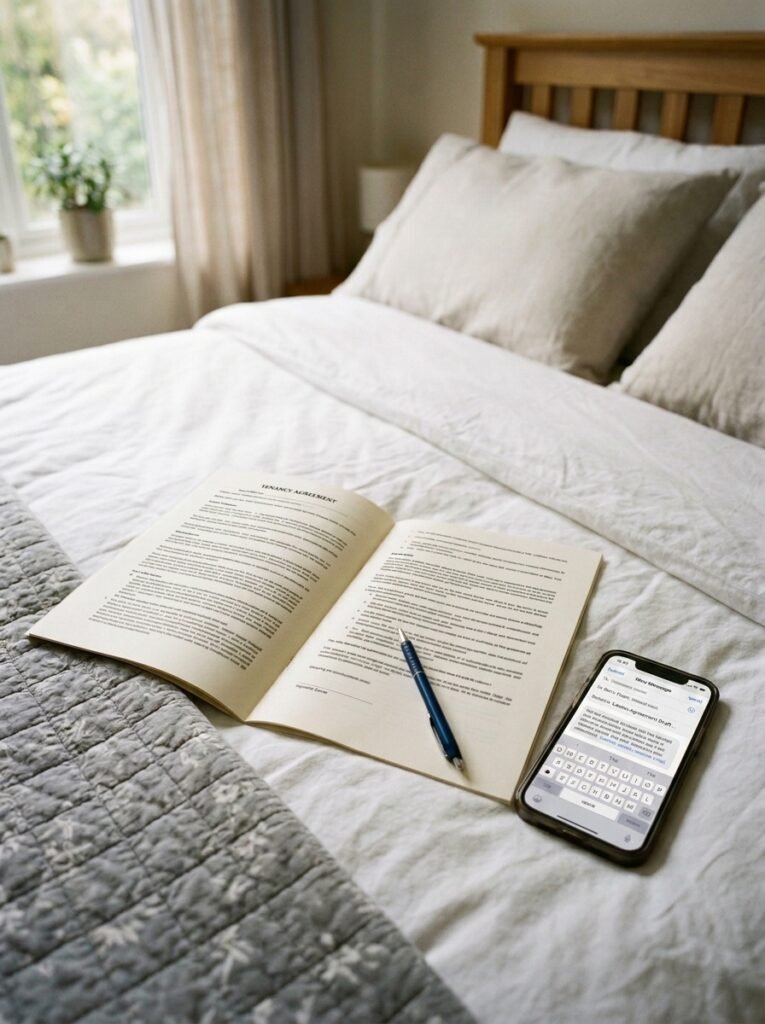
Reading the actual wording matters before anything gets bought. The phrase that catches people out is “no alterations”. Plenty of agreements read that as covering wallpaper, adhesive film, and anything semi-permanent. A one-line email asking about a specific product costs nothing. It settles the question in writing.
Strategy One: Cover the Wall
Covering means treating a meaningful share of the wall, not hanging something on it. Anything under roughly a third of the surface reads as an object rather than a treatment. That is why one small frame never fixes a wall somebody dislikes.
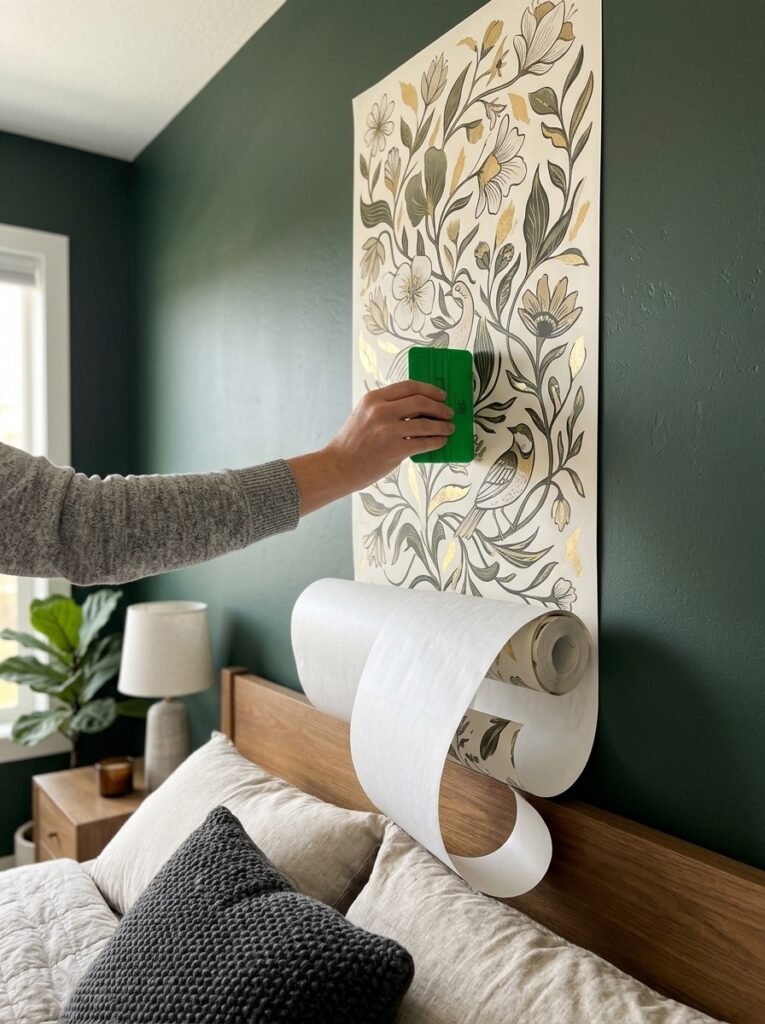
Peel-and-stick wallpaper. Best on smooth walls in eggshell or satin. A single panel run behind the bed uses a fraction of the material of a full room. It is far more forgiving for a first attempt. Working from the top down with a smoothing tool, and slightly overlapping the seams, gives the cleanest result.
A half wall. Applying only to the lower third, or up to old picture rail height, cuts the material bill. It also covers the part of a wall that collects scuffs.
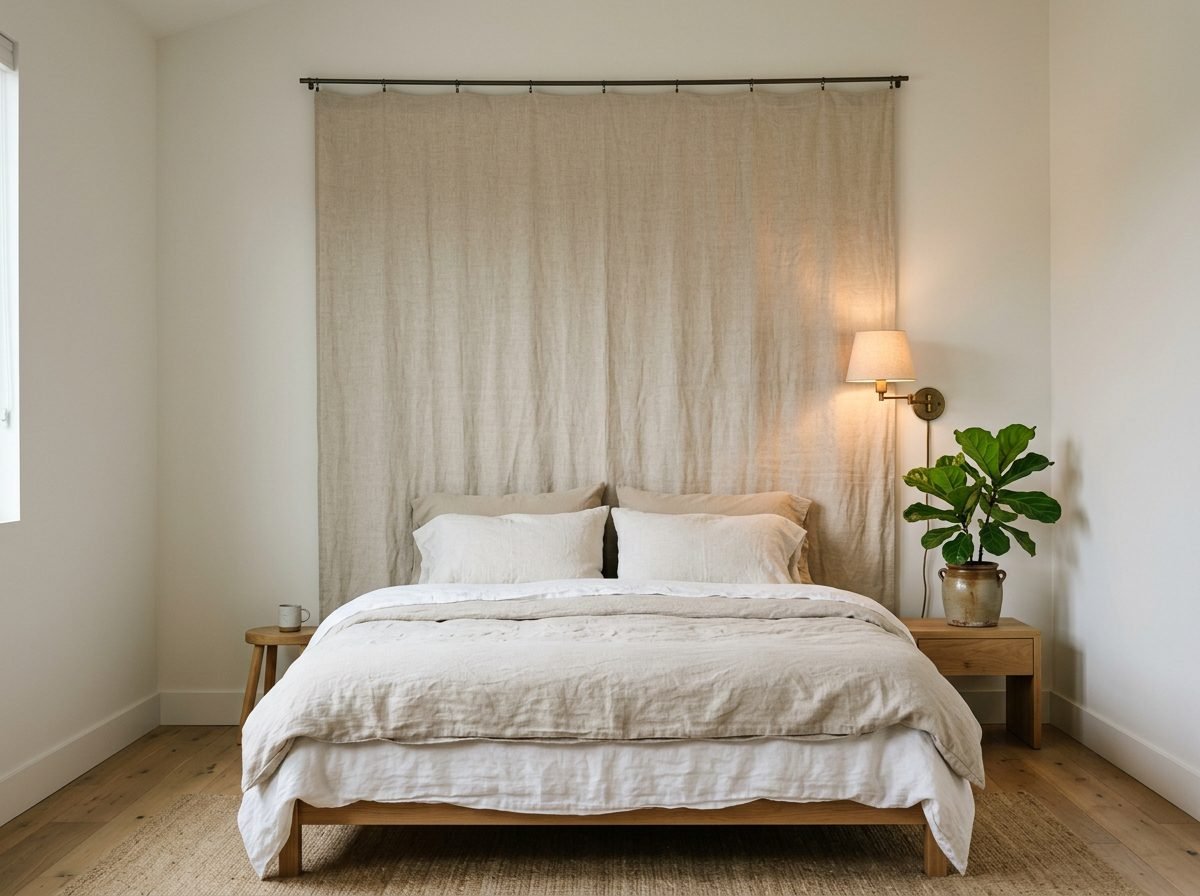
Fabric. A wide piece hung from a slim rod near the ceiling covers more wall per dollar than any other option. It quietens the room at the same time. Liquid starch is the long-standing renter method for fixing fabric directly to a wall. It releases later with warm water.
Slat panels. Prefabricated wood slat panels mount on a French cleat. That means two fixings rather than twenty. The whole panel lifts off in one piece and leaves two holes to fill.
Leaning panels. Plywood finished at home, leaned against the wall, and held with a single anti-tip strap. Nothing touches the wall surface. The visual coverage is total.
Ordering more material than the wall measures is worth the small extra cost. Pattern repeats waste a little at every drop. Running one strip short at the far end of a wall is a bad afternoon.
Strategy Two: Take the Eye Off the Wall
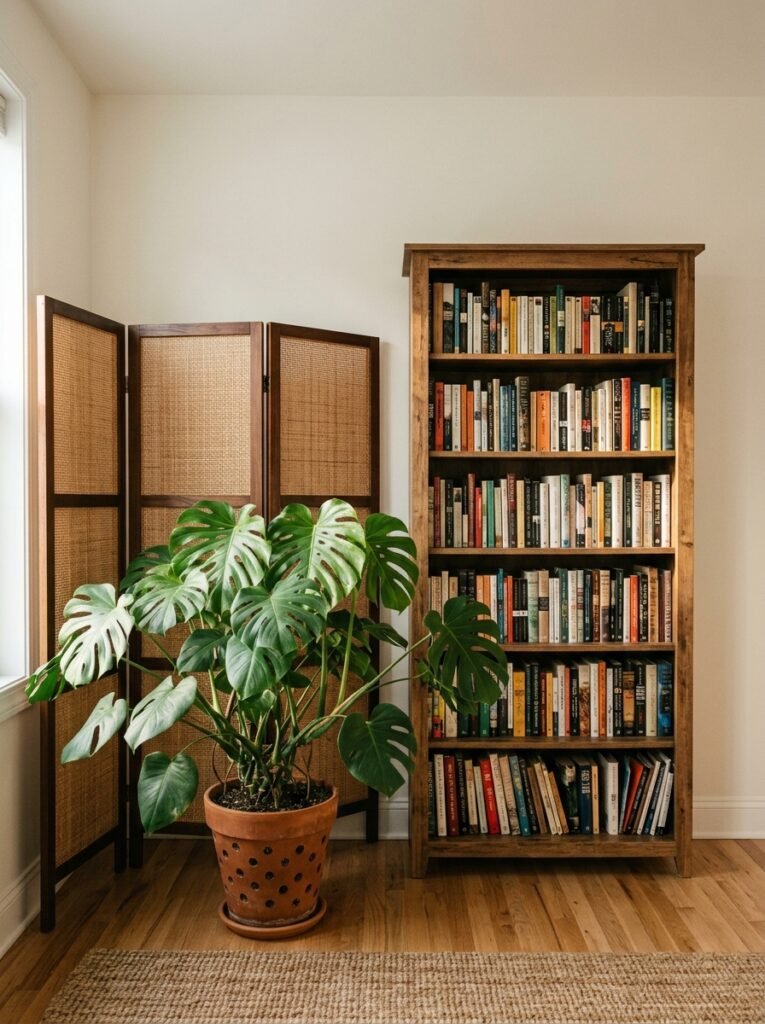
When covering is out, the aim flips. Leave the wall alone. Give the room something better to look at instead.
Height at the perimeter. A tall bookcase, a wardrobe, or a headboard that rises well above mattress level occupies the wall visually. None of it touches the wall itself.
A freestanding screen. A three-panel folding screen stands on the floor. It reads as a wall treatment from anywhere across the room, and it moves when the furniture does.
Structure in front of the plane. A tall plant, a floor lamp with presence, or a slim ladder shelf breaks the flatness of a wall. It gives the eye depth to work with.
Weight low down. Strong colour in bedding and a rug pulls attention downward. A wall nobody likes stops registering once the bed carries the interest instead.
Borrowed daylight. A mirror angled to catch a window moves light into the darker half of a room. No wall covering can do that. Keeping it off the wall directly above the bed matters for safety.
Where that effort goes matters more than how much of it there is. In a bedroom, the wall facing the bed repays attention far more than the one behind the headboard. There is more on that in this piece on choosing which bedroom wall is worth the trouble.
Light Changes a Wall’s Color Without Touching It
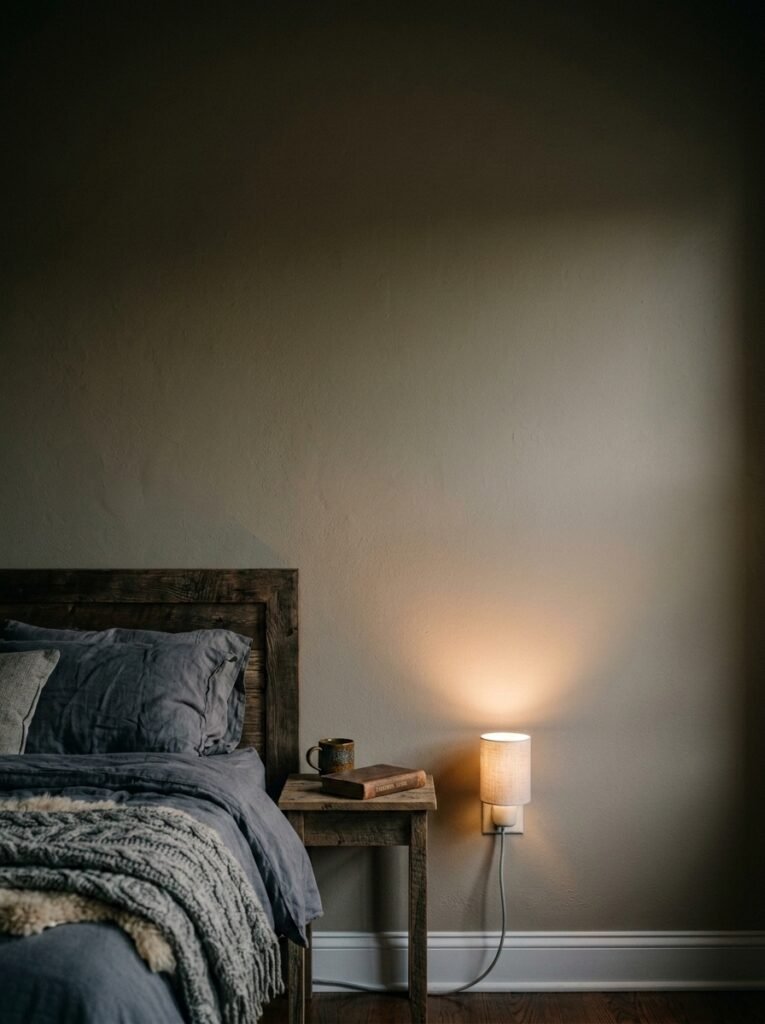
This is the most overlooked no-paint change. It is also the cheapest.
A wall is only ever the colour of the light bouncing off it. Builder’s magnolia under a cool bulb looks grey and tired. The same wall under a 2700K bulb reads as soft cream. Nothing on the wall changed.
Washing a wall, rather than lighting the room, adds more. A plug-in sconce or a clip light aimed upward creates a gradient from bright to dim. A gradient reads as depth. Flat overhead light never does.
Two smaller details help. Bulbs with a high colour rendering index stop everything on the wall looking washed out. A plug-in dimmer lets the same wall behave differently at nine in the evening than it does at six.
Two smaller lamps at different heights also beat one bright one. The wall then carries more than one gradient, instead of a single flat pool. For an actual colour change elsewhere in the room, this complete guide to bedroom colour schemes covers the rest of it.
One caution. A lamp placed close to a wall exaggerates whatever texture is there. On a bumpy or badly patched wall, moving the light away from the surface works better than moving it closer.
The Surface Decides What Will Stick
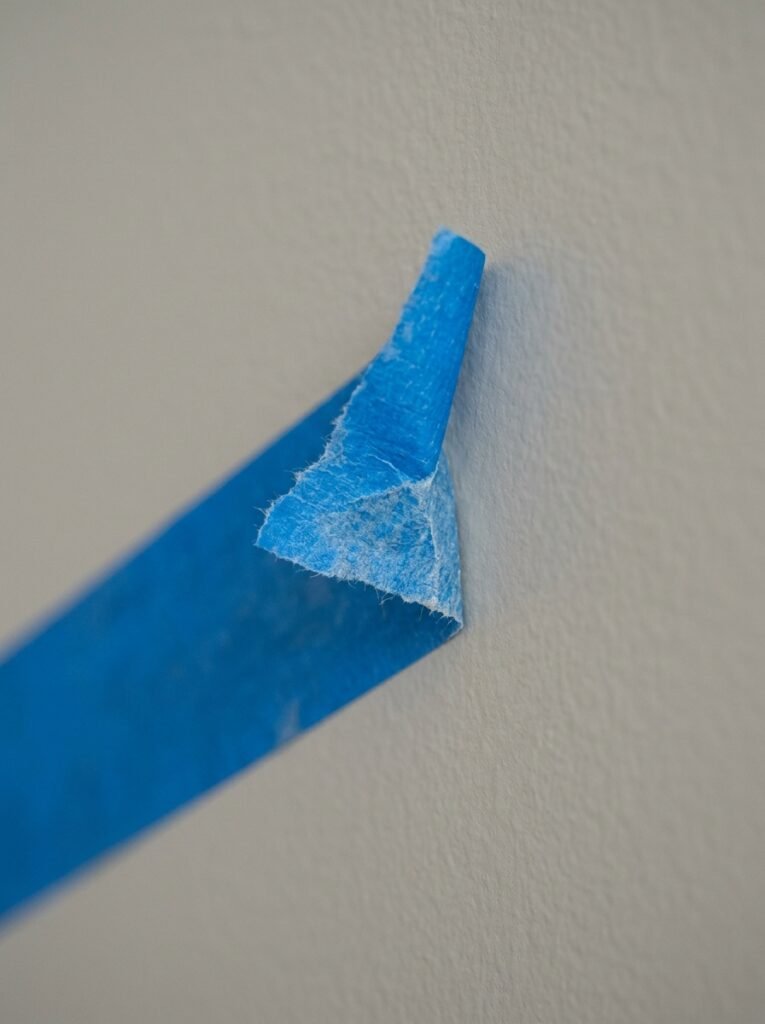
Nothing in strategy one works on every wall. The wall decides, not the product description.
Texture. Orange peel, knockdown, and heavy texture defeat peel-and-stick. The adhesive only contacts the high points. The paper releases within weeks.
Sheen. Flat and matte paints hold adhesive poorly and tear when anything is removed. Eggshell and satin are the reliable middle ground.
Fresh paint. Paint keeps curing for weeks after it looks dry. Adhesive products generally ask for a waiting period first. Skipping it is how paint comes away later.
Dust and damp. Wiping the wall down and letting it dry completely matters more than it sounds. Adhesive also fails on cold exterior walls that attract condensation.
There is a test that settles it in a day. Press a strip of ordinary painter’s tape firmly onto an inconspicuous patch. Leave it overnight. Pull it off. If paint comes with the tape, nothing adhesive belongs on that wall.
Six Answers Before Anything Gets Ordered
Does peel-and-stick wallpaper damage walls? On sound, smooth, properly cured paint it usually comes away cleanly. On flat matte paint, fresh paint, or anything textured, it can take the top layer with it.
What is the cheapest way to cover a whole wall? Fabric on a ceiling-height rod, by a wide margin. A wall’s worth of fabric costs a fraction of a wall’s worth of wallpaper.
Can fabric go straight onto the wall? Yes, using liquid starch as the adhesive. It soaks the fabric and holds it flat while it dries. It comes off later with warm water and a little patience.
Will adhesive hooks hold a mirror? Weight ratings assume ideal conditions, and bathrooms and bedrooms rarely provide them. For anything heavy, or anything above a bed, adhesive is the wrong answer.
What works on a textured wall? Everything in strategy two, plus fabric on a rod and leaning panels. Adhesive products are the one category to skip.
Does the landlord need to know? Checking if the product is semi-permanent, such as wallpaper or film, is the safer default. Textiles, freestanding pieces, and lighting rarely need a conversation.
Getting It All Off Again
Removal is where the deposit is won or lost. It goes wrong when it is rushed.
Warming the adhesive first with a hairdryer on a low setting helps considerably. Pulling slowly at a shallow angle helps too. Folding the material back on itself works better than dragging it straight out. Adhesive strips have their own pull tab, which wants a slow, steady pull straight down and no snapping.
Leftover residue lifts with a dab of oil or a proper adhesive remover on a cloth. A clean wipe finishes the job.
Nail holes take lightweight filler and a light sand. A small colour difference should be expected, since filled patches always flash slightly against aged paint.
One caution for older buildings. If paint lifts away with the adhesive, that counts as a disturbed painted surface. The EPA notes that lead-based paint is still present in millions of homes built before 1978. It usually sits under newer layers. Paint that is peeling, chipping, or damaged is the actual hazard. The right response is to stop, not sand it, and speak to the landlord.
Photographing every wall before work starts, and again after removal, is the fastest way to end a deposit conversation.
Which Strategy Fits Which Problem
The two approaches are not interchangeable. Matching them to the actual complaint saves both money and disappointment.
- A wall colour that reads wrong, on a smooth surface, is a covering job or a lighting job
- Heavy texture rules out adhesive entirely, so distraction is the only route
- Scuffs concentrated low down suit a half-height treatment rather than a full wall
- A no-holes lease points to leaning panels, tension rods, and freestanding height
- Dark panelling responds far better to being lit than to being covered
- A small bedroom where full coverage would feel heavy does better with a plain wall and interest elsewhere
- One year in a rental favours textiles and adhesive. Several years justifies the slat panel and its two screws
Picking one route per wall matters. Running both at once on the same surface is how a bedroom ends up busy without ever looking finished.
Using different routes on different walls is fine, and often better. A covered wall behind the bed, with three plain walls around it, reads as a decision. Four treated walls read as a showroom.
Without a Drop of Paint
Starting with the light makes sense, since it costs the least and takes about ten minutes to test. A single warm bulb reveals how much of the problem was really the wall.
Then comes deciding which camp the wall belongs in. Covering it works if the surface will take a covering and the colour is the complaint. Leaving it alone, and building interest in front of it, works when the surface will not cooperate.
Either way the wall stays exactly as the landlord left it. That is the entire point.