Console Table vs. Bench: Which Works Better in Your Entryway?
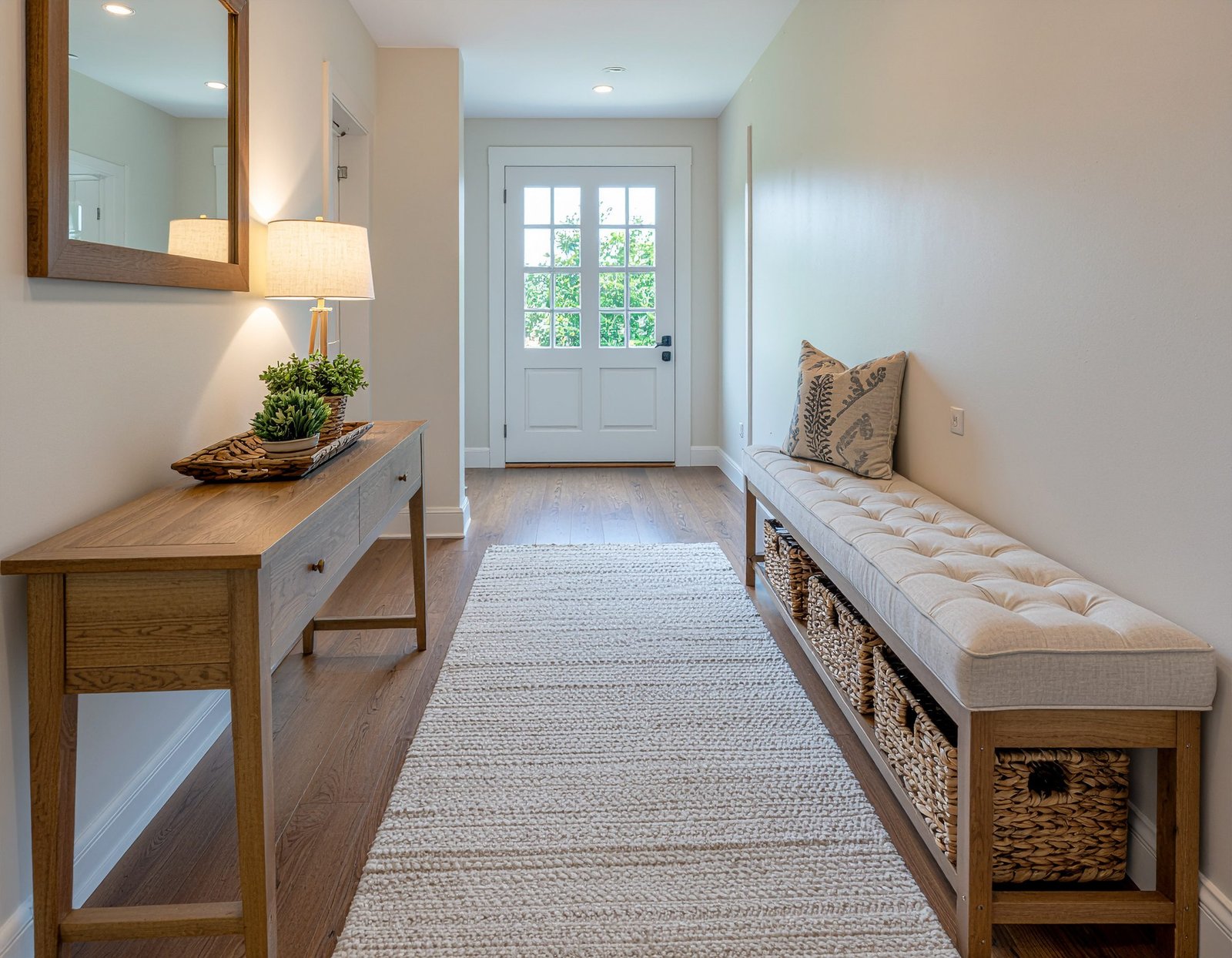
Walk into most homes and the entryway tells you almost everything about how the household actually functions. A narrow table with a bowl for keys says one thing. A sturdy bench piled with shoes and a couple of stray mittens says another. Both are classic choices for that first patch of floor inside the front door, and both photograph beautifully in home tours, yet they solve genuinely different problems.
I get asked about this constantly, usually from people standing in their new hallway holding a tape measure and a Pinterest board that features both options equally. The truth is that neither piece is objectively better. The right one depends on your space, your household, and what actually happens in those first ten seconds after someone walks through your front door.
This guide breaks down exactly when a console table wins, when a bench wins, and how to tell the difference for your own home before you spend money on the wrong piece of furniture.
Why This Decision Matters More Than It Seems
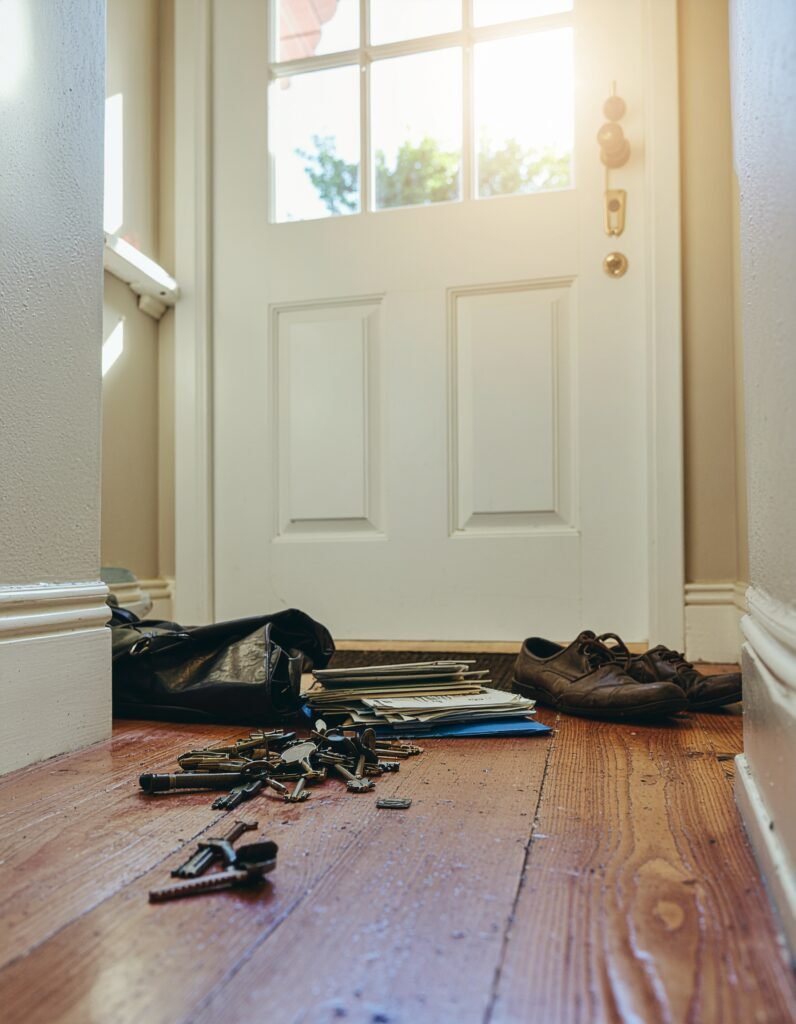
An entryway is a strange little room. It is often the smallest space in the house, yet it absorbs more daily traffic and more random objects than almost anywhere else. Keys, mail, sunglasses, bags, shoes, dog leashes, and umbrellas all funnel through this one narrow strip of floor multiple times a day.
Choosing furniture for this space is really choosing a system for handling all of that. A console table and a bench encourage completely different habits. One invites you to set something down and keep moving. The other invites you to stop, sit, and shed your shoes.
Get the choice right and your entryway quietly manages the daily chaos before it spreads into the rest of your home. Get it wrong and you end up with a beautiful piece of furniture that nobody actually uses the way you imagined.
The Case for a Console Table
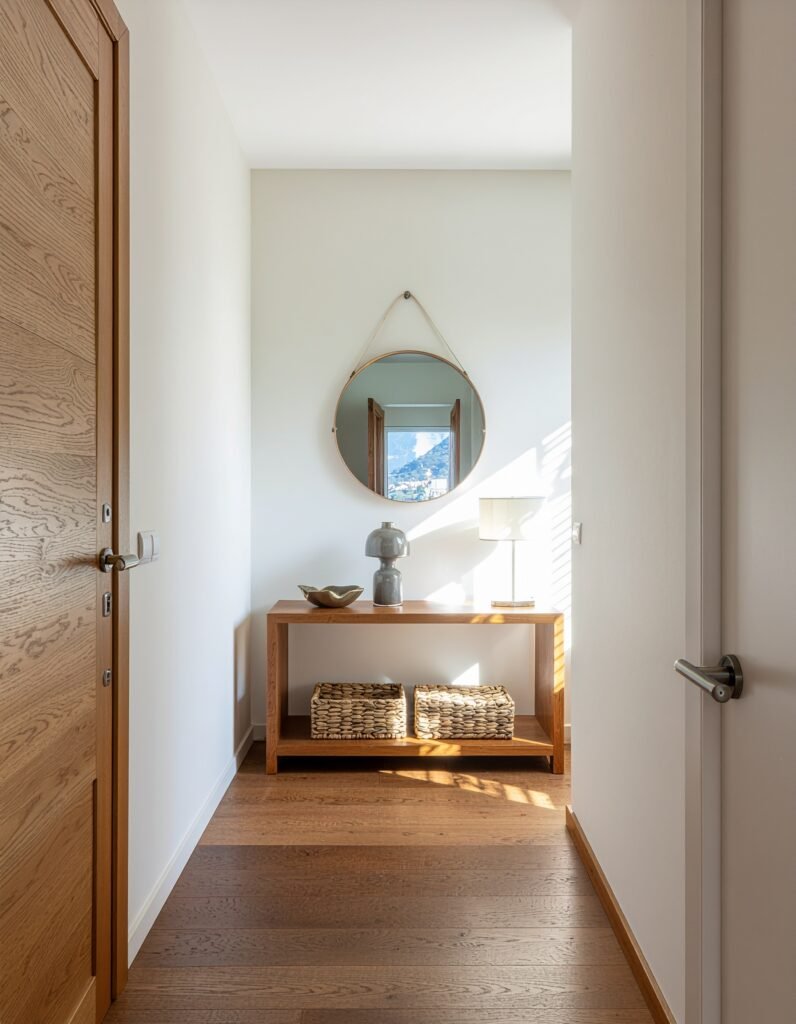
A console table is the elegant, efficient option. Its slim profile fits into narrow hallways where a bench simply would not have the depth to work, and it creates an instant landing spot for the small items that otherwise end up scattered across counters and floors.
The real strength of a console table is verticality. Add a mirror or a piece of art above it, a lamp on top, and a basket or two beneath, and you have built a genuinely styled moment in very little floor space. That combination also does real work, bouncing light around a dim hallway and giving you a last glance before heading out the door.
Console tables suit households that do not remove shoes at the entrance, formal entryways where the goal is a polished first impression, and any hallway too tight for a piece of seating. Add a small stool tucked beneath one end and you get a touch of the bench’s function without sacrificing the console’s slim footprint.
The Case for a Bench
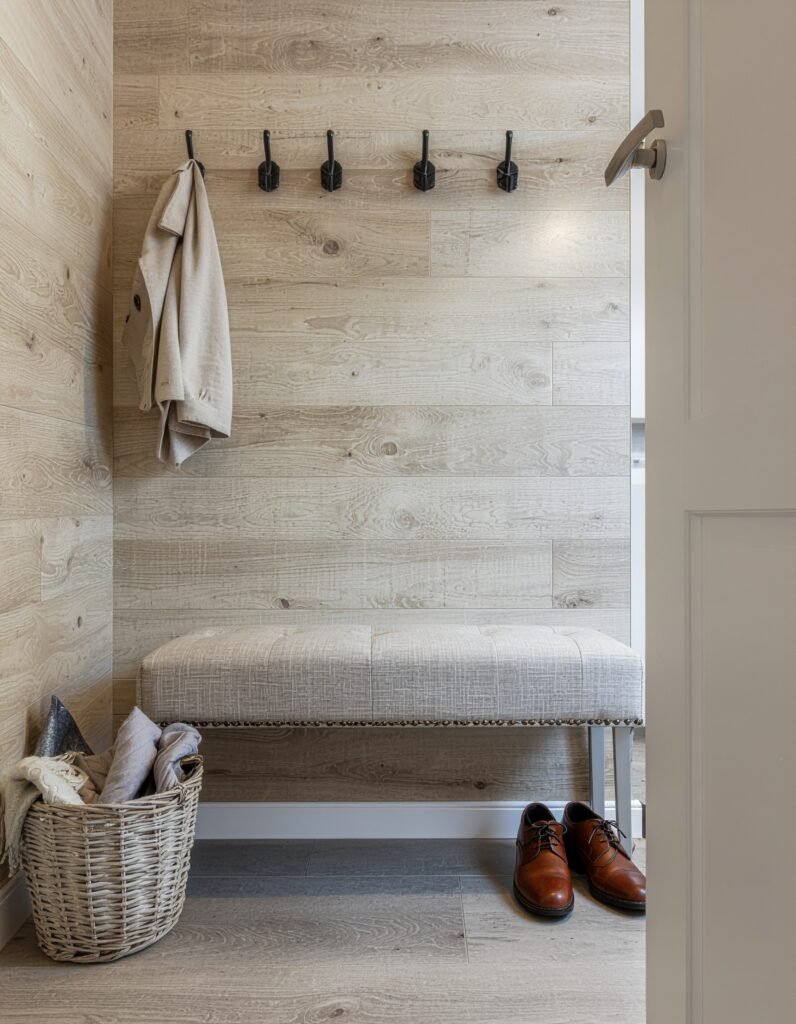
A bench solves a problem a console table cannot touch, which is the simple act of sitting down. Pulling off winter boots or lacing up sneakers is a genuinely different task standing up, and anyone with young kids, older parents, or a bad knee will tell you a place to sit at the door is not a luxury.
Benches also tend to be workhorses for storage. Many come with a lift-up seat, open cubbies underneath, or room for baskets that swallow shoes, bags, and sports gear out of sight. In households with kids, dogs, or serious weather, that storage capacity often matters more than any styling detail.
A bench suits busy families, homes where shoes come off at the door as a rule, mudroom-style entries, and colder climates where layers of boots and coats need a proper landing zone. It reads as warmer and more casual than a console table, which is exactly the feeling many entryways are going for.
Start With Your Entryway’s Size and Shape

Before you fall in love with either option, measure your actual space, because the numbers often make this decision for you.
Console tables are typically 12 to 18 inches deep, which lets them fit into hallways too narrow for almost anything else. Benches need more room to function properly, ideally at least 24 inches deep so a person can actually sit comfortably rather than perch awkwardly.
Beyond depth, think about the walking path. You want at least 30 to 36 inches of clear walkway past whatever furniture you choose, more if the entry sees regular foot traffic from multiple people. Check your door swing too. A bench positioned where an open door collides with it every single day will wear out its welcome fast.
If your entryway is a tight, straight hallway, a console table is almost always the safer structural choice. If you have a small foyer with some width to spare, a bench becomes genuinely possible.
Think About Who Actually Walks Through That Door
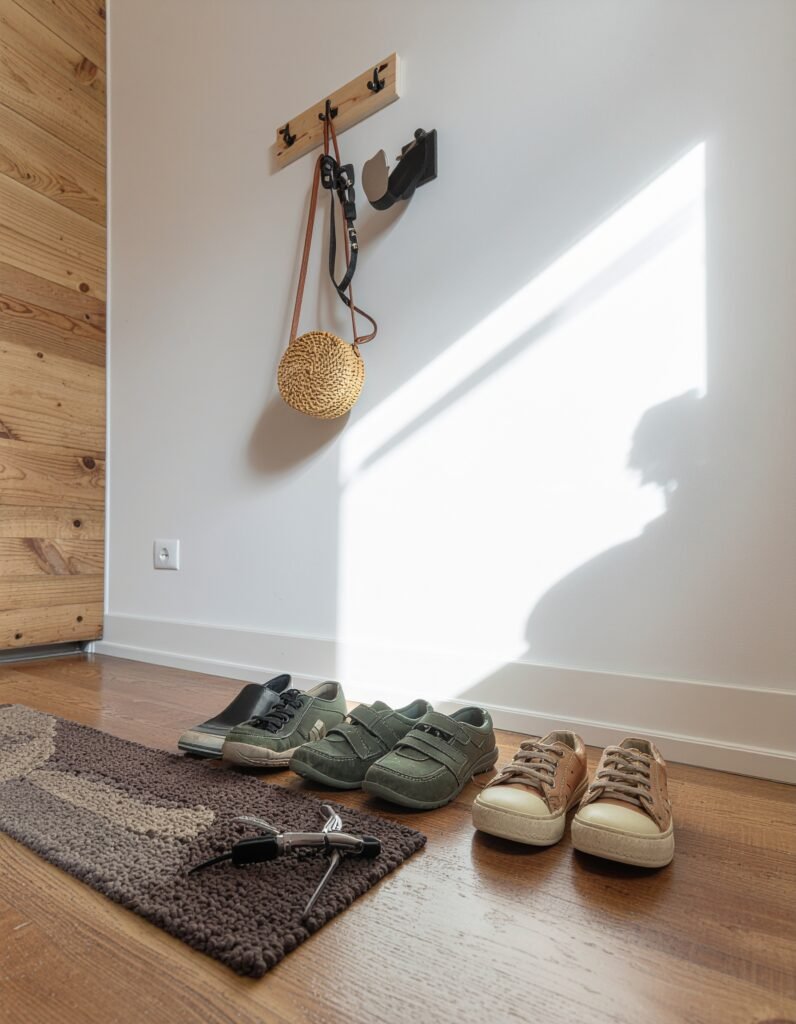
The best entryway furniture reflects how your household actually behaves, not how you wish it behaved. Be honest here, because this is where a lot of beautiful entryways quietly fail.
If you live alone or as a couple, rarely remove shoes at the door, and want the entry to feel elegant and considered, a console table fits your daily rhythm perfectly. If you have kids who need help with shoes, a dog whose leash needs somewhere to hang, or guests who regularly stop to chat while getting ready to leave, a bench earns its keep every single day.
Also consider frequency of use. An entry used constantly by an active family benefits from the durability and function of a bench, while a formal front entrance used mainly for guests can lean into the console table’s more polished presentation.
Let Your Storage Needs Make the Call
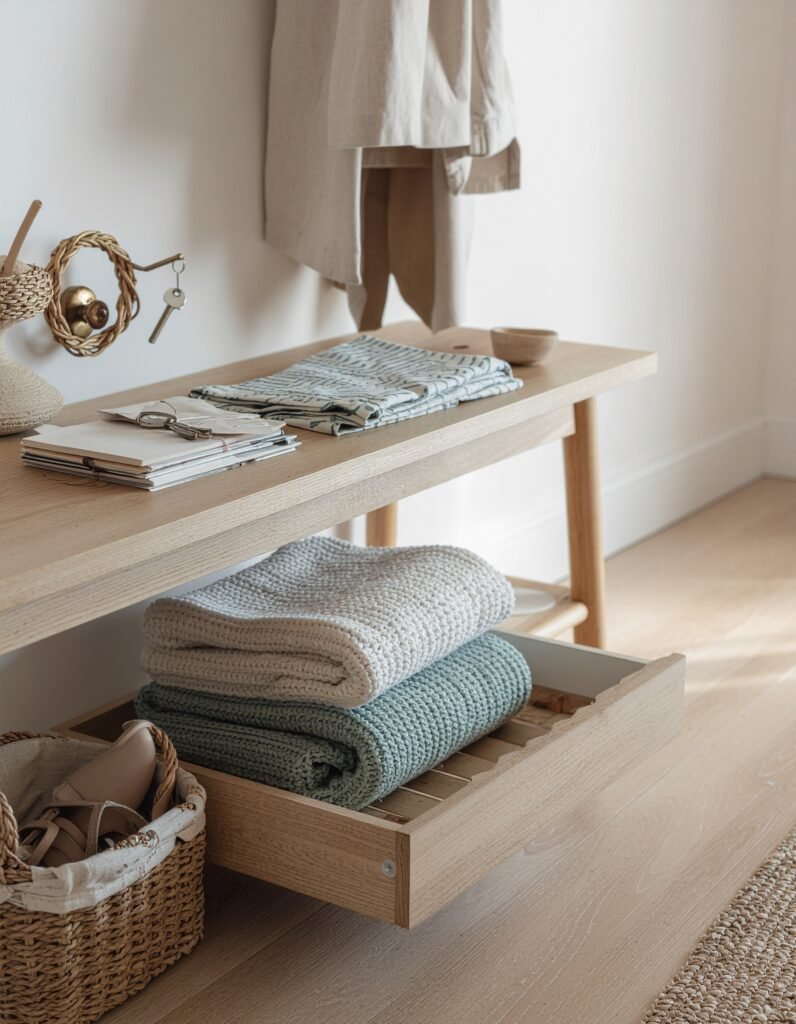
Storage is often the deciding factor once size and lifestyle are sorted out, so it is worth getting specific about what actually needs a home in your entryway.
For a console table, storage usually comes from what surrounds it rather than the piece itself. A shallow drawer holds keys and mail out of sight. Woven baskets tucked underneath handle shoes or scarves. A tray on top corrals sunglasses, wallets, and loose change without looking cluttered.
For a bench, storage can be built right into the design. Lift-top benches hide an entire cavity for off-season shoes or sports equipment. Open cubby benches let you use baskets for quick, grab-and-go organization. Wall-mounted hooks above a bench handle coats, bags, and leashes, turning the whole wall into a functional system rather than just the seat below it.
If your household generates a lot of daily entryway clutter, a bench with real storage capacity solves more of the problem on its own. If your entryway needs are lighter, a console table with a couple of styled baskets does the job just as well.
Style Considerations for Each Option
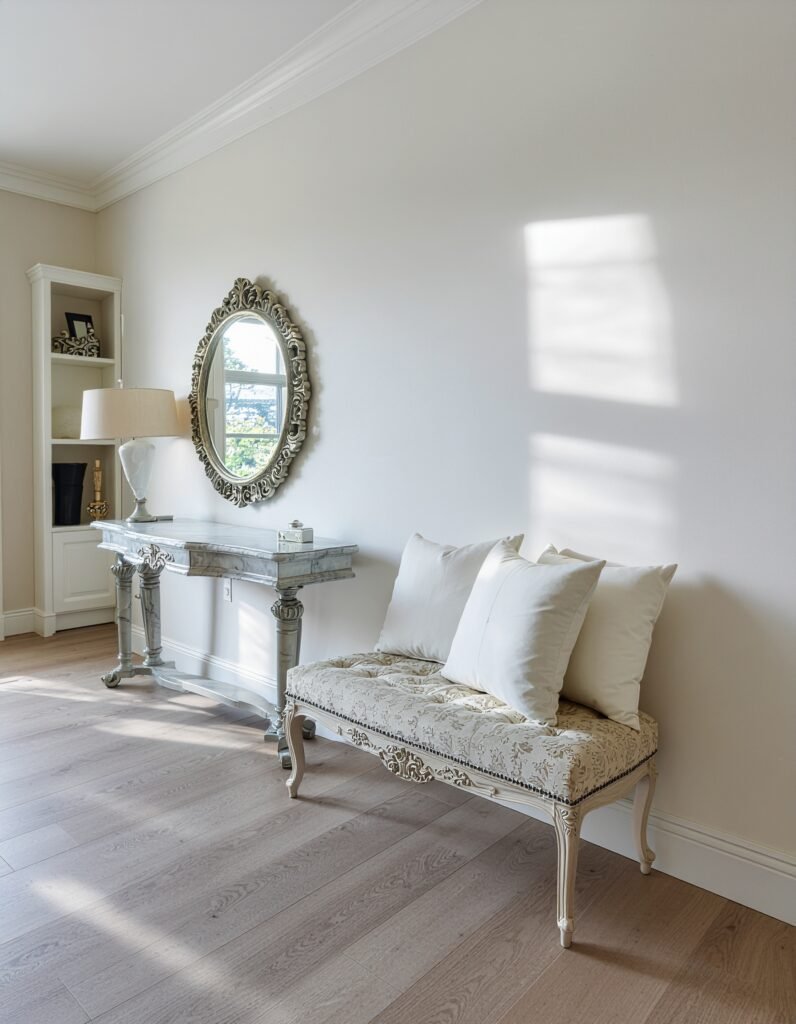
Beyond function, the two options genuinely read differently, and that matters for the overall feel of your home’s first impression.
A console table tends to feel more formal and considered. Paired with a mirror, a lamp, and a piece of art, it creates the kind of polished vignette people notice the moment they walk in. Materials like marble, glass, and sleek wood push the look even further upscale.
A bench feels warmer and more inviting by nature. An upholstered bench in a soft fabric says come in, sit down, stay a while. A wood or rattan bench leans more rustic and casual, especially paired with cushions and a few baskets tucked below. Benches also soften a hallway in a way console tables rarely do, since they read as furniture you actually use rather than furniture you look at.
Neither style is better. It is really a question of whether you want your entryway to say welcome, sit down, or you’re home, let’s get you settled.
Can You Have Both? Combining a Console Table and a Bench
Here is the good news for anyone standing between two Pinterest boards. If your entryway has enough width, you do not have to choose only one.
A longer or wider entry can hold a console table along one wall for keys, mail, and styling, with a bench on the opposite wall or tucked into a corner for seating and shoe storage. This setup essentially creates two zones, a display zone and a drop zone, each doing its own job without competing for the same few feet of floor.
Smaller entries can borrow a bit of both ideas without needing the full footprint of each. A narrow console table with a low stool or ottoman slid beneath one end gives you a spot to sit when you need it, while keeping the slim profile a tight hallway demands. This hybrid approach is one of the smartest solutions for entryways that cannot commit fully to either piece.
Practical Tips for Choosing and Placing Your Piece
A few practical guidelines help either option succeed once you have made your choice.
- Measure your entryway’s width, depth, and door swing before shopping, not after you fall for a piece online.
- Keep at least 30 to 36 inches of clear walking path past any furniture you add.
- Add a mirror above a console table to bounce light and give the space a finished, larger feel.
- Choose durable, easy-clean materials for a bench in households with kids, pets, or wet weather.
- Use baskets or trays with either option so small items have a designated home instead of drifting into piles.
- Add hooks above whichever piece you choose, since vertical storage for coats and bags multiplies your entryway’s function.
Common Mistakes to Avoid
The most common mistake is choosing furniture based purely on looks without considering the household’s actual habits. A gorgeous bench nobody sits on because it is too narrow to be comfortable, or a console table that becomes a permanent shoe pile because there was never a real storage plan, both miss the point of the space.
Oversizing the piece for the room is another frequent error. Furniture that blocks the door swing or narrows the walkway to an uncomfortable squeeze creates daily friction, no matter how attractive it looks in isolation.
Skipping storage planning is a related trap. Buying a bare bench or table without baskets, hooks, or trays to go with it usually means clutter finds its own disorganized home on top of the furniture within a week.
Finally, some people ignore materials entirely. A delicate upholstered bench in a mudroom that sees muddy boots and wet umbrellas daily will wear out fast, while a beautiful glass console table in a home with toddlers may create more anxiety than function.
Expert Insights on Entryway Design
Interior designers who focus on entryways tend to return to one idea again and again, and it is that function should lead style, not the other way around. The most beautiful entryway in the world fails if it does not match how the household actually uses the front door.
Designers also talk about the entryway as a drop zone, a small but crucial buffer that catches the day’s clutter before it spreads into the rest of the home. Whichever piece you choose, giving it real storage capacity, whether built in or added through baskets and hooks, is what makes that buffer actually work.
Scale is another point professionals emphasize repeatedly. Furniture should relate to the size of the entry itself, not to how impressive it looks in a showroom. A piece that fits the room comfortably, with breathing room on either side, always reads as more considered than one that strains against the walls.
Finally, experienced designers point out that materials should match real life. Entryways take more daily wear than almost any other space in the home, so durability deserves as much weight in the decision as appearance.
Frequently Asked Questions
Is a console table or a bench better for a small entryway?
A console table usually wins in truly tight spaces because of its slim depth, often just 12 to 18 inches. If your entry has a bit more width, a narrow bench or a console with a small stool tucked underneath can offer some seating without overwhelming the space.
Can a bench fit in a narrow hallway?
It depends on the depth available. Most benches need at least 24 inches of depth to be genuinely usable, so measure carefully before committing. If your hallway cannot spare that much, a console table is the safer choice.
Do I need both a console table and a bench?
Only if your entryway has the width to support both without crowding the walkway. Larger foyers benefit from separate display and drop zones, while smaller entries usually do better focusing on one well-chosen piece with smart storage.
What is the ideal bench depth for an entryway?
Aim for at least 24 inches, with 18 to 20 inches as an absolute minimum for occasional use. Anything shallower tends to feel unstable and uncomfortable for actually sitting down to put on shoes.
Should I choose an upholstered bench or a wood one for an entryway?
Wood and other hard-wearing materials handle daily traffic, moisture, and mud better, making them the practical choice for busy households or wet climates. Upholstered benches feel warmer and more inviting but suit lower-traffic entries or homes where shoes come off well before reaching the bench.
Conclusion
There is no universal winner between a console table and a bench, only the right answer for your specific entryway and the people who use it every day. A console table brings polish, efficiency, and a slim profile that fits almost anywhere. A bench brings comfort, real storage, and a place to actually sit down and shed the day.
Measure your space honestly, think through who walks through that door and how, and let your storage needs guide the final call. Whichever you choose, add a basket, a hook, or a tray to give the small daily clutter somewhere to land. Do that, and your entryway stops being an afterthought and starts doing real work the moment anyone walks through the door. If you are furnishing an entryway because you are starting fresh in a new space entirely, this beginner’s guide to creating a cozy home from scratch walks through the same kind of room-by-room thinking for everything beyond the front door.