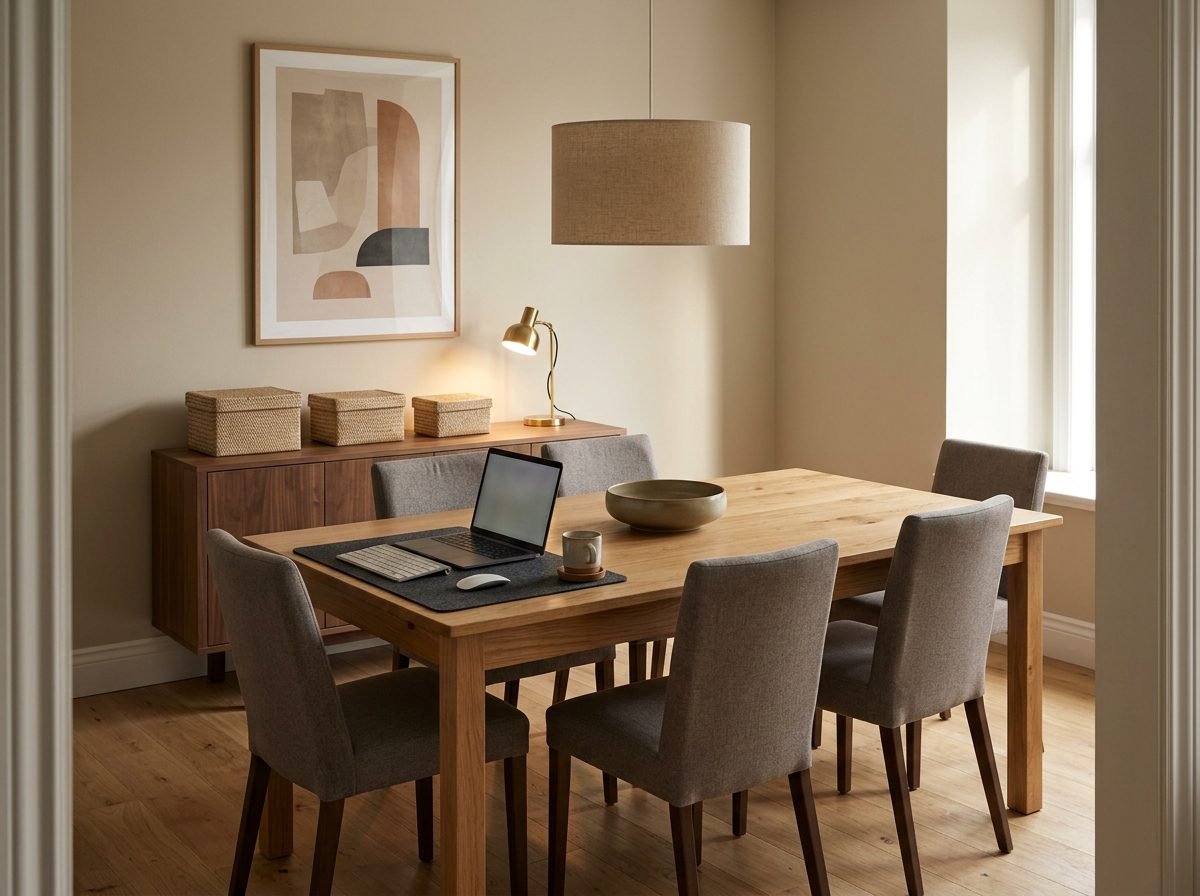
Multipurpose Dining Room Ideas for Meals, Work and Homework
A dining room that also works as an office, homework spot or craft table has one hard rule. Dinner needs the table back every day. Most ideas for a multipurpose dining room skip that part. They show a beautiful desk corner or a playroom shelf and never say where the laptop, worksheets and glue go at 6 p.m.
This Decorumy guide plans the room around that changeover. You’ll find which second uses fit a dining room, how much storage each one needs, what a quick daily reset looks like and how to protect the table. Everything here works with the table you already have.
The best multipurpose dining room ideas are built around the reset. Give every second use one closed home within a few steps of the table, keep power cords off walkways and protect the tabletop with a mat. Then clear work off the table before each meal, so the room still works as a dining room every evening.
What makes a multipurpose dining room work?
A multipurpose dining room works when the table belongs to meals and everything else has somewhere to go. The table is the shared surface. It can host a laptop, a puzzle or a sewing project during the day, but none of those can live on it.
That turns the design problem into a storage problem. Each second use needs a home close enough that putting things away takes seconds, not a trip down the hall. If the home is too far away, work piles stay on the table and dinner moves to the couch.
It also helps to decide which use comes first on busy days. In most homes that’s meals, then work, then hobbies. A clear order settles arguments about who clears the table and when.
Which second use suits your dining room?
The second use that suits your dining room is the one whose gear fits in the storage you can add. Some uses pack away into one box. Others need a full cabinet. Use this as a planning guide:
| Second use | What it needs nearby | Where the gear can live | How long the reset takes |
|---|---|---|---|
| Home office | Outlet, task light, one comfortable seat | One drawer or a lidded box per person | Short |
| Homework | Supplies caddy, good overhead or lamp light | A shelf or cubby per child | Short |
| Crafts or sewing | Protected surface, larger storage | A cabinet or rolling cart | Longer |
| Puzzles and games | Space to leave a puzzle out | A puzzle board that slides under a sofa or bed | Short to longer |
| Reading or library | Shelves, a comfortable chair | Wall shelves around the room | None |
Uses with a short reset fit almost any dining room. Uses with a longer reset, like sewing or large crafts, work best if you can leave the project on a board or tray that lifts off the table in one piece.
How much storage does a dining room need for a second use?
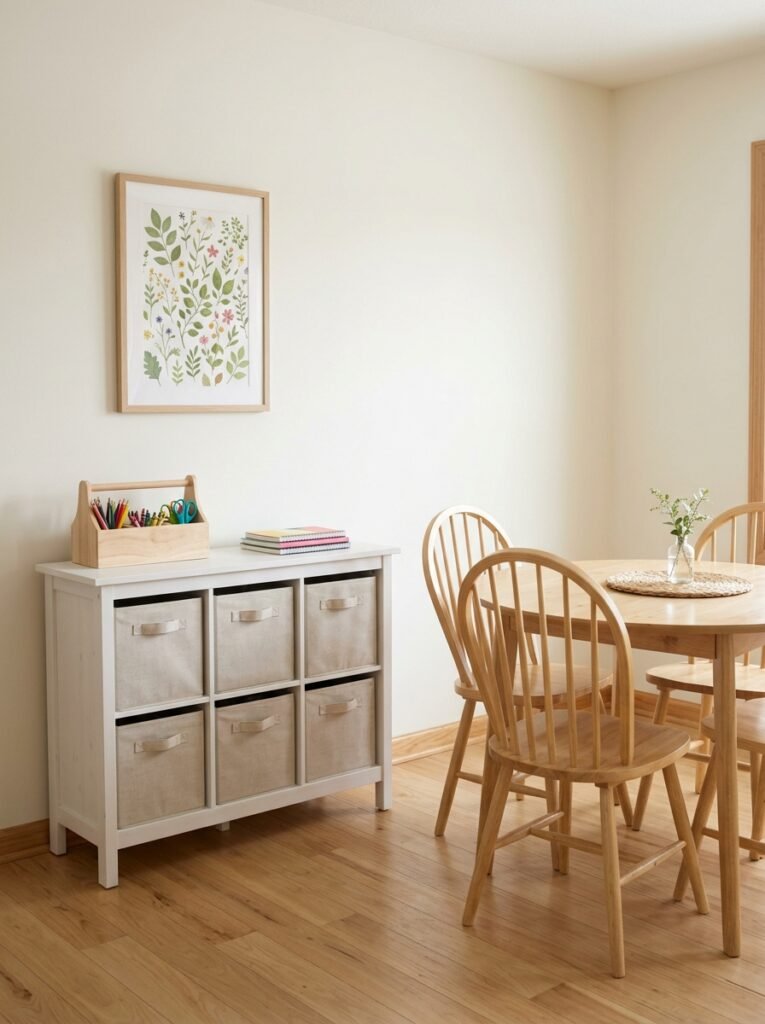
A dining room needs one closed home for each second use, plus a spot for the things dinner needs. Closed storage matters more than open shelving here. Papers, chargers and art supplies look like clutter on open shelves, even when they’re tidy.
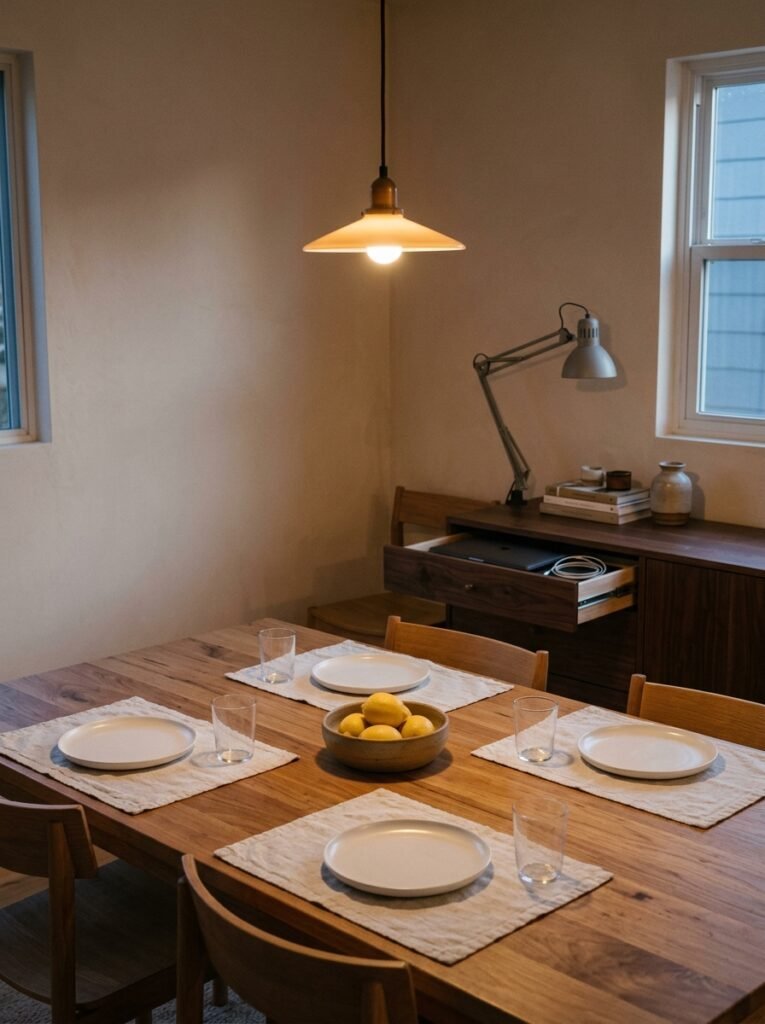
A sideboard is the usual starting point. Split it by use. Tableware, napkins and placemats go in one side. Work or homework gear goes in the other. If the sideboard is full of rarely used serving dishes, move those to a higher shelf or another room and give the prime drawers to daily items.
Some other storage that suits a shared dining room:
- A lidded box or basket per person, sized to hold a laptop, charger and notebook.
- A rolling cart that parks beside the sideboard and moves to the table during the day.
- Wall shelves above the sideboard for books and baskets.
- A cabinet with doors for craft supplies, which hides more than open cubbies do.
For furniture that folds, extends or hides storage, our guide to the benefits of multi-purpose furniture covers the options and what to check before you buy.
What does the daily reset look like?
The daily reset is the short routine that turns the work table back into a dining table. Keeping it short is what makes the room work over months, not just the first week. Here’s a simple version:
- Close laptops and put each person’s gear in their box or drawer.
- Unplug chargers and coil cords into the same storage.
- Roll the cart back to its parking spot.
- Wipe the table and remove the work mat if you use one.
- Put the centerpiece, runner or placemats back.
- Turn off the task lamp and switch to the dining light.
Clearing screens away matters for more than looks. Utah State University Extension notes that the benefits of shared family meals can diminish when screens are present. A reset that puts laptops and tablets in a drawer does double duty.
Quick answers about multipurpose dining rooms
Can a dining room really work as a full-time home office?
A dining room can work as a full-time office if the work gear has a closed home and you set up a comfortable seat. It works best for laptop-based work. If you need two monitors, a printer and files every day, a dedicated desk elsewhere usually serves you better.
What is the easiest second use for a dining room?
Homework is often the easiest second use for a dining room. Kids already sit at the table, the supplies fit in one caddy and the reset is quick. A shelf or cubby for each child keeps worksheets and books from mixing with mail.
How do I stop the dining table from becoming a dumping ground?
Give mail, keys and bags a home outside the dining room, such as a tray by the door. Then make the daily reset a fixed habit before dinner. A table that’s cleared every evening stops collecting piles, because nothing stays long enough to build up.
Do I need to buy new furniture to make a multipurpose dining room?
You don’t need new furniture to start. Most homes can begin with a box or basket per person and a cleared sideboard drawer. Add a cart, shelves or a larger cabinet only when you see which items keep ending up on the table.
How do you protect the dining table from work, crafts and homework?
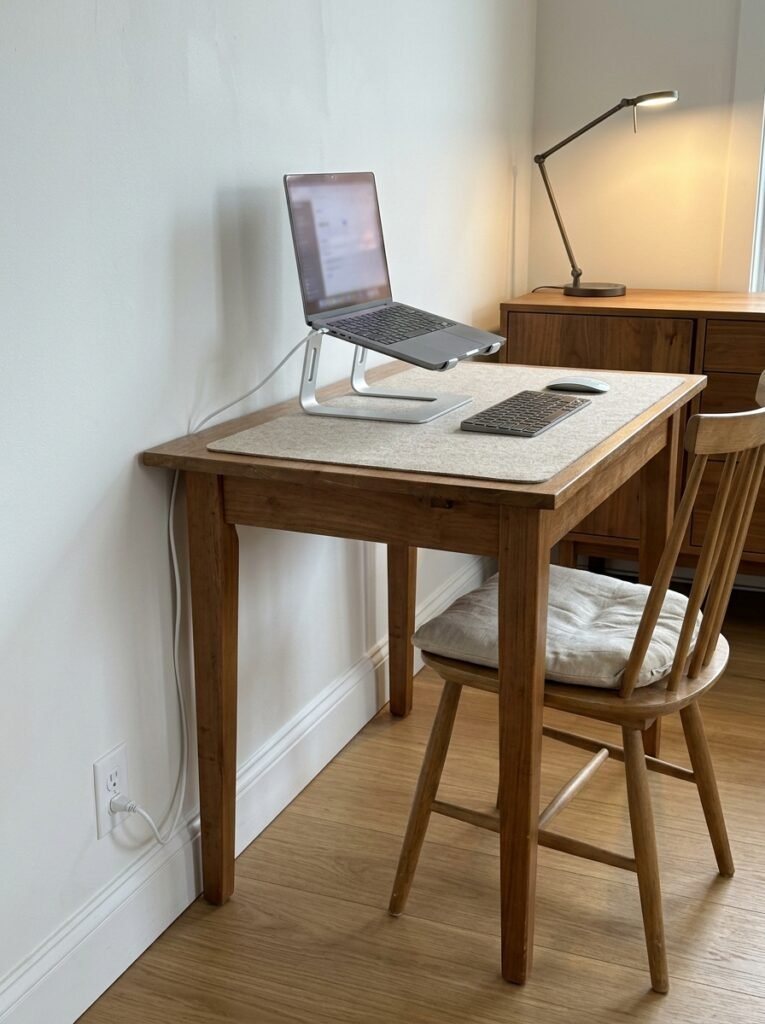
You protect the dining table by putting a surface between the table and the work. A desk mat or large blotter under a laptop and mouse prevents scratches and keeps the area defined. It also comes off in seconds during the reset.
Crafts need more protection. A self-healing cutting mat handles blades. A wipeable tablecloth or a sheet of thick kraft paper handles paint, glue and markers. Avoid taping anything directly to a wood finish, since some tapes can lift or mark it when removed.
Heat and moisture still apply. Use coasters for mugs during the workday, not just at dinner. Felt pads under chair legs protect the floor too, since chairs move far more often in a room that’s used all day.
Can you work comfortably at a dining table?
You can work comfortably at a dining table with a few adjustments. Most dining tables sit around 28 to 30 inches high, and dining chairs aren’t designed for long hours. Colorado State University’s guidance on working from home ergonomically points out that most kitchen tables are too high. It suggests raising your seat with a pillow or cushion and using an external keyboard and mouse.
A few setup choices help in a dining room specifically:
- Pick one “work seat” near an outlet and leave it set up with a cushion during the day.
- Put the laptop on a stand and use a separate keyboard and mouse.
- Choose a dining chair without arms for the work seat if armed chairs hit the table edge.
- Add a small footrest if raising the seat leaves your feet dangling.
All of this packs into the same box as the laptop. The cushion can live on the chair or in the sideboard.
How do you handle power cords and lighting?
Power cords should run from the wall to the table without crossing a walkway or going under a rug. The Electrical Safety Foundation International advises that extension cords are for temporary use only, and that cords shouldn’t run under carpets, rugs or furniture or through high-traffic areas.
That makes the outlet location your first planning decision. Put the work seat on the side of the table nearest an outlet. Plug a power strip into the wall rather than chaining cords together, and unplug at the reset. If the room has no outlet near the table, a licensed electrician can add one, which is safer than living with a cord across the floor.
Lighting needs two modes. A task lamp on the sideboard or a clamp lamp gives bright light for work and homework. The pendant over the table, ideally on a dimmer, handles dinner. Turning one off and the other on is the clearest signal that the room has changed jobs.
How do you keep it looking like a dining room?
A multipurpose dining room keeps looking like a dining room when the storage is closed, the containers match and the table is clear at night. Matching boxes or baskets read as decor. Mixed shopping bags and loose folders read as an office.
Choose wall art that suits both uses. A large print, a mirror or a grid of family photos works for dinner and doesn’t feel out of place during homework. If your dining room is small and you want to go bold with color, our guide to creative small dining room ideas explains why a dining room handles strong color well.
Keep the centerpiece easy to move with one hand. A low bowl or a single vase goes back on the table in seconds. Anything that takes two trips to clear will end up staying off the table for good.
What makes a multipurpose dining room fail?
The most common failure is storage that’s too far away. If work gear lives in another room, it stays on the table, and meals move elsewhere.
Open storage is the second. Open cubbies full of supplies make the room look busy all day and all evening.
Skipping the reset is the third. One night of leaving a laptop out turns into a week.
Running cords across the floor is the fourth, and it’s the one with safety stakes. Move the work seat or add an outlet instead.
Dinner gets the table back
A multipurpose dining room is a shared table with good habits around it. Give each use a closed home within a few steps, keep cords safe, protect the surface and clear the table before every meal. The room can be an office at noon and a dining room at six, as long as the reset happens every day.