Renter Friendly Kitchen Decor Ideas Without Painting or Drilling
A rental kitchen can have tired cabinets, plain countertops and lighting that makes everything look flat. Repainting it might be out of the question, but living with an uninviting kitchen is not the only alternative.
The most useful renter friendly kitchen decor ideas start with things you can take when you move: a washable runner, better countertop organization, portable lighting, artwork and compact storage. These changes can improve the room without painting or drilling.
Adhesive products need more caution. A label that says removable does not guarantee that old paint, laminate or tile will remain undamaged. Start with portable pieces, then consider temporary surface treatments only when your lease and the manufacturer’s instructions allow them.
Check what your rental kitchen can handle before decorating
The first decorating decision is not about color. It is about identifying what you are allowed to change and what surfaces you would be changing.
Read your lease and any building guidelines before attaching products to walls, cabinet doors or countertops. Rules differ between rentals, and a modification that seems minor may still require permission.
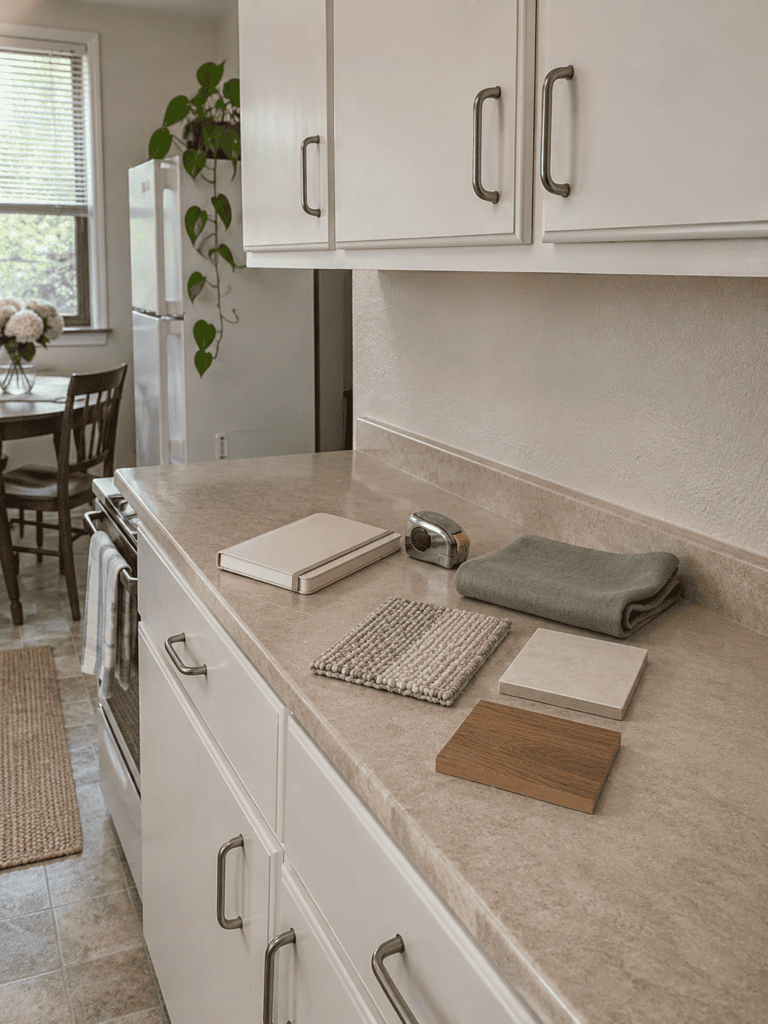
Photograph the kitchen before making changes. Include the cabinet fronts, countertops, walls, existing hardware and any visible marks. Keep those photos with your rental records.
It also helps to sort your ideas by the kind of change involved:
- Portable decor: Rugs, trays, freestanding carts, bowls and plants. These generally require no changes to the property.
- Removable attachments: Adhesive hooks, wallpaper and decorative panels. These require compatible surfaces and careful installation and removal.
- Changes to existing fittings: Cabinet handles, light fixtures and other installed components. Check the lease and obtain written approval when required.
For a first decorating project, focus on the portable category. A room can look noticeably more personal without anything being attached to the building.
Before buying a piece, check that it fits the available space, can be cleaned easily and will not obstruct doors or appliances.
Make the countertops look intentional without filling them
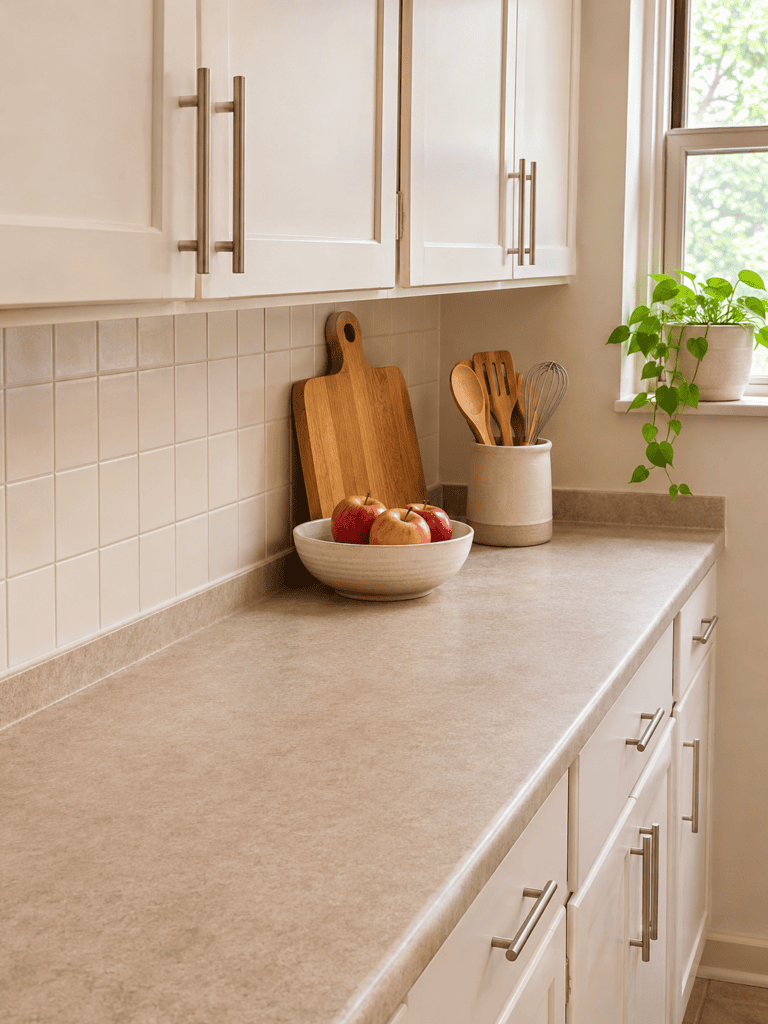
A rental kitchen often looks better when the everyday objects are organized rather than replaced.
Start by clearing the main food preparation surface. Move appliances you rarely use into a cabinet if there is room. Put cooking utensils, dishwashing supplies and food containers where you actually need them.
Now choose one area for decoration. A quiet counter corner away from the burners usually works better than spreading objects across the entire worktop.
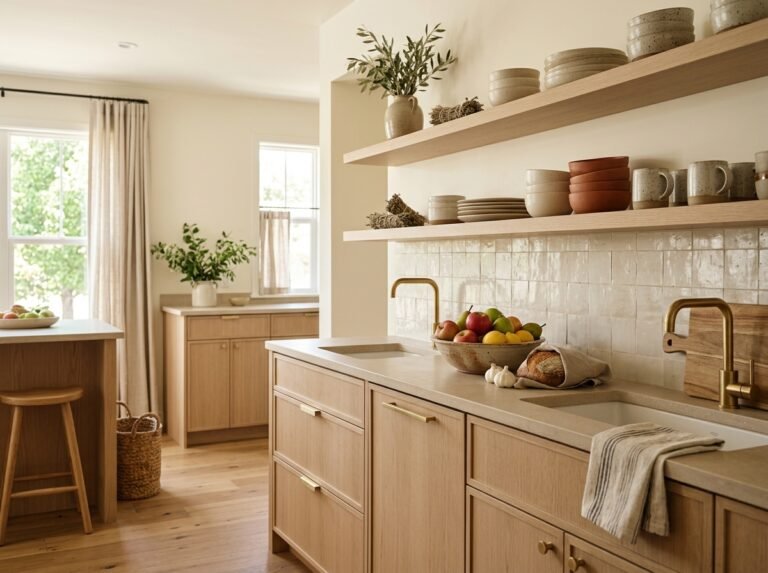
A shallow tray can hold a soap dispenser and sponge holder near the sink. At the opposite end, a wooden board and a ceramic fruit bowl can introduce texture without taking over the kitchen.
If a decorative object has to be moved every time you prepare dinner, it probably belongs somewhere else.
The easiest improvement may cost nothing. Remove items from the countertop, clean the surface and return only what you use often or genuinely enjoy seeing.
Add warmth with kitchen textiles you can take when you move
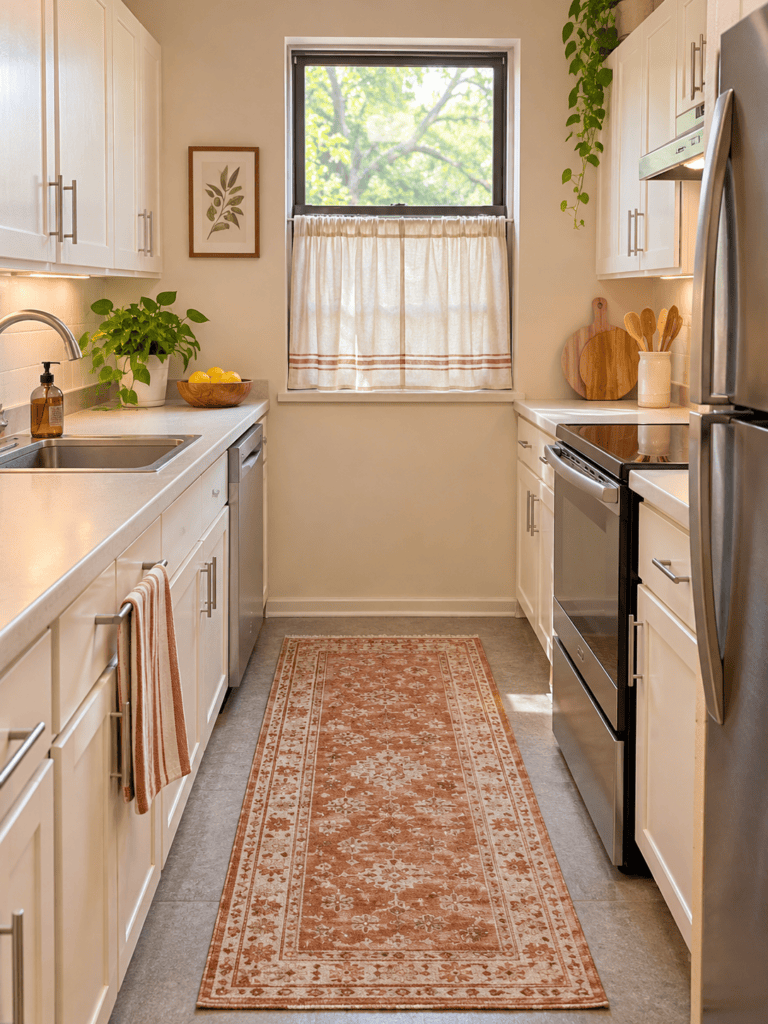
Textiles are especially useful in rental kitchens because they introduce color and softness without changing the cabinets or walls.
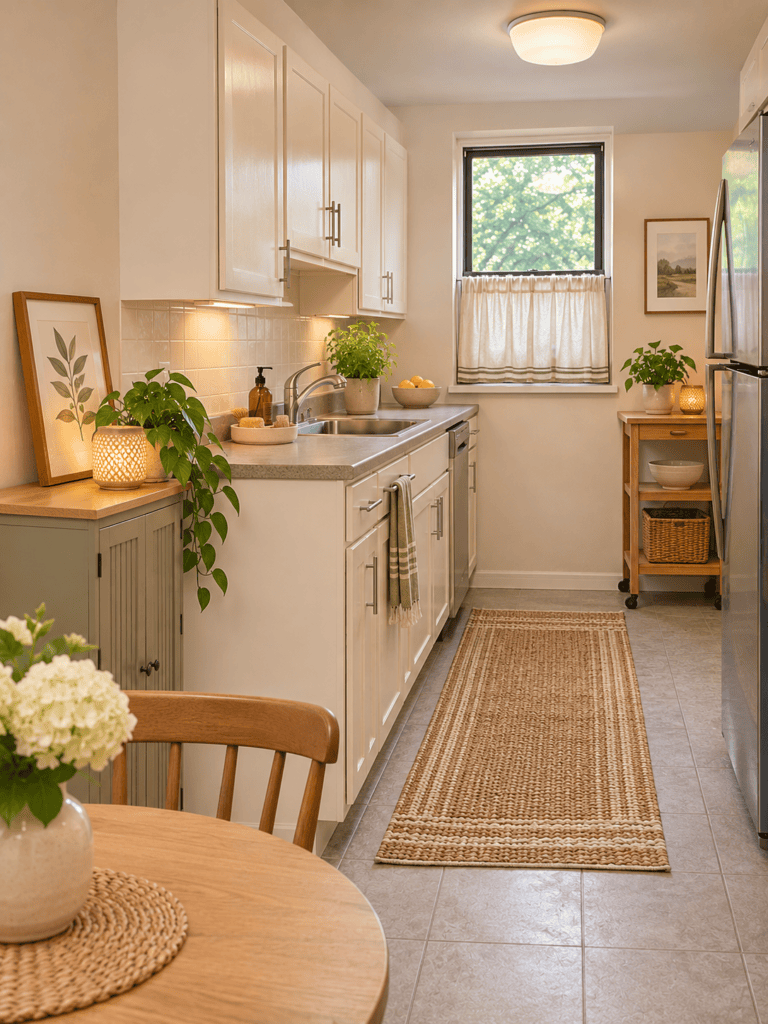
A runner, coordinated dish towels and a modest window treatment can make a room feel more inviting. Unlike permanent improvements, these can often be used in your next home.
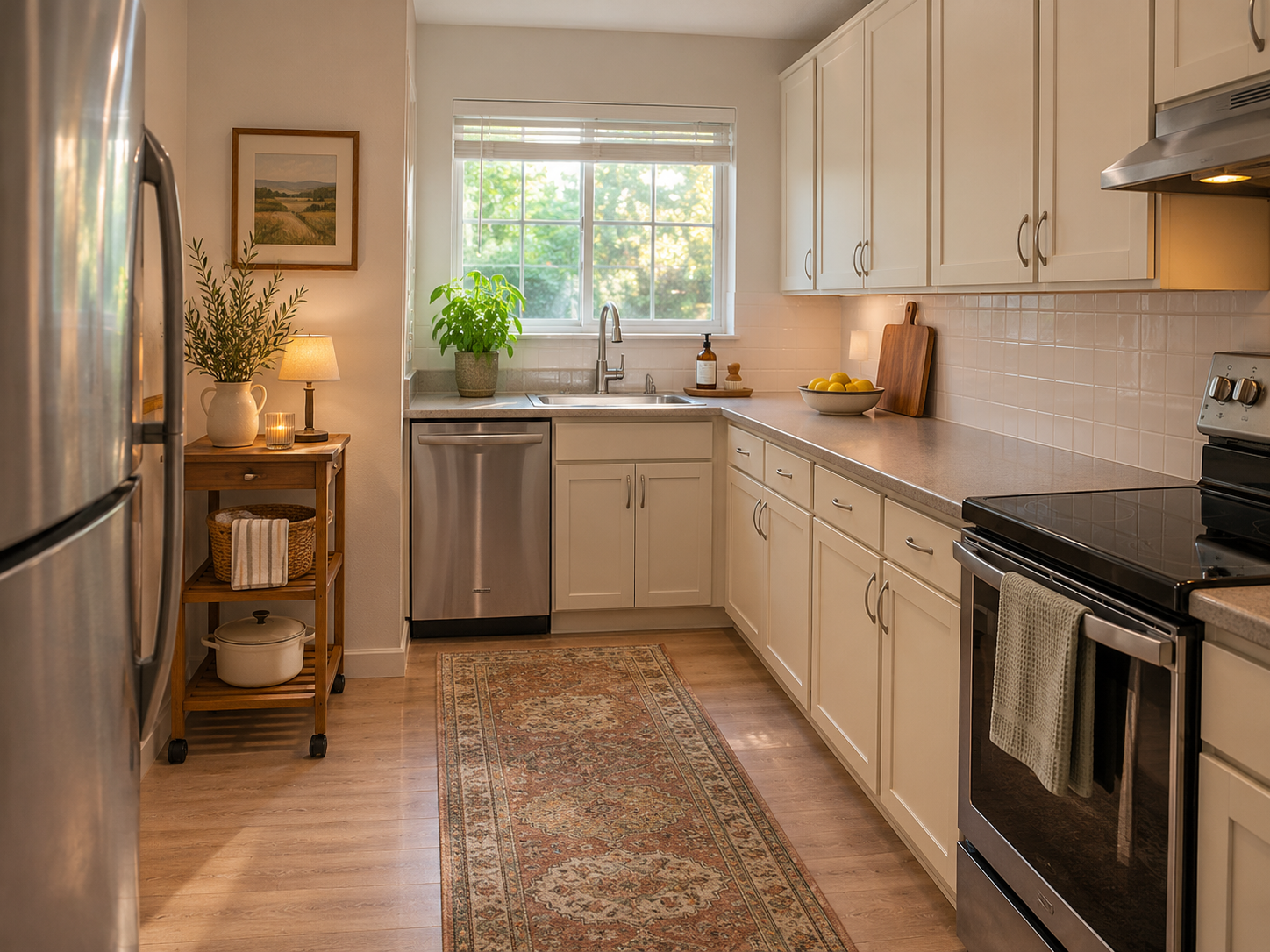
Choose a small color palette rather than buying several unrelated patterns. A faded red runner, a cream towel and a tan window shade can look more deliberate than six accessories in completely different colors.
Choose a runner that stays flat and leaves the floor visible
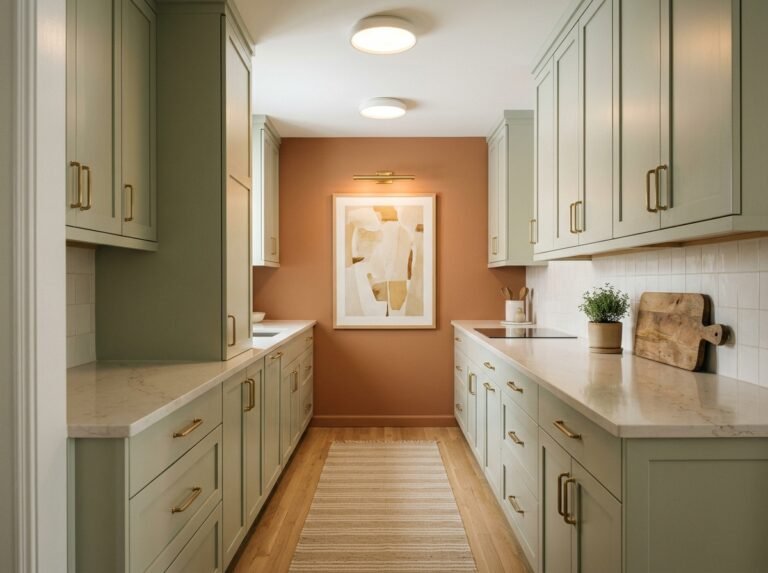
A washable, low pile runner is a practical choice for a narrow kitchen. It can introduce pattern without adding another object to the counter.
Measure the open floor area and check where the refrigerator, oven and cabinet doors move. The rug should not bunch under those doors or create a raised edge where people walk.
Use a backing or rug pad appropriate for your particular flooring. Some backing materials may not be compatible with certain finishes, so check the rug and flooring care guidance.
Avoid heavy fringe and thick pile in areas where crumbs and spills are common.
Dress the window without making holes
A lightweight cafe curtain can soften a kitchen window while leaving the upper glass open for daylight.
Where the frame and product allow it, a correctly sized tension rod may hold a simple curtain without drilling. Measure the inside width carefully and follow the rod’s weight and installation instructions.
A washable cotton or suitable synthetic fabric makes sense in a room where cooking can produce steam and grease.
If the window is close to a cooking surface, skip fabric that could approach a flame or burner. A fitted window covering approved for that location may be more appropriate.
Some windows also need to remain accessible for ventilation or emergency use. A decorative treatment should never prevent them from opening properly.
Bring useful light into the kitchen without changing the wiring
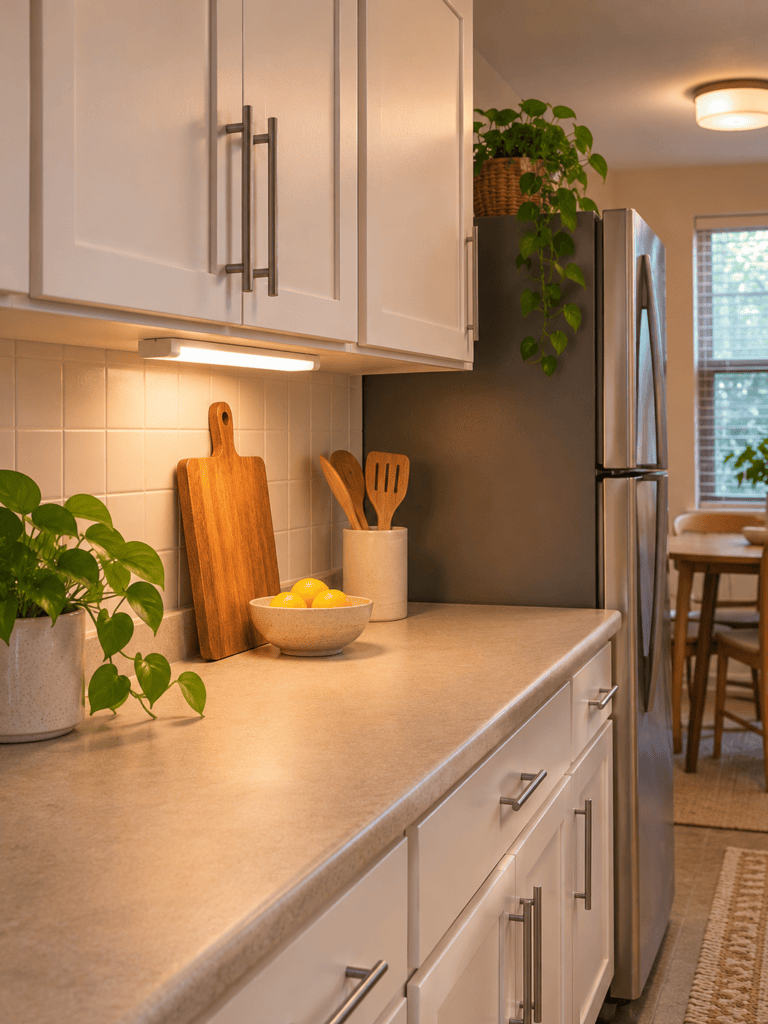
An ordinary rental kitchen may have adequate overhead lighting but still leave the worktop in shadow.
Before buying a new lamp, examine where the existing light falls. Stand at the counter in the evening. If your body blocks the ceiling light, adding illumination closer to the work surface may be more useful than changing the room’s decorative color.
Rechargeable cabinet lights can be an option when the manufacturer permits the intended installation surface and location. Some use adhesive mounts, while others have a different attachment system. Check the mounting method before buying.
If adhesive is prohibited, consider a portable light on a suitable dining counter or breakfast nook, where there is room and a safe place for it.
Choose light that makes it easy to see food, utensils and the work surface. A warm appearance can feel comfortable, but visibility matters more than creating an atmospheric glow.
Keep electrical products away from water, high heat and locations where cords could snag. Do not attempt to alter fixed wiring or remove an existing fixture without permission and qualified assistance where required.
Add attractive storage that does not need wall mounting
When a rental kitchen lacks storage, adding another decorative object to the counter can make the problem worse. A compact freestanding piece may do more.
A slim cart can hold coffee supplies, everyday dishes or small pantry items. A low freestanding rack may work in an unused corner. Interior cabinet organizers can also make existing shelves easier to use without becoming visible clutter.
The important measurement is not only the width of the new piece. Check how much room remains when drawers, cabinet doors and appliances are open.
Choose stable storage that does not need structural anchoring for its intended safe use. Taller units that require wall anchoring should not be used without an appropriate approved installation.
In a very narrow kitchen, the best storage improvement may be inside existing cabinets. Decorumy’s guide to small kitchen decorating ideas explains how to evaluate changes when every bit of usable space matters.
Decorative baskets can help organize a cart, but avoid putting a large basket in a passageway just because an unused corner looks empty.
Be selective with removable finishes
Removable wallpaper and adhesive backsplash panels can make a kitchen look different quickly. They also introduce a risk that rugs, trays and freestanding furniture do not.
The product has to stick firmly enough to stay in place, yet release without pulling away the surface beneath it. Both outcomes depend on the product, the original finish and the installation conditions.
Do not assume that a material advertised for renters is suitable for every rental kitchen. Painted walls, laminate cabinets, glossy tile and textured plaster may behave very differently.
Before applying anything, check the lease, inspect the product instructions and test a small area if the manufacturer recommends it. A successful test is useful information, but it does not guarantee the same removal result months later.
Test wallpaper on a small wall area first
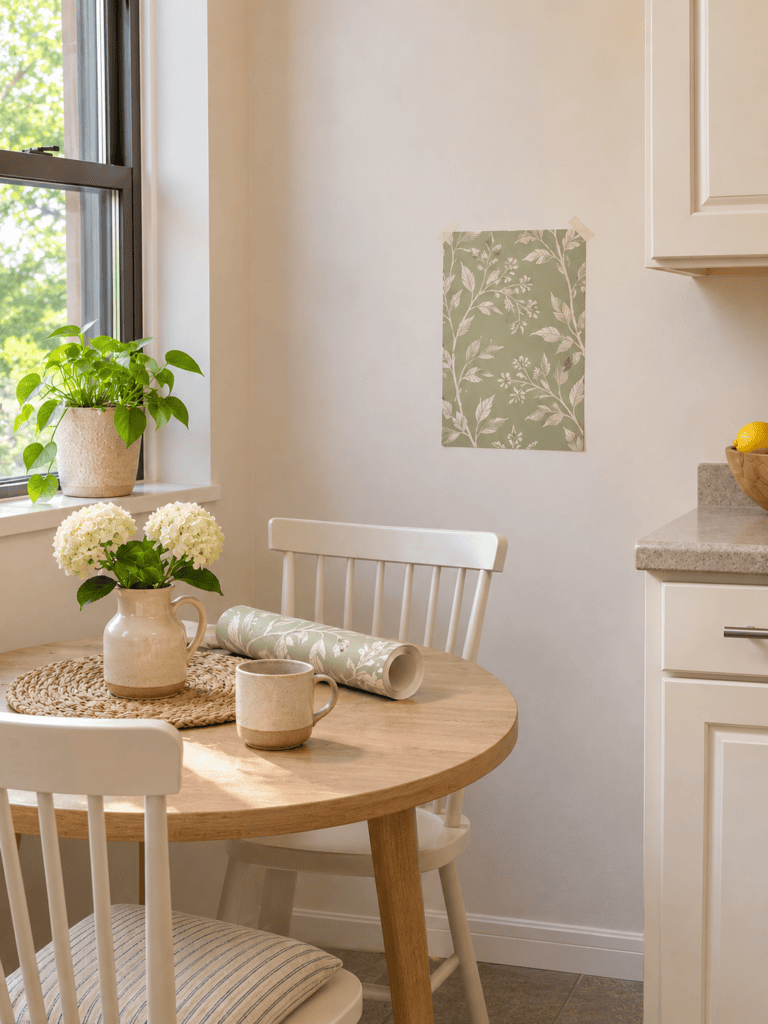
Removable wallpaper works best when the actual surface meets the product’s requirements.
For example, the Tempaper surface and installation guidance recommends smooth, sound surfaces with certain fully cured paint finishes. It also warns that some finishes can be damaged during removal.
This is especially relevant in older rentals with uncertain paint history. A wall might look smooth while having weak paint underneath.
For a kitchen, a small wall near the breakfast area may be a better decorative candidate than a surface exposed to cooking grease or frequent splashes.
A narrow patterned accent can introduce plenty of color. Covering every available surface is rarely necessary, and a smaller project means less material to remove later.
If the test damages the finish or the surface falls outside the manufacturer’s recommendations, leave the wall alone and use artwork or portable accessories instead.
Understand the extra risk of adhesive backsplash panels
An adhesive backsplash is not necessarily as easy to reverse as removable wallpaper.
The manufacturer WallPops explains in its backsplash installation and removal instructions that its tile products use stronger adhesive than some decorative wall coverings and may take paint away during removal.
Its guidance also specifies suitable surfaces, preparation requirements and heat restrictions. Those details are product specific, which is why instructions for one brand should not be applied automatically to another.
For a renter, the sensible sequence is to obtain any necessary approval, check compatibility and assess the risk to the existing finish before buying enough material for the wall.
If the kitchen’s backsplash is already glossy, sound tile, it may be better to leave it in place. A coordinating runner, ceramic bowl and countertop accessories can draw attention away from a dated pattern without covering it.
Avoid installing adhesive materials over damaged surfaces or near heat sources unless the product is specifically suitable for that application.
Refresh cabinet hardware only when the lease allows it
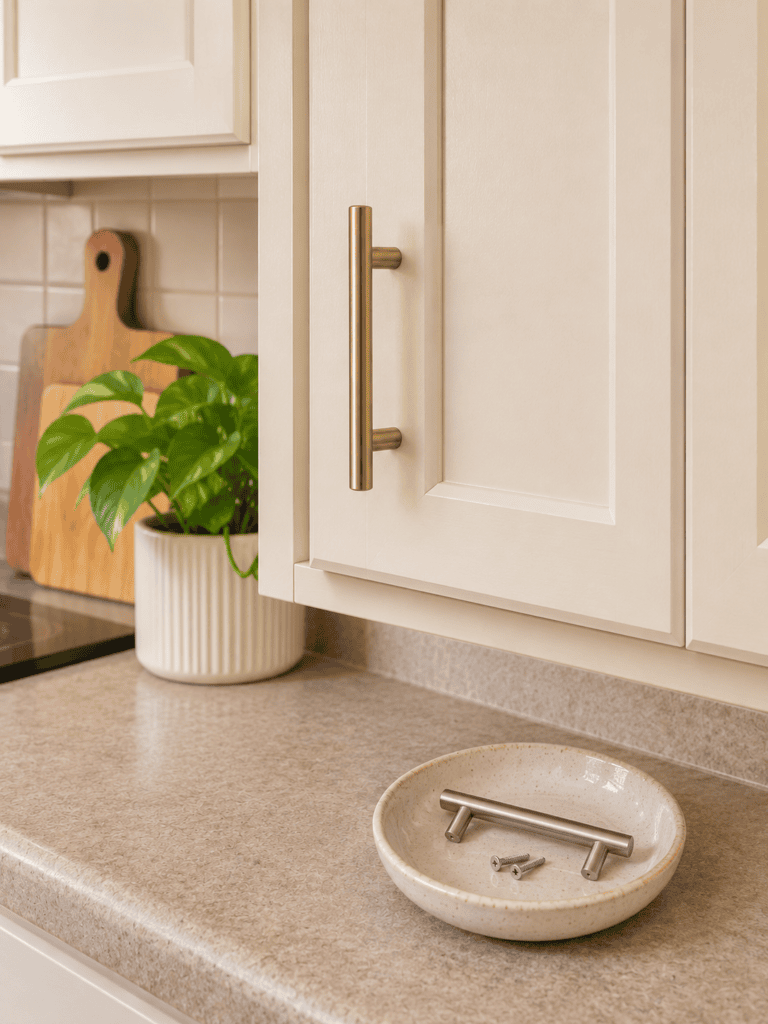
Cabinet handles can change how a kitchen looks, but replacing them is still an alteration to an existing fitting.
If the lease permits hardware changes, choose replacements that use the original holes. For pulls with two screws, measure the distance between the screw centers rather than the overall handle length.
Check that the new hardware is comfortable to grip and that screws do not protrude into drawers or cabinet interiors.
Store the original handles and their screws in a labeled bag for moving day. Avoid mixing the original parts with replacement hardware.
If the lease prohibits changes or the hardware is fragile, skip the swap. A coordinated dish towel, runner and countertop arrangement may provide a similar decorative improvement without touching the cabinets.
Do not drill new holes or modify cabinet doors simply to fit a preferred handle style.
Give empty walls personality without drilling
A kitchen wall can feel unfinished even when the cabinets and countertops are organized.
Framed prints, a small mirror in a suitable dry location or a decorative calendar can make the space feel more personal. Start with walls near a breakfast table or other area away from cooking splashes.
If you have a stable freestanding surface, leaning a securely positioned frame there avoids wall attachments altogether. Make sure it cannot slide or fall, particularly in homes with children or pets.
Lightweight wall decorations may be another option if the lease permits adhesive mounting.
The Command product guidance from 3M explains that its hanging products require compatible surfaces, proper preparation, appropriate weight limits and careful removal. It also warns against some surfaces, including wallpaper and rough or heavily textured walls.
An adhesive strip is not a guarantee against damaged paint. If the existing paint is flaky, the wall is textured or the property rules prohibit adhesive, choose a different display method.
A single piece that suits the wall will usually look more intentional than several small objects crowded into a narrow space.
Work with the cabinets and counters you already have

A rented kitchen becomes easier to decorate when its existing finishes are treated as part of the color scheme.
Consider honey oak cabinets. Adding cool white accessories everywhere may exaggerate the contrast between the warm wood and the rest of the room. Cream ceramics, olive textiles or muted terracotta can create a calmer relationship with the existing cabinetry.
With gray cabinets, natural wood accessories and warm textiles can keep the room from feeling stark. White cabinets give you more freedom, although repeating one accent color is usually more effective than introducing many unrelated shades.
Look at the cabinets, countertop and floor together before choosing accessories. A small sample of rug fabric held near the cabinetry may tell you more than an online product photograph.
For more guidance on choosing a coherent look, Decorumy’s kitchen decor ideas by style guide explains how different decorating directions work with existing materials.
There is no need to purchase matching sets. A consistent color relationship matters more than making every accessory identical.
Keep decoration away from cooking hazards
The area around a stove is not the place for most decorative objects.
The U.S. Fire Administration’s cooking fire safety guidance advises keeping combustible items such as towels, paper products, wooden utensils and curtains away from the stovetop.
That means a pretty dish towel should not hang where it can reach a burner. A row of wooden cutting boards should not sit against an exposed cooking area. Decorative paper and fabric should remain away from heat.
Moisture also matters. Items placed directly behind a sink may need frequent cleaning, while products used near splashes should be suitable for that environment.
Choose decorations that support daily kitchen use rather than interrupting it. Keep food preparation surfaces clear, store sharp tools securely and make sure every cabinet and appliance can still open normally.
Common questions about decorating a rental kitchen
Can you put contact paper on rental countertops?
Only consider it if the lease permits the change and the product manufacturer confirms that the existing countertop material is suitable. Heat, moisture, surface wear and later removal can all be concerns. Avoid treating decorative contact paper as an automatic replacement for a durable food preparation surface.
If the countertop is already serviceable, using a portable board or tray for a decorative accent may be a better choice.
What if the kitchen walls have heavy texture?
Avoid assuming adhesive products will hold correctly on textured paint or plaster. Some manufacturers specifically advise against rough or textured surfaces.
Artwork displayed on freestanding furniture, coordinated textiles and countertop accessories can give the room character without adhesive.
Can renters use peel and stick flooring?
Only when the lease allows it and the product is suitable for the existing floor. Adhesive flooring can leave residue or damage some finishes during removal. Flooring also affects slip resistance, door clearance and everyday cleaning.
A properly sized washable runner is often a simpler decorative starting point.
How do you decorate a rental kitchen with almost no counter space?
Leave the main preparation area clear. Use a compact tray near the sink, choose appropriately sized organizers inside existing cabinets and consider a small freestanding cart only if there is sufficient floor space.
A runner or a decorative treatment near the eating area can also introduce personality without claiming any of the worktop.
Do temporary decorations guarantee that you will get your security deposit back?
No. Deposit deductions depend on the lease, the condition of the property, applicable law and the circumstances of any damage.
Keep photographs of the original kitchen, preserve removed fittings and follow the relevant product instructions. Do not rely on marketing terms such as removable or damage free as a promise about your deposit.
Start with three changes you can pack up later
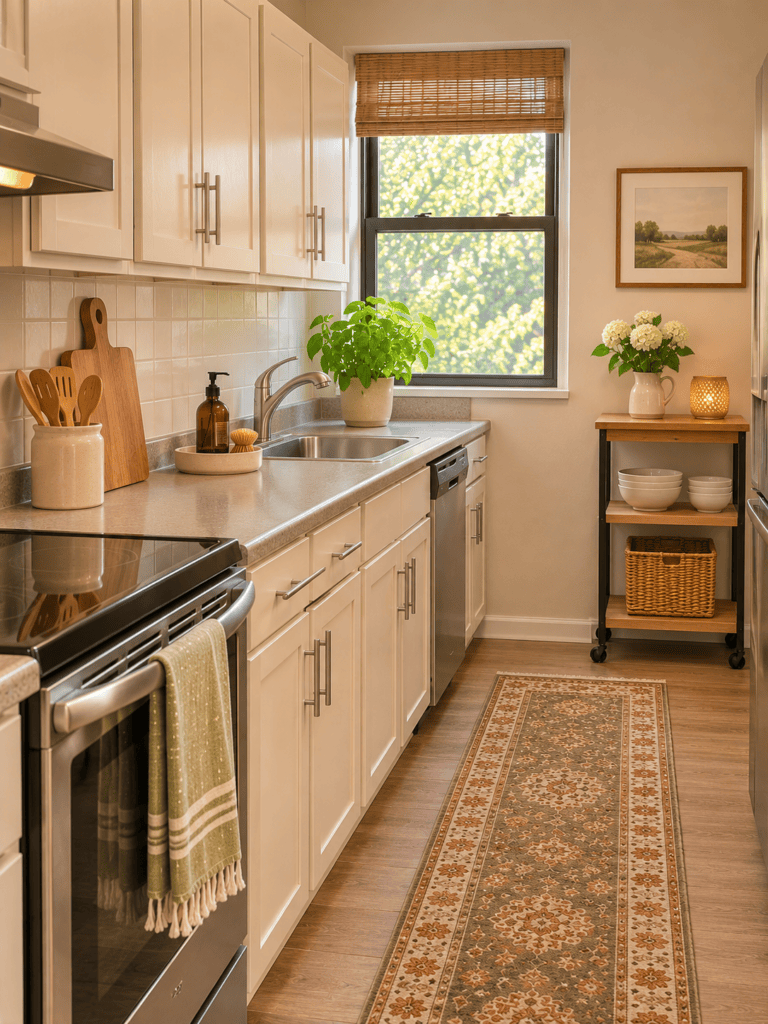
You do not have to change everything in a rental kitchen to make it feel like your space.
Begin with a thorough clearout of the visible surfaces. Keep the things used for everyday cooking within easy reach and put the rest away.
Then choose three improvements: one textile that adds color, one small arrangement that organizes the counter and one practical storage or lighting change that solves an everyday annoyance.
Live with those changes before purchasing anything else. If a runner gets in the way of cabinet doors, move or replace it. If the counter still feels crowded, remove something instead of buying another organizer.
Save adhesive materials and hardware changes for situations where the lease, surface condition and product instructions make them appropriate.
The best rental kitchen decor is not the kind that looks permanently installed. It is the kind that makes the space more comfortable now and can leave with you when the next move comes.