Kitchen Decor Ideas by Style: Find a Look and Actually Pull It Off
The difference between a kitchen that looks styled and one that looks like a collection of nice-but-random things usually comes down to one thing: commitment to a direction. Decor works when every piece speaks the same language. A wooden board, a set of canisters, and a framed print can either add up to a clear look or just clutter a counter, and which one you get depends on whether they belong to the same style.
So before buying another jar or hanging one more print, it pays to name the look you are going for and let a few well-chosen pieces carry it. There is also a helpful tailwind right now. The whole category has swung warm and natural, with the NKBA 2026 Kitchen Trends Report finding that 96% of industry professionals name warm neutrals as the leading color direction, and wood-grain cabinetry outpacing painted finishes for the first time in years, led by white oak at 51%. That shared earthy base makes most of today’s styles easier to mix and easier to pull off on a budget. This guide walks through the main kitchen decor styles, what defines each, and how to get the look without a renovation.
The Warm, Natural Backdrop Behind Every Current Style
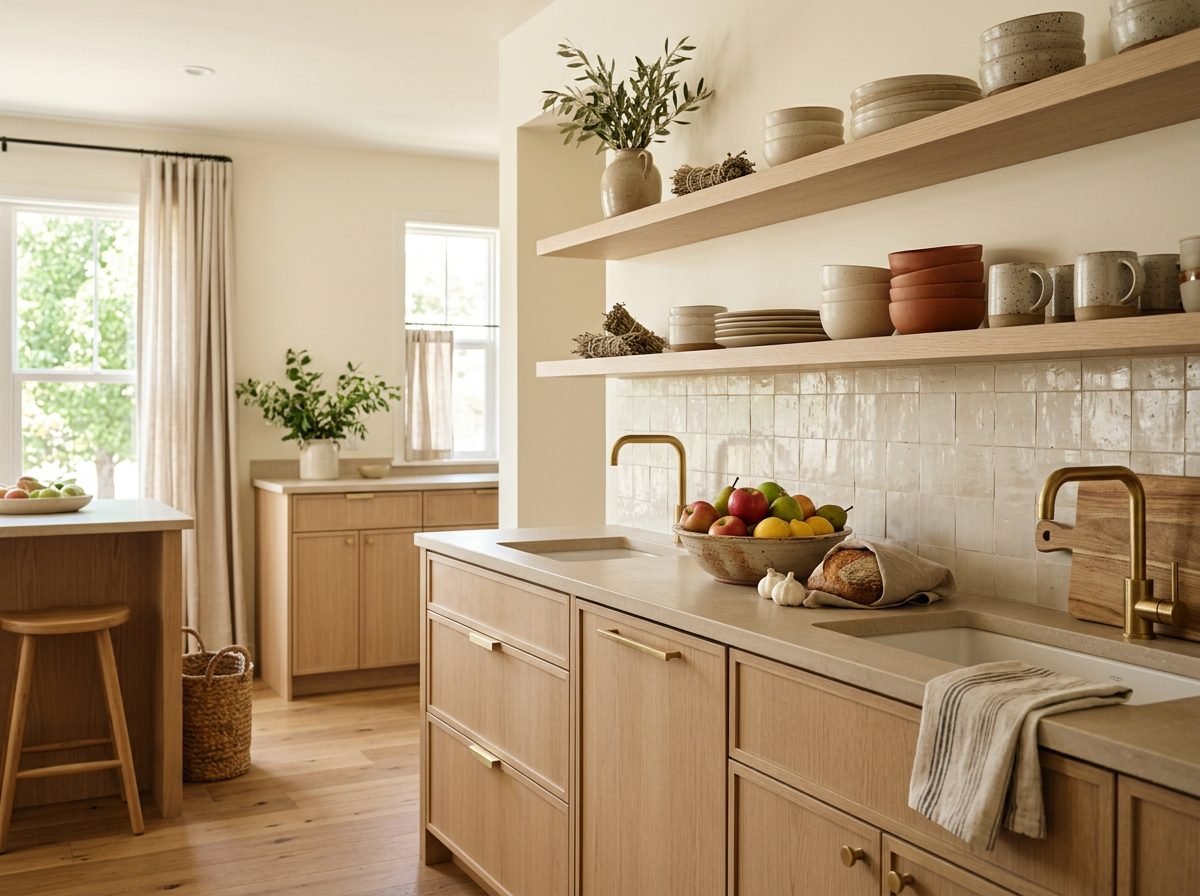
It helps to understand the shift underneath all of this. The biggest move in kitchen design has been away from cool, sterile white and grey toward warmth and natural texture. Earthy neutrals like taupe, mushroom, stone, oat, and clay have become the new staples, with visibly textured timber replacing the flat white cabinetry of previous years, as John Lewis of Hungerford describes. Glossy surfaces are giving way to matte, tactile ones, paired with warm metals like brushed brass and bronze, according to Harvey Jones.
Why does this matter for choosing a style? Because it means you can lean warm and natural no matter which direction you pick, and the styles below all sit comfortably on that same foundation. A warm-wood cutting board, an earthenware bowl, and a 2700K bulb will flatter almost any of them.
Modern and Minimalist
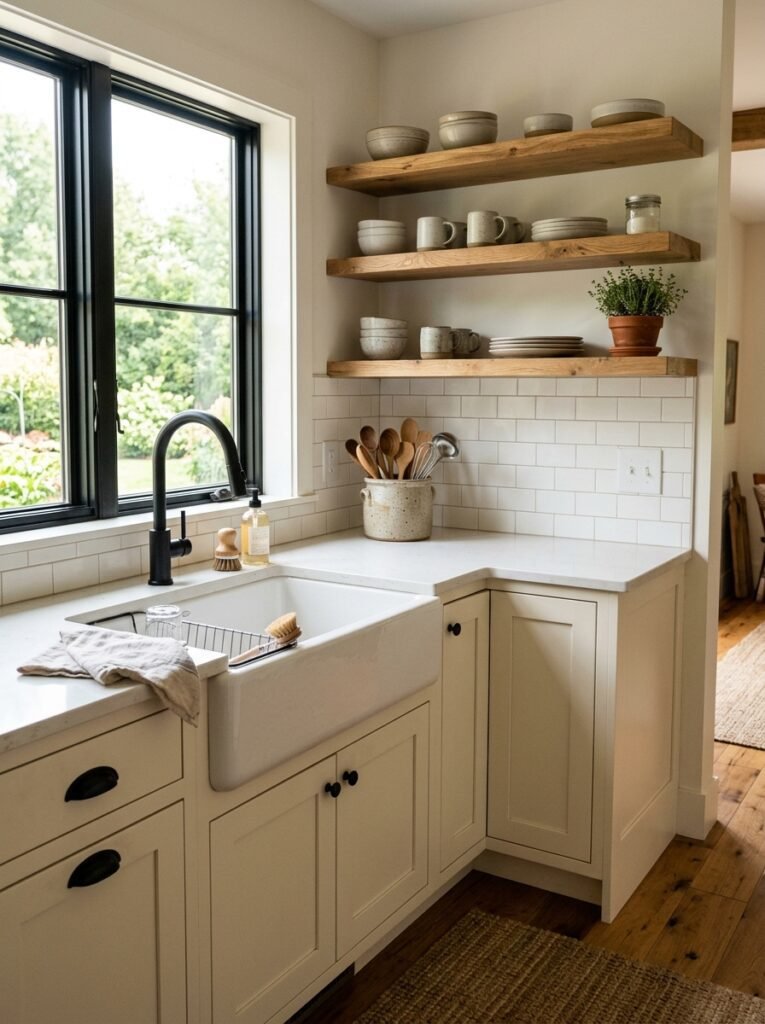
Modern kitchens are built on clean lines, slim or handleless hardware, uncluttered counters, and a restrained palette. Left cold, the look can feel clinical, which is exactly why the current version warms it up with wood accents and matte stone so it reads calm rather than sterile.
To decorate one, do less on purpose. Keep counters nearly clear except for one or two sculptural objects, hang a single large piece of art rather than a gallery, and let the materials do the talking. A warm-wood board leaned against the backsplash or a matte-black or brass fixture adds just enough contrast. The budget levers here are almost free: clear the clutter, add one natural-wood element for softness, and swap any cool-white bulbs for warm ones.
Scandinavian
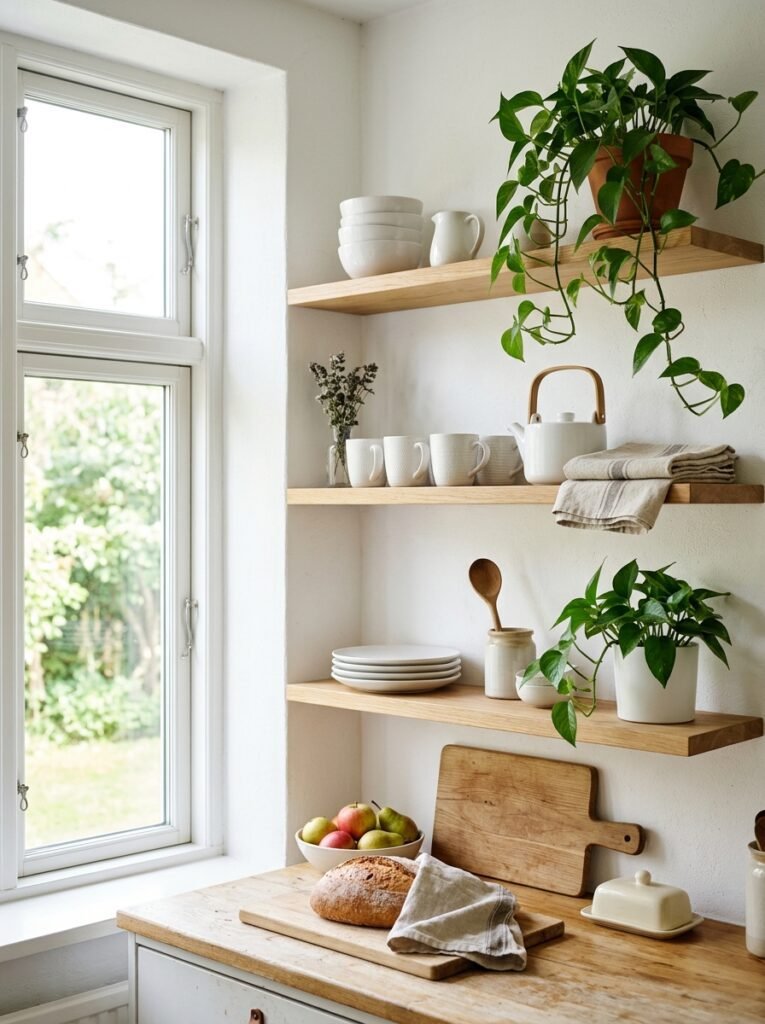
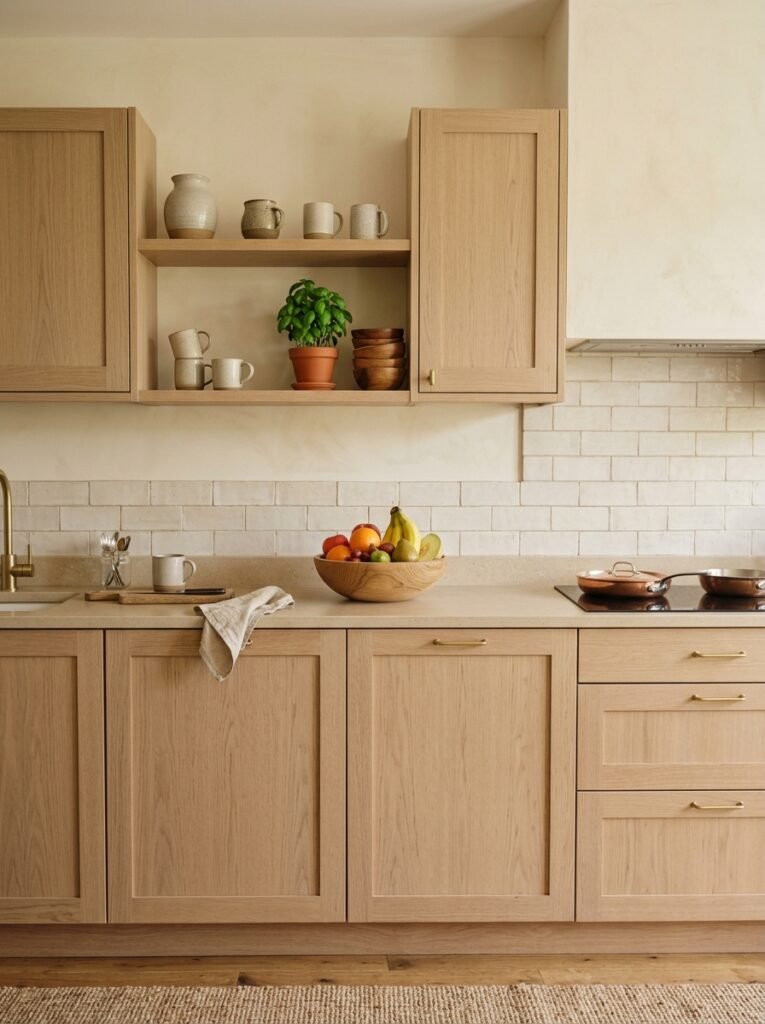
Scandinavian style is modern’s cozier cousin: pale woods, white and soft-neutral walls, an emphasis on natural light, and a functional simplicity warmed by a few plants and textiles. It is one of the most forgiving looks to pull off because it thrives on restraint and inexpensive natural materials.
Decorate with a pale oak open shelf holding simple ceramics, a couple of linen towels, a trailing plant, and a wooden bowl of fruit. The trick is to stay uncluttered while keeping the mood warm, so lean on texture, light wood, and one or two living things rather than a lot of objects.
Modern Farmhouse
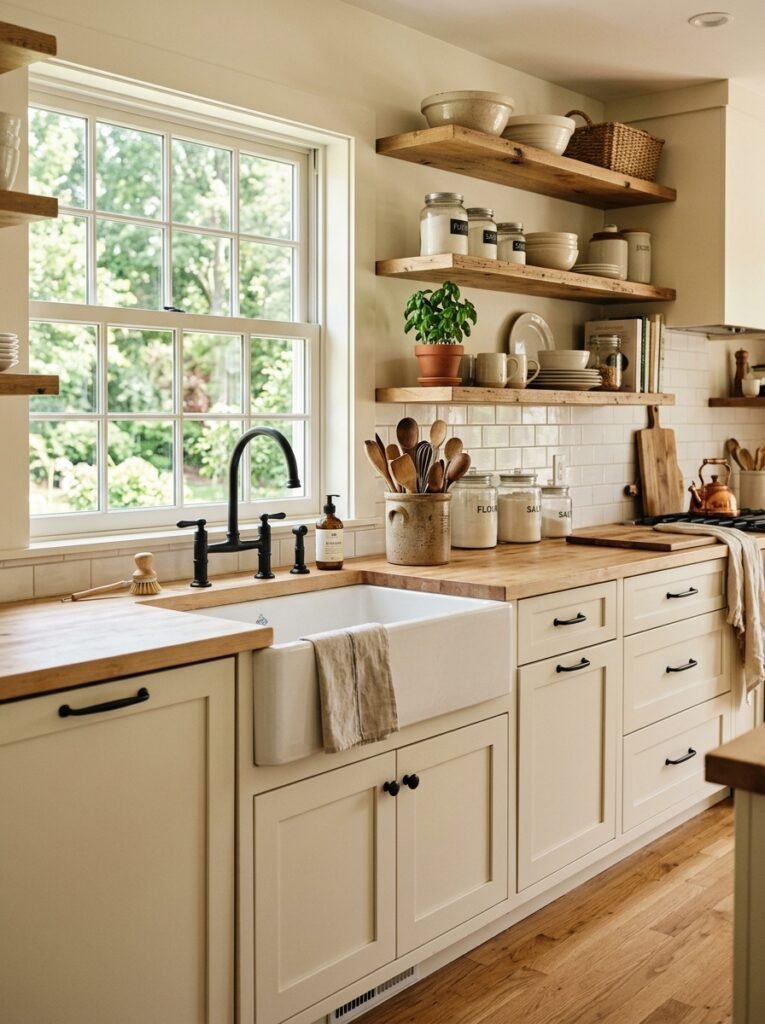
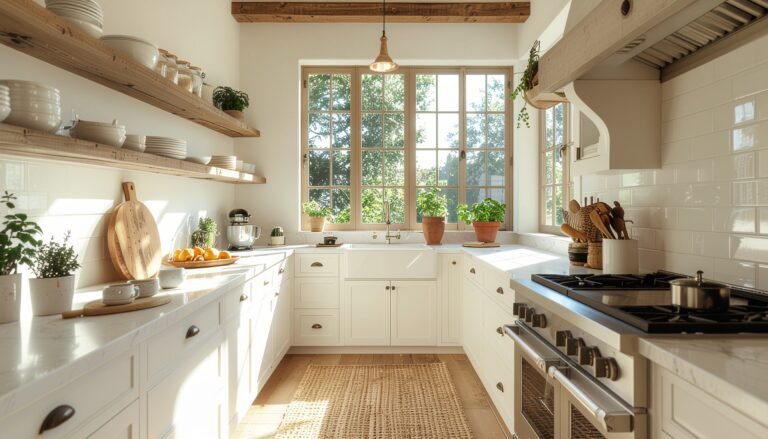
Modern farmhouse blends rustic and clean: shaker cabinets, an apron-front sink feel, open shelving, natural wood against creamy neutrals, and a little black metal for structure. The current take has shed the cool greys of a few years ago in favor of warmer creams and richer wood.
This is one of the most accessory-driven styles, which makes it budget-friendly. A stoneware crock of utensils, a stack of wooden cutting boards, a bowl of produce, a simple framed botanical, and brass or matte-black hardware do most of the work. Because the look is built from small, swappable pieces rather than big architectural moves, it is easy to layer in over time.
Mediterranean and Earthy
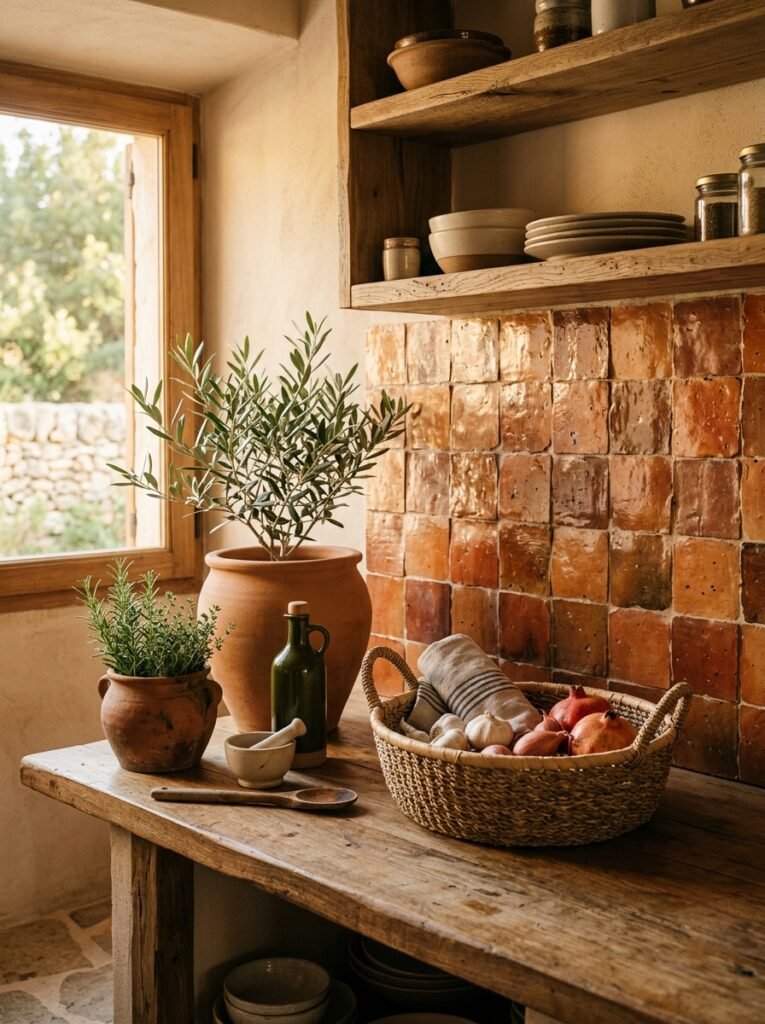
This is the heart of the 2026 mood: terracotta and warm earth tones, sage and olive greens, handmade tiles, clay pots, and woven textures that feel sun-baked and grounding. It leans directly into the earthy palette that designers are championing, and it rewards handmade, imperfect pieces.
Decorate with terracotta planters, olive-toned accents, woven baskets, clay bowls, and a patterned tile backsplash, real or peel-and-stick if you are renting. If this is your direction, we go deep on one of its best color pairings in our guide to terracotta and sage green kitchen ideas, which shows how the two shades balance each other across cabinets, tile, and accessories.
Industrial
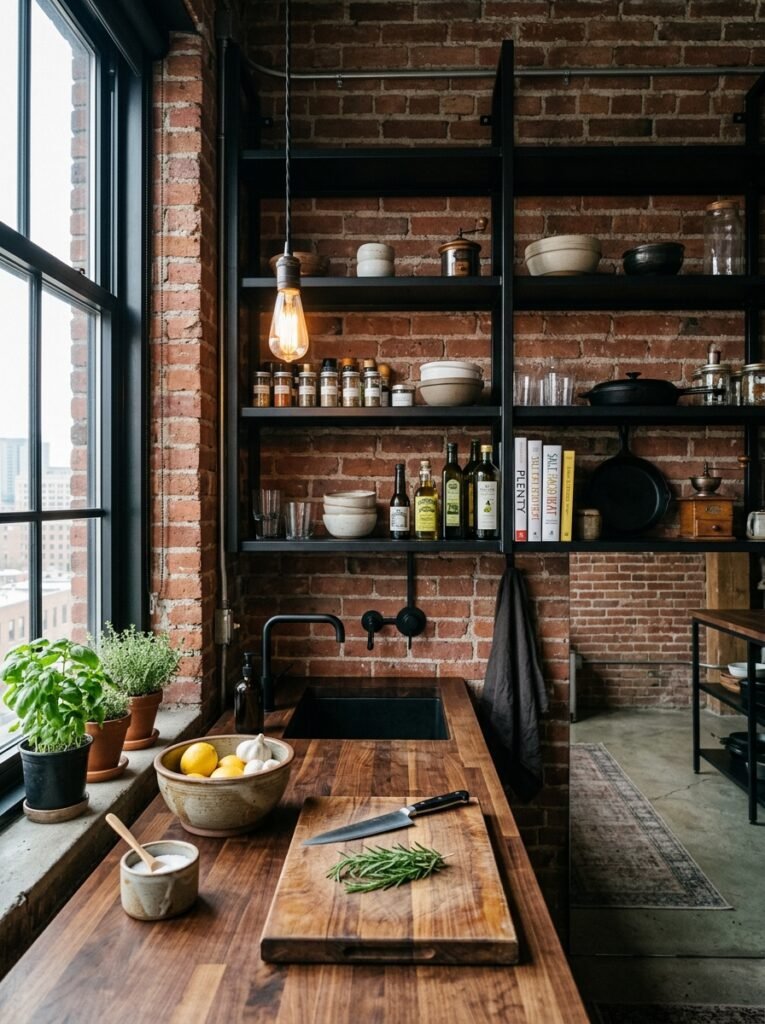
Industrial style leans on raw materials: exposed brick or concrete looks, open metal shelving, darker tones, utilitarian fixtures, and Edison-style bulbs. On its own it can feel cold, so the version worth copying softens the hard edges with wood and warm light.
To style it, pair open metal shelving with matte-black fixtures, add a butcher-block or concrete-look surface, and keep accessories simple and functional, think a single statement pendant, a few sturdy ceramics, and a wooden board or two. A warm-toned bulb and one piece of natural wood keep the whole thing from tipping into austere.
Japandi
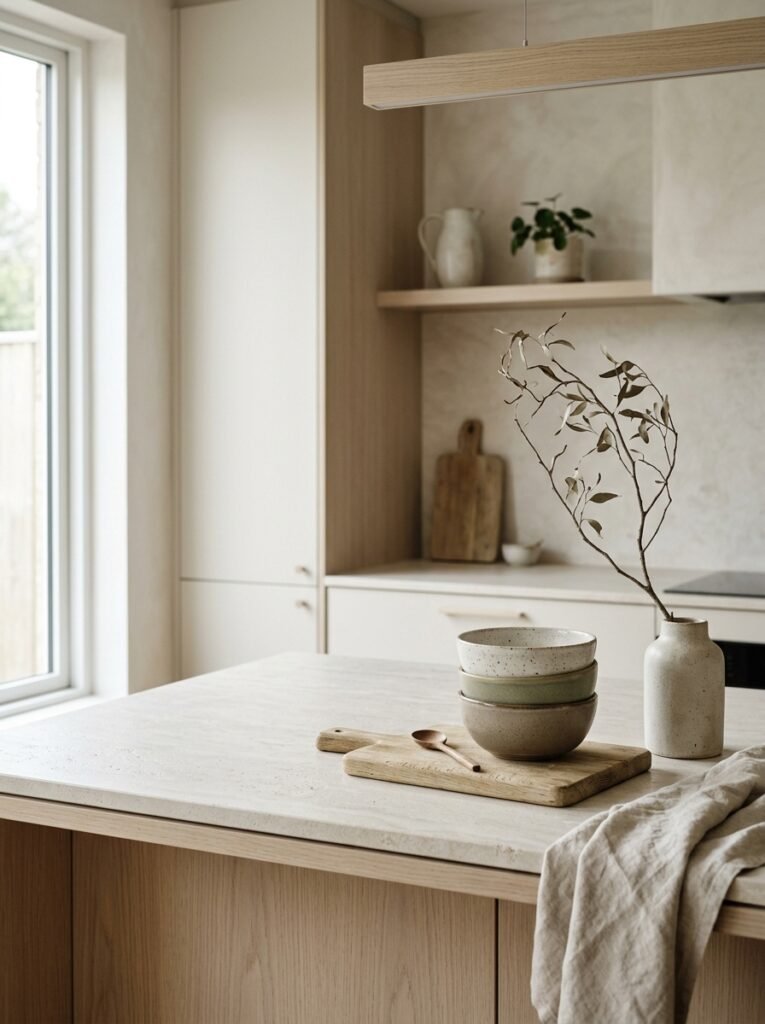
Japandi is the meeting of Japanese minimalism and Scandinavian warmth, and it may be the most on-trend look of the moment. It runs on natural materials, a muted earthy palette, handmade ceramics, low clutter, and a wabi-sabi appreciation for imperfection.
Decorate with a few handmade bowls, natural wood, linen, matte finishes, and a single sculptural branch or simple arrangement instead of a crowd of objects. The restraint is the point, so choose fewer, better pieces and let empty space be part of the design. Of all the styles here, Japandi sits most naturally on 2026’s warm, tactile foundation.
Making Any Style Cohesive
Whichever direction you choose, the same handful of moves is what ties a kitchen together. Pick a tight palette of two or three colors and repeat them across your accessories, textiles, and any tile. Commit to a single metal finish for hardware and fixtures rather than mixing brass, chrome, and black at random. Layer materials and textures, wood, stone, ceramic, linen, and a little metal, since a mix reads more collected than a matched set. Keep counters curated rather than crowded. And unify the mood with warm lighting, since a 2700K bulb pulls an entire palette together while a cool one fights it.
A few affordable swaps suit any of these styles at once: new cabinet hardware, warm-bulb pendants, earth-toned accessories like terracotta planters and wooden bowls, one real wood element such as a butcher-block section or open shelf, a jute rug underfoot, and a set of handmade ceramics, all of which Kitchen Cabinet Kings highlights as low-cost ways to shift a kitchen from cool to warm. If you want to go further on the budget side, our guide to refreshing a kitchen on a small budget breaks down where the money is best spent, and for pieces that hold up once you actually start frying and chopping, see our take on kitchen decor that survives real cooking. If your kitchen opens onto an eating area, carry the same style through it using the ideas in our modern dining room decor guide so the two zones read as one space.
Style Mistakes That Undo the Look
A few common missteps quietly cancel out an otherwise good style. The first is mixing too many styles at once, so pick one lead and borrow lightly from at most one other. The second is buying a matched “kitchen set” where everything coordinates too perfectly, which reads like a catalog rather than a home; a little contrast in material or finish looks more gathered. The third is ignoring your kitchen’s existing cabinets, counters, and architecture and fighting them instead of working with what is already there. Crowding every surface is another, since no style can read through clutter, which is often the missing piece our guide to the details a kitchen is missing addresses. And finally, cool lighting over a warm palette undoes all the effort, so match the bulbs to the mood.
Pick One Direction This Week
Start by choosing the style that matches both how your kitchen already leans and how you want it to feel, since working with your existing finishes is far easier than working against them. Then pull just three or four decor pieces that clearly speak that language, a wood board, some earthenware, the right hardware, a warm bulb, and live with them for a few days before adding more. Built this way, kitchen decor stops being a guessing game and becomes a short, repeatable process, and a kitchen with one committed style always looks more intentional than one styled from a little of everything.