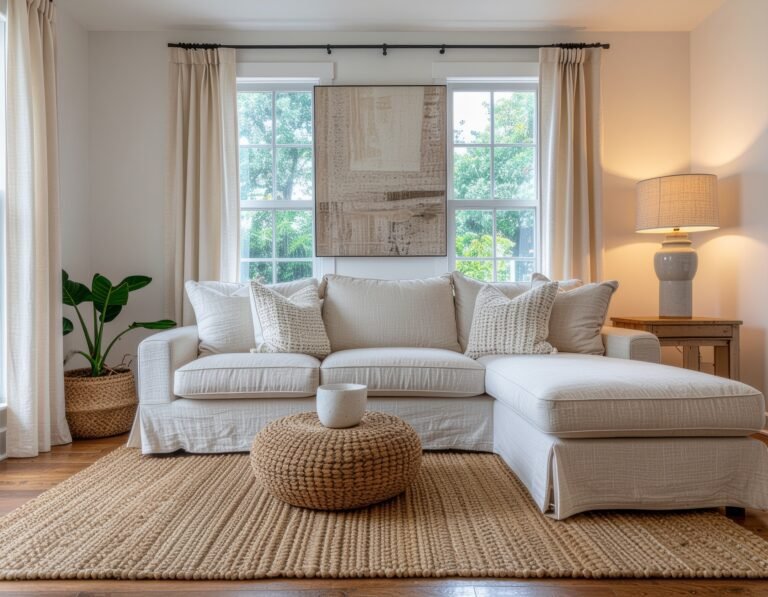
The $200 Living Room Makeover That Looks Like It Cost Thousands
Let’s be honest about $200 first. In decorating money, that’s almost nothing. One “nice” cushion from a fancy store can eat half of it. So no, this isn’t one of those posts pretending $200 buys you a magazine living room.
What $200 can do is finish a room that free work has already fixed. That’s the whole trick, and most budget posts skip it. You do the zero-cost stuff first (clearing, moving furniture, restyling what you own), and only then spend money on the gaps that are left. In that order, $200 goes surprisingly far. In the wrong order, it just disappears and the room looks the same.
Here’s the exact plan, with real numbers.
Where the $200 Goes
First the budget, so you know I’m not hiding a $400 rug in step seven:
| Item | Budget |
|---|---|
| One large rug | $70 |
| Lamp + warm bulbs | $35 |
| 4 pillow covers | $30 |
| One textured throw | $18 |
| Secondhand mirror | $20 |
| One big plant (or branches + vase) | $12 |
| Art prints + thrifted frames | $15 |
| Total | $200 |
These aren’t rules, they’re sliders. Already own a decent rug? Great, shift that $70 into lighting and a second mirror. Just keep the proportions the same: the biggest chunk goes to the biggest surface in the room, and that’s your floor.
Part One: The Free Stuff (Do This First)
Clear your flat surfaces. All of them.
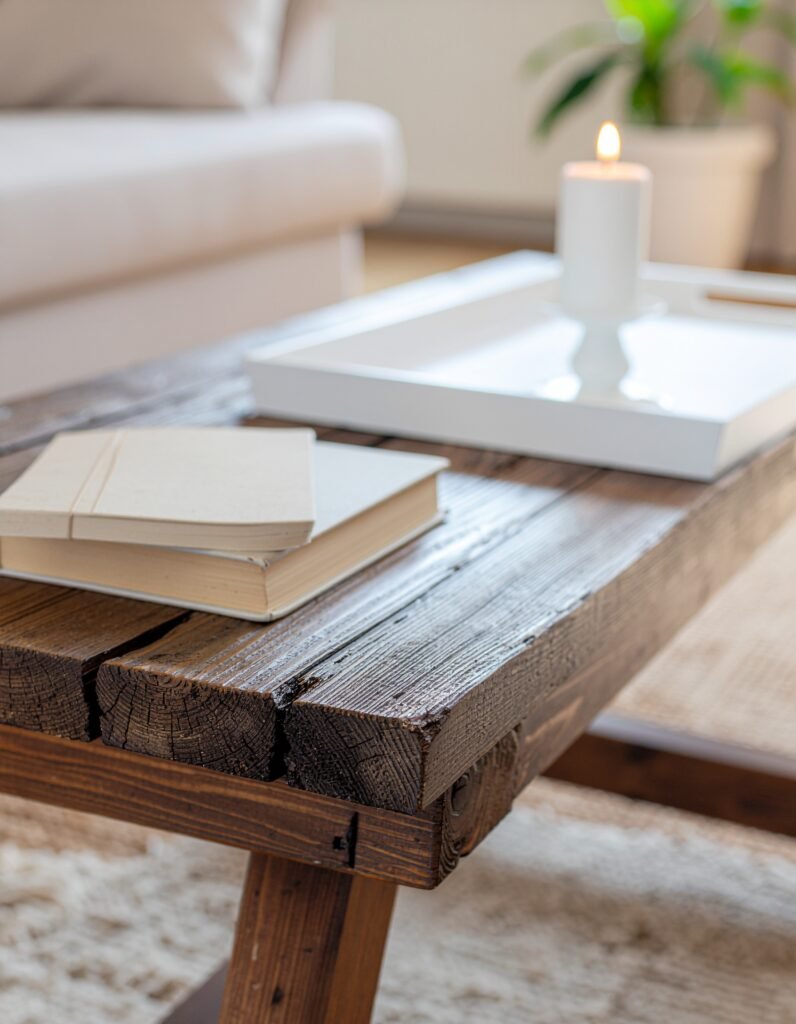
Go look at any expensive room online and count what’s sitting on the coffee table. Usually three things. A tray, a candle, a couple of books. That’s it.
Clutter makes expensive furniture look cheap, which means decluttering makes cheap furniture look expensive. Best trade in decorating, and it’s free.
My rule: three items max per surface. Anything you’re unsure about goes into a cardboard box, the box goes into a closet, and if you haven’t opened it in two weeks, you didn’t need any of it. While you’re in the mood, look around for the room’s weakest piece of furniture. Most living rooms have one chair or side table too many. Get it out. The empty space you win back is worth more than the furniture was.
Move the furniture around
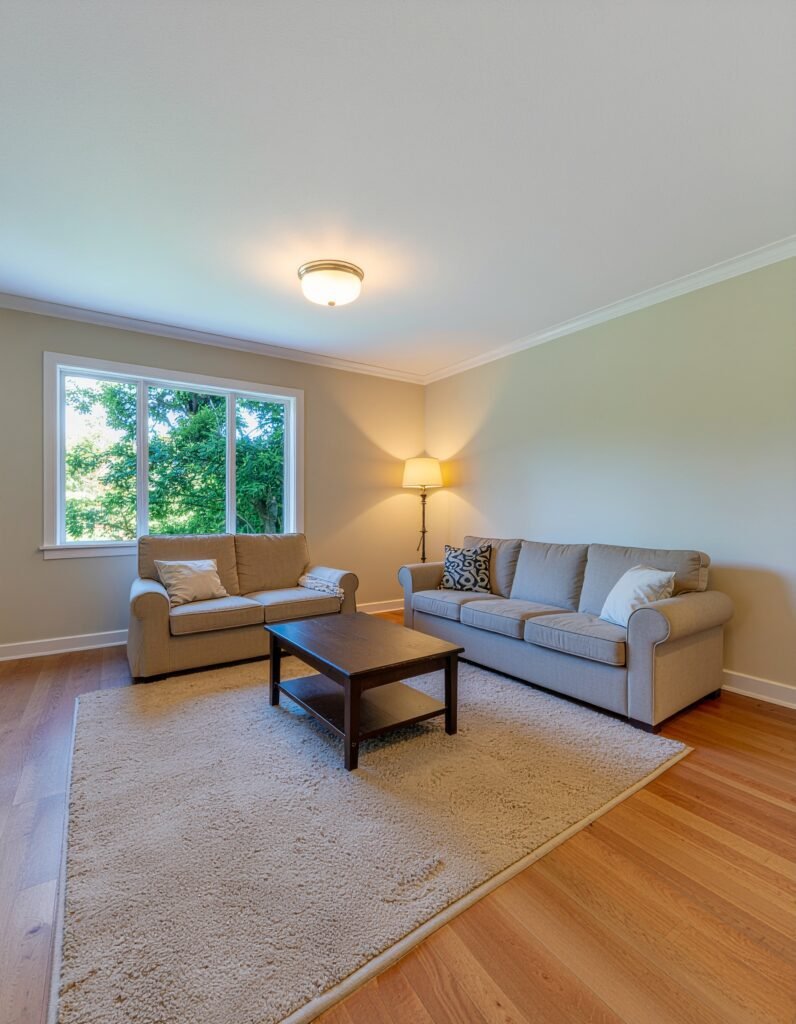
A new layout is basically a free renovation, and the first move is always the same: pull the sofa off the wall. Even six inches helps. Furniture pressed flat against the walls is the number one thing that makes a room look parked instead of designed.
Then set up the seating so people actually face each other, within about 8 feet, with the coffee table close enough that you can reach your cup without getting up (14 to 18 inches from the sofa). Keep walkways around 30 inches so nobody has to squeeze past anything. And angle one chair. Just one. That single diagonal line does more to break up a boxy room than anything else on this list.
Also raid your other rooms. The armchair in the bedroom that nobody sits on might be exactly what this room is missing. Try swaps before you buy anything.
Restyle the shelves
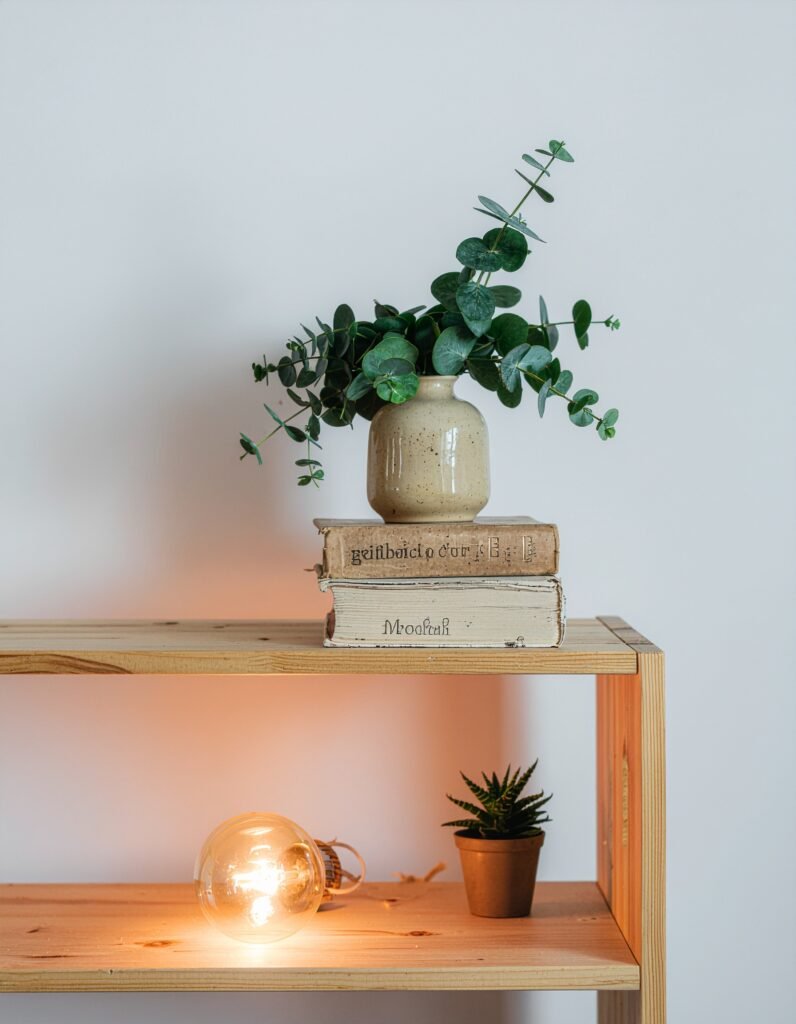
This is where “curated” comes from and it costs nothing. Group objects in threes, vary the heights (a stack of two books under a small object lifts it nicely), and then do the hard part: leave about a third of every shelf empty. Empty space is the whole difference between a styled shelf and a storage shelf.
Then go shopping inside your own house. A wooden bowl from the kitchen, a vase from the bedroom, a framed photo from the hallway. Things feel new in a new room.
Now live with all of this for a day before spending anything. Seriously. The shopping list usually shrinks after this stage, and that’s the point.
Part Two: Spending the Money
The rug ($70): go big or skip it
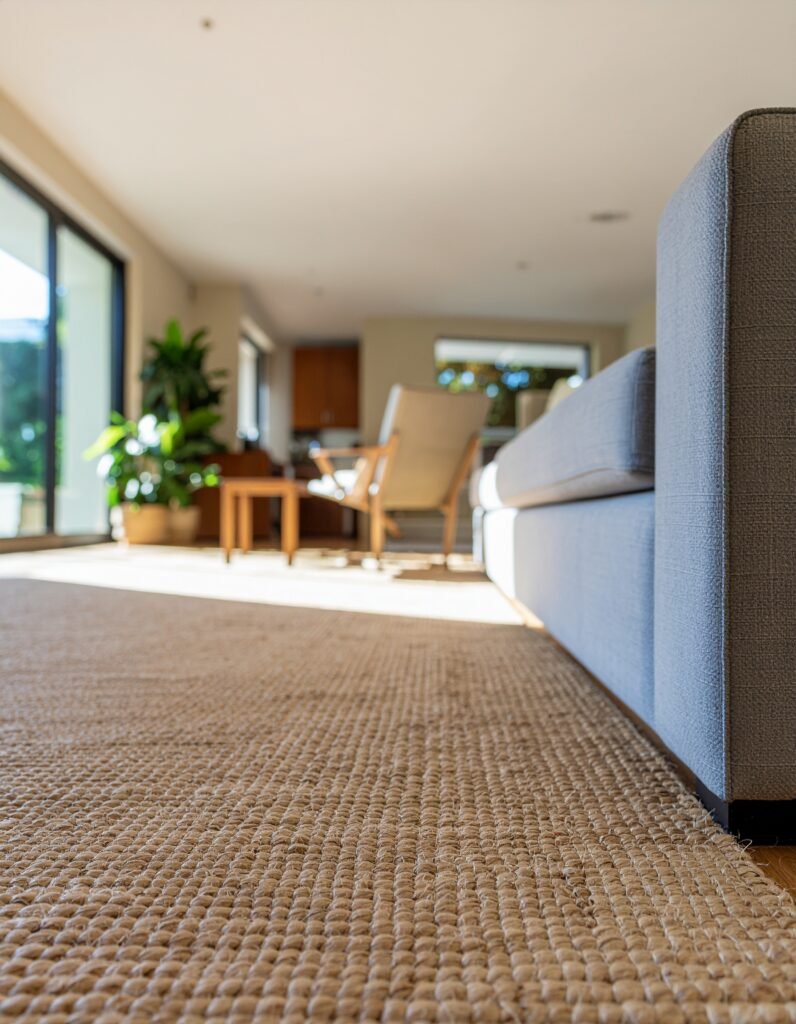
If you buy one thing, it’s this. But at this budget, size beats everything else. A $70 flatweave in 8×10 will do more for the room than a $70 plush rug in 5×7 ever could, because a small rug shrinks everything around it. This is the money mistake I see most: people buy the nicer small rug. Don’t.
Placement is simple. Front legs of every seat sit on the rug. The cheapest large options are jute, sisal, and cotton flatweave, which conveniently also look current right now. If you want pattern too, layer a smaller patterned rug on top of a big cheap jute one. Looks intentional, costs less than one large patterned rug.
Check Facebook Marketplace before anywhere else. Big rugs are a pain to ship and move, so people sell barely-used ones for very little.
Lighting ($35): the ceiling light is the enemy
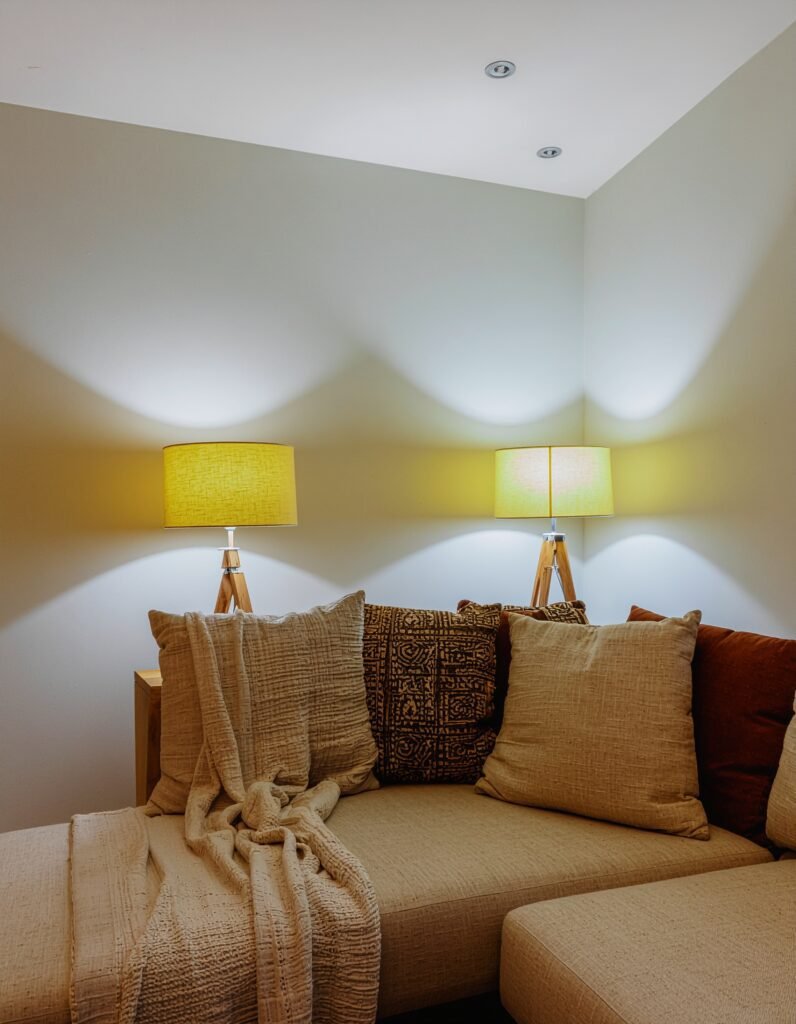
Free rule first: after sunset, the ceiling light stays off. Overhead light flattens everything in the room. Lamps at seating height make pools of warm light, and pools of warm light are basically what “cozy” means.
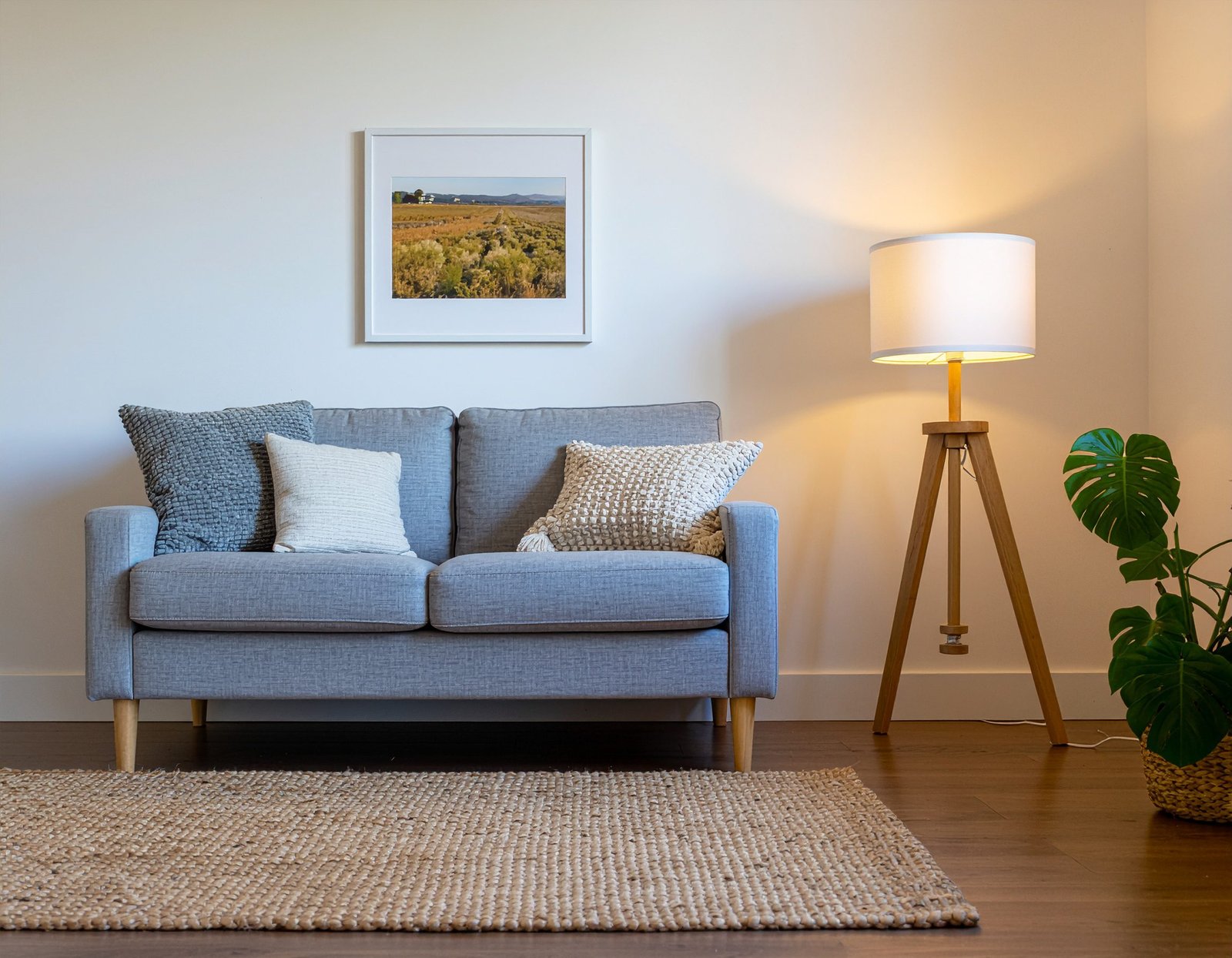
You want at least two lamps at or below eye level. And honestly, the bulb matters more than the lamp. Look for 2700K on the box, sometimes labelled “warm white.” That one number does more for the mood than any lampshade you’ll ever buy. A thrifted lamp base for $5 or $7 with a fresh shade passes for a boutique find, and a $10 plug-in dimmer turns any lamp into mood lighting.
Pillow covers, not pillows ($30)
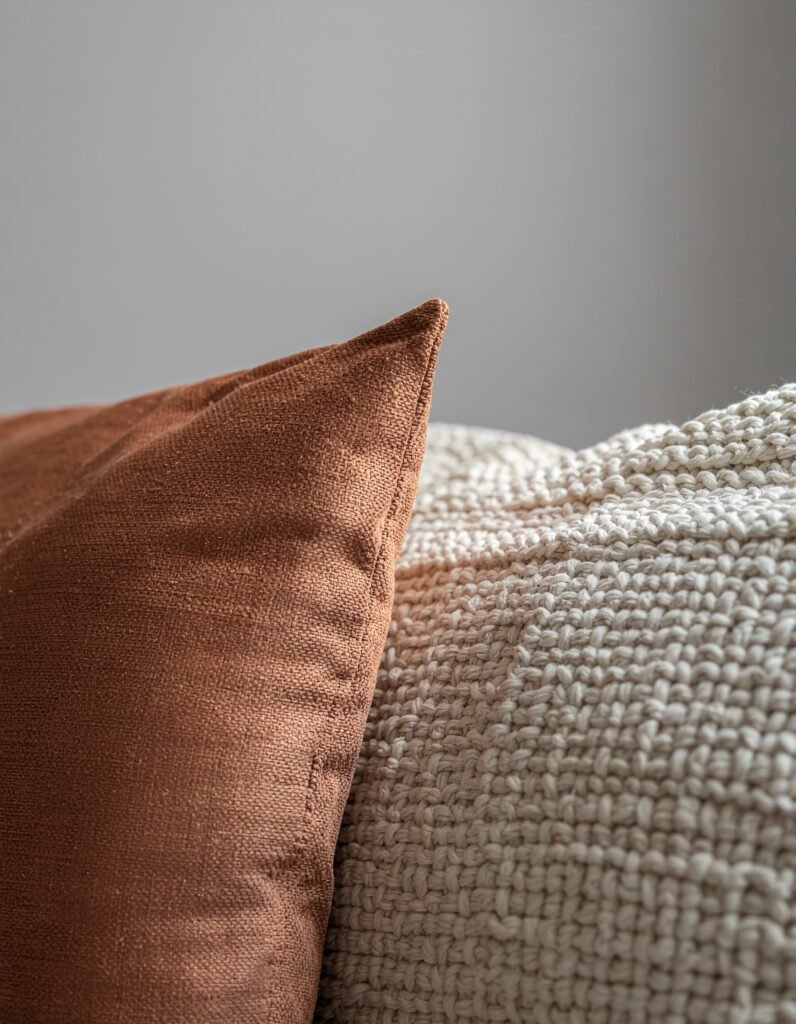
Buy covers, keep your old inserts. That’s four “new” pillows for the price of one real one.
If you do need inserts, size up: a 20-inch insert inside an 18-inch cover gives you that plump hotel look. Same-size inserts give you sad, empty corners.
For the mix, keep it to three textures and two colors. Say velvet, linen, and a knit, in shades that get along. Odd numbers on the sofa, three or five. Never four.
One throw ($18)
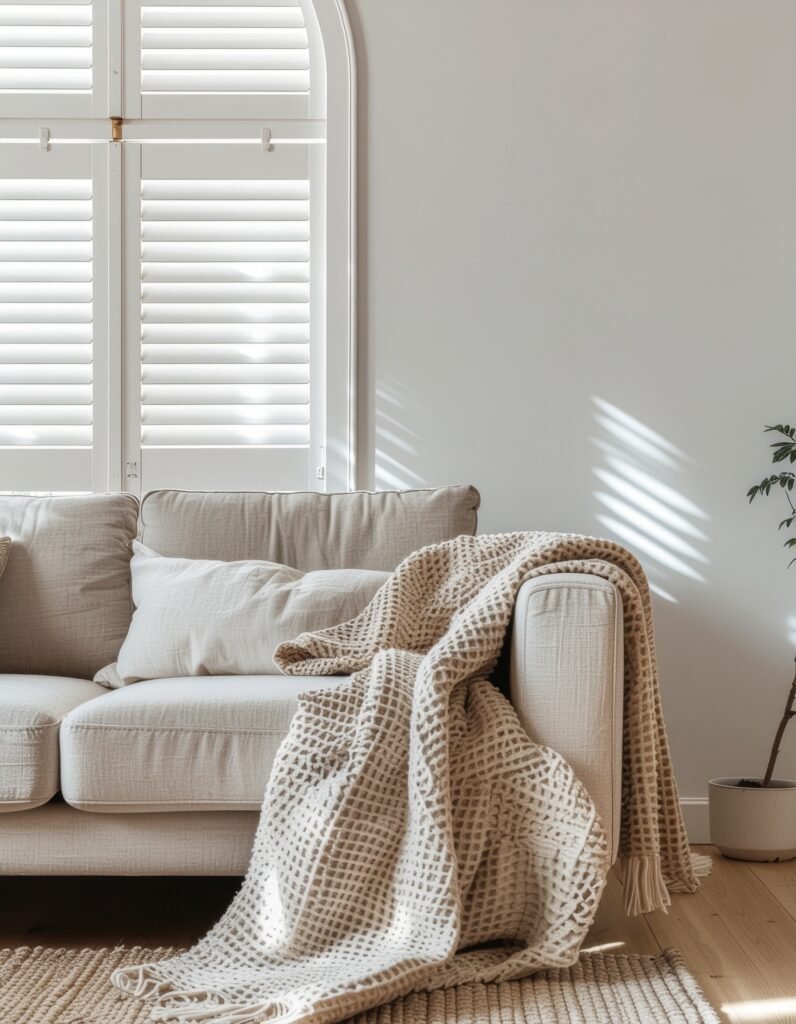
One good textured throw. Waffle weave, chunky knit, brushed cotton. Not thin fleece; it looks cheap in person and even cheaper in photos.
Then drape it like a person just put it down, loosely over one arm or corner. The neatly folded rectangle across the sofa back is furniture-showroom energy, and not in a good way. If that kind of lived-in, layered texture is the direction you actually want to go, this boho living room makeover guide takes the same one-throw idea and builds an entire relaxed, collected style around it.
A secondhand mirror ($20)
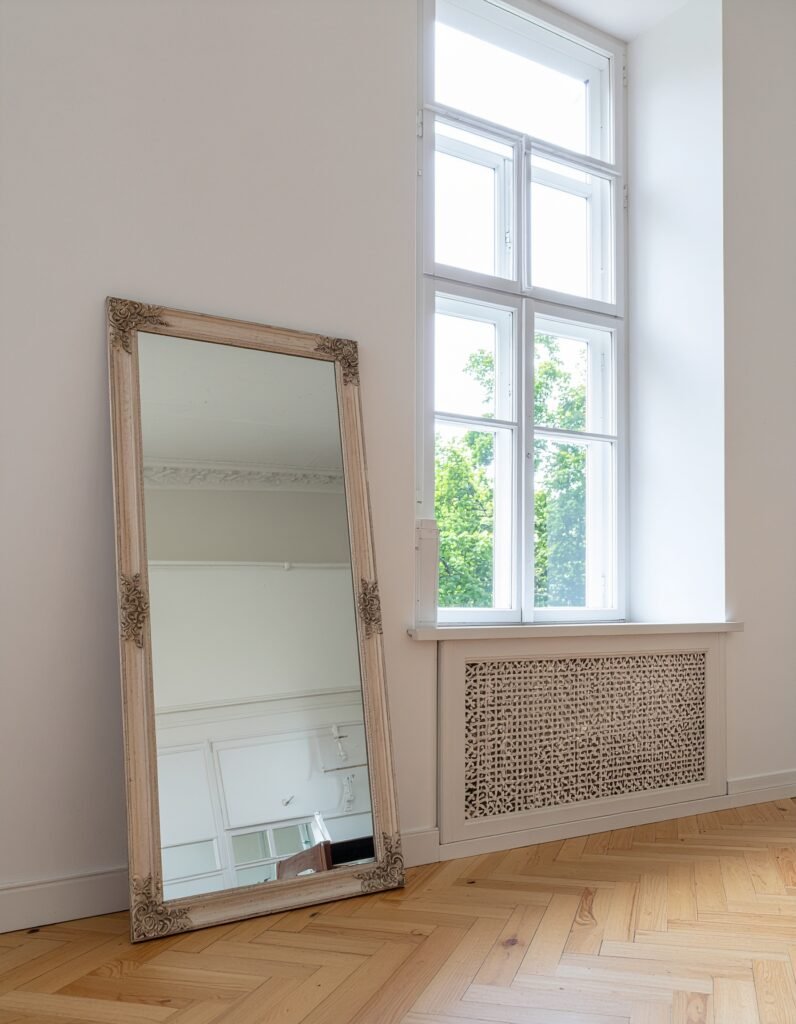
Mirrors are the single best thrift store category. They’re heavy, annoying to ship, and permanently out of fashion, so they stay permanently underpriced. Find a big one, hang it opposite or beside a window, and enjoy the extra daylight and the room suddenly feeling larger.
Bigger than feels natural, by the way. Small mirrors scattered around read as clutter; one oversized mirror reads as a decision. If the frame is ugly, spray paint exists.
A plant that’s actually alive ($12)
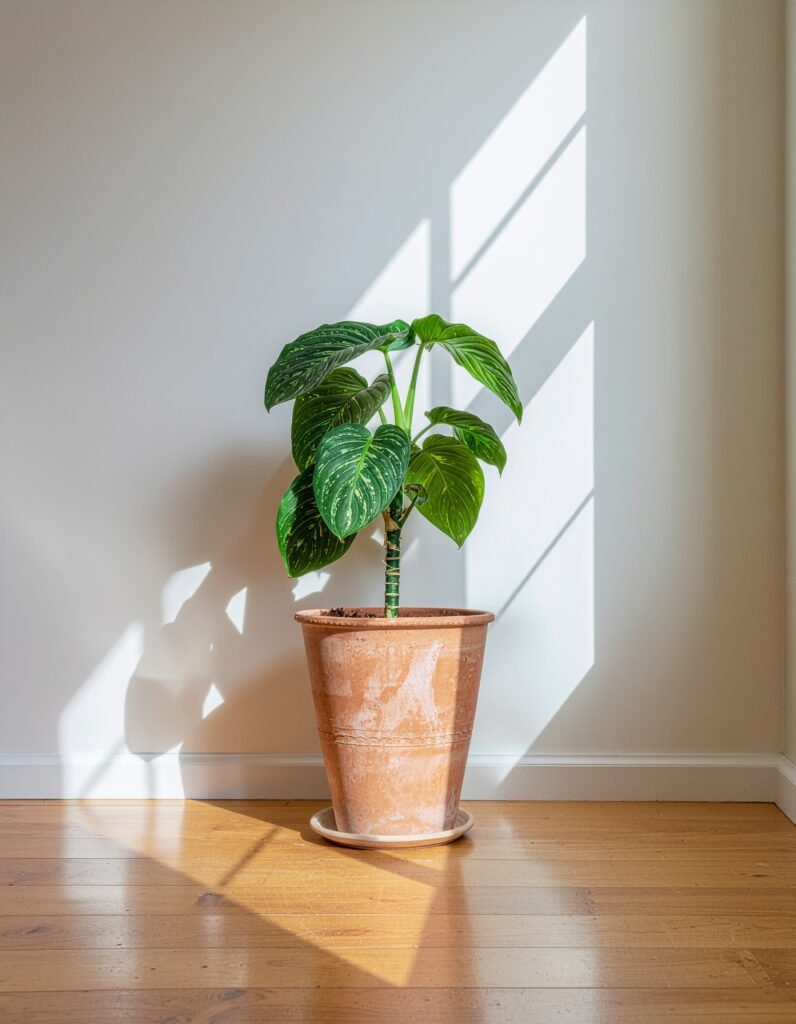
One big plant beats five little ones, every single time. A pothos or a snake plant will forgive you for forgetting it exists for weeks.
Even cheaper: cuttings from friends root in plain water for free. And a supermarket bunch of eucalyptus in a plain vase looks great for weeks, then dries out and keeps looking great for months.
Something on the walls ($15)
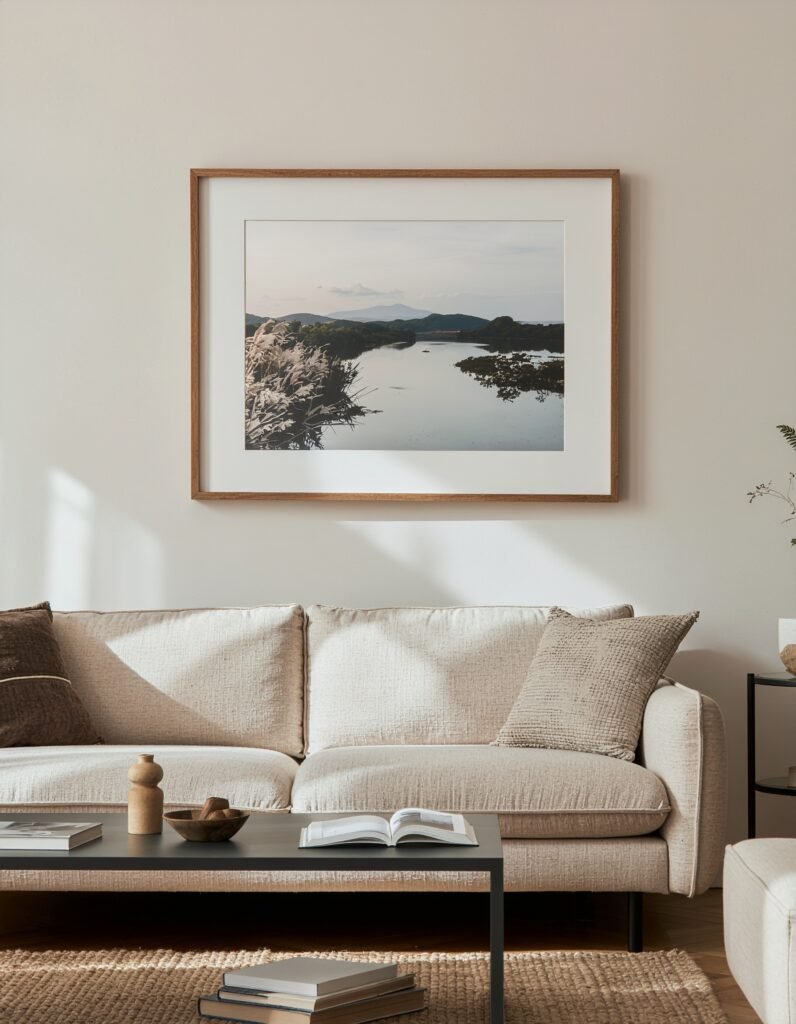
A bunch of major museums have released their collections online as free public-domain downloads. Pick a painting you genuinely like, print it large at a local print shop, drop it into a thrifted frame. A few dollars, and it’s real art instead of the same mass-market print everyone has.
One rule saves you from the most common wall mistake: art above a sofa should be roughly two-thirds of the sofa’s width. One big piece beats a scatter of little frames, for your wall and your wallet both.
What NOT to Buy
Half of budget decorating is refusing to waste the budget. My skip list:
- Small rugs. If you can only afford a small one, buy none and spend elsewhere.
- Matching sets. Twin lamps, coordinated cushion packs, frame multipacks. Sets look like a catalog page, not a home.
- Word art. If it says Live, Laugh, or Love, it cancels out everything else in this post. Sorry.
- Cheap fake plants. Under about $20 they look fake from across the room, and a live pothos costs less anyway.
- New curtains. Not yet. First rehang the ones you have: rod up near the ceiling, extended 8 to 12 inches past the window on each side. They’ll suddenly look custom, and it cost you nothing.
The Weekend Version
Saturday morning: declutter, run the box test, remove one piece of furniture. Saturday afternoon: new layout, restyle the shelves, rehang the curtains higher and wider. Sunday: shopping. Thrift stores first for the mirror, lamp base, and frames, then fill the gaps (rug, covers, throw, bulbs, plant) at discount or online stores. Sunday evening: set everything up, kill the ceiling light, switch on the lamps, and sit down.
That first evening in the finished room is the whole payoff.
Final Word
Rooms look expensive when they look intentional, and intention is free. The $200 only fills the gaps that the free work exposes: light where the room felt flat, texture where it felt bare, one big rug to hold everything together.
Do it in order. The order matters more than the money.
FAQ
Is $200 actually enough? Only if the free stage happens first. Clearing and rearranging do about half the job, and the money does the rest. Spend $200 on a cluttered, badly arranged room and you’ll barely see where it went.
What if I only have $100? Keep the rug and the lighting, drop everything else for now. Those two carry the transformation. The mirror, art, and plant can wait a month.
What’s the biggest mistake people make? Buying small because small is cheap. A small rug, small art, small lamps. Ten small purchases look like clutter; three properly sized ones look like a designed room. When in doubt, buy fewer, bigger things.